
 +965 2292 4888


Daily Economic Update
23.02.2026
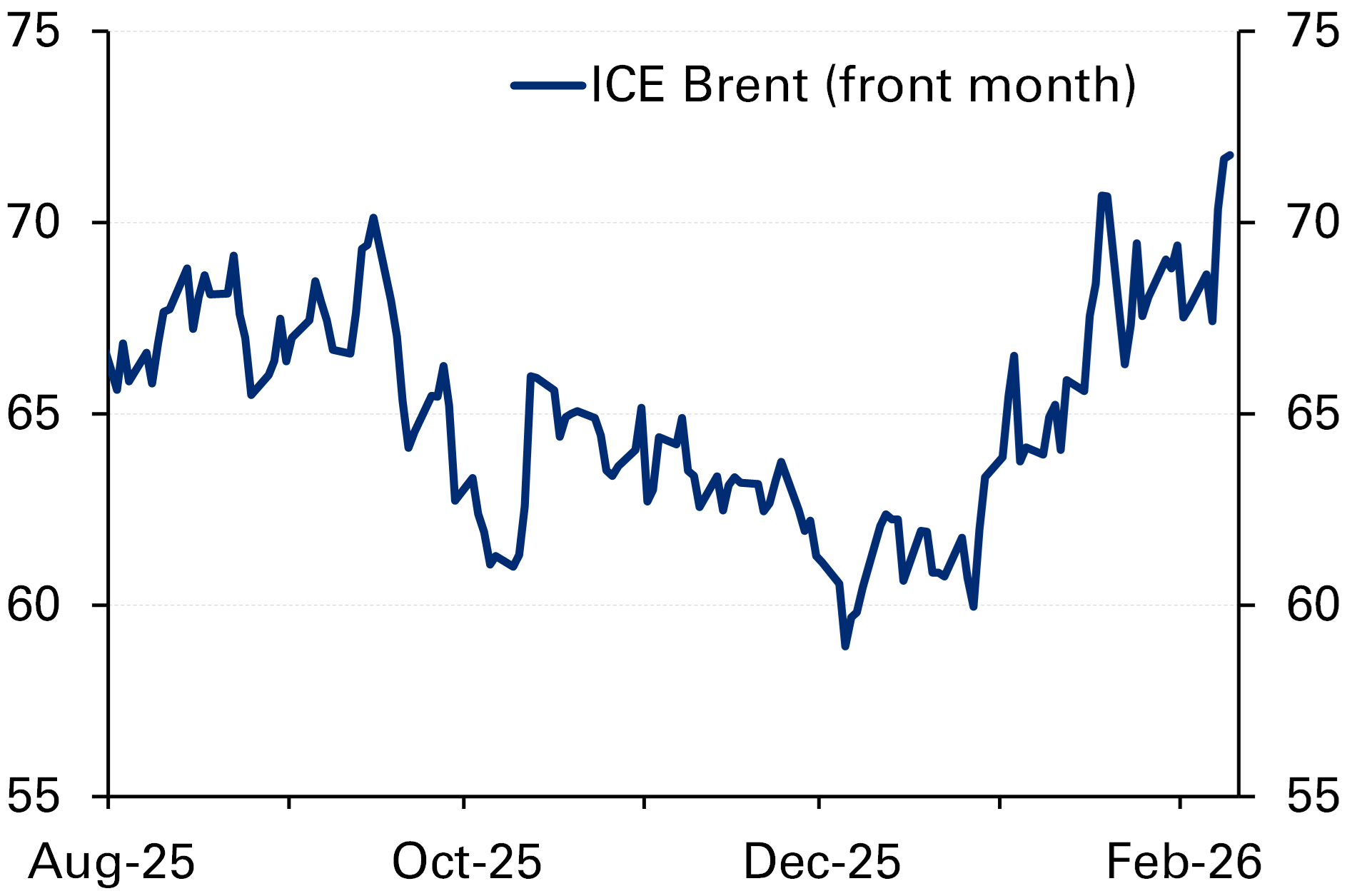
Oil: Prices rally amid escalating US-Iran tensions. Brent futures rallied to a six-month high on Friday, ending the week at $71.8/bbl and notching a 5.9% w/w gain, supported by escalating tensions between the US and Iran. Earlier in the week, prices had softened after Tuesday’s reports that the Geneva talks between the two countries had reached an understanding on the main “guiding principles”. However, the tone shifted sharply on Wednesday when media outlets reported that Israel had raised its alert status in anticipation of potential US military action against Iran. Momentum was further reinforced on Thursday after President Trump warned that, absent a deal, “it’s going to be unfortunate for them”, reportedly giving Iran a 10-15 day deadline to agree to terms – implicitly signaling the possibility of US strikes. The geopolitical backdrop remains highly fluid, with considerable uncertainty stemming from Trump’s unpredictable nature. The extent of any future price reaction would depend heavily on the nature and scale of a potential conflict, with a brief campaign involving limited US strikes and proportionate Iranian retaliation likely resulting in only a temporary spike in prices. Additional factors also supported the bullish tone last week. US-mediated talks between Russia and Ukraine in Geneva ended on Wednesday without progress. Meanwhile, EIA weekly data showed sizeable drawdowns in US commercial inventories: crude stocks fell 9 mb w/w, while gasoline and distillate inventories dropped 3.2 mb and 4.6 mb w/w, respectively. Looking ahead, OPEC-8 members are set to meet on Sunday to finalize their April output policy. The group had previously agreed to pause quota increases in Q1 26 amid softer seasonal demand conditions, while setting the expectation for a resumption in supply additions in April at a pace of 137 kb/d per month. Should this rate be maintained through year-end, the remaining tranche of the 1.65 mb/d voluntary cut would be fully unwound by December.
Global: Further tariff-related news, Trump’s State of the Union address, and heavy Fed speak key matters this week. In the US, following last week’s tariff development, further news flow on the matter will attract sizeable attention. President Trump is due to deliver the annual State of the Union address to Congress on Tuesday where he may outline his next policies. Several Fed officials are also scheduled to speak over the week, likely offering views on monetary policy and the economy. In terms of economic data, PPI inflation for January (Friday) is seen easing to 0.3% m/m for both the headline and core rates from 0.5% and 0.7%, respectively, in December. The Conference Board’s consumer confidence index (Tuesday) is expected to improve to 86 in February from 84.5 in January. In the UK, the Nationwide house price data for February will likely be released on Friday, which previously showed 1% y/y increase in residential prices in January. In China, following the extended Lunar New Year break, the data calendar remains light. The PBoC on Tuesday is expected to leave the one and five year loan prime rates at 3% and 3.5%, respectively, unchanged since May 2025. Finally, in Japan, February’s Tokyo inflation is due on Friday, with core inflation set to fall to 1.7% y/y from previous month’s 2%. January’s retail sales and industrial production are also due on Friday, with retails sales seen declining 0.4% y/y (improving from December’s 0.9% fall), while industrial production is seen rebounding by 5.3% m/m after a 0.1% decline earlier.
Japan: Inflation falls to nearly a four-year low as PMIs improved. Inflation fell to 1.5% y/y in January, lower than the previous month’s 2.1% rise and below the Bank of Japan’s 2% target for the first time since March 2022. The decline was mainly driven by a slowdown in food inflation, which fell to a 15-month low of 3.9%, while energy costs remained negative for the second consecutive month. Similarly, core inflation fell in January, matching consensus expectations of 2% y/y and moderating from December’s 2.4% print. These results are broadly in line with the BoJ’s outlook, which projected inflation falling to 1.9% in FY2026. Despite inflation moderating, Prime Minister Takaichi is still expected to push for a suspension of the consumption tax, her signature piece of legislation so far, citing cost-of-living pressures. Meanwhile, February’s PMI figures continue to show improving conditions with the composite PMI rising to a 33-month high of 53.8, with the manufacturing and services ones rising to 52.8 and 53.8, respectively.
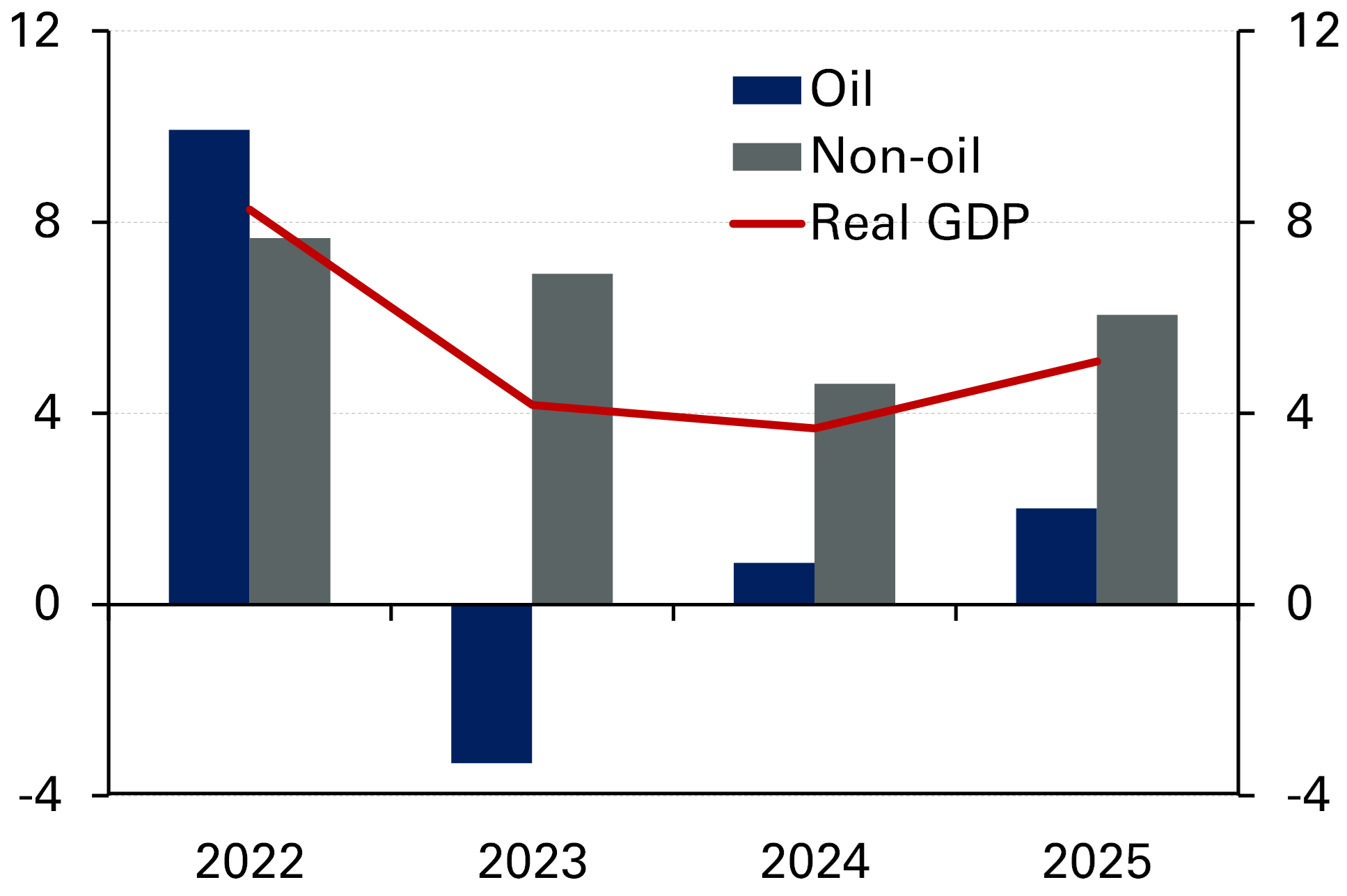
UAE: Non-oil growth expands by 6.1% y/y in the first nine months of 2025. GDP growth accelerated to 5.1% y/y in the first three quarters of 2025, marking the strongest performance since 2022 and up from 3.7% y/y in the same period of 2024, according to media reports. Non-oil activity remained key, rising by 6.1% y/y, with the financial (9.0%), construction (8.7%), real estate (7.9%), and manufacturing (6.9%) sectors recording the fastest growth rates. The oil sector growth also increased, posting a growth of 2.0% y/y in the first three quarters of 2025, compared with 0.9% y/y a year earlier. This improvement was supported by a 3.7% y/y increase in crude oil production to average 3.03 mb/d over the same period. The oil sector’s performance was particularly buoyant in Q3 with production rising by 10.5% y/y to 3.24 mb/d, driven by a higher baseline quota and the OPEC+ decision to unwind voluntary production cuts. The momentum in the oil sector is expected to carry through the final quarter of 2025, while the non-oil economy should remain robust, supported by the improvement seen in the PMI to 54.3 in Q4, up from 53.4 in Q3. Looking ahead to 2026, we forecast total GDP growth of 5.1%, underpinned by ongoing policy-driven diversification efforts, sustained investment inflows and higher oil production.
Egypt: The IMF board to discuss the Extended Fund Facility (EFF) arrangement fifth and sixth reviews. The IMF has scheduled the EFF program for the Executive Board review on 25 February 2026, a critical step towards unlocking $2.5 billion in pending financial support in addition to $274 million under the Resilience and Sustainability Facility (RSF). These financial packages are linked to the fifth and sixth reviews of the EFF and the first review for the RSF. Managing director Kristalina Georgieva as well as the IMF mission chief have already signaled confidence in a favorable outcome, citing the country’s commitment to structural reforms and the tangible progress in stabilizing economic fundamentals despite regional tensions. However, the IMF is still emphasizing on the urgency of accelerating the government divestment agenda while curbing the dominant role of the state-owned enterprises. Meanwhile, the president, Abdel Fattah El Sisi, urged the Central Bank of Egypt (CBE) to maintain policies that would help curb inflation and safeguard price stability, particularly for essential goods. The CBE cut its key interest rates by 100bps earlier in February, in line with easing inflation that reached 11.9% y/y in January, and lowered the required reserve ratio for commercial banks 2% to 16%.