
 +965 2292 4888


Daily Economic Update
14.01.2026
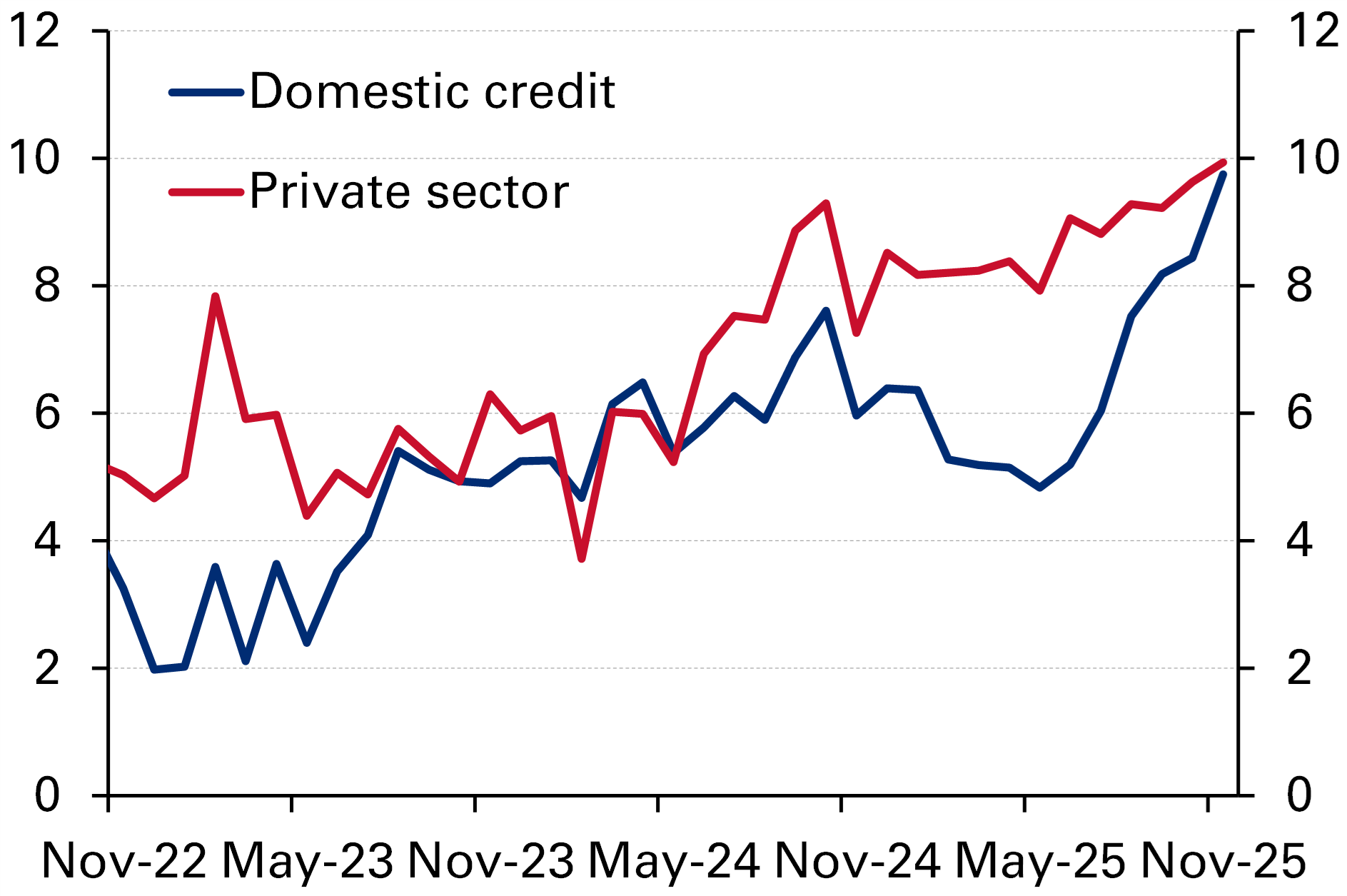
UAE: Domestic credit growth hit a more than decade high in November. Domestic credit continued its upward trajectory for the sixth consecutive month in November, recording growth of 9.7% y/y up from 8.4% in October and the strongest under the current series methodology stretching back more than a decade. Private sector credit, which accounts for 73% of all credit, accelerated to 9.9% y/y, driven by robust growth in personal loans (16.5% y/y) and credit to businesses (6.3% y/y). Public sector credit (government plus GREs) also surged, posting an 8.8% y/y increase compared to 4.9% in October, largely due to higher central government borrowing. On a year-to-date basis, domestic credit growth rose sharply to 10.2%, up from 6.8% in the same period in 2024. This was primarily driven by private sector lending (10.2% YTD), supported by stronger growth in credit to businesses and industries (7.0%) and sustained demand for personal loans (15.7%). Meanwhile, residents’ deposits remained resilient, recording yearly double-digit growth for the seventh consecutive month (14.7% y/y). Private sector deposits, which represent nearly 75% of all deposits, grew 18.3% y/y, while public sector deposits rose 4.7% y/y, up from 2.3% in October, driven by a notable increase in GRE deposits (9.4% y/y versus 2.2%). Year-to-date growth in deposits stood at 14.1% compared to 11.7% in the same period of 2024, supported by strong private sector deposit growth (17.3%). Public sector deposits, however, slowed to 6.5% YTD, down from 10.2% in the same period of 2024, reflecting a sharp deceleration in GRE deposits growth (5% versus 15.3%), while government deposits remained broadly stable at 7.5% YTD. Amid strong deposit growth, the loan-to-deposit ratio has fallen to 66.4% from 70.8% at the end of 2024.
Egypt: World Bank turns more constructive on growth as EU prepares to disburse EUR 1 billion. The World Bank has revised up its outlook for the Egyptian economy, signaling growing confidence in the recovery momentum. In its latest Global Economic Prospects report, the bank nudged up its GDP growth forecast for Egypt by 0.1 percentage point to 4.3% in the current fiscal year, compared to its June 2025 projections. It also raised its forecast for the next fiscal year by 0.2 percentage points to 4.8%, citing stronger net exports, easing inflationary pressures, and improving global financial conditions that are expected to support private consumption and investment. Alongside the more optimistic growth outlook, Egypt is set to receive a fresh external financing boost this week. The Minister of Planning and International Cooperation confirmed that the European Union will disburse EUR 1 billion on Thursday, representing the second tranche of the EUR 5 billion macro financial assistance package agreed in 2024. The disbursement follows the implementation of 38 economic and structural measures under the program, with around 100 additional reforms still in the pipeline. While securing the remaining EUR 3 billion will depend on further progress on structural benchmarks, the latest tranche underscores continued international support for Egypt’s reform agenda. Together, the World Bank upgrade and the EU disbursement reinforce the improving macro narrative, anchored by policy discipline, structural reforms, and a gradually strengthening growth outlook.
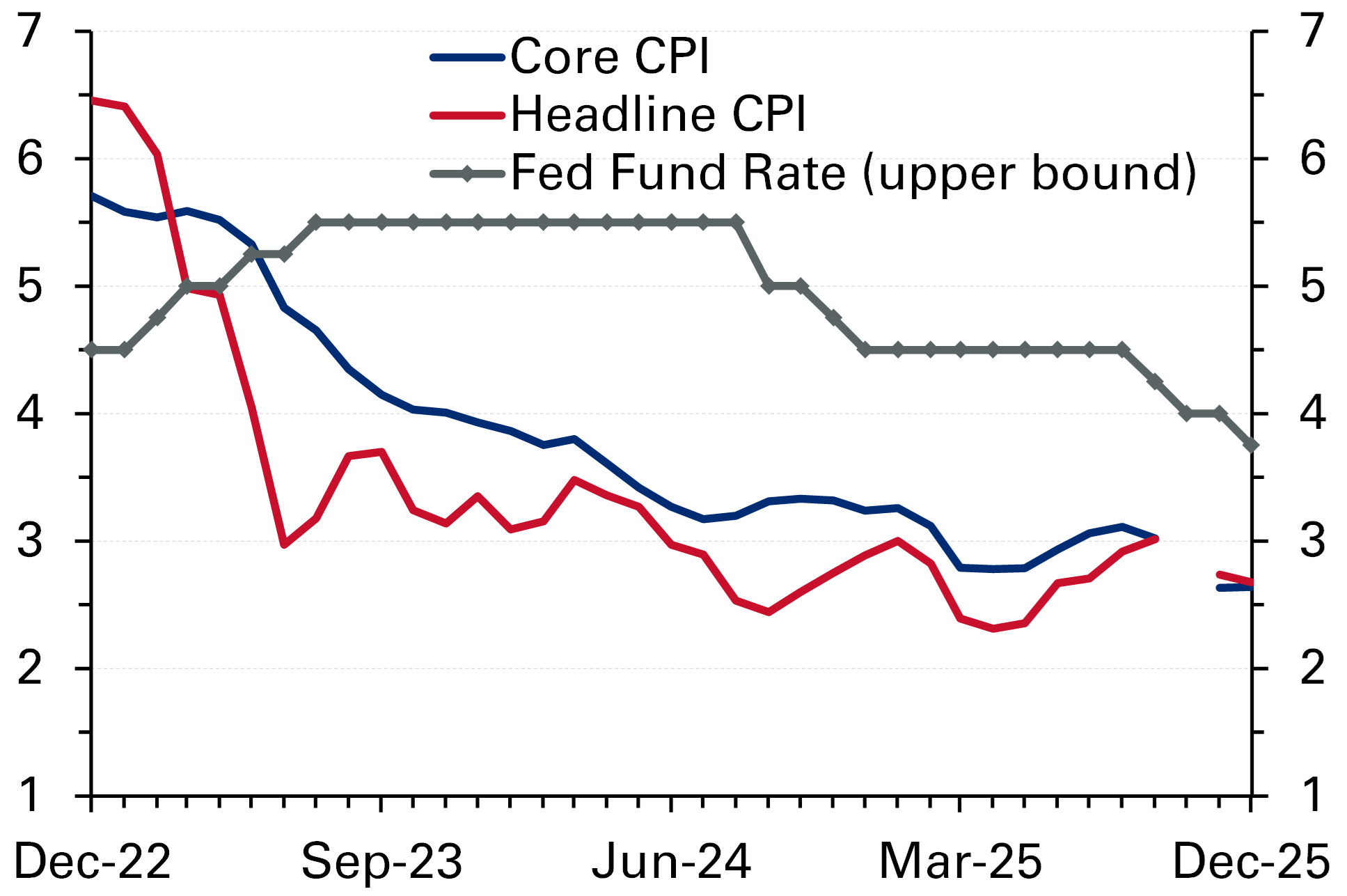
US: Core CPI inflation softer than expected but mixed details see muted market reaction. CPI inflation in December was expectedly flat at 2.7% y/y and core inflation also remained unchanged at 2.6%, milder than the consensus forecast of 2.7%. On a m/m basis, headline CPI increased by 0.3% and core CPI increased by a softer 0.2%. We note that the prior government shutdown, which resulted in no CPI for October and the survey for November being compressed in the second half of the month, is continuing to have an impact on the level of the CPI. Food prices rose by 0.7% m/m (3.1% y/y), the most since August 2022. Shelter was the key driver of core inflation, accelerating to 0.4% m/m (3.2% y/y) from September’s 0.2%. Several leisure-related CPI components, including air fares (5.2% m/m), recreation (1.8%), hotel stays (3.5%) and food away from home (0.7%) surged. More positively, core goods prices were unchanged on a m/m basis (1.4% y/y), and durables fell 0.4% m/m (+1.2% y/y, the lowest rise since June), including new and used cars, in early signs that the tariffs-related spikes may be subsiding. Overall, December CPI readings were mixed, showing softer core goods inflation but sharply accelerating services and leisure-related categories. Accordingly, and along with the ongoing disruption due to the shutdown, the market reaction was relatively muted, with the futures market continuing to signal a near certainty of a hold at the FOMC’s January 27-28 meeting and around two-third probability of two 25 interest rate cuts by the end of 2026.
US: Trump announces 25% tariffs on Iranian trade partners, but implementation remains doubtful. Ratcheting up pressure on the Iranian regime, Trump announced 25% tariffs on imports from countries “doing business” with Iran effective immediately. However, additional details or any official implementation were not available at this point. Iran’s biggest trading partner is China, and the US’s latest decision, if actually implemented, will likely reignite global trade frictions, especially with China, jeopardizing the trade truce the US achieved with the country in October last year. The Chinese Foreign Ministry responded, saying “there are no winners in a tariff war” and China would "resolutely safeguard its legitimate rights and interests." Iran’s other significant trade partners include the UAE and Turkey, while the EU, India, and many other countries (total of over 100 trading partners) also have bilateral trade with Iran. We note that, in 2025, Trump threatened to punish any country importing Russian oil with 25% tariffs, but except for India, there was no implementation of these punitive duties, including on China, which continues to be among the biggest buyers of Russian crude oil. As of now, it is doubtful that the Trump administration would be willing or even able to implement these Iran-related tariffs as that would impact a significant number of US trade partners, many of which had signed trade deals with the US. In addition, hiking tariffs again will worsen the US affordability problem, a matter that has become a key priority for the US administration to tackle recently.
China: December exports surge 6.6% y/y and trade surplus hits record $1.2tn in 2025. Exports surged 6.6% y/y in December exceeding market expectations of 3.0% and accelerating from November’s 5.9% gain, driven by China’s efforts to diversify its trading partners away from the US (exports with the US were down 30% y/y in December). Meanwhile, imports rose 5.7% y/y following a 1.9% rise in November and exceeded market expectations of 0.9% marking the seventh straight month of growth and the fastest pace since September, signaling a moderate improvement in domestic demand toward year-end. China’s trade surplus rose to $1.2 trillion in 2025, marking a 20% increase from the previous year. This was fueled by rising exports to non-US markets as the government moved to diversify trade routes and sought closer economic ties with ASEAN and the EU following the increased uncertainty of the trade dynamic between the US and China. That said, China’s surplus benefited from other factors including weakness in imports. China’s heavy reliance on external demand however poses a structural risk to future growth, as global trade conditions remain vulnerable to geopolitical tensions and slowing demand in key markets.