
 +965 2292 4888


Daily Economic Update
07.06.2026
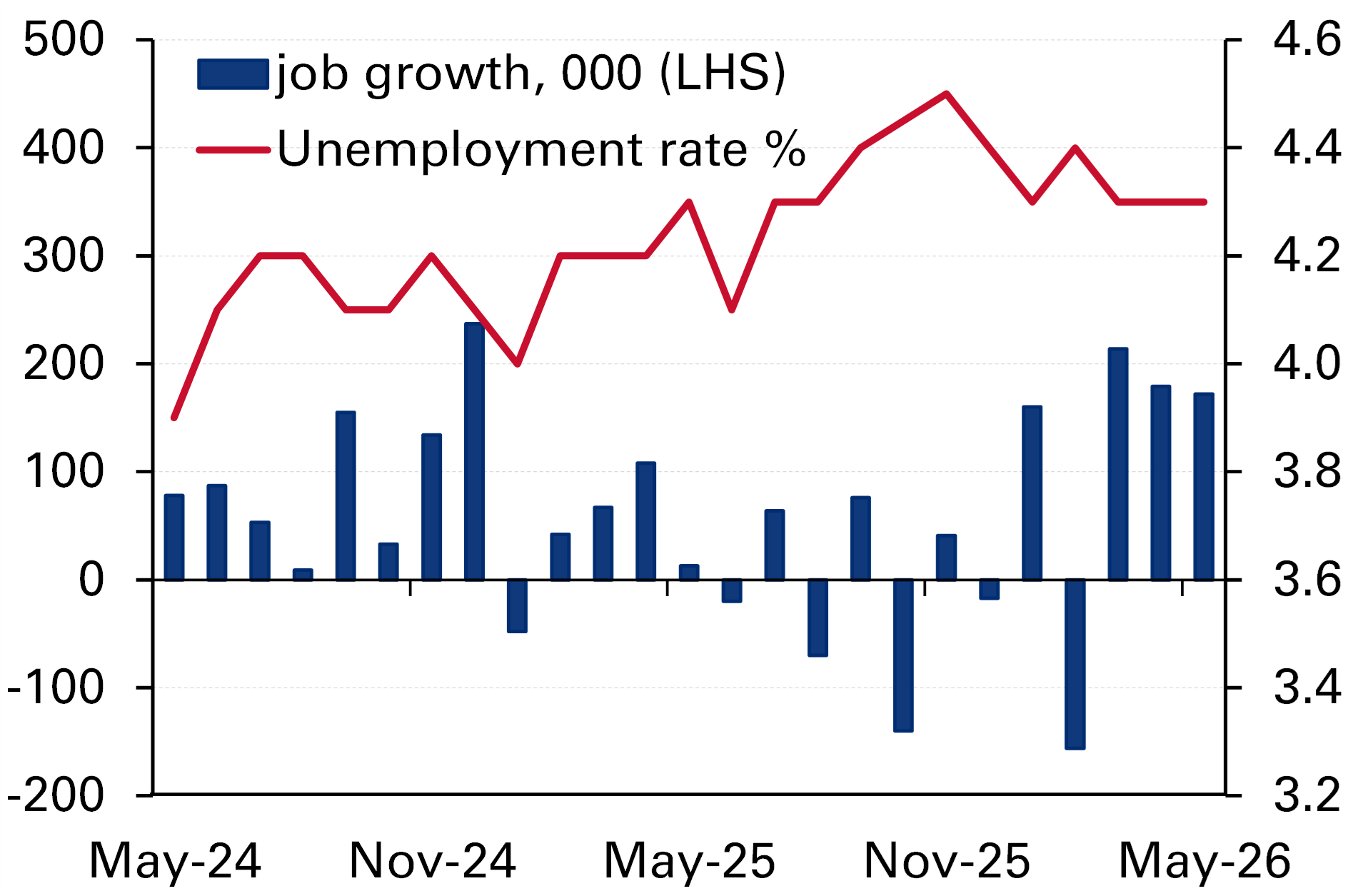
US: Job growth solid in May in a further sign of improving labor market, complicating Fed Chair Warsh’s easing plans. In a further sign of an improving labor market, non-farm payrolls rose by 172K in May, more than double expectations (+85K), and April’s increase was revised higher by 64K to stand at 179K. This puts the three-month moving average job growth at 188K per month, the highest in more than two years. Sector-wise, job growth was generally more broad-based than recent trends. The Fifa World Cup 2026, which kicks off this week, likely supported job growth in May with “leisure and hospitality” adding 70K jobs, much higher than recent trends. Similarly, “local government” added 55K jobs, possibly also driven by the global sporting event. The unemployment rate came in line with expectations and stable at 4.3% for the third straight month, a level considered close to full employment. The participation rate was also steady at 61.8%, the lowest since October 2021. Average hourly earnings increased by 3.4% y/y (0.3% m/m) matching March’s for the lowest increase since 2021, indicating no wage-driven inflationary pressures. The combination of an improving labor market and higher inflation readings are further complicating new Fed Chair Warsh’s easing plans. The solid jobs report drove an across-the-board increase in US treasury yields on Friday with the two-year yield up by around 10 bps and the 10-year by more than 5 bps. This put pressure on the S&P 500, which fell by 2.6% on Friday, closing the week lower, but following an impressive run over the past two months, which saw the index soar by 20% since a recent low at the end of March.
Japan: Household spending and cash earnings improve in April; yen weakens to 160 again. Real household spending fell a modest 0.5% y/y in April, up from March’s 2.9% fall and well above consensus estimates of a 1.5% decline. Despite the improvement, April’s figure represents the fifth consecutive month of contraction for household spending, driven by a 0.6% y/y decline in food spending and an 8.6% decline in utility spending despite continued subsidy support by the Takaichi government. Meanwhile, employees’ cash earnings rose by 3.5% y/y in April, accelerating from an upwardly-revised 3.1% in March and beating consensus estimates of 3.2%. Similarly, real wage growth rose to 1.9% y/y and remained positive for the fourth consecutive month. These releases coincide with renewed weakness in the yen, which depreciated to JPY160/$1 just weeks after the country intervened to support the currency, raising the likelihood of a second intervention by the authorities.
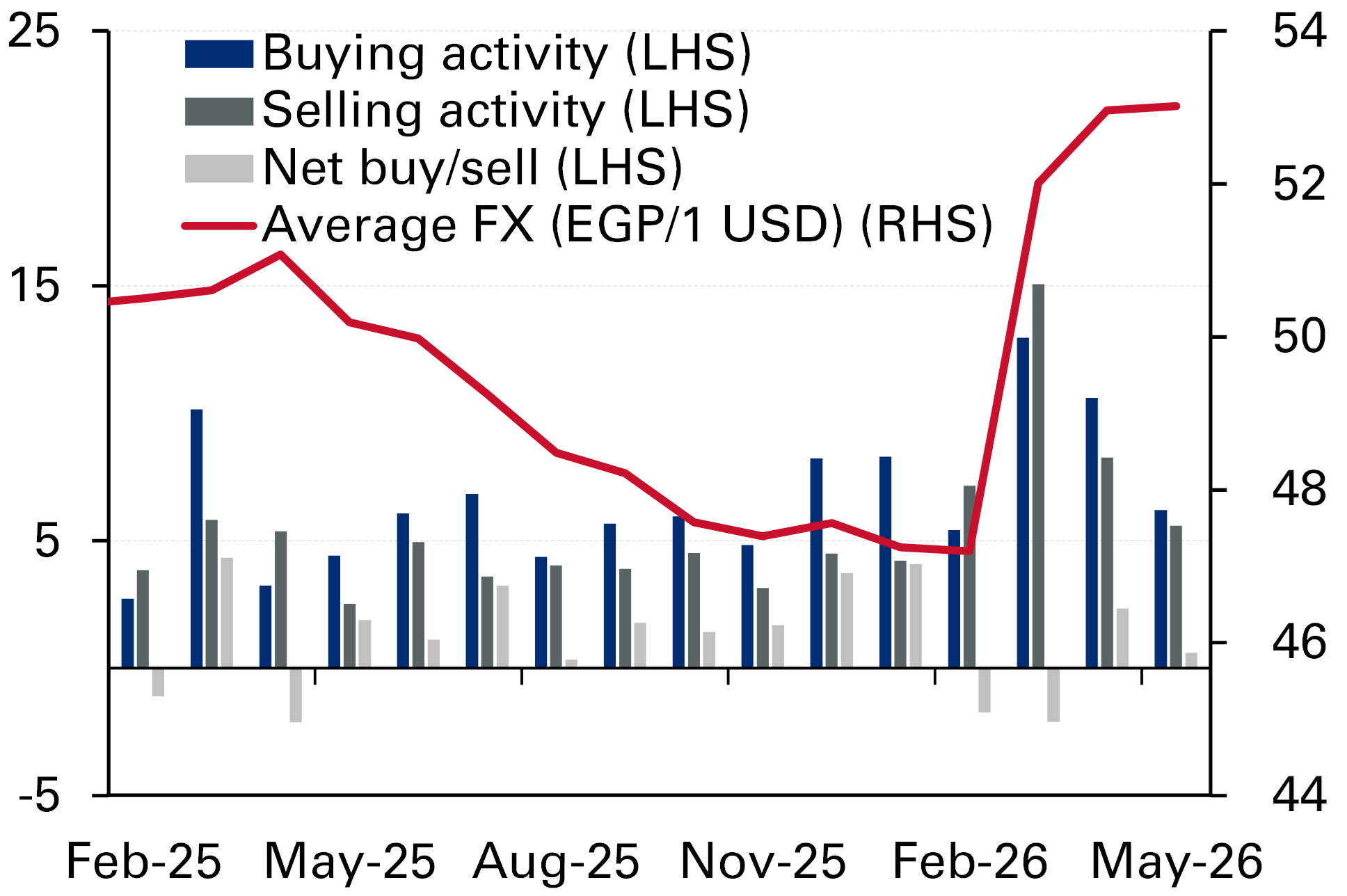
Egypt: Carry trade inflows support EGP appreciation. Foreign portfolio inflows into Egyptian sovereign debt rebounded strongly last week, helping the pound recover part of its recent losses. Net foreign purchases of local debt instruments surged to around $2.3 billion, up 167% w/w from approximately $860 million in the week preceding Eid Al-Adha holiday, according to data from the Egyptian Exchange. The improvement in investor sentiment was also reflected in Egypt’s 5-year CDS (Credit Default Swap) spread, which declined to around 298 bps, signaling a more favorable market assessment of Egypt’s sovereign risk. At the same time, activity in the interbank foreign exchange market accelerated significantly, with trading volumes rising by around 84% w/w to $1.2 billion, compared to $650 million in the previous week. Supported by the recovery in carry trade inflows, the Egyptian pound recorded its strongest level in nearly one and a half months, appreciating by around 1% during the week to close near EGP51.82/$1. The recent rebound highlights how sensitive the EGP remains to shifts in foreign portfolio flows, with carry trade dynamics continuing to play a key role in short-term currency movements.