
 +965 2292 4888


Daily Economic Update
10.06.2026
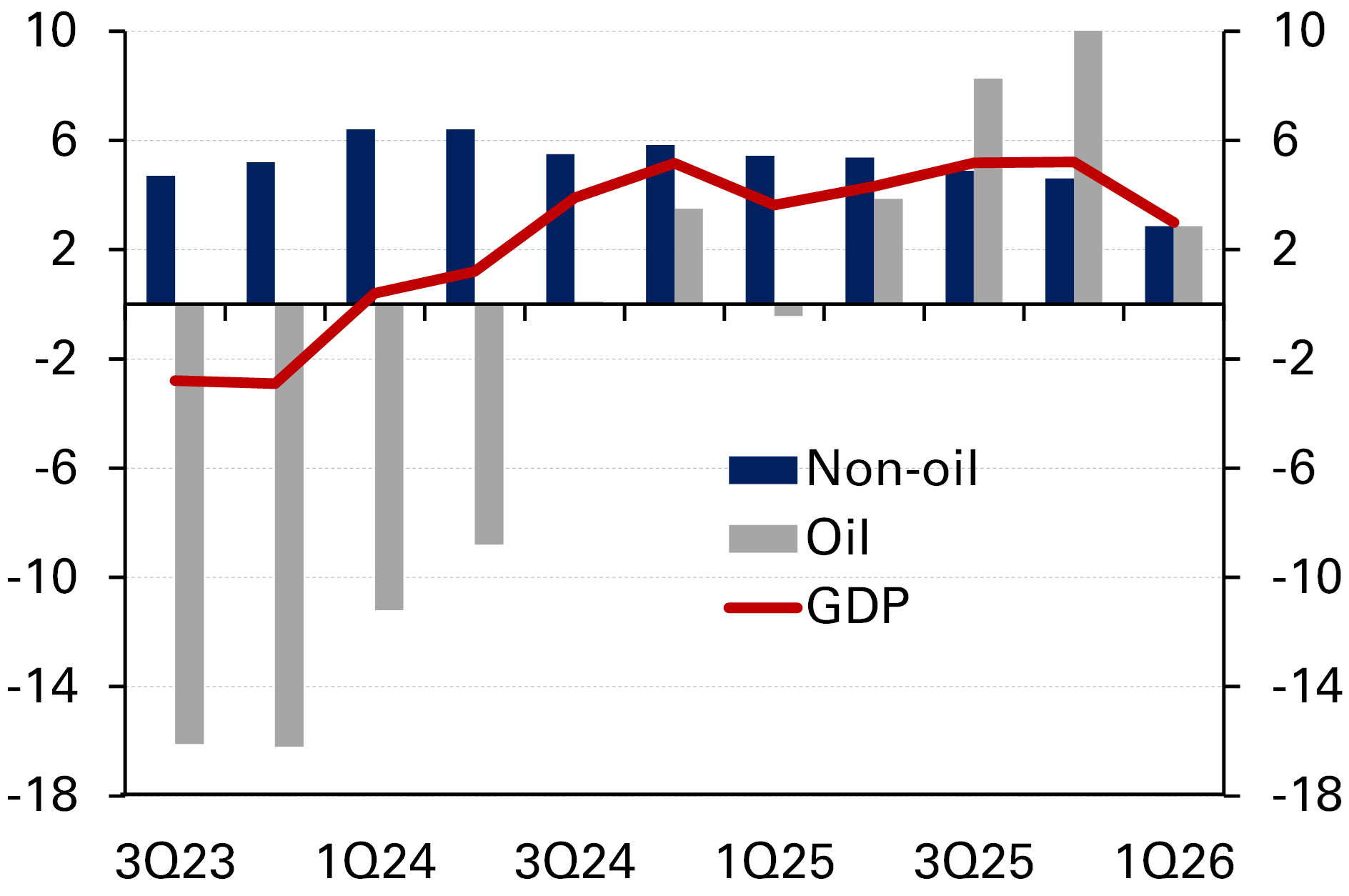
Saudi Arabia: Economic growth confirmed to have slowed in Q1 as oil activity loses momentum. Saudi Arabia’s economy grew by 3% y/y in Q1 2026, according to the final estimates released by GASTAT, slightly above the 2.8% indicated in the flash reading. Despite the upward revision, growth still marked the slowest pace since Q2 2024 (and compared to 5.2% in Q4 2025), reflecting the economic impact of the regional conflict and disruptions to oil activity. The slowdown was primarily driven by the oil sector, which expanded by just 2.9% y/y, a sharp deceleration from the 10.8% growth recorded in Q4 2025 amid disruptions linked to the US-Iran conflict and temporary bottlenecks surrounding the Strait of Hormuz, which affected crude output and trade flows. The slight upward revision to GDP was largely supported by the non-oil economy, which grew 2.9% y/y and remained the largest contributor to overall growth, adding 1.7 percentage points to overall GDP. This highlights the continued resilience on domestic demand despite elevated geopolitical uncertainty. On a quarterly basis, the economy contracted by 1.2% q/q, slightly better than the 1.5% decline estimated earlier. Oil activities remained the main drag, subtracting 1.6 percentage points from quarterly growth, while non-oil and government activities provided modest support. Looking ahead signs of recovery are emerging, with the Kingdom’s PMI improving to 52.8 in May after March’s sharp deterioration. However, activity remains below historical norms, suggesting growth momentum is still fragile. Reflecting these challenges, the IMF recently revised down its Saudi 2026 growth forecast to 2%, from 3.1% previously, citing prolonged geopolitical risks, weaker trade flows, and continued pressure on regional infrastructure and financial conditions.
US: Trade deficit in April slightly narrows and existing home sales improve in May. The US trade deficit in April slightly narrowed to $55.9 billion from $56.6 billion in March on a stronger increase in exports (2.6% m/m) than the 2% rise in imports. Since January, the overall deficit has stabilized in a smaller range of around $54-57 billion a month compared to wild swings seen in 2025 amid tariff-related uncertainty. Meanwhile, the closure of the Strait of Hormuz and the resulting curtailed flow of energy products from the Middle East has led to a sharp uptick in US energy exports, helping the US post stronger increases in its overall exports. US petroleum product exports, which averaged around $20 billion per month before the war began, surged to $28 billion in March and to further $37 billion in April. Given no quick resolution of the Strait situation in sight for the moment, US energy exports will likely remain elevated in the near term, and that should help soften the impact of higher AI-related imports on the total goods trade deficit. Separately, existing home sales rose by 3.2% m/m in May, the fastest growth this year, up from a 0.7% increase in April, with the annualized rate of home sales also hitting the highest level since December 2025. Moreover, first time buyers accounted for 35% of total sales, the biggest share since June 2020, suggesting a return of end-user demand. Though mortgage rates (30Y fixed) are still 50 bps higher versus their pre-Middle East war levels, strong pent-up demand is helping the housing market recover somewhat.
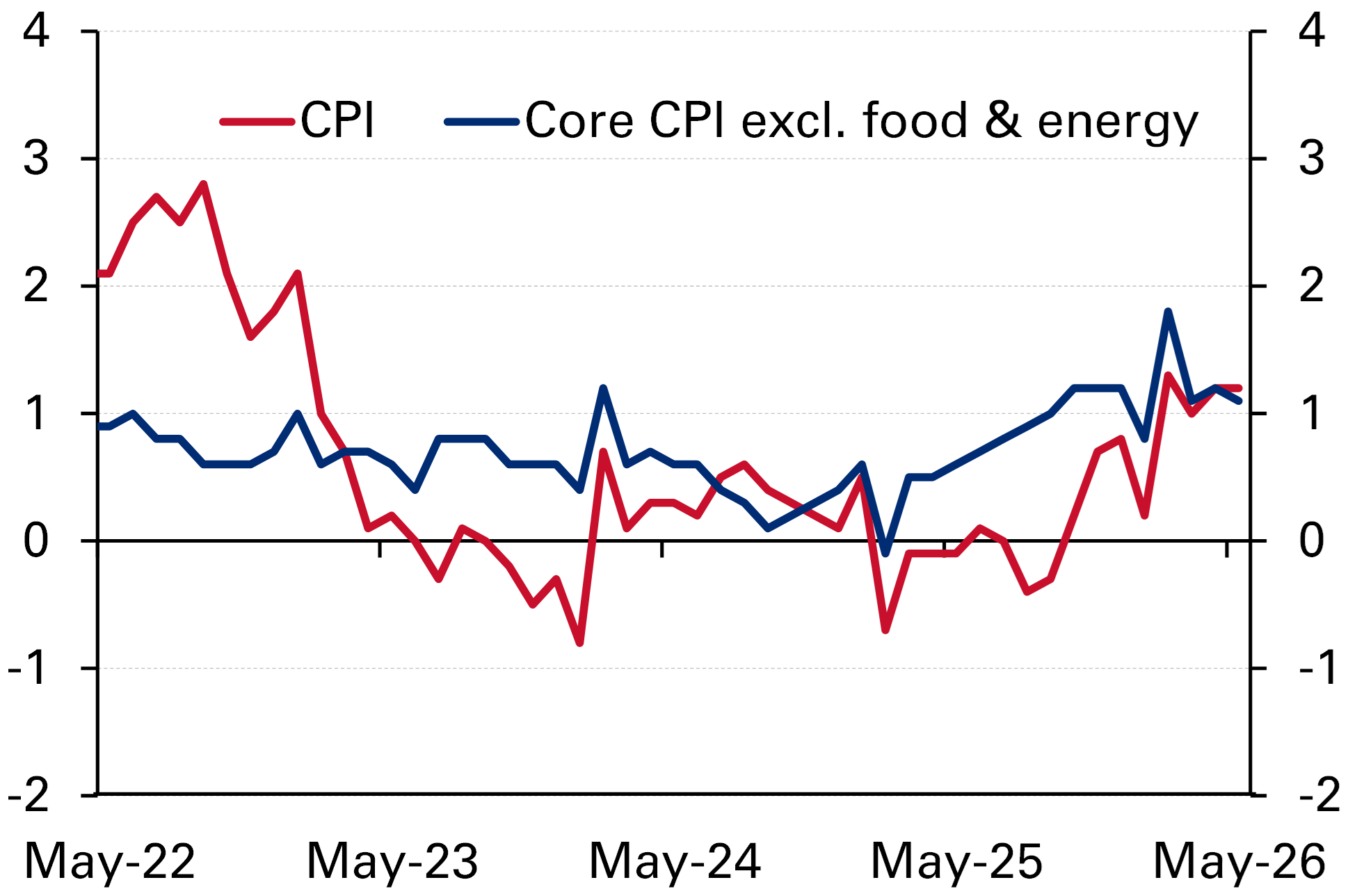
China: Muted CPI inflation but PPI inflation the highest in nearly four years. China’s May inflation points to ongoing cost-push dynamics, while underlying consumer price pressures remain subdued. Headline CPI inflation held steady at 1.2% y/y in May, below expectations (1.3%) with prices falling 0.1% m/m. Similarly, core CPI increased 1.1% y/y (1.2% in April) and decreased 0.1% m/m indicating continued softness in domestic demand. At the same time, producer price inflation accelerated sharply to 3.9% y/y (from 2.8% in April), its highest level since July 2022, driven primarily by rising energy and commodity costs linked to geopolitical disruptions and stronger demand in industrial and high-tech sectors. Within the CPI, non-food inflation edged higher to 1.9% y/y in May (1.8% in April), supported by a pick-up in transport costs (5.4% vs. 4.6%) while food prices continued to weigh on headline inflation. That said, the data reinforces the view that China’s inflation dynamics continue to be prone to weak household demand and ongoing property sector headwinds which are constraining underlying price pressures across the economy.
Japan: PPI inflation accelerates ahead of the BoJ meeting next week. May’s producer price index (PPI) inflation rose to 6.3% y/y, significantly above consensus estimates of 5.5% and the previous month’s 5.3% print. May’s figure also represents a more than three-year high, driven by sharp increases in the prices of chemicals, utilities, and petroleum and coal products amid the ongoing situation in the Strait of Hormuz. The Bank of Japan will take these factors into account at its meeting on Tuesday, with markets currently expecting a 25bp hike, raising the interest rate to 1%. The yen has weakened again past the JPY160/$1 threshold, just weeks after authorities intervened to support the currency. Finance Minister Katayama recently reiterated the government’s stance, stating that it stands ready to take “bold actions” if needed.