
 +965 2292 4888


Daily Economic Update
28.06.2026
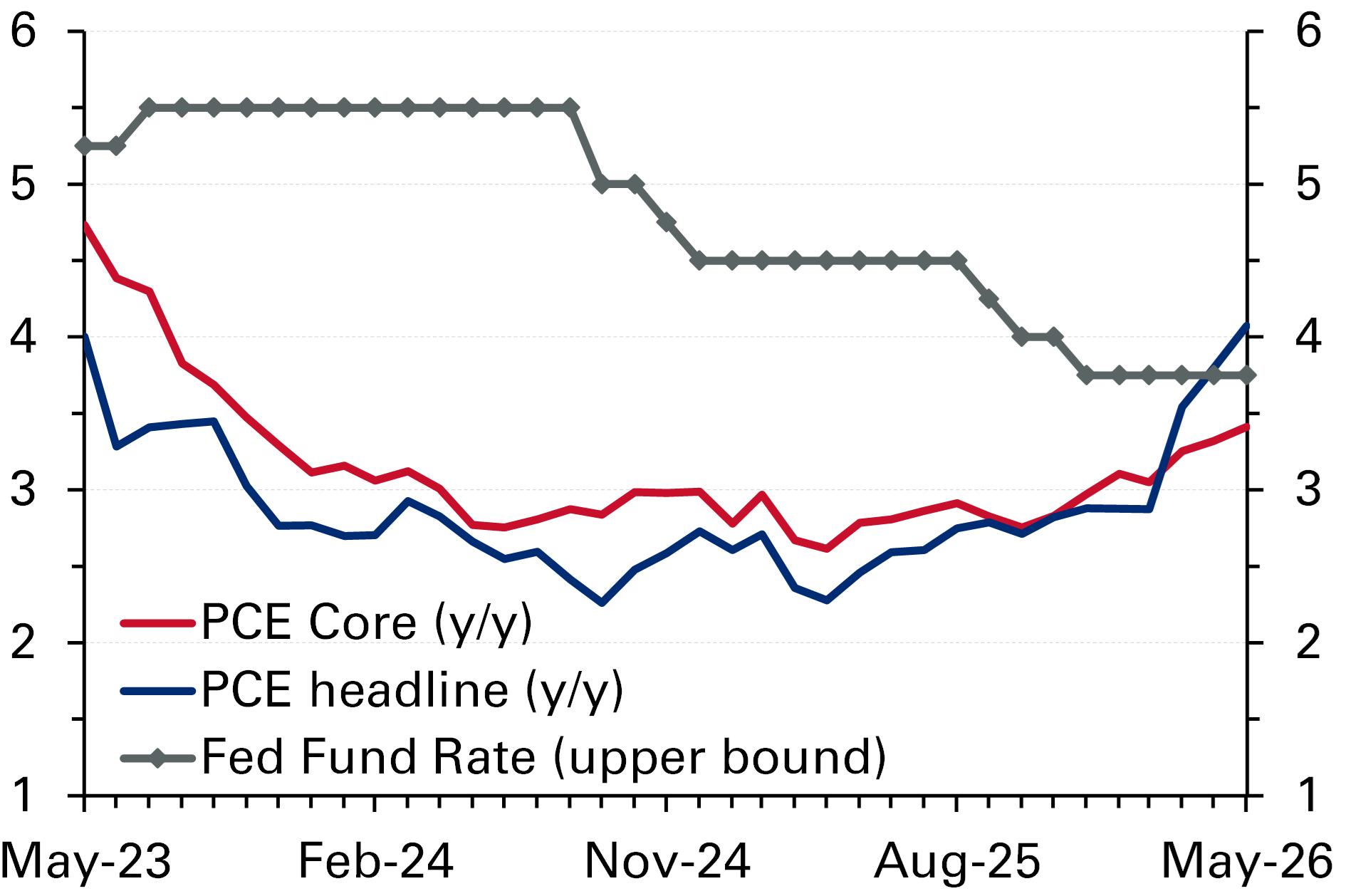
US: PCE inflation accelerates in May, matching forecasts; Q1 GDP growth revised higher. PCE inflation in May accelerated to hit an over-three-year high of 4.1% y/y from 3.8% in April. Core PCE inflation also rose to the highest level since October 2023 at 3.4% from April’s 3.3%. On a monthly basis, both headline and core rates were steady from April at 0.4% and 0.3%, respectively. A core measure of services inflation that excludes shelter and energy stood at 0.5% m/m, the highest reading since January, indicating that price pressures are broadening beyond the usual energy-related sources. The recent drop in oil prices has raised hopes that headline inflation has likely peaked but underlying inflation may remain substantially elevated versus the Fed’s 2% goal over an extended period. Moreover, as the labor market continues to improve, with the latest weekly jobless claims moderating to 215K (w/e June 20) from 227K the previous week and trending around a historically modest level, combatting inflation would dominate the FOMC thinking over the coming policy meetings. Indeed, the latest commentary from a few Fed officials indicates growing risks of higher inflation. Minneapolis Fed President Neel Kashkari (an FOMC voting member) supported raising interest rates by 25 bps this year citing elevated inflation. He mentioned that while current higher inflation is being primarily driven by supply dynamics, including tariffs and the fallout from the Middle East war, massive investment in data centers and associated infrastructure is also contributing to price rises. New York Fed President John Williams (a permanent voting member) highlighted similar risks but expected inflation to moderate to 3.5% by year-end and emphasized that “the current stance of monetary policy is well positioned” to restore the Fed’s 2% target. Chicago Fed President Austan Goolsbee (non-voting) also expressed his concerns about elevated inflation. Finally, the US economy in Q1 expanded by higher than initially reported at 2.1% (annualized) versus the previous estimate of 1.6%, recovering from the government shutdown-impacted rise of 0.5% in Q4 2025. The upgrade was mainly driven by a smaller drag from imports but partially offset by a lower than previously estimated increase in personal consumer spending (from 1.4% to 0.5%).
Japan: Tokyo CPI inflation rises in line with expectations. Tokyo’s consumer price inflation ticked up to 1.7% y/y in June, accelerating from May’s 1.4% print but remaining below the 2% target for the sixth consecutive month. Core inflation (excluding fresh food) also increased, matching consensus estimates of 1.6% as favorable base effects and continued fuel subsidies helped keep price pressures contained. This month’s reading also breaks a disinflationary trend in core inflation, which had been easing steadily since November’s 2.8% print. Looking ahead, inflation is expected to remain broadly subdued in the near term, supported by ongoing policy measures. That said, a gradual pickup in underlying price pressures could emerge as domestic demand and wage growth strengthen. The BoJ is widely expected to keep rates steady at its next meeting in July, but markets still expect one more rate hike before the end of the year.
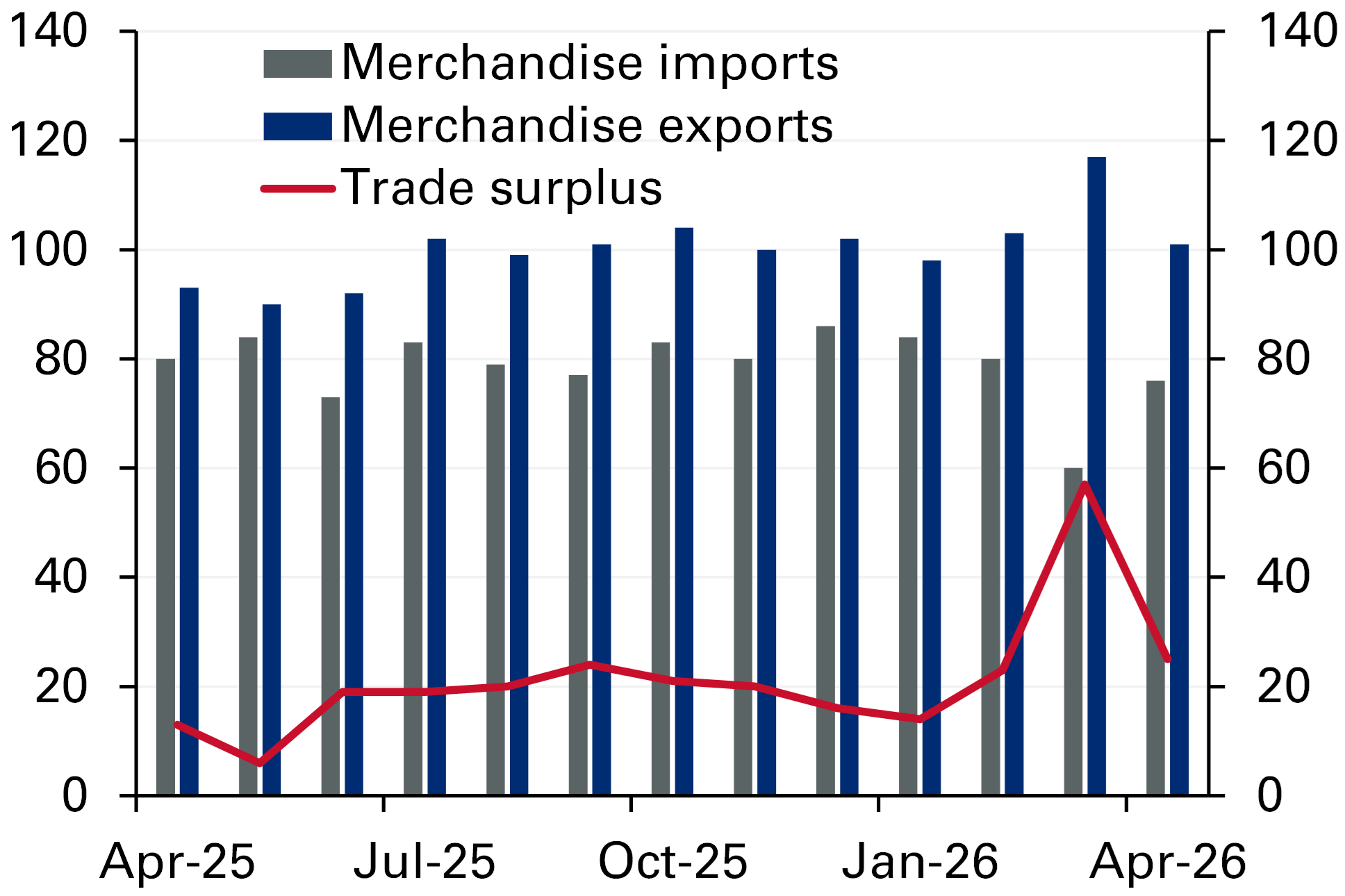
Saudi Arabia: Trade surplus doubles in April as oil exports strengthen. The merchandise trade surplus doubled in April compared to a year earlier, driven by stronger oil exports and a decline in imports, according to preliminary data from GASTAT. Total merchandise exports increased by 9.3% y/y, while imports fell by 5.2%, leading to a sharp improvement in the Kingdom’s trade balance. Oil exports remained the main driver, rising 11.7% y/y and as a share of total exports to 68.8%, highlighting the continued importance of the energy sector despite recent disruptions to regional shipping routes. Non-oil exports, including re-exports, also grew, by 4.5% y/y, although this masked weaker domestic output. National non-oil exports excluding re-exports declined 7.3%, while re-exports surged 20.4%, supported by a 74% increase in machinery and electrical equipment. As a result, machinery and electrical equipment became the Kingdom’s largest non-oil export category. China remained Saudi Arabia’s largest trading partner, accounting for 15.2% of exports and 29.4% of imports, followed by the UAE and South Korea among export destinations. This sharp improvement in the trade surplus was driven primarily by higher oil exports rather than stronger non-oil domestic output. While external balances remain healthy, the decline in national non-oil exports suggests that the momentum of the non-oil economy softened during April, even as re-export activity continued to expand.
Egypt: The government moves closer to IMF staff-level agreement. Egypt appears to have met the key requirements for the current review of its IMF-supported reform program, paving the way for a staff-level agreement that could unlock around $1.6 billion in new financing. According to recent reports, the government has completed the required asset sales under its privatization program, while continuing to implement major reform commitments, including maintaining a flexible exchange rate regime and advancing structural reforms aimed at increasing private sector participation in the economy. A major milestone was the release of the second edition of the State Ownership Policy, which outlines the government’s strategy for reducing the state’s footprint in the economy and raising the private sector’s contribution to more than 65% by 2030. The updated document is one of the key structural commitments under Egypt’s agreement with the IMF. The expected IMF funding would provide additional support to Egypt’s external financing position at a time when the economy continues to navigate regional geopolitical uncertainties. More importantly, a staff-level agreement would signal that the IMF remains confident in the government’s commitment to its reform agenda, reinforcing investor confidence and supporting continued inflows from international partners.