
 +965 2292 4888


Daily Economic Update
08.06.2026
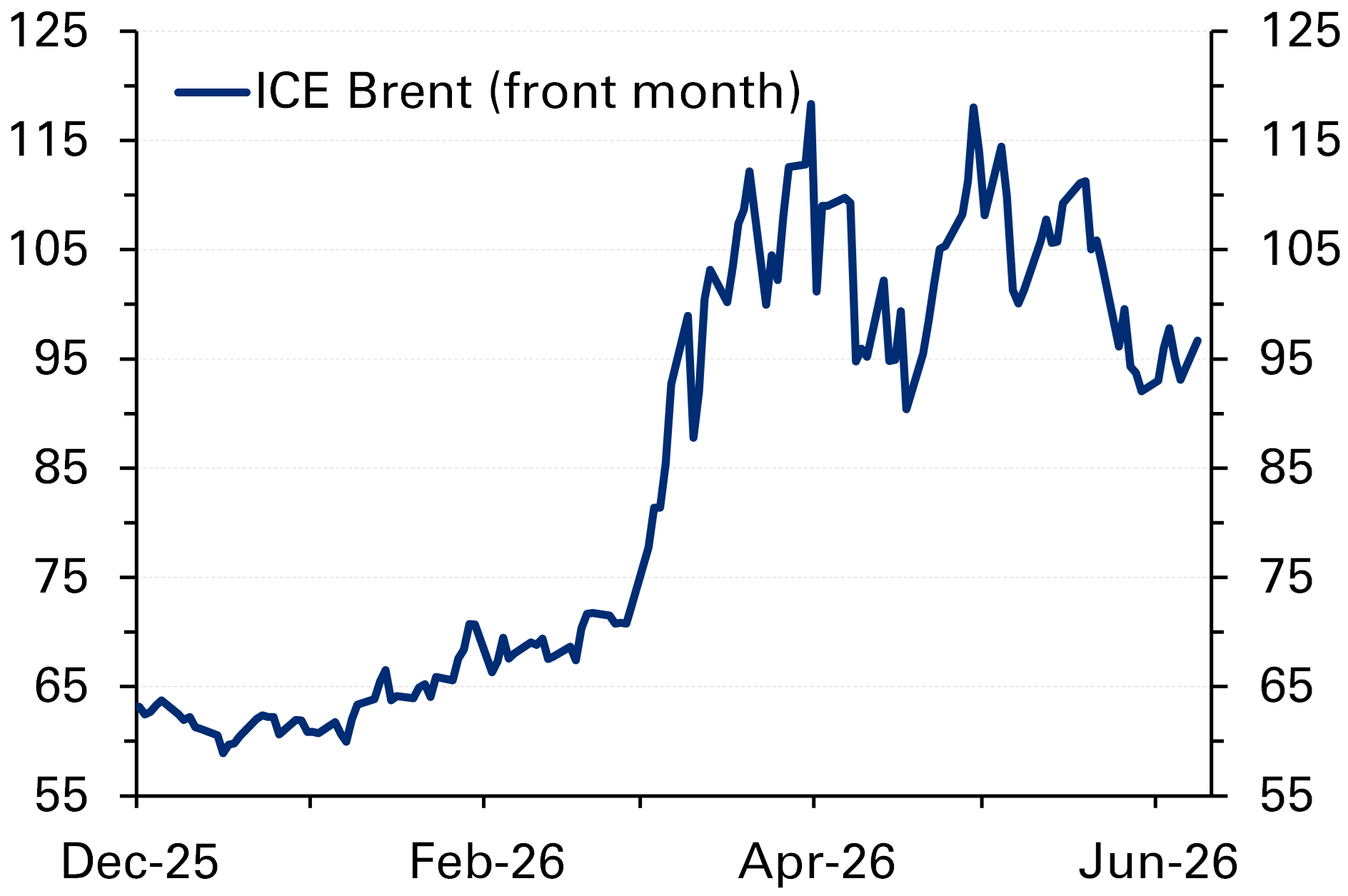
Oil: Prices rise after Iran and Israel exchange strikes. Brent futures surged 4.3% in Asian trading this morning to $97.1/bbl, following overnight tit for tat strikes between Iran and Israel that triggered a fresh spike in the geopolitical risk premium. Lebanon has once again emerged as the central flashpoint during this fragile ceasefire period, with Iran maintaining its hardline position that a cessation of hostilities across all fronts is a prerequisite for resuming negotiations with the US. In this context, Iran followed through on its pledge to strike northern Israel in response to continued Israeli operations in southern Lebanon, which prompted retaliatory Israeli strikes on military targets inside Iran. Notably, the absence of reported casualties on either side suggests that both parties continue to exercise some restraint, with the diplomatic track still intact, potentially helped by President Trump’s direct engagement with Israeli PM Netanyahu. The gains earlier today build on last week’s price action where Brent futures closed the week up 1.1% at $93.1/bbl despite trading being dominated by heavy bouts of volatility and end-of-week pressure following President Trump’s announcement of a peace agreement between Israel and Lebanon, including a halt in Hezbollah’s attacks. Additional downside pressure stemmed from the contained nature of US–Iran hostilities, with repeated tit for tat strikes that spilled into Kuwait, Bahrain, and Oman, failing to trigger a broader escalation that would derail ongoing peace talks. Notably, crude loadings at Oman’s Mina Al Fahal terminal (800–900 kb/d) were suspended following an explosion nearby, highlighting continued operational risks even in a contained conflict environment. On the fundamentals side, inventory drawdowns remain aggressive, reinforcing underlying tightness with EIA data showing that total US crude inventories (commercial + SPR) fell by 16 mb w/w in the week ending May 29, bringing cumulative withdrawals for May to around 60 mb. Meanwhile, OPEC+ 7 agreed yesterday to raise output quotas again for July by 188 kb/d m/m, marking the fourth consecutive increase, but the physical impact is likely to be notional as Saudi, Iraqi, and Kuwaiti crude export capacity remain hampered by the closure of the Strait.
Global: US CPI/PPI inflation for May, ECB meeting, and developments on the latest Iran-Israel military strikes key matters this week. Military escalation is back at the forefront given the overnight strikes between Iran and Israel with the key question being whether the escalation will be limited and contained or it is a prelude to the resumption of full-blown military conflict. In terms of data releases, in the US, an important CPI inflation report for May will be released on Wednesday, with the headline rate consensus forecast at a three-year high of 4.2% y/y (3.8% in April) and hotter core inflation of 2.9% versus 2.8% in April. Attention will also be on May’s PPI inflation (Thursday), which had surged to an over three-year high in April. Finally, the monthly New York Fed survey of consumer inflation expectations for May is due later today. In the Eurozone, the ECB meets and is expected to hike interest rates by 25bps on Thursday, raising the deposit rate to 2.25%. The bank will also release a new set of macroeconomic projections. In the UK, GDP for April (Friday) is seen falling 0.1% m/m after rising a solid 0.3% in March, indicating weakening momentum amid elevated energy prices and Middle East war-related supply chain disruptions. In China, May’s trade data is due on Tuesday with expectations for ongoing solid growth for exports (14% y/y) as well as imports (25%). May’s inflation is due on Wednesday with consensus estimates at 1.3% y/y, inching up from 1.2% in April. Finally in Japan, May’s PPI is due on Wednesday and is expected to hit a three-year high of 5.5% y/y, driven by increasing cost pressures linked to the Middle East war.
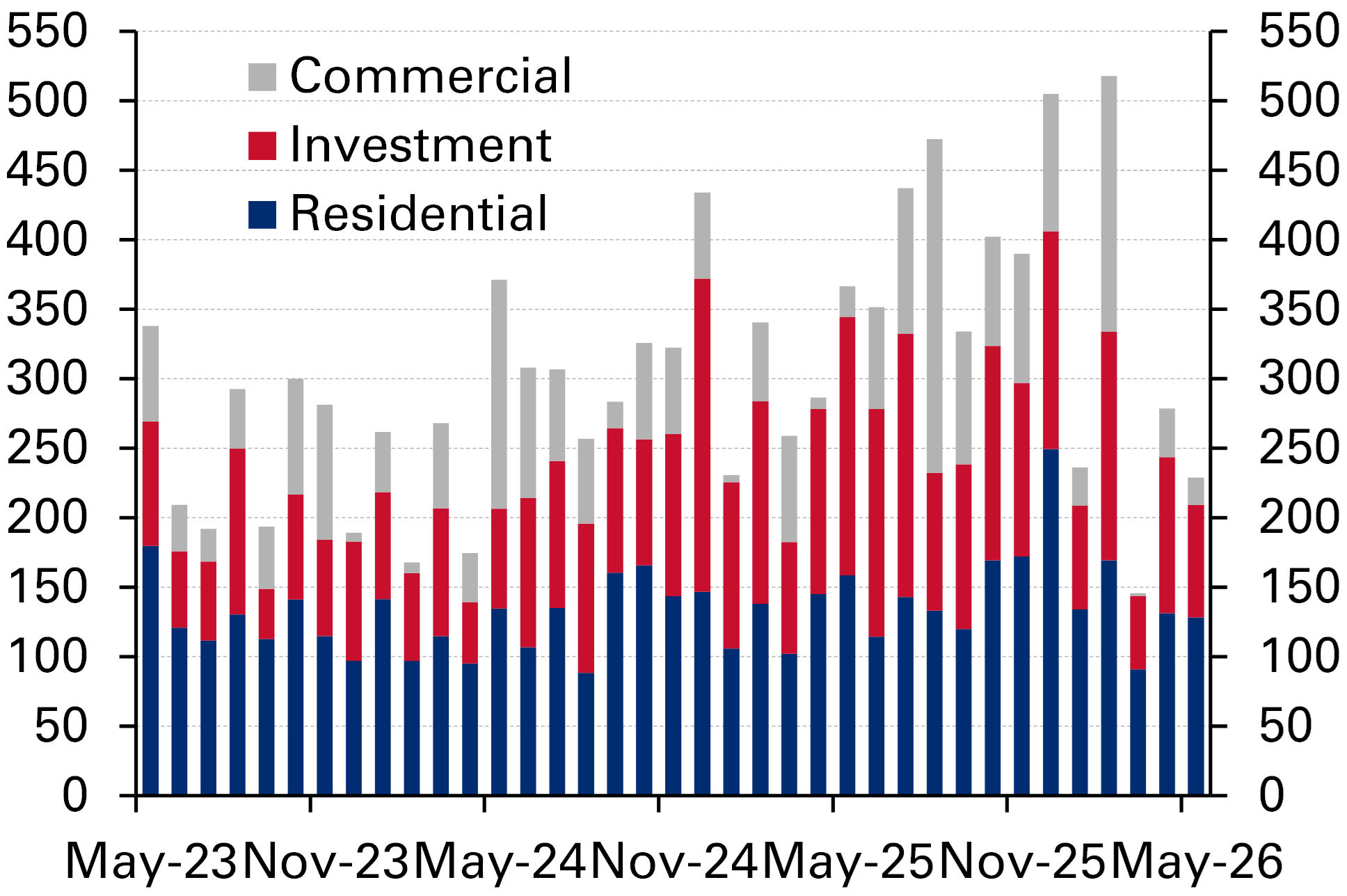
Kuwait: Real estate sales resumed decline in May after April pick-up. Total real estate sales fell in May to KD229 million (-38% y/y; -18% m/m), the second lowest level in over two years (after March), as the negative geopolitical backdrop continued to weigh on confidence. The decline in May followed improved sales in April, likely boosted by a combination of ceasefire optimism and the seasonal post-Ramadan demand. Weaker May sales were evident in all three sectors, with steeper annual declines recorded in the residential (-19% y/y) and investment sectors (-56%), followed by the commercial sector (-11%). On a monthly basis, the latter was most affected, declining by 44% reflecting the short-term effects of the ongoing conflict on business activity, which is notably in line with weaker recent readings in other relevant indicators including the PMI and consumer card spending. Also worth noting is that the sales drop came despite a broad monthly increase in transactions (9%), an indication of softer prices and/or a higher number of transactions in lower valuation areas. Conflict-related developments will likely continue to influence the real estate market in the coming months until a resolution is found. Confidence and demand should recover thereafter.
Egypt: Foreign reserves continue to edge higher in May. Egypt’s net international reserves rose modestly in May, increasing by $125 million to reach $53.13 billion, according to the latest data from the Central Bank of Egypt. This extends the steady upward trend seen since the start of the year, with reserves rising by nearly $1.7 billion YTD. The improvement was mainly driven by a rise in foreign currency reserves, which increased by $656 million to reach $33.9 billion by the end of May. This increase more than offset a $425 million decline in gold reserves, which fell to $18.8 billion, largely reflecting fluctuations in global gold prices. Egypt’s reserve position remains relatively comfortable, continuing to cover around six months of imports, providing an important buffer against external shocks and supporting the country’s ability to meet short-term external obligations. Meanwhile, Egypt’s unofficial reserves also increased, rising by $148 million to $14.9 billion, further strengthening the country’s external liquidity position.