
 +965 2292 4888


Daily Economic Update
05.02.2026
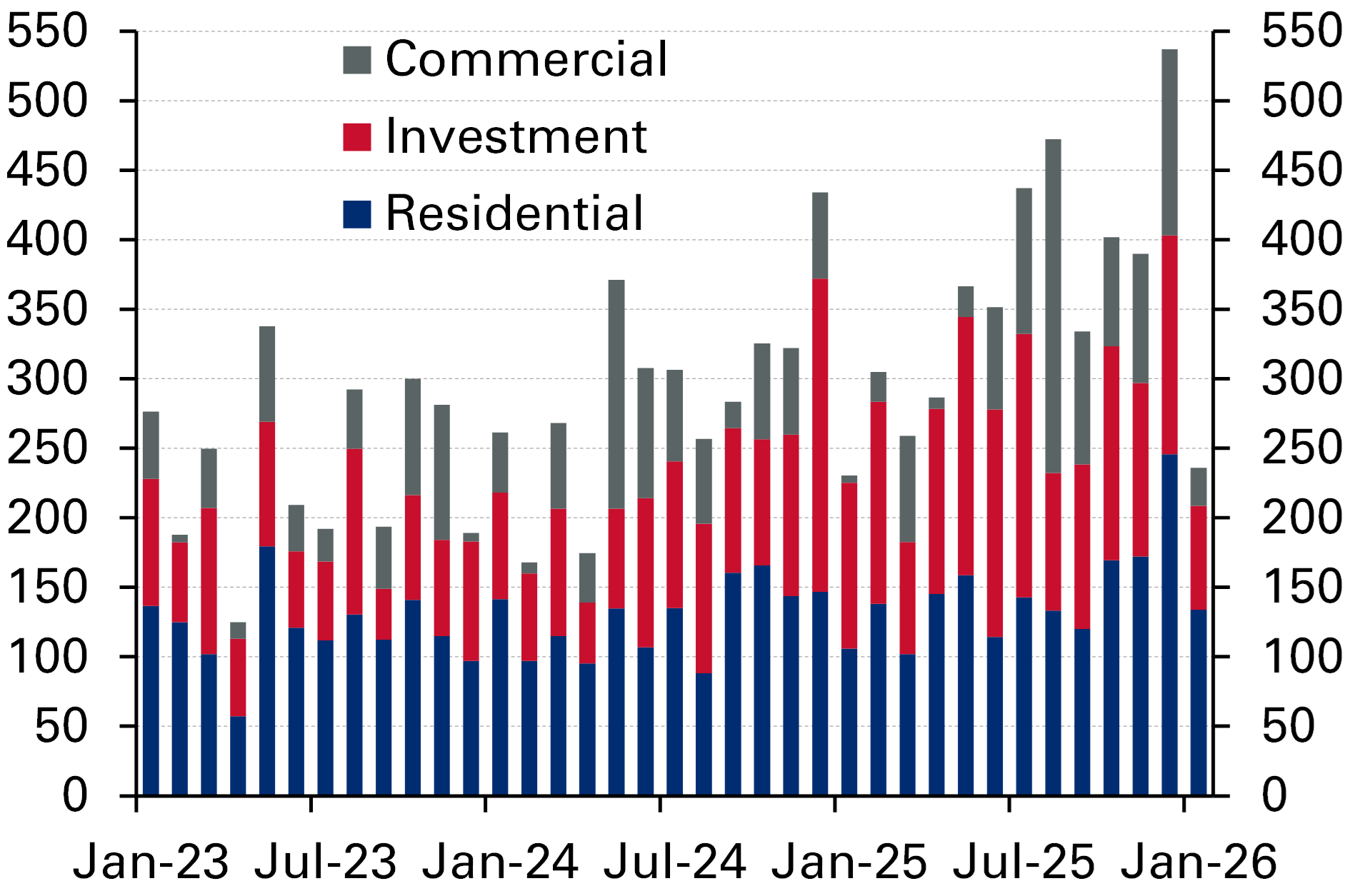
Kuwait: Real estate sales retreat in January after strong year-end close. Real estate sales in Kuwait fell sharply in January 2026 to KD236 million (-56% m/m), the lowest in a year. Nevertheless, sales were still up year-on-year, albeit by a modest 2.4%, helped by the low base of January 2025. January’s drop was broad-based, with activity cooling across all segments. Residential sales fell to KD134 million (-46% m/m), sharply slowing from the four-and-a-half-year high recorded in December 2025, but still managing to log an annual increase (26% y/y)—again likely due to base effects. Meanwhile, investment sales fell to their lowest level since May 2024 at KD75 million (-53% m/m; -37% y/y) and commercial sales plunged almost 80% m/m to KD27 million, an eight-month low, after an exceptionally strong reading in December (dominated by one-off large transactions). Transaction volumes also saw a similar trend, reflecting a broad normalization after a strong year-end surge, though they remained higher compared to a year earlier. Looking ahead, real estate market fundamentals remain largely supportive amid improving non-oil activity and the forthcoming real estate financing law, which should boost sector demand after it is finally approved.
Kuwait: PM mentions prepping of new Sukuk law. HH the Prime Minister Sheikh Ahmad Al-Abdullah Al-Ahmad Al-Sabah announced that Kuwait is preparing new legislation to enable the issuance of domestic and international Sukuk. This follows the approval of the liquidity and financing law last year which led to the borrowing of around KD 6 billion from local and international bond markets in Q4. A new Sukuk law represents an effort to diversify borrowing sources by allowing access to Islamic financing via the fast-growing regional Sukuk market led by Saudi Arabia, Bahrain, and the UAE. This will essentially help to deepen the existing debt market, reduce reliance on bond markets which may negatively impact issuance pricing, and maintain an adequate level of liquidity needed for deficit financing and anticipated acceleration in the delivery of diversification projects central to the fiscal and structural reform agenda. According to a recent Fitch report, global Sukuk issuance in 2025 was the highest on record at over $300 billion, up 25% y/y, dominated by sovereigns but with rising issuance from banks and corporates for infrastructure and project finance, with momentum expected to be sustained in 2026 thanks to continued growth in core markets.
Saudi Arabia: Aramco raises $4 billion in heavily oversubscribed international bond sale. Aramco raised $4 billion through its first international debt issuance of the year, tapping global markets via a four-tranche bond with maturities of 3, 5, 10, and 30 years. The offering was strongly received, attracting more than $22 billion in orders and resulting in an oversubscription of around 5.5 times, underscoring robust international investor appetite. Strong demand allowed Aramco to tighten pricing across all tranches, with yields set at 4% for the 3-year bond, 4.375% for the 5-year, 5% for the 10-year, and 6% for the 30-year. The successful issuance comes at a time when the company’s free cash flows remain under pressure amid lower oil prices, highlighting continued market confidence in Aramco’s credit profile. This marks the third time Aramco has accessed debt markets in the past nine months, following a $5 billion conventional bond issued in May and a $3 billion Sukuk in September. The proceeds are expected to bolster liquidity, support growth plans, and help maintain base dividend payouts. Meanwhile, Aramco faces a sizable capital expenditure program ahead, particularly after raising its 2030 gas production capacity growth target in November to around 80% above 2021 levels.
UAE: Dubai real estate market begins 2026 on a strong footing. Dubai real estate sales logged a solid increase of 63% y/y to reach AED73 billion ($19.7 billion) in January 2026 and marking one of the strongest monthly performances on record, according to DXB interact. Growth was mainly driven by a sharp acceleration in first sales, which include off-plan sales, nearly doubling to AED52 billion (94%y/y) while the resale segment registered a softer expansion of 11.9% y/y to reach AED20.5 billion. First sales for apartments rose by 43% y/y to AED18.7 billion, while villa first sales saw a strong m/m increase of 63% to reach over AED19 billion, though logging an annual decline of 7.5% y/y, and plot activity remained solid at AED11.2 billion (29% y/y). Overall apartment sales, which constitute about 36% of total sales, hit AED26.4 billion (29% y/y), while villa sales stood at AED26.4 billion, supported by the strong m/m increase in the first sale market, amid modest annual decline of 3.5% y/y. The top-performing areas in January were Al Barsha South Fourth, Business Bay, and Madinat Al Mataar, reflecting buyer interest in these urban hubs. The strong start to the year underscores an ongoing momentum that could continue for now, supported by sustained investors’ inflows, the expansion in the non-oil economy and the continued growth in population.
Oman: Plans to increase investment in non-oil sector. Oman’s sovereign wealth fund (OIA) is accelerating its pivot away from hydrocarbons as previous capital-intensive investments, such as integrated energy group OQ (formerly Oman Oil Company) become financially self-sustaining. This will enable the OIA to channel resources into high potential sectors like logistics, manufacturing, tourism, healthcare, and others aligned with the Oman Vision 2040’s economic diversification goals. Investor interest is increasingly concentrated in green hydrogen and alternative energy, while OIA simultaneously cultivates new emerging sectors such as fintech, AI, and digitization, through partnerships with global specialists. The fund’s strategy involves using sector specific teams that redeploy proceeds from IPOs, supporting and co-investing with the private sector rather than competing with it, thus reshaping its domestic investment portfolio while maintaining a diversified international footprint backed by the $5.2 billion Future Fund Oman launched in 2024.
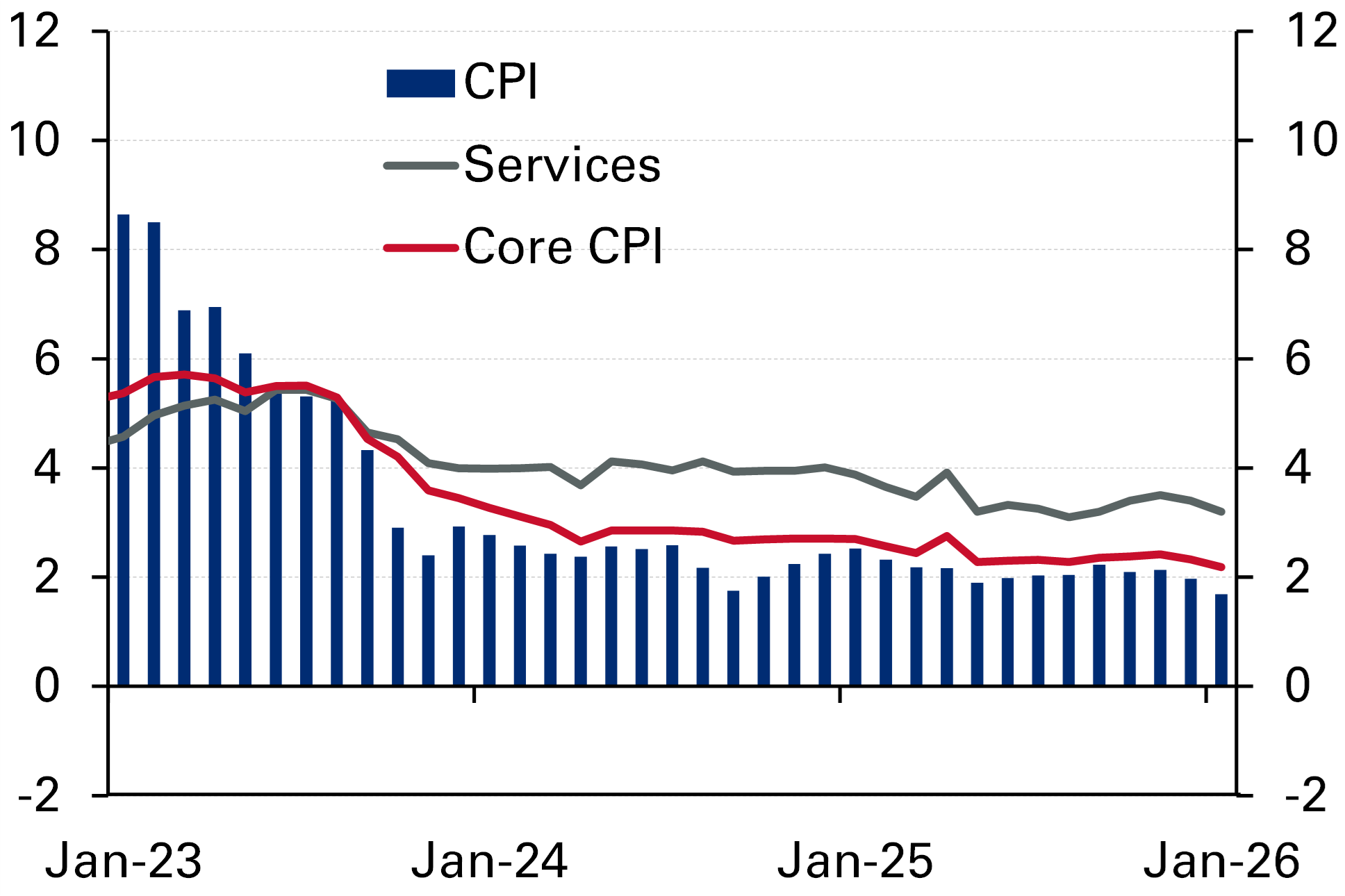
Eurozone: CPI inflation softens in January reaching 1.7% y/y. Consumer price inflation eased in January to 1.7% y/y, down from 2.0% in December, according to Eurostat’s latest flash estimate. The reading was in line with expectations and confirms a renewed moderation in price pressures at the start of 2026. Core inflation also declined to 2.2% in January from 2.3% in December. The component breakdown shows services inflation slowing to 3.2% y/y (from 3.4%) and energy prices dropping sharply by 4.1%, following a 1.9% decline in December. In contrast food, alcohol & tobacco rose to 2.7% (from 2.5%) and non energy industrial goods edging up to 0.4% (from 0.3%). With headline inflation moving further below the ECB target and largely broad-based disinflation continuing, the figures reinforce expectations that the ECB, set to meet today, will maintain its current policy stance in the near term, keeping the deposit facility rate at 2%.
US: Services activity steady at the start of 2026; January’s delayed job report to be published next Wednesday. The ISM non-manufacturing PMI in January was unchanged at a downwardly revised 53.8 in December, a one-year high, as the growth in new orders eased (53.1 versus 56.5 in December), mainly due to a contraction in export orders. The employment measure softened to 50.3 from December’s 10-month high of 51.7, while input price pressures strengthened to 66.6 from 65.1, a three-month high. Overall, following a very strong manufacturing activity reading earlier this week, a decent services print suggests that the economic momentum remained robust at the start of 2026 though headwinds amid weak employment and elevated inflation persisted. Meanwhile, private sector hiring in January eased further, as ADP data showed a net job gain of 22K in private sector payrolls in January, down from a revised 37K in December and 74K in November. Finally, the BLS announced that delayed January’s non-farm payroll report will now be published on next Wednesday, Feb 11 (was originally due this Friday), with January CPI inflation on Feb 13 (originally due on Feb 11) following the lifting of the partial government shutdown. JOLTS report for December, which was initially due last Tuesday, will be released later today.