
 +965 2292 4888


Daily Economic Update
16.03.2026
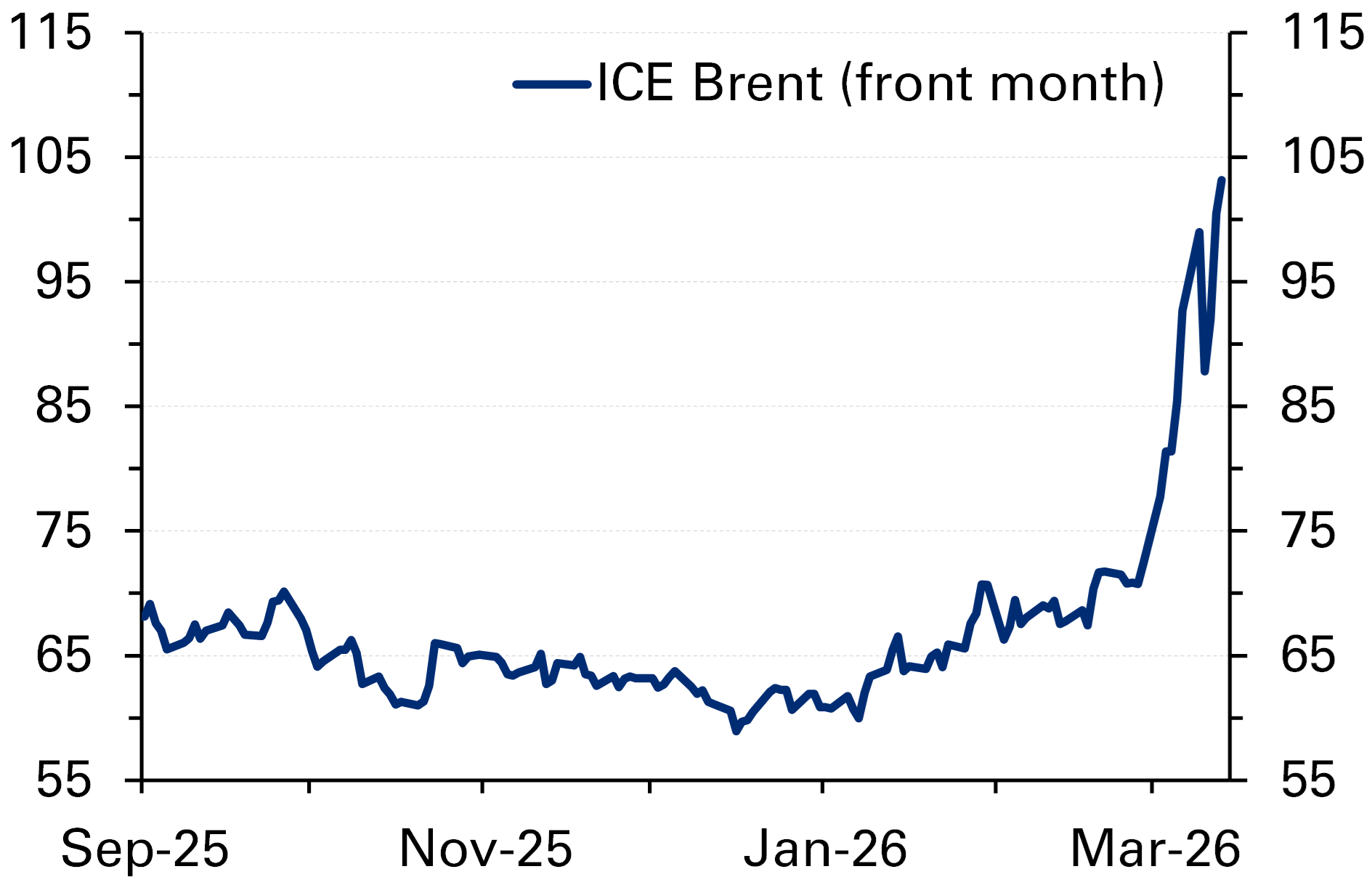
Oil: IEA reveals further information on SPR release; Brent continues upward move. The International Energy Agency (IEA) provided further details on the record release from emergency reserves, indicating that the total volume will amount to 412 mb, distributed across the Americas (172 mb), Asia-Oceania (66.8 mb), and Europe (32.7 mb). Stocks in Asia-Oceania will be released immediately, in line with comments made by Japanese Prime Minister Takaichi last Monday, while the remainder is expected to be released by the end of March. Asian oil importers have been particularly exposed during the recent crisis, as countries such as Japan and South Korea import more than 70% of their oil needs from GCC producers. The agency also stated that around 72% of the release will consist of crude oil, with the remainder comprising refined products, while the Americas will release crude only. Over the weekend, the US Department of Energy clarified that the emergency release will take the form of an exchange rather than an outright sale, implying buyers will need to return barrels to the Strategic Petroleum Reserve (SPR) at a later date, with interest (in barrels). However, the IEA did not provide additional information on the pace of the release, leaving markets uncertain about how quickly these barrels will be available. As a result, the oil market remains on tenterhooks, with developments around the blockade of the Strait of Hormuz expected to remain the key focus this week. Oil prices opened slightly higher this morning in Asian markets, with Brent rising 1.6% to $104.8/bbl (at the time of writing), amid continued disruption to oil traffic in the region.
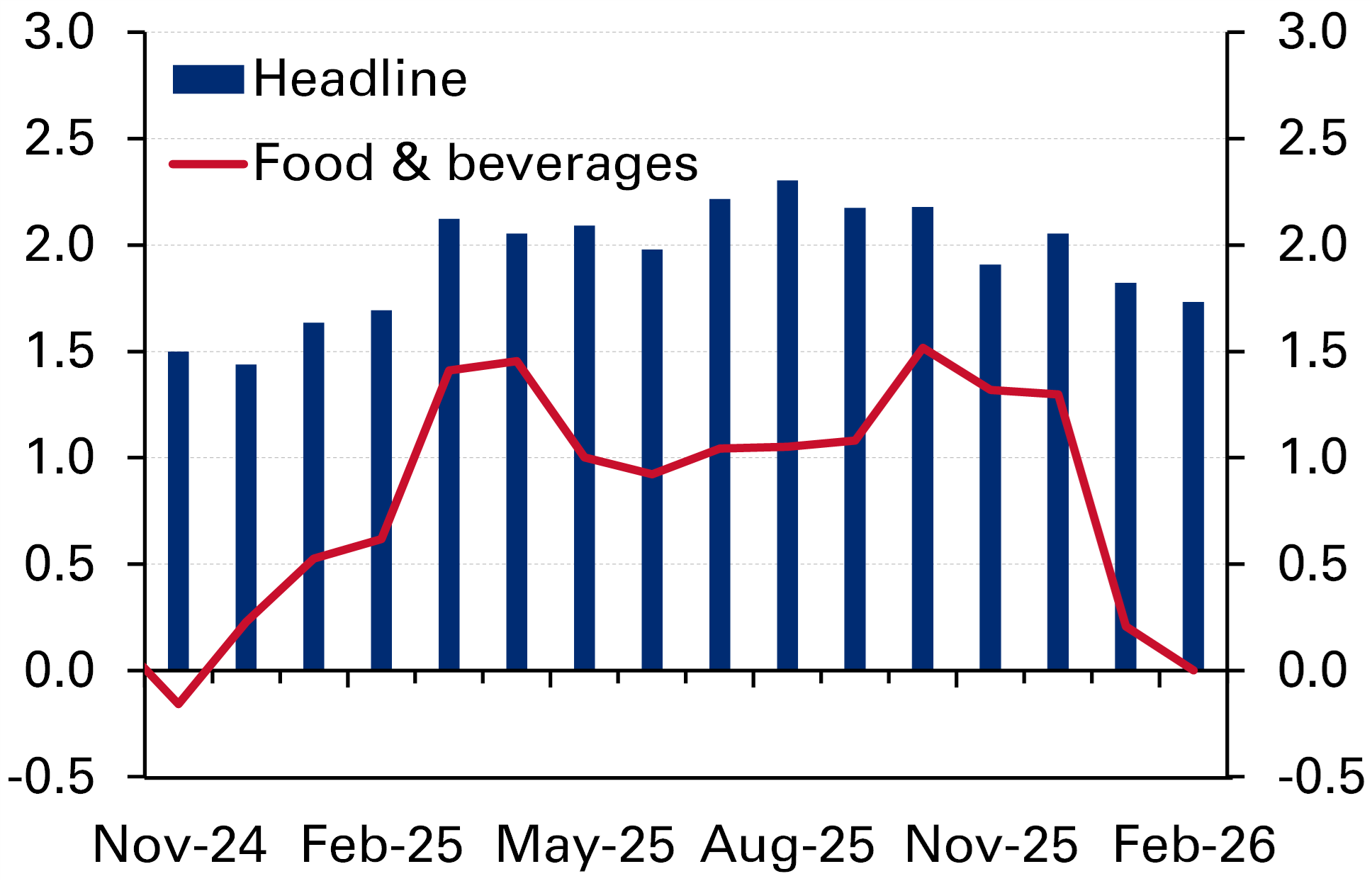
Saudi Arabia: Inflation edges lower in February, but geopolitical pressures may reverse the trend. Consumer price inflation eased for the second consecutive month in February, reaching its lowest level in more than a year. Consumer prices rose by 1.7% y/y, slightly down from 1.8% in January, according to data from GASTAT. The headline figure was largely driven by the housing and utilities segment, which increased by 4.1% y/y, mainly reflecting a 5.1% rise in actual housing rents. Prices for personal care and miscellaneous goods also recorded a notable increase of 8.2% y/y. Elsewhere, price pressures remained relatively contained, with food, beverages, and clothing showing broadly stable readings during the month. Importantly, the February data reflects price dynamics prior to the recent regional escalation, suggesting that inflationary pressures may soon re-emerge. If the conflict persists, potential disruptions to supply chains and higher energy and transport costs could push prices higher, particularly in housing-related utilities, such as water, electricity, gas, and other fuels. Under such a scenario, inflation could gradually move above the 2% mark in the coming months, reversing the recent easing trend.
UAE: T-Bond auction demand resilient despite geopolitical tensions. The Ministry of Finance successfully completed the March auctions of UAE dirham-denominated Treasury Bonds (T Bonds), the first issuance since the onset of the regional escalation, placing two equal tranches totaling AED 1.1 billion. Investor demand remained solid, with bids reaching AED 4.85 billion (oversubscription of 4.4 times) and pricing clearing at tight spreads of up to 16bps above US Treasuries. Yields stood at 3.73% for the September 2027 tranche and 3.85% for the January 2031 tranche. These outcomes closely mirrored January’s issuances, which had recorded a 4.7 times oversubscription and a tight spread of 9bps above US Treasuries. Following the March issuance, total outstanding debt under the T Bond and T Sukuk programs rose to AED 29.2 billion, reinforcing the resilience of the local currency debt market.
GCC: Joint efforts to diversify and expand cargo routes. Saudi Arabia, the UAE, and Oman are accelerating efforts to establish alternative logistics corridors in response to disruptions from ongoing regional conflicts. These initiatives aim to safeguard supply chains, reduce reliance on vulnerable maritime routes, and strengthen economic resilience. Saudi Arabia has launched an integrated logistics corridor program, linking its Red Sea ports to its Eastern Province and other GCC countries through inland freight routes. Meanwhile, the UAE is using advanced port infrastructure to reroute cargo, and Oman is promoting Duqm Port as a strategic alternative to congested Gulf routes. By diversifying transport routes, including land, rail, and new port connections, the GCC authorities aim to preserve and reinforce the bloc’s reliability as a hub for global trade despite geopolitical uncertainty.
Egypt: Electricity tariffs frozen as government considers minimum wage increase. The Egyptian government is planning to increase public sector wage allocations to around EGP 750 billion in FY26/27, up from EGP 679 billion in the current fiscal year. The proposed rise reflects plans to increase the minimum wage to EGP 10,000 from EGP 7,000 currently, in an effort to support household purchasing power amid rising cost pressures. The move highlights the government’s attempt to shield lower-income groups from a potential surge in inflation linked to the ongoing conflict and higher global energy prices. However, the increase in wage spending will also test the government’s efforts to continue reducing the budget deficit. At the same time, authorities have decided not to raise electricity tariffs until at least the end of June, despite rising production costs following the recent fuel price hike. Maintaining current tariffs is aimed at containing inflationary pressures and limiting additional strain on household budgets. If the freeze extends into the next fiscal year, the electricity subsidy bill could reach between EGP 70–80 billion in FY26/27, broadly in line with the roughly EGP 75 billion allocated in the current fiscal year.
China: Economic activity rebounds in early 2026 ahead of the Middle East war; Trump-Xi summit at risk. Data released today, which is for January and February combined, shows that China started the year on a strong footing with consumption, production, and investment gaining traction. Retail sales rose 2.8% y/y in January-February, up from a 0.9% increase in December and beating expectations of a 2.5% increase. Industrial production was also strong at 6.3% y/y, exceeding expectations of 5.1% and higher than the 5.2% recorded in December. This was driven by strong external demand, with earlier-reported exports surging by 22% y/y in January-February. Fixed asset investment increased by 1.8% y/y in Jan-Feb, rebounding from a rare annual decline (3.8%) in 2025. Looking ahead, the outlook going into the second quarter is a precarious one, as higher energy prices and the increased risks to energy security and trade routes may overshadow the resilience seen early in the year. Separately, China’s new house prices dropped by 3.2% in February, widening from a 3.1% decrease in January and the steepest decline in eight months, further underscoring the struggle to stabilize the housing market. Finally, in an interview, President Trump mentioned that he may delay his scheduled visit to China at the end of this month if China does not help in unblocking the Strait of Hormuz. We note that US and Chinese officials met yesterday in France and are set to meet again today to prepare for that visit. It remains to be seen whether Trump will follow through on his threat if China does not cooperate. However, that threat shows the risk of how a war in the Middle East between US/Israel on one hand and Iran on the other could re-ignite tensions on a global scale, creating further headwinds for the global economy beyond the energy price shock. Having said that, there is still a positive spin to Trump’s threat which is his desire to secure the Strait sooner rather than later. If that is achieved one way or another, whether military operations in the Middle East fully cease or not, it will be a sigh of relief for the energy market and the global economy.
Global: Fed, ECB, BoE, and BoJ meetings in focus this week as the Middle East war enters its third week. The war in the Middle East, now in its third week and with no off-ramp in sight yet, remains the single most important matter globally. Central bank meetings in the US, Eurozone, UK, and Japan are scheduled later this week, and attention will be on each bank’s likely reaction function to the current energy price shock. In the US, the FOMC (on Wednesday) is expected to leave rates unchanged. The updated macroeconomic forecasts and the famous dot-plot that will be released will take on even greater importance given the current energy price shock. Meanwhile, PPI inflation for February (Wednesday) is expected at 0.3% m/m for both the headline and core rates. In the Eurozone, the ECB (Thursday) is widely expected to leave interest rates unchanged, with the deposit rate at 2%. As in the US, the updated macroeconomic forecasts that will be released by the ECB will take on even greater importance. In the UK, the BoE (Thursday) is expected to keep the bank rate unchanged at 3.75%. Labor market data is also due on Thursday, with the unemployment rate seen steady at 5.2% in the November-January period but total pay growth is expected to slow to 3.9% y/y, down from 4.2% in the October-December period. In China, the PBoC (Friday) is expected to leave its one and five-year loan prime rates unchanged at 3.0% and 3.5%, respectively. Finally in Japan, the BoJ (Thursday) is expected to leave its key interest rate unchanged at 0.75%. Exports (Wednesday) are seen growing by a limited 1.6% y/y in February after soaring by 17% in January.