
 +965 2292 4888


Daily Economic Update
17.05.2026
US–China: Talks conclude with a clear focus on stability, but no window for a Strait of Hormuz breakthrough was opened. The Trump-Xi summit broadly delivered on its initial goal, with both sides maintaining a constructive tone and reaffirming the importance of keeping the relationship on a stable footing. The two countries agreed to a constructive “strategic stability” to govern their relationship. The Taiwan issue grabbed the headlines with Xi warning Trump that if that matter was mishandled, it could lead to “conflict” between China and the US, urging the US to handle the issue with “extreme caution”. The Middle East war and the opening of the Strait of Hormuz were discussed, but it does not look like this opened any window for a breakthrough and maybe safe to assume that no tangible progress was made on that front. In practice, outcomes were generally limited, with no major progress on core issues such as tariffs, technology restrictions, or broader market access, and discussions instead centered on preserving the existing trade truce and avoiding further escalation. There were some modest economic signals—including indications of potential Chinese purchases of U.S. goods, particularly in aviation and energy—but these remain loosely defined and incremental rather than policy-changing. Overall, the meetings reinforce a near-term de-escalation bias, but do not alter the structural nature of the relationship.
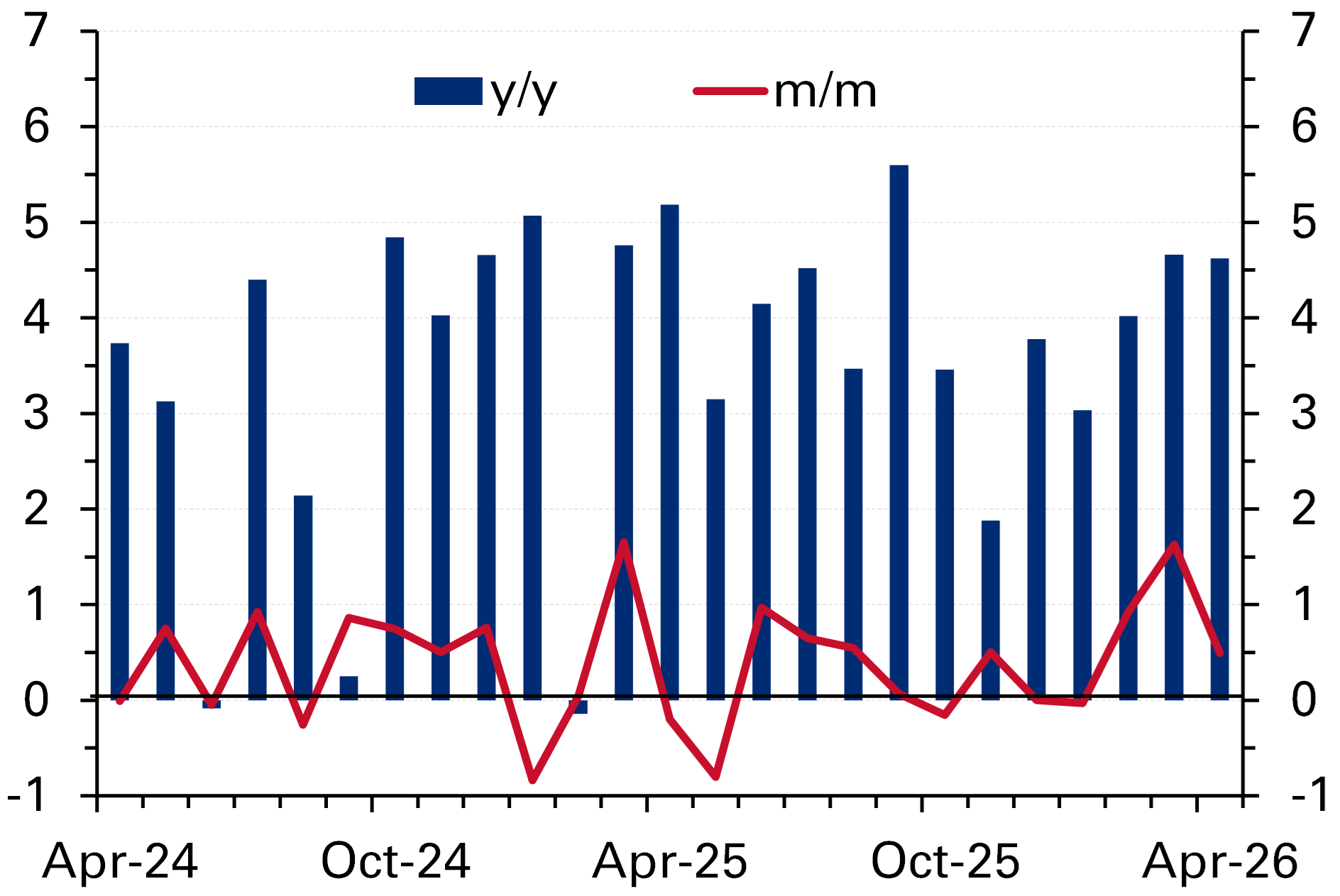
US: Retail sales remain resilient; bond rout deepens on renewed inflation concerns. Retail sales in April rose by 0.5% m/m (4.6% y/y) following a solid 1.6% (4.7% y/y) rise in March, matching the consensus forecast and indicating robust consumer resilience despite the Middle East war-related impact on energy prices. A narrow measure of sales (excluding gasoline, auto, building material and food services) increased by 0.5% m/m from an upwardly revised 0.8% in March. Higher-than-usual tax refunds in March/April after additional tax breaks enacted last year as well as record-high stock markets have kept household spending momentum intact for now, especially among the wealthy ones. However, rising gasoline prices and elevated inflation will further squeeze spending ability of low-to-mid-income consumers, weighing on broader economic growth. Separately, with no signs of any quick reopening of the Strait of Hormuz and resulting rebound in oil prices, inflation concerns reignited that deepened the bond rout. UST 10Y bond yields rose to around 4.6%, the highest closing level in a year, while the 30Y ones stayed firmly above the 5% mark (around 5.1%), near the highest since 2007. Similarly, UK 10Y gilt yields jumped to hit the highest value since 2008, with Japan’s 10Y also reaching near a 29-year high, and Germany 10Y bund yield climbing to hit around the highest point since 2011. Given an improving job market and clear signs of higher inflation risks, the futures market, which was pricing in an over 85% probability of no change in the Fed fund rates the previous week, currently signals over 50% probability of a 25bps rate hike by the end of 2026. The bond sell-off also extended to the equity markets, with the S&P 500 falling 1.2% on Friday, though it was still up 0.1% for the week.
UK: GDP growth strong in Q1, but the outlook is muted; political uncertainty drives long-term bond yields higher. The UK economy grew 0.6% q/q (1.1% y/y) in Q1, accelerating from an upwardly revised 0.2% (1% y/y) increase in Q4, matching the consensus forecast, on broad-based improvements. On the expenditure side, increases in both household consumption and business investment were solid at 0.6% q/q and 0.7%. In terms of output, services rose 0.8%, up from 0.2% in Q4 and construction rebounded to 0.4% from a drop of 2.8% in Q4 but growth in production slowed to 0.2% from 1.3%. Moreover, in March, the economy unexpectedly grew 0.3% m/m, slightly easing from a downwardly revised 0.4% expansion but much better than the consensus forecast of a drop of 0.2%. March’s data signal that the early impact of the Middle East war was rather limited. However, looking ahead, given stubbornly high energy prices, ongoing supply-chain disruptions, and the potential for interest rate hikes by the BoE this year, the economic outlook continues to be uninspiring. Meanwhile, long-term gilts have been rattled by mounting political uncertainty and its implications for public finances, as yields on 30Y gilts surged to the highest since 1998 at around 5.8%. Gilt selling pressure was amplified as a sitting Labor MP from the Makerfield constituency vowed to step down to make way for a more left-leaning Mayor of Great Manchester, Andy Burnham, to run for the MP position. Burnham’s potential entry to Parliament would allow him to present a serious threat to PM Starmer’s premiership, raising political as well as economic uncertainty further. Other candidates including Wes Streeting, who last week resigned from the post of Health Secretary, are also attempting to challenge Starmer.
Japan: Yields move higher as producer prices accelerate in April. Producer price index (PPI) inflation increased to a nearly three-year high of 4.9% y/y in April, significantly above consensus estimates of 3% and March’s upwardly-revised 2.9% figure. This marks the second consecutive monthly acceleration in PPI inflation and the first time in 11 months that PPI has exceeded the 3% threshold, pointing to renewed pressures driven by the ongoing disruption to energy supply through the Strait of Hormuz. Petroleum and coal products contributed mostly to the change, followed by chemicals and then utility price increases. Japanese government bonds were also affected, with the 30-year JGB yield rising to over 4% as higher oil prices and more debt issuance guidance led it to its highest level since the bond’s introduction in 1999.
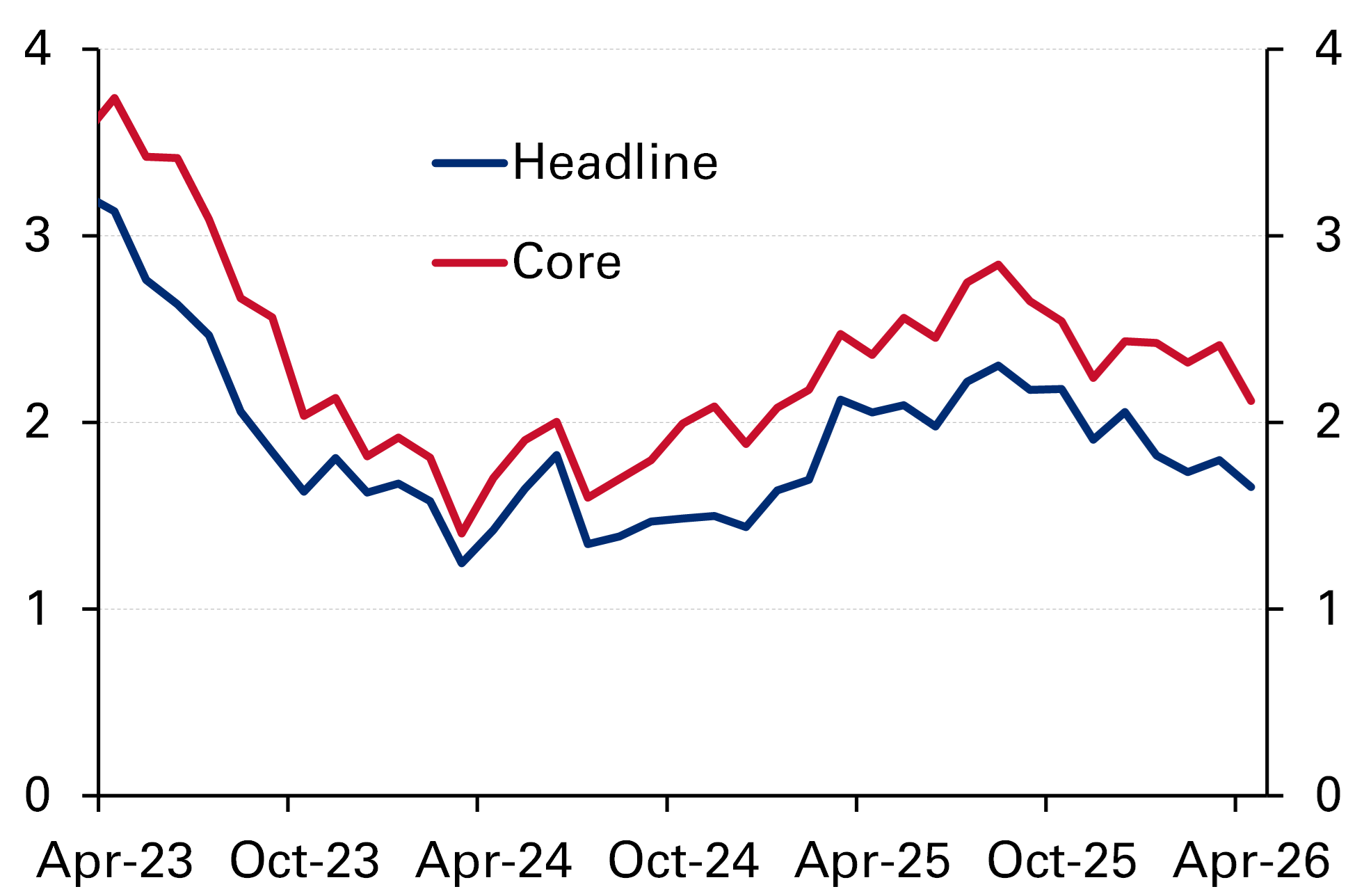
Saudi Arabia: Inflation eases in April despite regional pressures. Inflation continued to moderate in April, showing resilience despite ongoing regional tensions and supply disruptions linked to the conflict. According to GASTAT, inflation eased to 1.7% y/y (+0.2% m/m) in April, down slightly from 1.8% y/y (+0.3% m/m) in March, marking the lowest level since January 2025. Also, core inflation eased to 2.1% y/y in April, from 2.4% in March. The latest reading suggests that the impact of the regional conflict on consumer prices remains limited so far. This resilience has been supported by measures such as fixed domestic fuel prices, which have helped shield consumers from higher global energy costs, while the government may also be absorbing part of the increase in logistics costs in the short term. The moderation was mainly driven by slower housing inflation, which remains the second-largest component in the inflation basket. Housing and utilities inflation eased to 3.8% y/y in April from 3.9% in March, while residential rent growth slowed to 4.8% y/y, the weakest pace in 42 months and the 17th consecutive month of deceleration. This trend reflects a continued cooling in Riyadh’s rental market, where rent growth slowed to 7.3% y/y, supported by government efforts to improve affordability through housing supply measures, including taxes on undeveloped land, rent controls in the capital, and more recently, the introduction of a vacant property tax. Elsewhere, some categories continued to see stronger price increases. Personal care and miscellaneous goods rose 6.3% y/y, driven by a 22.5% increase in jewelry and watch prices, while insurance and financial services rose 2.3% y/y, reflecting higher insurance costs. At the same time, price pressures remained contained across essential categories. Food and beverages increased only 0.6% y/y, while transport and restaurants & hotels rose by 1%. A few categories even recorded deflation, including furniture & household equipment (-0.5%) and clothing & footwear (-0.3%). While inflation remains well contained for now, continued disruptions in regional trade routes could gradually feed into higher costs for businesses and consumers if tensions persist. Looking ahead, the Ministry of Finance expects inflation to average around 2% in 2026, easing slightly to 1.8% in 2027 before edging up again in 2028.
Egypt: Unemployment falls to a new record low in Q1 2026. Egypt’s unemployment rate declined further to 6% in Q1 2026, down from 6.2% in the final quarter of 2025, marking the lowest unemployment level in Egypt’s modern history, according to the latest data from CAPMAS. The labor market added around 610k new jobs during the quarter, bringing the total number of employed individuals to approximately 33.3 million. At the same time, the labor force participation rate improved to 47.6%, up from 46.7% previously, signaling a gradual increase in labor market participation. From a gender perspective, female unemployment remained elevated but stable at 14.3%, while male unemployment eased to 3.6%, down slightly from 3.8% in the previous quarter. Overall, the latest figures point to a continued improvement in labor market conditions, although structural challenges remain, particularly around female labor participation and job quality. Sustaining this momentum will depend on stronger private sector job creation and continued investment inflows across labor-intensive sectors.