
 +965 2292 4888


Daily Economic Update
30.04.2026
US: Fed holds rates, Powell to remain Governor, Warsh nomination advances. The FOMC, as expected, kept the Fed funds target rate unchanged at 3.5–3.75%, noting that the economy is expanding at a solid pace, job gains remain firm, and unemployment has changed little, while inflation remains elevated, partly reflecting higher global energy prices. The statement also highlighted a high level of uncertainty around the economic outlook following recent developments in the Middle East. The decision was reached in a split vote. Governor Miran favored a 25bps rate cut, while regional Fed presidents Beth Hammack, Neel Kashkari, and Lorie Logan supported holding rates but dissented over the inclusion of an easing bias in the statement. In his final post-meeting press conference as Fed Chair, Powell confirmed that he will remain a Fed Governor after his term ends on May 15, noting he intends to keep a “low profile.” He repeated his previous stance that he would need to see the DoJ’s criminal investigation about renovation of a Fed building project is “well and truly over, with finality and transparency” before deciding to leave the Fed though he was encouraged by the DoJ’s decision to drop that probe last week. Powell added that his decision to stay is partly driven by concerns over legal challenges that could threaten the Fed’s ability to conduct monetary policy independently of political pressures. His term as Governor runs through January 2028. Throughout the press conference, Powell emphasized the importance of preserving the Fed’s independence and its ability to fulfill its congressional mandate without political interference. When asked whether Kevin Warsh would withstand political pressure, Powell said he would “take him at his word,” referencing Warsh’s Senate Banking Committee testimony, where he pledged to act independently. On the policy outlook, Powell noted that the committee’s central tendency is moving toward a more neutral stance, while stressing that “nobody is calling for a hike right now.” On inflation, particularly the recent spike in gasoline prices, he said the pass-through to core inflation remains uncertain. However, he warned that a prolonged rise in energy prices could begin to affect broader components, including consumption and GDP. Market reaction was largely driven by rising oil prices and renewed inflation concerns, with 10-year U.S. Treasury yields increasing by 8bps to around 4.43%. Futures markets are currently pricing in over an 80% probability of no change in policy rates this year. Separately, the Senate Banking Committee advanced Kevin Warsh’s nomination for Fed Chair in a 13–11 vote after Republican Senator Thom Tillis lifted his blockade, paving the way for a final Senate confirmation by simple majority in the coming weeks.
China: Official PMI remains in expansion territory in April, but momentum softens ahead of US talks. China’s official manufacturing PMI edged down to 50.3 in April from 50.4 in March, remaining above the expansion threshold for a second consecutive month and suggesting that the post-holiday rebound has largely stabilized. Factory output stayed solid, while new orders eased slightly. Export orders, however, strengthened further, supported by front-loaded shipments amid global uncertainty, pointing to uneven demand conditions. Meanwhile, the non-manufacturing PMI slipped to 49.4 in April from 50.1 in March, as services activity cooled after a brief rebound and construction lost momentum. As a result, the composite PMI eased to 50.1 from March’s three-month high of 50.5, signaling modest but continued expansion. Overall, the mild expansion in activity is being driven primarily by production and exports, while domestic demand remains fragile and the outlook is increasingly sensitive to external risks. This comes ahead of a planned meeting in May between President Xi and President Trump, where Beijing is expected to seek greater clarity on US trade measures following last year’s Busan agreement, which temporarily reduced tariff pressures and eased restrictions on key exports, amid ongoing concerns related to the Middle East conflict.
Japan: Retail sales rebound while industrial production declines, as BoJ flags geopolitical risks. Retail sales rebounded in March, rising by 1.7% y/y compared to a downwardly revised 0.1% decline in February, significantly exceeding consensus expectations of a 0.8% increase, supported by continued government subsidies. In contrast, industrial production surprised to the downside, falling by 0.5% m/m in March against expectations of a 1.1% increase, marking the second consecutive monthly decline. The drop was driven by an 8.6% contraction in inorganic and organic chemicals and a 7.7% decline in petroleum and coal products, partly reflecting rising input costs and supply disruptions linked to the US–Iran conflict. Governor Ueda acknowledged these headwinds following the Bank of Japan’s decision to hold rates steady, noting that the current geopolitical environment and rising costs influenced the decision to keep the policy rate unchanged at 0.75%.
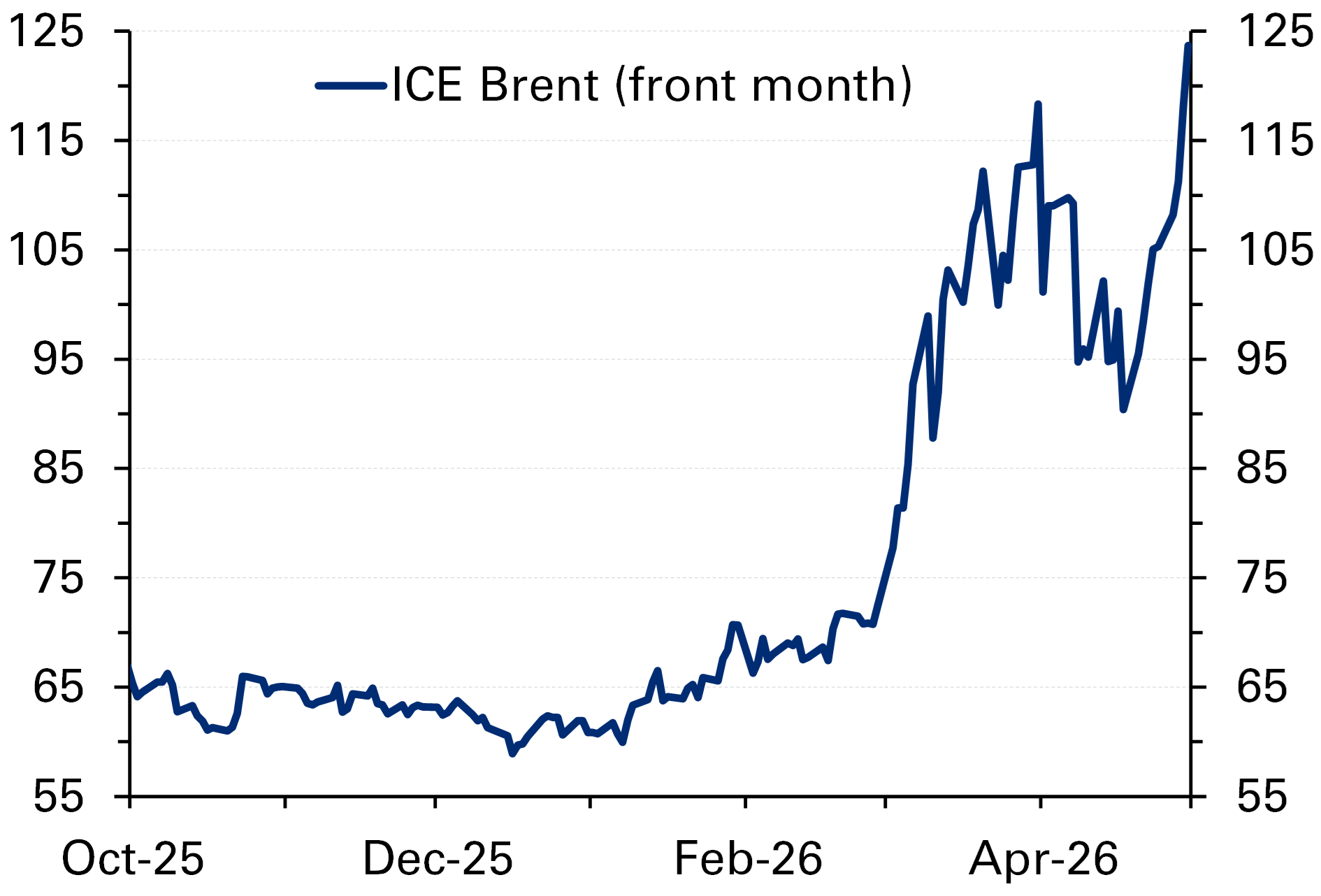
Oil: Prices hit new wartime highs as US–Iran deadlock persists. Brent futures for June delivery closed at $118/bbl yesterday, up 6.1% d/d, extending the rally to an eighth consecutive session. In early trading today, prices rose further to around $125/bbl (+6.3%), the highest level since the onset of the US–Iran conflict, ahead of the June contract’s expiry. While part of the strength in the June contract reflects an elevated prompt delivery premium, gains have extended beyond the front month, with the July contract also rising to around $114/bbl amid significant market tightness. Market dynamics increasingly suggest that the current equilibrium, characterized by no active hostilities but continued disruption to flows through the Strait of Hormuz, is inflicting sustained pressure on global oil balances. With limited alternative supply, the ongoing impasse is translating into effective demand destruction and physical scarcity rather than a temporary logistical disruption. This view was reinforced by weekly data from the US Energy Information Administration for the week ending April 24, which showed sizable draws across petroleum inventories. Commercial crude stocks fell by 6.2mb w/w, the Strategic Petroleum Reserve declined by 7.1mb, while gasoline and distillate inventories dropped by 6.1mb and 4.5mb, respectively. At the same time, US crude exports surged to a record 6.4mb/d, pushing total US oil and product exports to 14.2mb/d, underscoring the extent to which US supply is being pulled into an increasingly tight global market. Adding to the bullish tone, reports indicated that President Trump may consider direct strikes on Iran in an effort to break the deadlock, with a formal briefing on potential military options reportedly scheduled for later today.
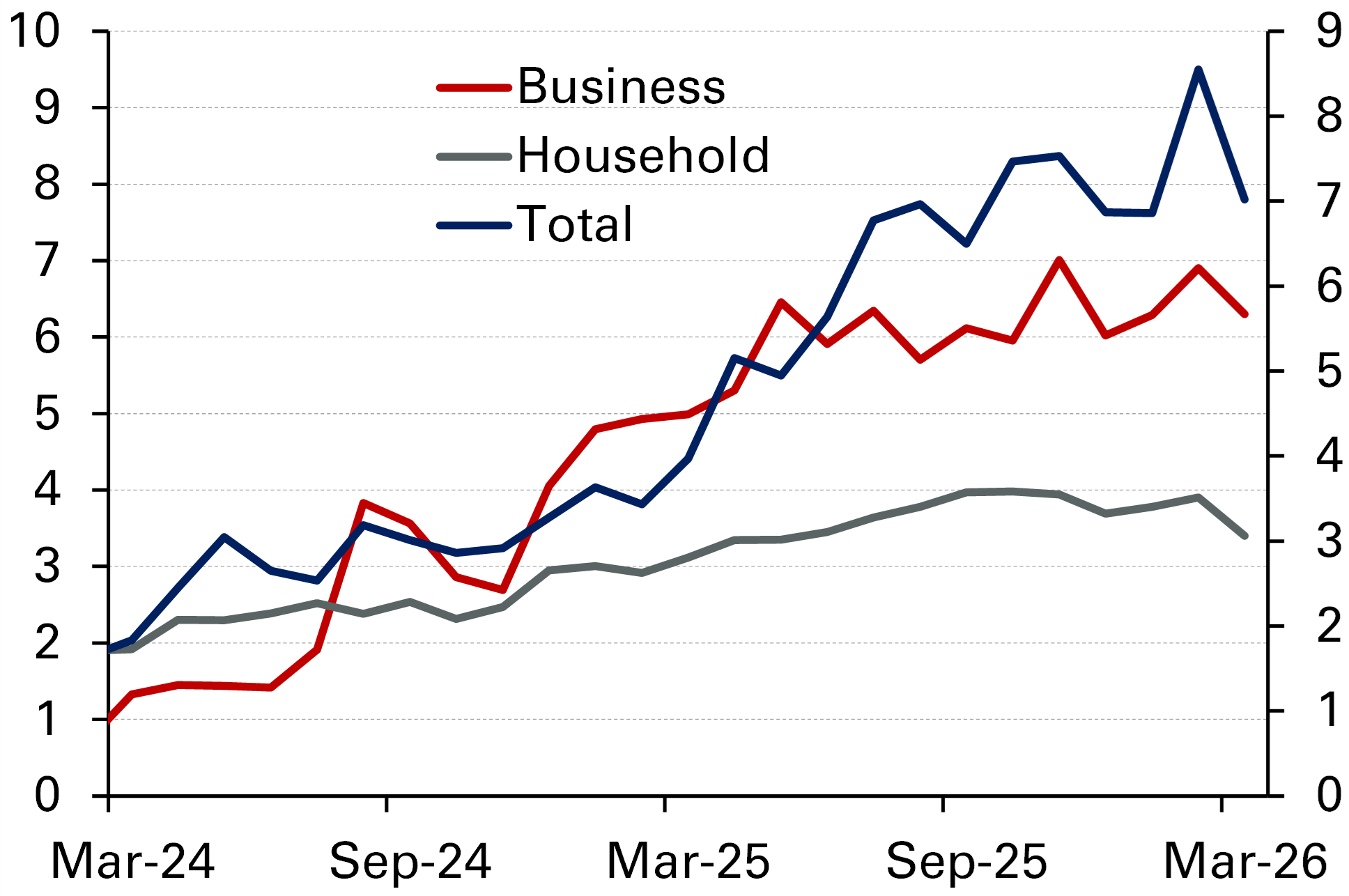
Kuwait: Domestic credit falls in March as business lending slows amid US–Iran war impact. Domestic banking credit declined by 0.6% m/m in March, reversing the strong 2.2% expansion in February and bringing YTD growth down to 1.8%, as credit conditions were affected by the US–Iran conflict that began in late February. The contraction was primarily driven by a sharp pullback in lending to banks and other financial institutions, which fell by 13% m/m following a 26% surge in February, weighing on overall credit growth. Meanwhile, business credit growth moderated to 0.6% m/m, bringing YTD growth to 2.9%. The deceleration was largely due to a 5.5% m/m contraction in credit to the trade sector, while lending to construction (0.8% m/m), public services (0.3% m/m), and oil and gas (2.7% m/m) also showed slower growth. Credit for the purchase of securities eased to 0.2% m/m, while household credit declined by 0.4% m/m, compared to a modest 0.2% increase in February, marking its first monthly contraction since March 2024. On the liabilities side, resident deposits increased by 1.6% m/m in March (3.8% YTD), the strongest monthly rise since August 2025, supported by sharp increases in public sector deposits (10.9% m/m) and government deposits (8.3% m/m). In contrast, private sector deposits declined by 1.0% m/m, the steepest drop since December 2020, leaving total deposits broadly flat on a YTD basis (+0.05%). The decline in private sector deposits was mainly concentrated in time deposits (-1.2% m/m), while CASA deposits fell by 0.6% m/m.
Egypt: FY26/27 financing needs rise to EGP4 trillion amid higher debt obligations. Egypt’s Ministry of Finance estimates total financing needs for FY26/27 at around EGP4 trillion, up from EGP3.57 trillion in the current fiscal year, marking a 12.3% y/y increase, according to the budget’s analytical statement. To meet these requirements, the government plans to raise EGP3.42 trillion through domestic debt instruments, compared to EGP3.18 trillion this year, alongside approximately EGP595 billion (around $12 billion) in external financing. A significant portion of these needs is driven by debt servicing obligations, with total repayments projected at around EGP2.8 trillion, up from EGP2.08 trillion in the current year. Meanwhile, interest payments are expected to reach EGP2.42 trillion, slightly higher than EGP2.3 trillion in the current year. Overall, the figures highlight the continued pressure from elevated debt servicing costs, reinforcing the importance of the government’s strategy to optimize debt structure, extend maturities, and contain borrowing costs over the medium term.