 +965 2292 4888


Daily Economic Update
09.06.2026
Oil: Prices pare back gains after Iran and Israel signal pause to hostilities; Kuwait seeks alternative oil export routes. Brent futures closed Monday up 1.3% d/d to $94.3/bbl after rising more than 5% earlier in the session as both Iran and Israel said they had halted attacks on each other following an appeal from US President Trump. Iran, however, insisted that it would resume strikes on Israel should the latter continue to hit southern Lebanon, prompting a slide in oil prices that have persisted into this morning’s trading session (-0.9% to $93.4/bbl). While both sides have ceased hostilities for now, the situation has returned to the status quo ante and the Strait remains closed. On this front, Kuwait is reportedly exploring alternative export routes, including linking into Saudi Arabia’s Red Sea infrastructure, the UAE’s Fujairah pipeline system, or Oman’s Indian Ocean ports. There is also renewed consideration of reviving the 500 kb/d Trans Arabian Pipeline (TAP), which the Saudis had mothballed back in the early 2000’s, though this option faces significant infrastructure and geopolitical hurdles. Ultimately, these alternatives are costly, complex, and time intensive, suggesting limited near-term relief. In the interim, Kuwait is looking to expand overseas storage capacity once flows through the Strait normalize. Meanwhile, consolidation in Kuwait’s oil sector continues, with the completion of the merger between KNPC and KIPIC, the two refining arms of KPC, officially announced. The merger will see management of the country’s entire refining operations and capacity of 1.45 mb/d, split between 0.615 mb/d at the Al-Zour refinery run by KIPIC and 0.835 mb/d shared between the Mina Abdullah and Mina Ahmadi refineries operated by KNPC, brought under the direct management of KNPC. The merger will also see the transfer of the 22 mtpa LNG unloading and regassification plant, also at Al-Zour, brought under KNPC. Kuwait’s plans to integrate and expand petrochemicals production at Al-Zour could also be boosted.
Saudi Arabia: Official reserve assets decline for the second consecutive month in May. Saudi Arabia’s official reserve assets declined for the second consecutive month in May, according to the latest data released by the Saudi Central Bank (SAMA). Official reserves fell by SAR 25 billion ($6.6 billion), or 1.3% m/m, to reach SAR 1.83 trillion ($488 billion) at the end of May, compared with SAR 1.86 trillion ($495 billion) in April. Despite the monthly decline, Saudi Arabia’s reserve position remains strong. On an annual basis, official reserve assets increased by SAR 110 billion ($29 billion, 6.4% y/y) compared with May 2025. The recent monthly decline may reflect a combination of factors, including fiscal financing needs, external obligations, or liquidity management amid ongoing regional uncertainty. Nevertheless, the current reserve level continues to provide the Kingdom with a strong buffer against external shocks, particularly as geopolitical tensions and disruptions to regional trade routes persist. Saudi Arabia’s sizeable reserve stock remains a key pillar supporting macroeconomic stability, exchange rate credibility, and the government’s ability to manage temporary pressures arising from lower growth and higher regional risks.
Egypt: More international bond issuance planned as financing needs remain elevated. The government is planning to issue around $4 billion in international bonds during FY26/27, aiming to cover nearly half of its estimated external financing needs of $8-9 billion for the upcoming fiscal year that starts in July. The move comes as the government continues to manage fiscal pressures while interest payments on public debt rose by 35%, highlighting the growing cost of debt servicing. At the same time, the Central Bank of Egypt (CBE) recently revised down its economic growth expectations, now forecasting GDP growth at 4.9% and 4.8% over the coming two fiscal years, reflecting a more cautious outlook amid external challenges. On the external financing front, Kuwait renewed its $2 billion deposit at the CBE for another year, reinforcing regional financial support for Egypt during a period of elevated global uncertainty. Overall, deposits from Arab countries at the CBE currently stand at around $20.3 billion, including $9.3 billion in medium and long-term deposits and $11 billion in short-term facilities, providing an additional liquidity buffer for Egypt’s external position.
US: Consumer inflation expectations mostly steady in May but perceptions about the job market weaken slightly. According to the monthly New York Fed survey, consumers’ one-year ahead inflation expectations ticked down to 3.5% in May from April’s one-year high of 3.6%. However, those for three-year and five-year-ahead horizons were unchanged for the third-consecutive month at 3.1% and 3%, respectively. Long-term inflation expectations is a key metric that the Fed monitors, and making sure these remain anchored in such an inflationary environment is critical. Consumers shared somewhat weaker perceptions about the job market, with slightly more of them expecting to lose jobs over the next 12 months in May than in April, above the series’ 12-mont trailing average. Job finding prospects also deteriorated to the lowest since December 2025. However, more consumers saw quitting their jobs voluntarily in the year-ahead and the expectations about the unemployment rate edged down but were still elevated. Consumers also believed there will be a tighter access to credit availability along with a slightly higher probability of missing the minimum debt payment over the next three months. Overall, these survey results indicate cautious consumer perception with steady but elevated inflation expectations but a slightly weaker job market outlook.
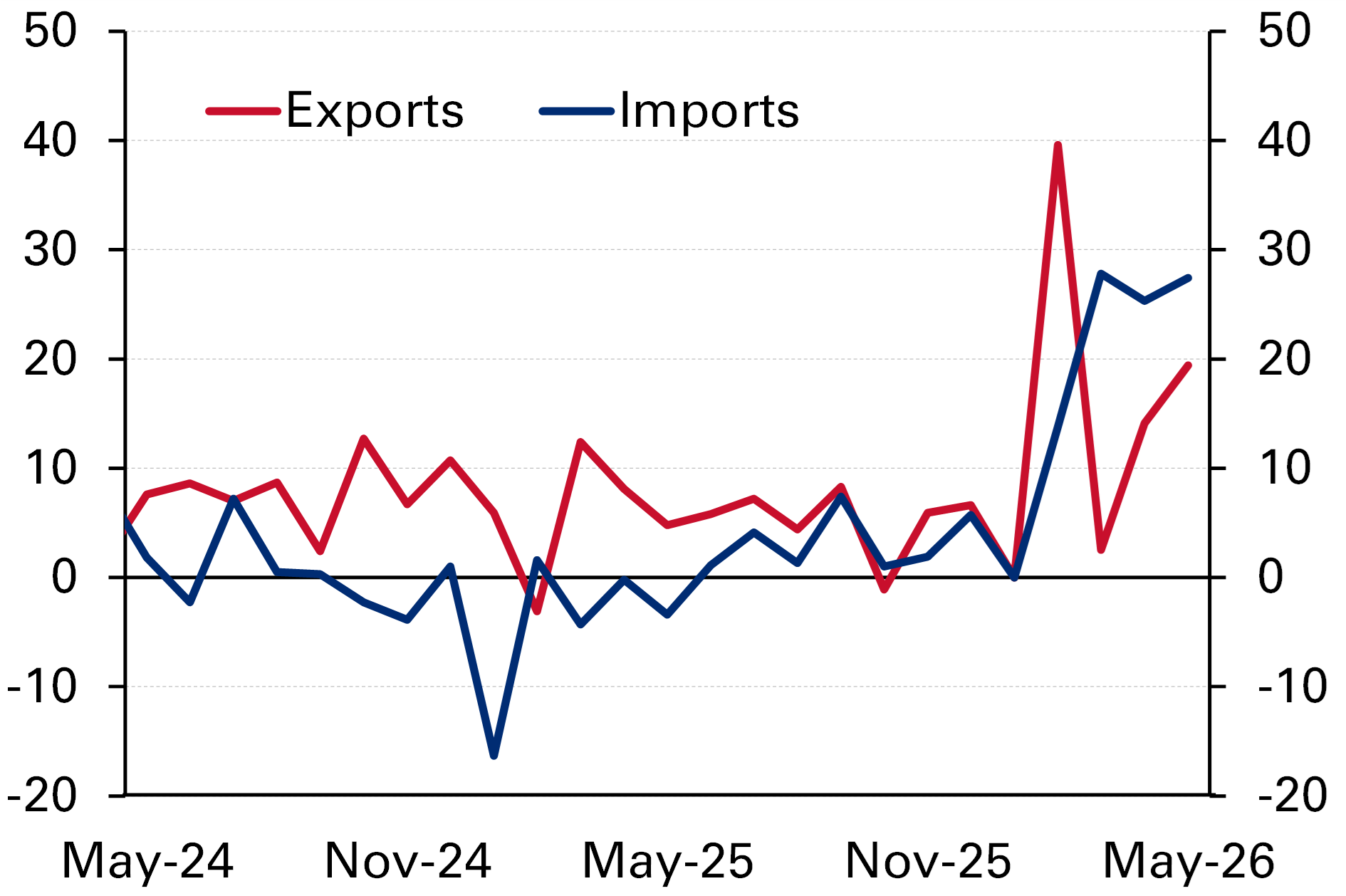
China: May trade data continues to be strong with exports beating expectations. Exports rose by 19% y/y in May, accelerating from 14% y/y in April and beating expectations, underscoring the continued strength in global demand and supported by solid tech-related shipments. This reinforces the role of exports as a key pillar of growth. Notably, exports to the US improved, hitting the highest level in more than a year and were up 35% y/y, also reflecting base effects as May 2025 was the trough following the tariff-related shock. Meanwhile, import growth remained strong at 27% y/y in May (25% in April), supported by higher energy prices, base-effects, AI-related goods, and possibly improving domestic demand. The trade surplus widened to US$105bn, up from US$85bn in April. Overall, the data confirms that net exports continue to drive growth for China, despite the disruption emanating from the Middle East conflict.