
 +965 2292 4888


Daily Economic Update
03.02.2026
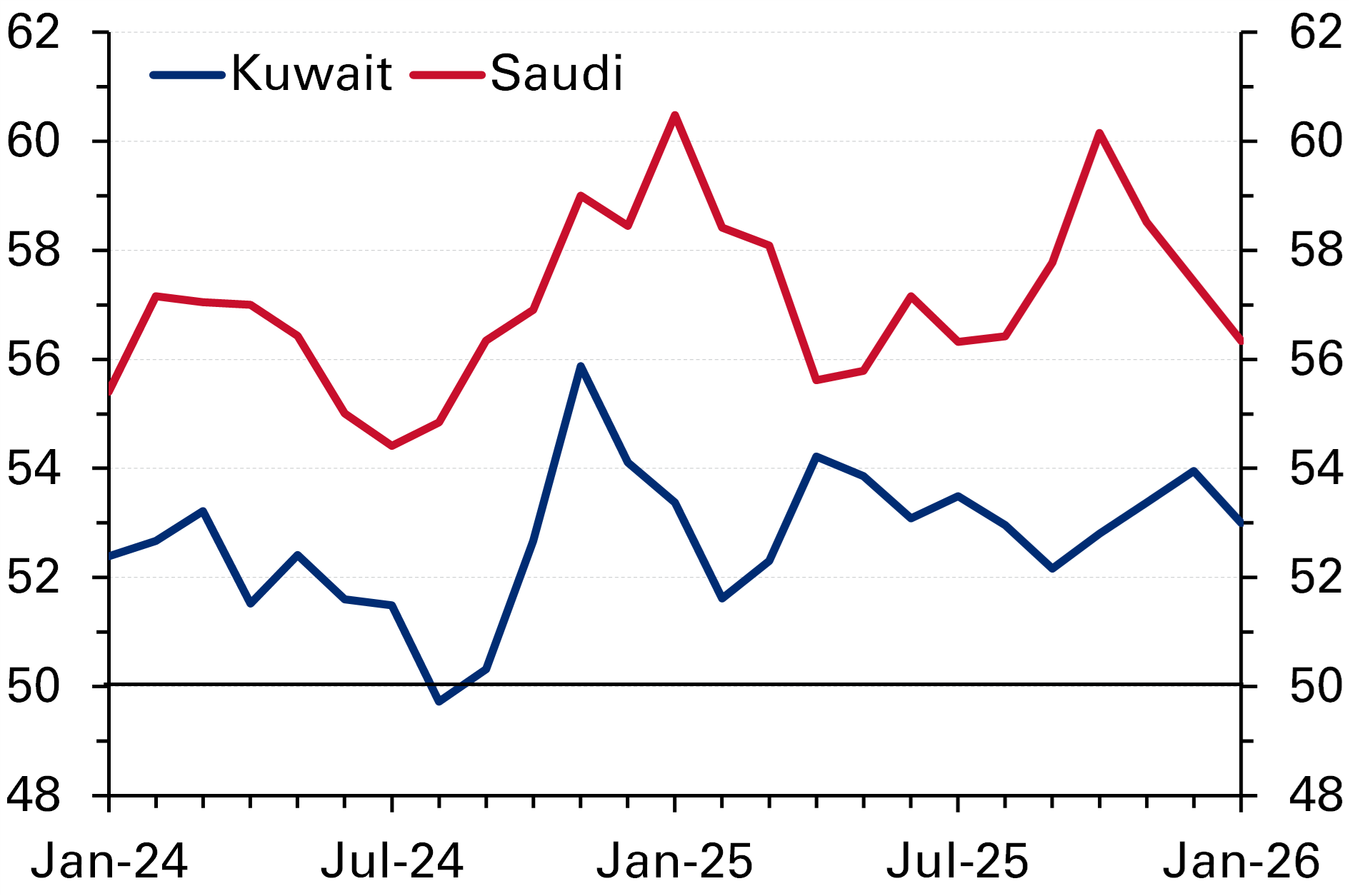
Kuwait: PMI shows non-oil activity making a solid start to the year. The non-oil private sector PMI activity gauge eased to 53 in January from December’s seven-month high of 54, marking a three-month low yet remaining firmly in expansion territory. January’s score was in largely line with the average reading for 2025 – which was itself a series record. Output and new orders both continued to grow in January, albeit at a more moderate pace than in December, supported by successful marketing efforts and competitive pricing. Amid strong consumer demand, firms maintained hiring activity, though growth in the employment subindex softened slightly from the previous month. Meanwhile, input-cost inflation remained elevated despite easing from December, driven by higher machinery maintenance expenses, raw materials costs, and rents. Nevertheless, this did not translate to faster increases in prices charged to customers, as firms persisted in prioritizing competitive pricing strategies. Strikingly, firms remain upbeat about the year-ahead outlook, with the business confidence metric remaining close to the 60 level – among the strongest readings in the survey’s history.
Saudi Arabia: Non-oil growth resilient despite easing momentum. Saudi Arabia’s non-oil private sector continued to expand at the start of 2026, albeit at a slower pace versus December. The PMI declined to a six-month low of 56.3 in January, down from 57.4 in December, and slightly below its long-run average of 56.9. Despite the moderation, the index remained comfortably above the 50 threshold, signaling a sustained improvement in operating conditions. Survey results pointed to continued strength in output and sales, supported by newly approved projects, steady customer enquiries, and improved investor interest. Around 23% of surveyed firms reported higher output during the month, while only 2% recorded a contraction. External demand provided an additional boost, as new export orders rose at their fastest pace since October 2025, driven by stronger demand from GCC and Asian markets. However, rising input costs continued to weigh on pricing conditions, limiting the pace of expansion in some segments. Firms responded by raising output prices, although competitive pressures constrained the full pass-through of higher costs. Looking ahead, business confidence improved, with the Future Output Index edging higher. This suggests a more optimistic outlook for activity over the year, particularly within the manufacturing sector.
Egypt: Finance Ministry leans on tariff reforms to accelerate industrial localization. The finance ministry is considering requests from around 80 companies to reduce customs duties on nearly 150 imported production inputs, in a move aimed at strengthening local manufacturing. The proposed tariff cuts target key strategic sectors, including chemicals, home appliances, textiles, automotive glass, sheet metal, and renewable energy. Under the plan, customs duties on selected raw materials and intermediate inputs could be lowered by 10–30%, bringing effective tariff rates down to just 2–5%. At the same time, tariffs on certain imported finished goods may be raised to as high as 60%, giving domestically produced alternatives a stronger competitive edge in the local market. The initiative seeks to address long-standing distortions in Egypt’s customs structure, where duties on production inputs have, in some cases, exceeded those applied to finished products. Correcting this imbalance is expected to reduce production costs for local manufacturers, improve price competitiveness, and encourage deeper industrial value chains inside Egypt. These measures are aligned with the government’s broader industrial strategy, which aims to raise the industrial sector’s contribution to GDP from 14% to 20% by 2030, double industrial employment to around 7 million workers, and expand the role of green industries. Overall, the shift signals a more assertive use of tariff policy to support domestic production and reduce reliance on imported finished goods.
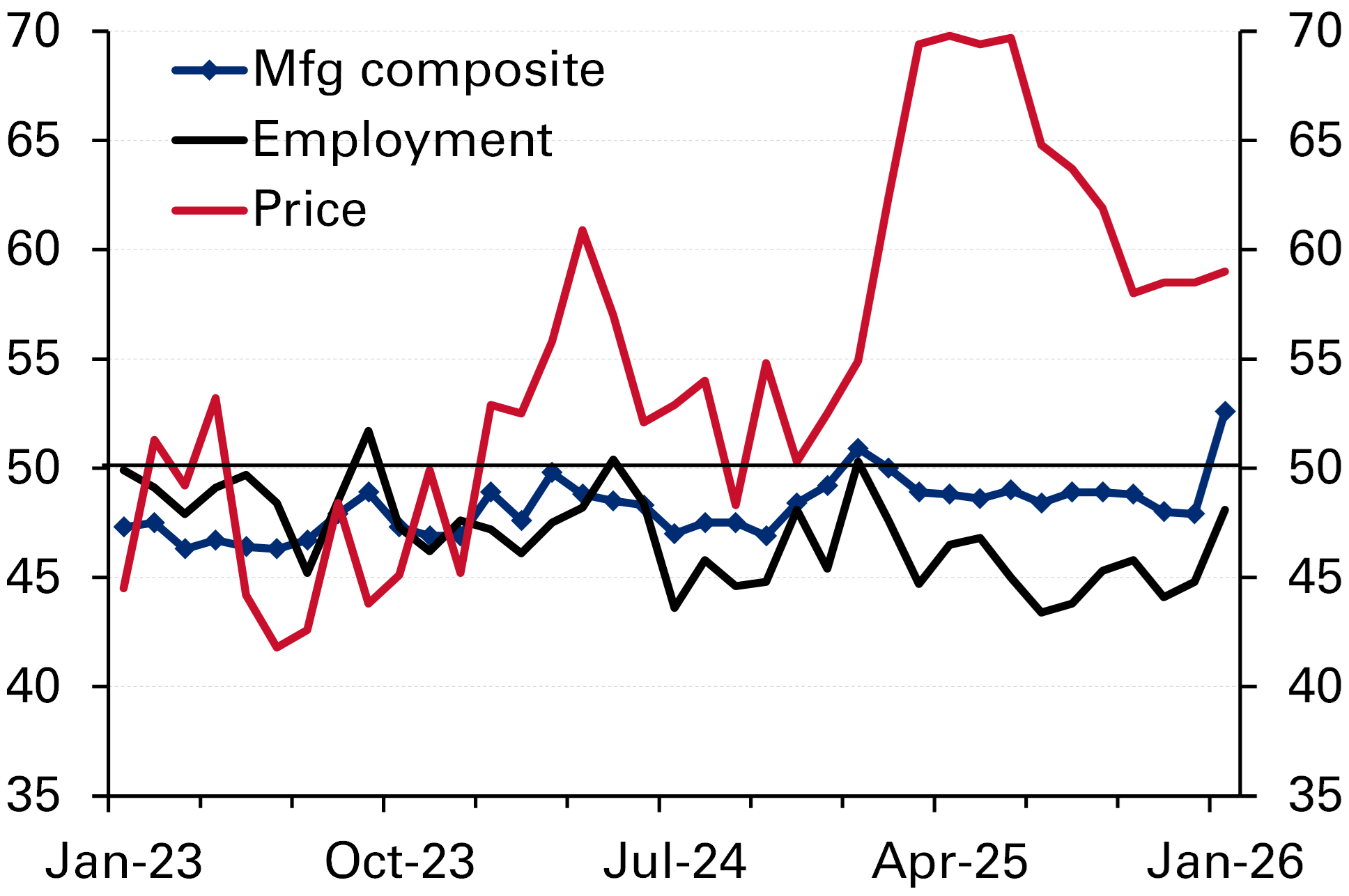
US: ISM manufacturing PMI hits an over three-year high; BLS to delay jobs reports amid the partial government shutdown. The ISM manufacturing PMI in January unexpectedly rose to the highest level since August 2022 to 52.6 from 47.9 in December, exiting a 10-month long slump on broad-based improvements. The gauge of new orders hit a nearly four-year high (57.1 from 47.4 in December), indicating a solid pickup in demand, and while employment continued to shrink the pace of decline was the softest since January 2025 (48.1 versus December’s 44.8). Input price pressures strengthened to 59 from 58.5 but were relatively mild versus the trend seen earlier in 2025 during the peak tariff episode. However, survey participants cited ongoing trade and tariff related uncertainty, highlighting volatile operating conditions. Meanwhile, amid an ongoing partial government shutdown, the Bureau of Labor Statistics announced delaying January’s non-farm payroll report (originally due this Friday) as well as the December JOLTS report (due later today). More on the shutdown in the next piece.
US: House to vote on funding measures to lift the government shutdown; US-India reach a trade deal, reducing tariffs on Indian goods to 18% from 50%. The House of Representatives will vote on a revised funding package likely today as the House Rules Committee approved moving forward with the bill, which should lift the shutdown soon. The already agreed spending measures will fund almost all government functions until September 30, but the Department of Homeland Security (DHS) was funded for two weeks only under a Continuing Resolution, giving lawmakers more time to work out disputes over DHS funding and Immigration and Customs Enforcement’s (ICE, which falls under DHS) latest brutal crackdowns. Separately, President Trump announced reaching a trade deal with India that will reduce tariffs to 18% on Indian goods down from the combined 50% (25% reciprocal and additional 25% related to India’s purchases of Russian oil) currently, effective immediately. Trump claimed that India will halt buying Russian crude oil and will also purchase US goods including energy, agriculture, coal, worth $500 billion in addition to completely removing tariffs and non-tariff barriers. However, Indian PM Modi in his social media post, while acknowledging the trade deal, didn’t mention anything about stopping Russian oil inflows or making commitments to purchase US goods worth $500 billion (India’s goods imports from the US amounted to $42 billion in 2024).
UK: House prices recover in January as per Nationwide. UK house prices rebounded by 0.3% m/m in January following a drop of 0.4% in December as per Nationwide data, matching the consensus forecast. On an annual basis, the growth rate rose to 1% from December’s 20-month low of 0.6%. Looking ahead, the outlook for the UK residential property market remains broadly muted as affordability concerns continue to weigh on demand amid a weak labor market, slower wage growth, high property prices and moderating yet still elevated mortgage rates. Meanwhile, the S&P Global manufacturing PMI for January was revised slightly higher to 51.8 in the final reading from the flash 51.6, strengthening from December’s 50.6, the highest reading since August 2024 and indicating a sustained improvement in manufacturing activity.