
 +965 2292 4888


Daily Economic Update
18.05.2026
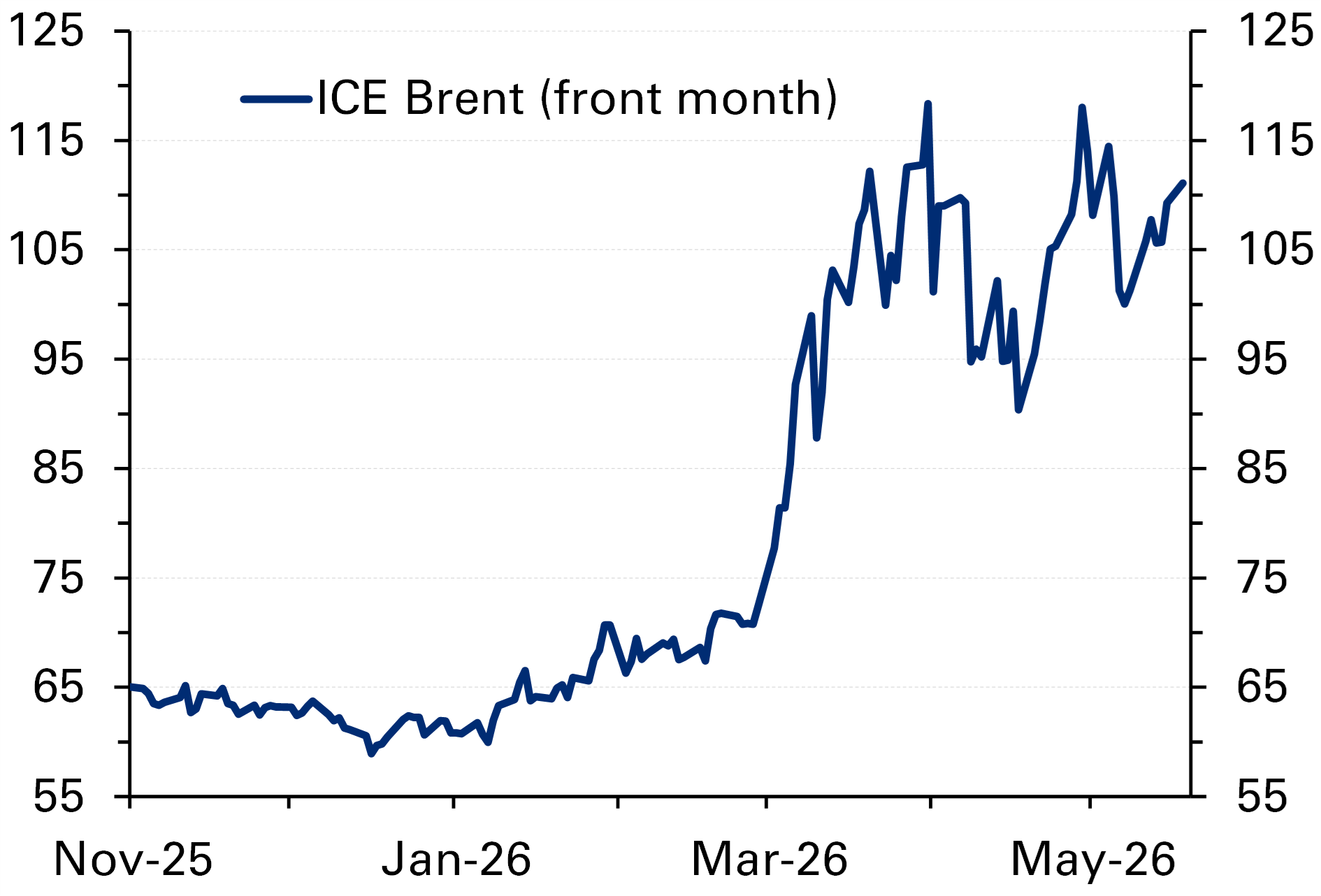
Oil: Prices rise as re-escalation risk re-emerges. Brent futures rose sharply last week, closing Friday up 7.8% w/w, as the geopolitical tone between the US and Iran shifted back toward confrontation, unwinding earlier market optimism that Trump’s visit to China could facilitate Chinese pressure on Tehran to reopen the Strait of Hormuz. The deterioration in sentiment removed a key pillar of recent bullish expectations tied to a diplomatic breakthrough, with negotiations remaining at an impasse. That more hawkish tone has carried into the weekend, with US President Trump warning that “the clock is ticking” for Iran, reinforcing the sense of urgency around negotiations. At the same time, renewed security incidents in the region have re-ignited escalation risks, including a drone strike targeting the UAE’s Barakah nuclear facility and reports from Saudi Arabia of intercepted drones launched from Iraq. These developments have pushed Brent futures to a two-week high this morning, rising around 1.9% in early trading today, as the market rebuilds a geopolitical risk premium. Adding to the tightening backdrop, the US decision to let waivers on purchases of Russian oil expire further constrains global supply availability. Taken together, the combination of rising geopolitical tensions, fading diplomatic optimism, and incremental supply tightening continues to underpin oil prices, with near term direction remaining highly sensitive to escalation risk.
Saudi Arabia: Aramco prepares what could become the Kingdom’s biggest privatization wave. Aramco is reportedly preparing a major asset sale program that could raise as much as $35 billion, potentially marking the largest privatization drive in the company’s history. According to several reports, the energy giant is moving ahead with the plan despite ongoing regional tensions, signaling confidence in both investor appetite and the resilience of Saudi Arabia’s investment environment. The strategy is expected to involve a pipeline of infrastructure and energy-related assets being offered to global private equity firms and infrastructure investors over the coming months. While details remain limited, the move appears consistent with Saudi Arabia’s broader shift toward asset monetization and private-sector participation, particularly as the Kingdom recalibrates spending priorities under its evolving economic transformation strategy. The timing is particularly notable. Aramco’s push comes as Saudi Arabia balances higher fiscal pressures, rising financing needs, and a more selective investment approach, while still preserving funding for strategic growth sectors. For investors, this could represent one of the most significant opportunities in years to gain exposure to high-quality Saudi infrastructure and energy assets. More importantly, the move may signal a new phase in the Kingdom’s economic strategy, one that increasingly relies on unlocking value from state-owned assets. If executed successfully, the initiative could become a major test of international investor confidence in Saudi Arabia at a time of elevated geopolitical uncertainty, while also supporting fiscal flexibility without slowing the Kingdom’s long-term diversification ambitions.
Egypt: The government successfully launches Egypt’s first international social bond. Egypt has issued its first-ever international social bond, raising $1 billion through an eight-year issuance priced at a yield of 7.625%, marking another step in diversifying the country’s external financing sources. Investor appetite proved strong, with total orders exceeding $ 3.9 billion, allowing the Ministry of Finance to tighten pricing from the initial guidance of around 8%. The issuance was arranged by a consortium of international and local banks, including Citi, Credit Agricole, CIB, Deutsche Bank, and HSBC as joint lead managers. The bond is positioned within Egypt’s broader sustainable financing strategy, with proceeds expected to support socially focused spending areas. At the same time, the issuance also helps meet part of the government’s broader financing requirements, particularly amid elevated debt servicing costs that continue to absorb a large share of fiscal revenues. Overall, the strong subscription reflects continued investor appetite for Egyptian debt instruments, while also highlighting Egypt’s ability to access international capital markets through more diversified funding tools.
Global: Bond market movements, UK inflation, and Japan GDP key matters this week amid an increasing likelihood for the resumption of bombings. With the conclusion of President Trump’s visit to China and the ongoing deadlock in the US-Iran negotiations, the drums of war are beating again and the likelihood that bombings will resume have increased. Meanwhile, eyes will remain on the global bond markets following last week’s surges in yields to decades-high levels for some countries. In terms of economic releases, in the US, the minutes of the FOMC’s April meeting are due on Wednesday, which along with speeches by several Fed officials this week, will offer more clues about Fed members’ views given the renewed inflationary pressures. The S&P Global flash PMIs for May (Thursday) are expected to show a slightly lower manufacturing reading (53.8 versus April’s 54.5) but a marginally-higher services one (51.3 versus 51). In the Eurozone, flash PMIs for May are due on Thursday with both manufacturing and services gauges seen easing slightly to 51.6 (from 52.2) and 47.5 (from 47.6), respectively. In the UK, the CPI for April will be released on Wednesday, and the consensus forecast is for easing headline and core rates to 3% y/y (from 3.3%) and 2.7% (from 3.1%), respectively, reflecting the disinflationary impact of the government’s welfare measures that were announced in the Autumn budget last year. Meanwhile, the unemployment rate (Tuesday) is seen steady at 4.9% in the January-March period, with regular wage growth seen slowing to 3.5% y/y from 3.6% in the December-February period. In China, the PBoC (Wednesday) is expected to leave the 1Y and 5Y LPRs unchanged at 3.0% and 3.5%, respectively, extending the current policy pause to one year. Finally in Japan, Q1 GDP is due on Tuesday with consensus estimates at 0.4% q/q growth (0.3% in Q4), supported by stronger net exports. April’s trade data (Thursday) are expected to show both export and import growth slowing to 9.3% y/y (from 11.7%) and 8.3% (from 10.9%), respectively.
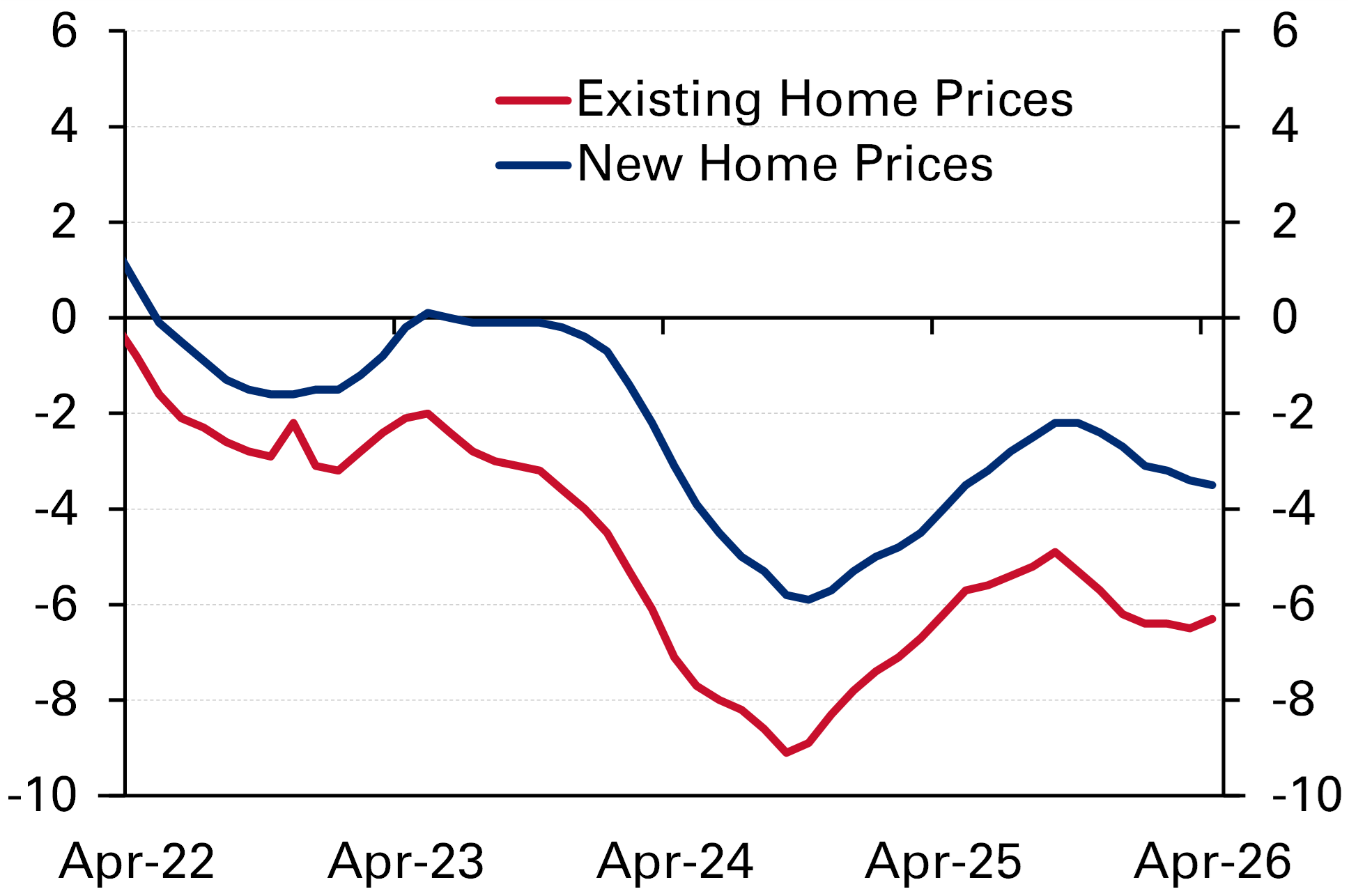
China: April’s macroeconomic data much weaker than expected, with growth in retail sales and industrial production the lowest in several years. April’s data pointed to a renewed softening in economic momentum, with several key indicators surprising by a wide margin to the downside. Industrial production growth slowed to a weaker-than-expected 4.1% y/y, easing from the stronger March print of 5.7%, and the lowest in nearly three years. Retail sales expanded by just 0.2% y/y in April (+1.7% in March), much lower than expected (+2%), and the weakest growth since December 2022, highlighting the fragile consumer demand despite policy support. Fixed asset investment also disappointed, with growth turning negative in the January-April period (-1.6% y/y) after being positive in January-March (+1.7% y/y) reflecting in part the persistent drag from the property sector. In this context, house prices remain under pressure, with new house prices falling by 3.5% y/y in April (-3.4% in March), marking 34 consecutive months of decline, reinforcing the structural nature of the real estate downturn and its broader spillovers into domestic demand. By contrast, labor market conditions showed a slight improvement, with the survey-based unemployment rate edging down to 5.2% in April from more than a one-year high of 5.4% in March. Overall, the data suggests that while there are pockets of resilience, particularly in industry, China’s economy continues to rely heavily on external demand, as weak consumption and property-related pressures weigh on overall economic activity.