
 +965 2292 4888


Daily Economic Update
03.12.2025
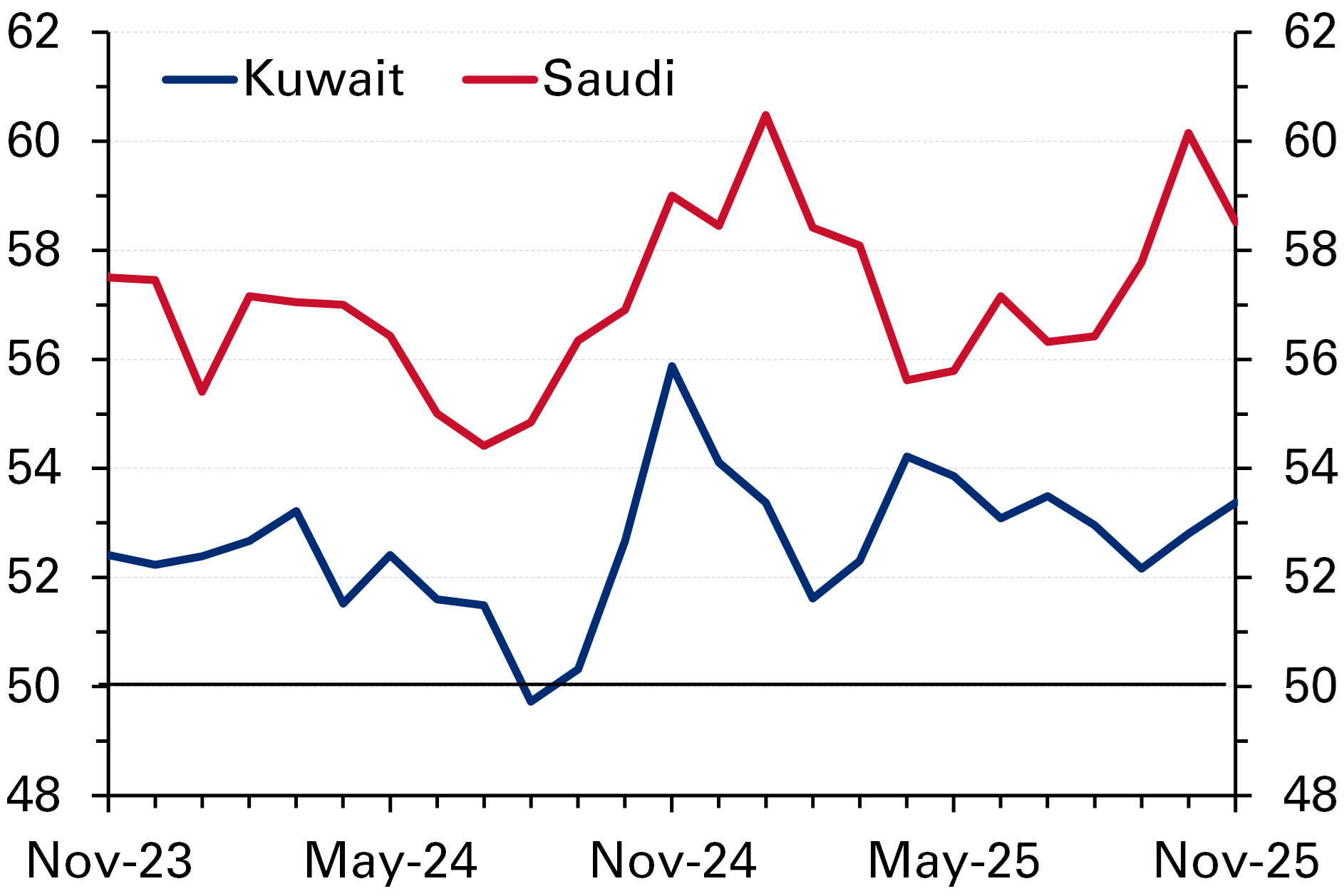
Kuwait: Non-oil private sector PMI improves in November. The non-oil, private sector PMI rose to 53.4 in November from 52.8 in October, reflecting an accelerated expansion in business activity. Both the new orders and output subcomponents remained key drivers, growing at a faster pace compared to the prior month, helped according to the report by firms’ marketing efforts. Business sentiment also rose, with the 12-month ahead outlook the most positive in a year and half. Employment increased in November at the highest pace since June, though the rate of job creation remained relatively slow and just above the 50-no change mark. Meanwhile, both input and output cost inflation rose at a quicker pace, with firms citing higher spending on electricity, rent, and staff as primary drivers behind increased prices. The rise in the non-oil PMI points to a stronger growth performance in Q4, mirroring the trend seen at the end of last year. This momentum also bodes well for a pickup in business activity going into 2026, with non-oil economic growth projected at 3.3% next year.
Saudi Arabia: Another strong month for non-oil activity in November. According to the Riyad Bank Saudi PMI, November’s headline rate came in at 58.5, signaling another strong month of expansion for the Saudi non-oil private sector. The rate of growth eased slightly compared to October (60.2), but was, nevertheless, among the strongest this year. Output, new orders (both well above 60) and employment subindices all continued to accelerate, though only the former was at a faster rate than the previous month. Firms reported improving demand, both in domestic and international markets, that translated into stronger order books and purchasing activity as well as gains in employment and inventories. Input costs continued to increase amid sharper wage rises but the overall rate of inflation was the slowest in eight months. Output prices, meanwhile, continued to rise, but at a slower rate than in October in the low 50s. Firms were the most optimistic about year-ahead business prospects since June.
Egypt: Net foreign assets hit highest level since February 2020, signaling a structurally stronger FX position. Net foreign assets (NFAs) in the banking system continued their steady recovery in October, rising to $22.7 billion, the highest since February 2020, according to Central Bank of Egypt data. This marks a monthly increase of $1.9 billion (+9% m/m) and more than double the $9.2 billion registered in October 2024. The improvement reflects broad-based FX inflows, with two key drivers standing out: 1) stronger remittance inflows, which have maintained their +$3 billion monthly run-rate; and 2) a surge in foreign portfolio investment, particularly in treasury bills, supported by improved sentiment toward Egypt’s stabilization path and high interest rates. Notably, the EGX recorded $1.4 billion in net foreign inflows during October alone. The commercial banks’ NFAs improved to $10.9 billion, up from $9.8 billion in September. Meanwhile, the CBE’s NFAs rose to nearly $11.8 billion, compared to $11.1 billion the previous month, reinforcing the view that FX liquidity is becoming more balanced and less reliant on one-off external support.
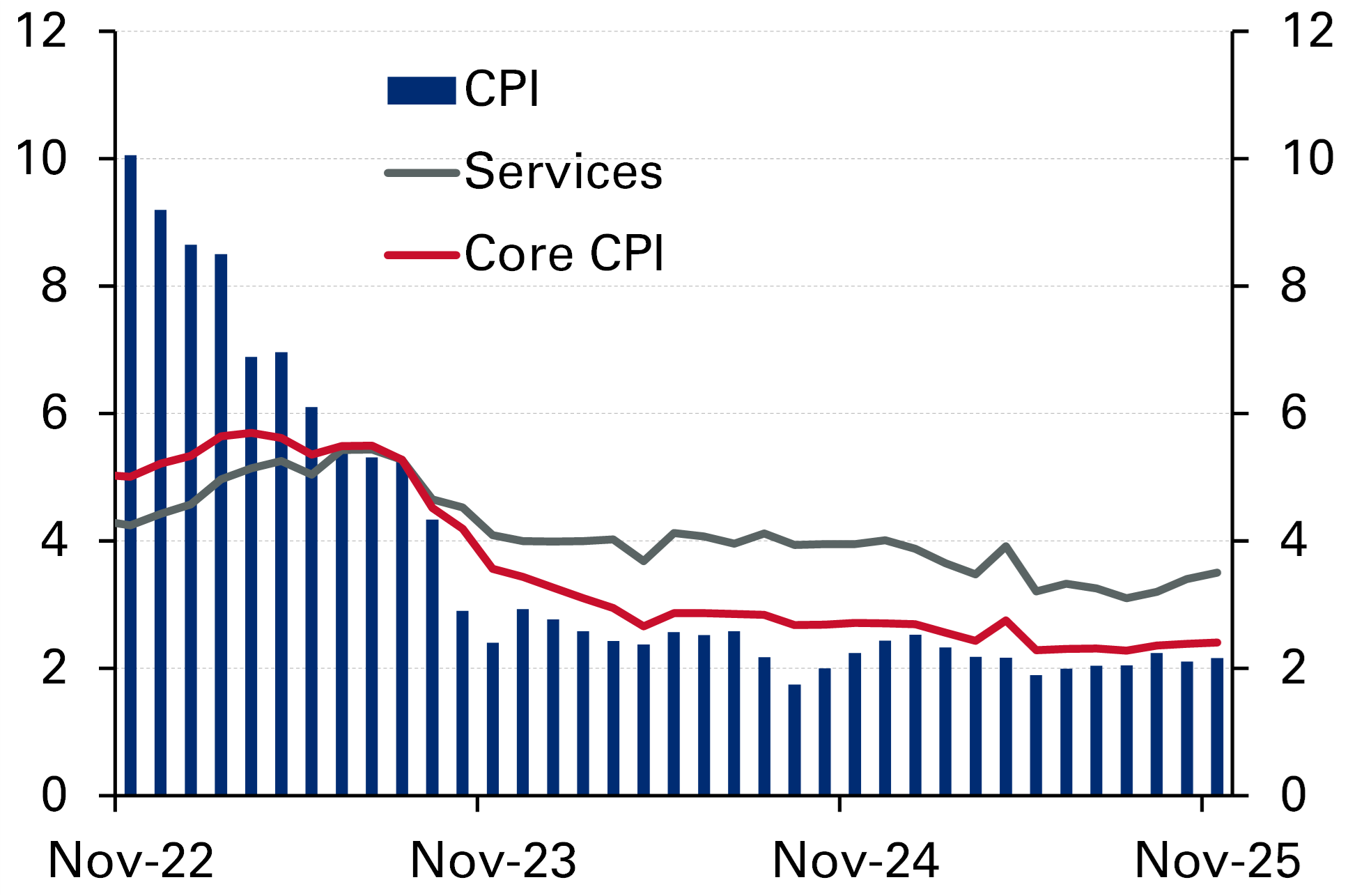
Eurozone: Headline inflation ticks up in November but the core rate steady. The Eurozone’s flash inflation reading for November rose modestly to 2.2% y/y from 2.1% in October and slightly above market expectations of 2.1%. The increase was driven by higher services inflation, which climbed to 3.5% y/y (3.4% in October), reaching its highest annual rate since April. In addition, energy prices exerted less downward pressure in November, contracting by 0.5% y/y, versus a 0.9% decline in October. Meanwhile, core inflation (excluding energy, food, alcohol, and tobacco) held firm at 2.4% y/y, and was slightly below the 2.5% forecast. Overall, the inflation figures for October and November have been slightly higher than the ECB’s forecasts for Q4, but the deviation is minor. The view remains that the ECB continues to have a strong incentive to hold rates steady for now.
UK: House prices tick up in November but the pace moderates. The UK Nationwide housing price index rose by 1.8% y/y (0.3% m/m) in November, down on October’s 2.4% increase and the slowest since June 2024. The average price of a UK property was back up at £272,998, a little below its peak of August 2022. November’s reading did, however, come in better than economists surveyed by Reuters were expecting (1.4% y/y; 0.1% m/m), which Nationwide’s Chief Economist remarked was a sign of a still-resilient housing market despite relatively high interest rates and plenty of pre-budget uncertainty. In last week’s government budget Chancellor Rachel Reeves announced several tax measures including a new surcharge on homes worth more than £2 million and a 2-percentage point increase in tax rates on housing rental income. While these are not due to take effect until April 2027 and in phases, they could, nevertheless, weigh on buyer sentiment going forward and especially on buy-to-let investors. For now, easing wage growth, record-high property prices and still-elevated mortgage rates are creating affordability challenges for many first-time buyers, though the possibility of further reductions in policy interest rates by the Bank of England should be somewhat supportive amid an overall cautious house price outlook.