
 +965 2292 4888


Daily Economic Update
20.05.2026
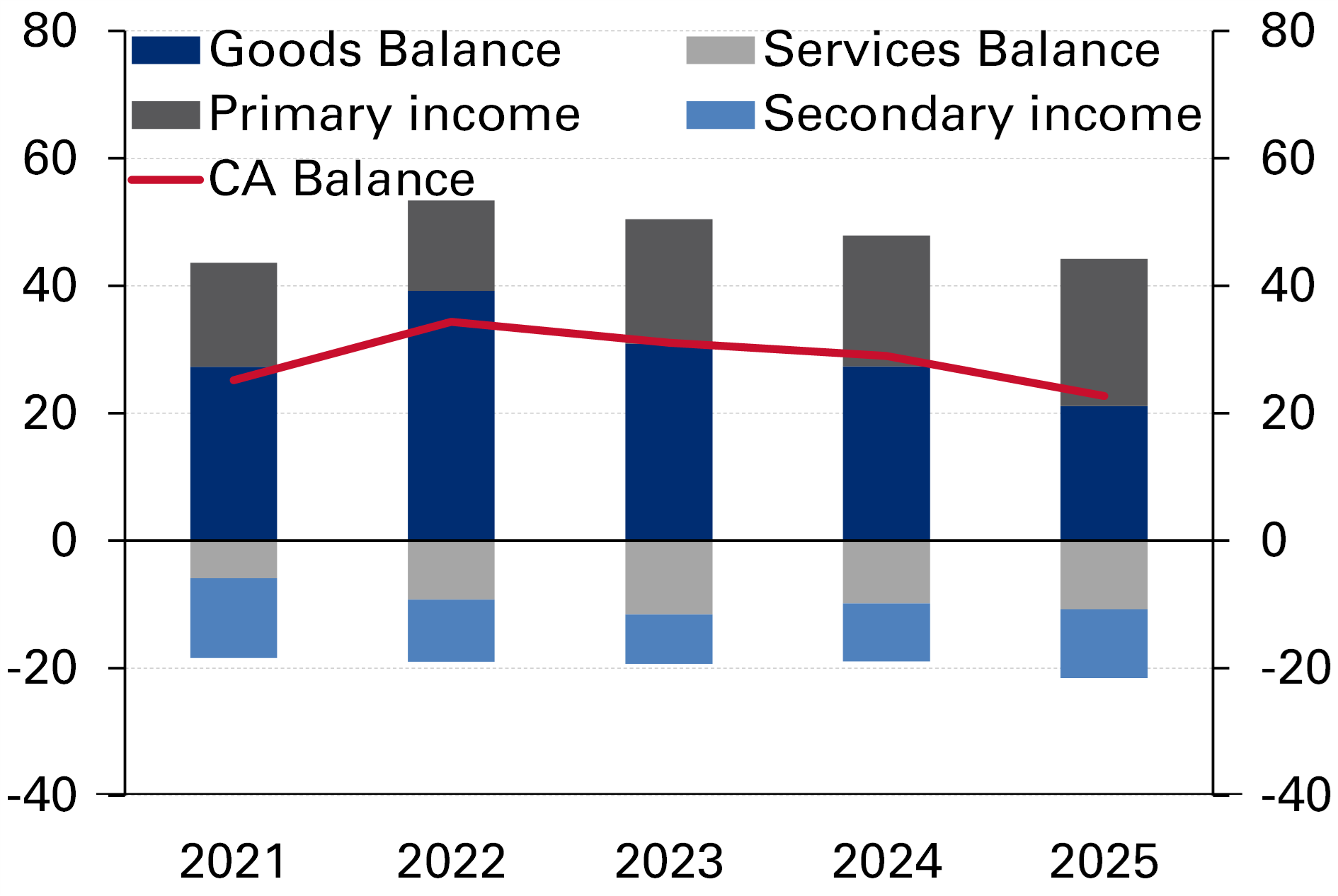
Kuwait: Current account surplus narrowed in 2025 but was still large at 23% of GDP. The external current account surplus remained large in 2025, albeit narrowing to KD10.9 billion (23% of GDP) from KD14.3 billion (29% of GDP) in 2024 on weaker oil export revenues. The number was likely easily the largest surplus among Kuwait’s GCC peers, though not all countries have released full data yet. On goods trade, oil exports declined by 11.3% to KD18.7 billion, reflecting a 12.8% drop in Kuwait Export Crude prices to $70.3/bbl, which more than offset a modest 2.4% increase in oil production. Non-oil export growth moderated to 10.7% from 40% in 2024, largely due to slower growth in motor vehicle exports. At the same time, import growth accelerated to 12.1% (from 1.1% in 2024), driven by precious metals and pearls (+40%), machinery and mechanical appliances (+17%), and transport equipment (+15%). Moreover, the services account deficit rose to KD5.2 billion on rising transportation debits, though still below the record high of KD5.9 billion in 2023. The primary income account, which mainly represents investment income, recorded a surplus of KD11.2 billion (23% of GDP) mainly due to an increase in portfolio investment income. Workers’ remittances outflows rose by 18% to KD5.1 billion, up from 11.8% growth in 2024. Meanwhile, in the financial account of the balance of payments (mostly financial flows that represent the counterpart to transactions on the current account), net financial outflows eased to KD12.4 billion from KD15.3 billion in 2024, on a decline in direct and portfolio investment outflows. This was partly offset by a sharp increase in ‘other’ investment outflows, which more than doubled to KD1.2 billion, reflecting higher currency and deposit outflows by the government and local banks. Finally, reserve assets declined for the second consecutive year by KD1.2 billion to reach KD12.5 billion, still covering over three months of imports. The outlook for 2026 is clouded by uncertainty related to the regional geopolitical tensions. Higher oil prices could yet strengthen the current account surplus this year despite export disruptions due to the closure of the Strait of Hormuz, depending upon how long the latter remains closed. Prolonged disruptions could also weigh on non-oil trade flows and imports.
Oman: Fiscal deficit narrows in Q1 2026 on strong revenue momentum. The fiscal deficit in Q1 2026 narrowed to OMR25 million (-0.2% of GDP) from OMR136 million (-1.3% of GDP) in Q1 2025, underpinned by strong revenue growth. Total revenues rose by 13% y/y in Q1 26, supported mainly by a 36% increase in gas revenues and a 5% increase in oil revenues. Oil & gas revenues accounted for 71% of overall receipts in Q1. On the other hand, total expenditures grew at a slower but still solid pace of 9% with current expenditures increasing by 8% while development expenditures rose 31% to support ongoing investment and diversification projects. In contrast, ‘other expenses and contributions’ (mostly subsidies) declined by 15%, partially offsetting other spending pressures, while accrued expenses (obligations pending settlement) more than doubled to OMR140 million. Meanwhile, public debt reached OMR14.5 billion (about 34% of GDP) by the end of Q1, reflecting a modest increase of 2% y/y. Looking ahead, Oman’s fiscal and macroeconomic outlook remains supported by elevated hydrocarbon revenues. Based upon our forecasts, the fiscal balance is expected to improve to a surplus of 4.0% of GDP in 2026 overall, moderating to a near balanced position in 2027, reflecting a normalization of hydrocarbon prices and sustained investment spending. Given its geographic position outside the Strait of Hormuz, Oman is relatively less exposed to regional trade disruptions, which could allow it to benefit from the currently elevated oil and gas prices. However, the Ministry of Finance report for Q1 suggested that oil revenues are accumulated with a 3-month lag from the point of sale, implying that the rise in oil prices in March 2026 will have had little impact on Q1 revenues.
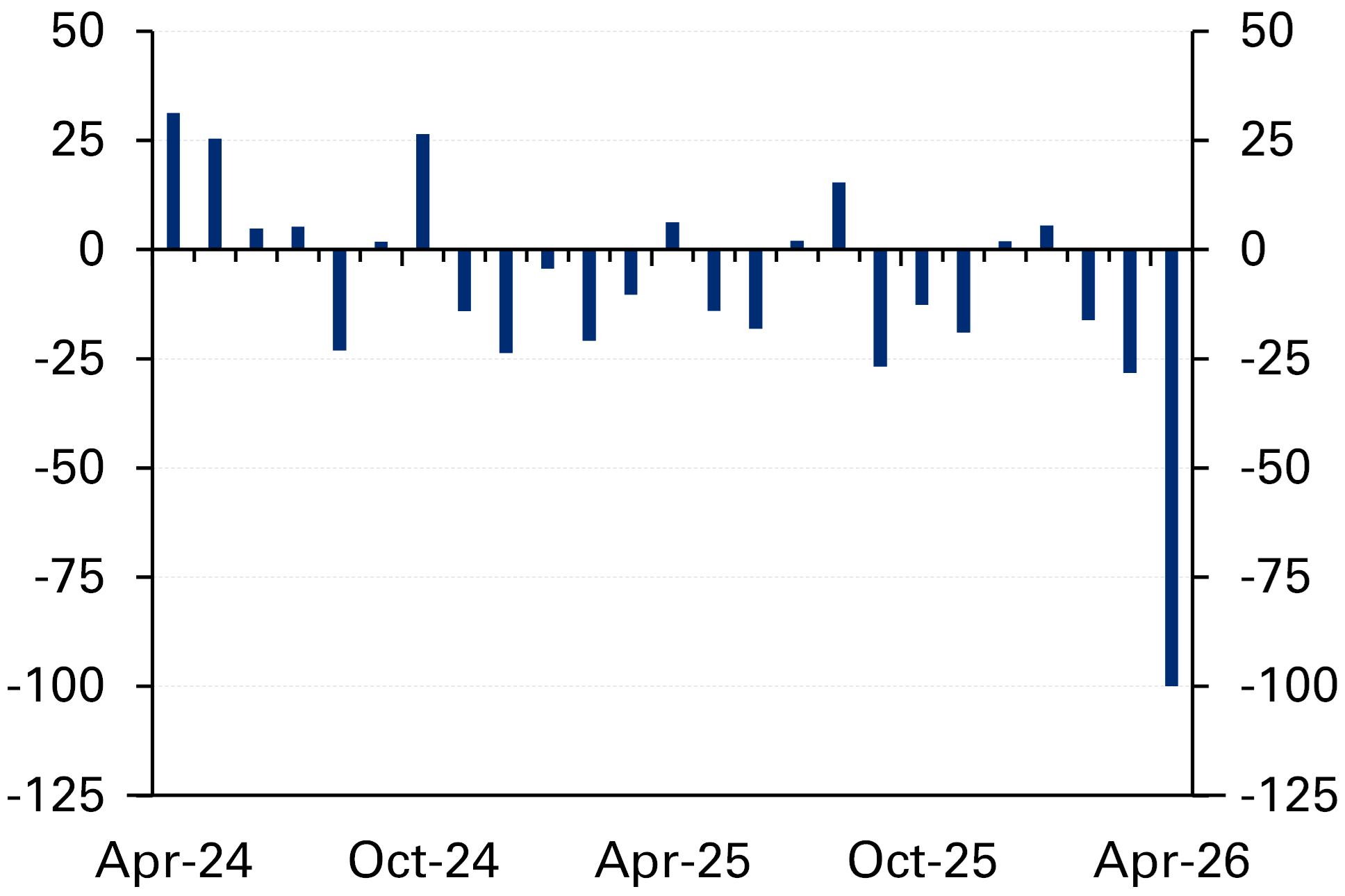
UK: Weak employment data further clouds the economic outlook; IMF lifts 2026 growth forecast to a still-muted 1% on a strong Q1. UK payrolls fell by 100K (based on real-time payroll data) in April, the largest monthly drop since the peak of Covid, following a bigger-than-previously reported fall of 28K in March. We note that monthly payroll figures are usually subject to substantial revisions over subsequent months; nonetheless, the job trend has remained mostly downward since the government’s announcement of higher national insurance contributions in October 2024. Even excluding the outsized decline in April, payrolls have fallen by an average of over 10K per month since November 2024. The unemployment rate ticked up to 5% in the January-March period from 4.9% in the December-February period, with the participation rate also edging up to 63.9% from 63.8%. Wage data was rather mixed, as regular wage growth further eased to 3.4% y/y in three months through March from 3.6% in the three months through February, the slowest expansion in over five years, but total wage growth (including bonuses) surprisingly accelerated to 4.1% from 3.9%. Finally, job vacancies dropped to 705K in the February-April period to hit a five-year low. A weak employment scene, elevated cost pressures, potentially higher policy interest rates, the government’s limited ability to support growth through fiscal measures, and mounting political uncertainty are resulting in an uninspiring growth outlook for the economy. The IMF lifted its UK GDP growth forecast for 2026 to a still-muted 1% from the 0.8% projected in April, but slower than 1.4% in 2025. That upgrade mostly reflected a robust outturn in Q1 (0.6% q/q GDP growth) and the stronger pre-war momentum, with the outlook remaining muted overall, dampened by the Middle East war-related headwinds and high energy prices.
China: Summit with Russia reinforces steady alignment as Beijing balances external ties; PBoC keeps interest rates unchanged. China’s ongoing two-day summit with Russia in Beijing, on May 19–20, is so far largely delivering a message of continuity, with President Xi using it to reaffirm strong economic and strategic ties with Moscow and to reinforce China’s diplomatic positioning against a shifting global backdrop. The meeting follows closely on the heels of the Xi-Trump summit, highlighting China’s attempt to strike a careful balance—stabilizing ties with the US while continuing to deepen coordination with key strategic partners. Against this backdrop, discussions are centering on expanding economic links, particularly in energy, trade, and infrastructure, alongside broader coordination on current geopolitical issues, including the ongoing conflict in the Middle East. The summit does not point to a major shift, but more to a steady extension of the existing partnership. In that sense, the summit reflects a dual objective: maintaining stable relations with major economies while gradually strengthening alternative partnerships that support China’s longer-term push toward a more multipolar global order. Separately, the PBoC kept its Loan Prime Rates unchanged in May, leaving the one-year and five-year rates steady at 3.0% and 3.5%, respectively, and extending the current policy pause to one year. The decision points to a cautious approach to easing, as policymakers continue to prioritize financial stability and currency considerations while providing measured support to the economy. Meanwhile, the 10-year Chinese government bond yield closed yesterday at the lowest level since August, in contrast to surging yields in the US, Europe, and Japan, reflecting China’s inflation dynamics, recent weak macroeconomic data out of China, and different expectations for central bank policy, among other reasons.