
 +965 2292 4888


Daily Economic Update
19.05.2026
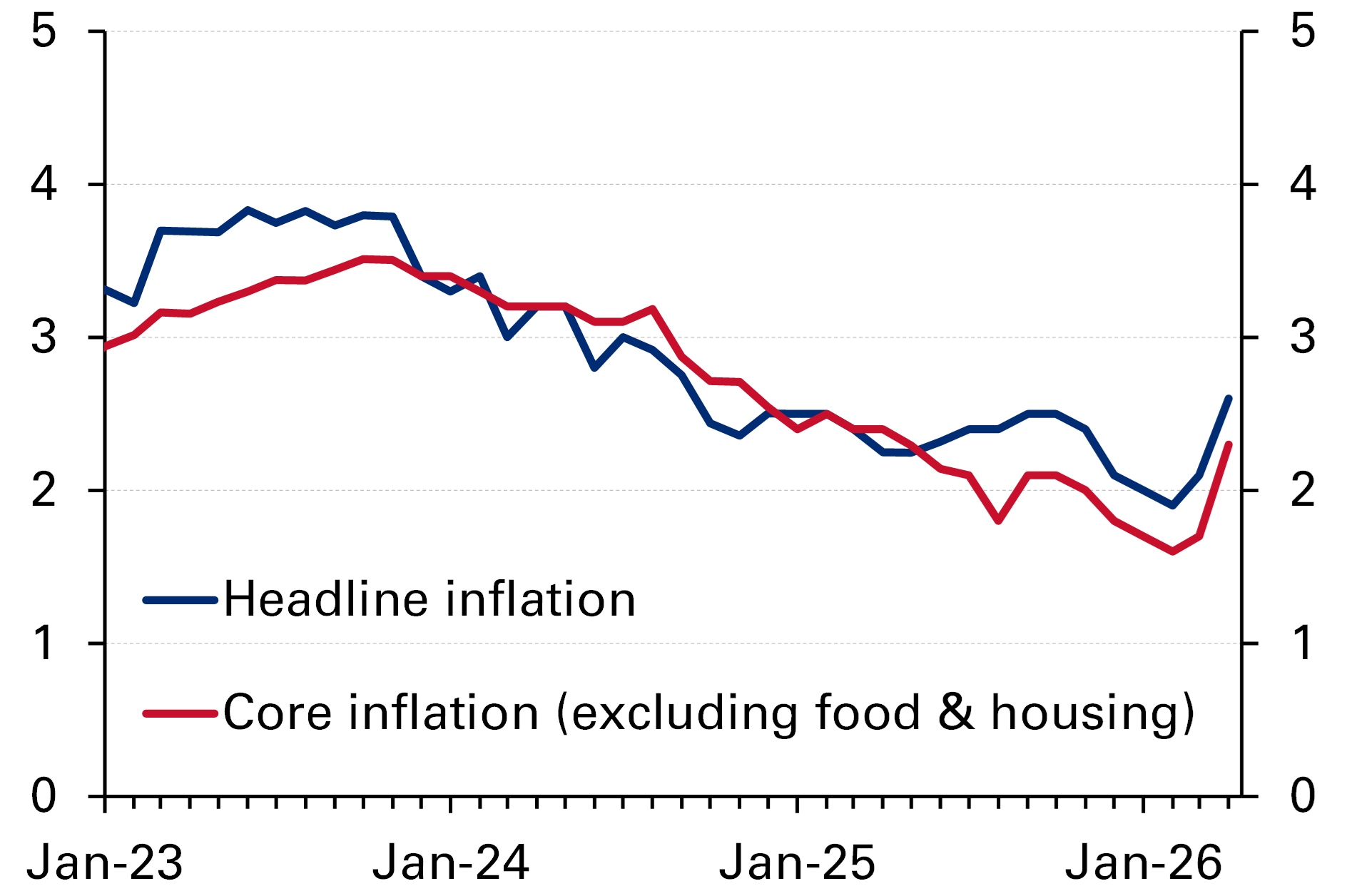
Kuwait: Inflation accelerates in April amid war-related disruptions. CPI inflation accelerated to 2.6% y/y in April from 2.1% in March, as the inflationary impact of the US-Iran war continued to feed through to domestic prices. The pick up was driven by a combination of higher food prices and transport costs, particularly airfares, reflecting supply disruptions and limited flight availability. Food price inflation intensified during the month, reflecting Kuwait’s food-import dependence, to 6.3% y/y, the fastest pace since June 2023. This was led by a sharp increase in fish & seafood prices amid restricted fishing activity during the active hostilities period. By contrast, housing services inflation, the largest CPI component and which represents mostly rents, held steady at 0.5% y/y, helping anchor the headline inflation reading. Excluding food and housing, core inflation jumped to an 11-month high of 2.3% y/y from 1.7% in March. The acceleration was driven mainly by transport costs (4.5% y/y), with the air travel component surging 21% y/y. Other categories showed more modest movements. Clothing & footwear prices posted a second consecutive monthly increase, confirming that the disinflationary cycle that began two years ago likely bottomed in February. Healthcare costs also edged higher, while most other components remained broadly stable. The only category to register easing price pressures was miscellaneous goods, reflecting a moderation in precious metals prices. Overall, the April print suggests that while inflation remains at a reasonably low level, war related disruptions are starting to filter through to domestic prices
Qatar: Headline and core inflation drop sharply in April after March spike.CPI inflation dropped back sharply to 2.6% y/y in April (-1.2% m/m) from 4.2% in March, signaling a rapid easing in price pressures experienced earlier in the regional conflict. There was also an unwinding of some Ramadan and Eid seasonal effects from March, as well as well as a helpful base effect in the communication component. Price pressures in April moderated across key segments. Inflation in housing services segment – the largest CPI component – eased to 1.6% y/y from 1.8%. But core inflation, which excludes this component, also fell sharply to 2.8% from 4.7%, driven in part by the normalization in communication prices but also by broader softening in other discretionary categories. Notably, recreation & culture entered deflation (-3.2%) for the first time since July 2025, while transport slipped back into deflation at -0.5% y/y. Meanwhile, previously surging miscellaneous goods & services inflation eased to 13.8%, tracking the pullback in precious metals prices from peaks recorded earlier. Partially offsetting these effects, food & beverage inflation, an area of particular vulnerability given Qatar’s import dependence, accelerated to 10.4% (from 8.7%), reflecting ongoing supply chain disruptions stemming from the closure of the Strait of Hormuz. Base effect normalization also pushed the restaurants & hotels segment back into positive territory (1.2%). Overall, the April print points to a broad-based falling back in underlying versus from March, but the persistence of food price pressures and ongoing supply disruptions clouds the outlook for further deceleration in months ahead.
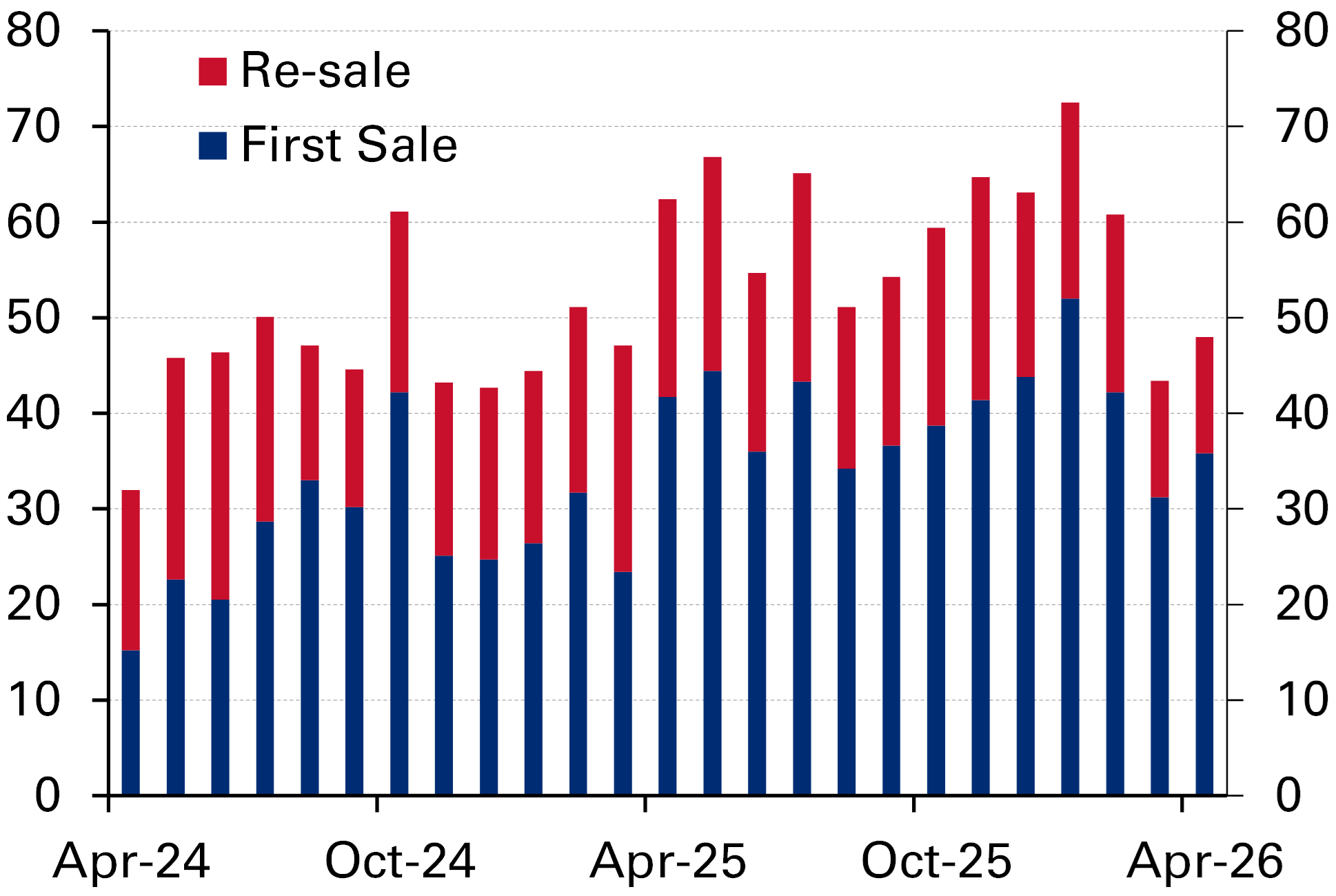
UAE: Dubai property sales saw a partial rebound in April. Dubai real estate sales logged a partial recovery in April, up 11% m/m to AED48.0 billion after March’s conflict-led slump (-29% m/m), according to DXB interact, potentially signaling early stabilization as the market adjusts to geopolitical shocks. Monthly gains were mainly driven by the primary (i.e. first sale) segment, which include off-plan sales, rising by 15% m/m (to AED35.8 billion), underscoring the continued dominance of off-plan activity while resale transactions edged up only 1% m/m (to AED12.2 billion). By building type, apartments sales rose 7% m/m and constituted around half of total sales, while villa sales declined by -19% m/m. The fall in villa sales included a-28% drop in off-plan villa sales, perhaps suggesting near-term caution toward higher value deals and longer off-plan commitments amid elevated uncertainty. Meanwhile, commercial and plot segments rebounded strongly (36% and 35% m/m, respectively), recovering from declines seen in March. On a year-on-year basis, sales fell further in April (-23% y/y) versus a smaller decline in March (-8% y/y), reflecting a continued cooling from the exceptionally strong levels seen previously. Overall, April’s sales data suggests early signs of stabilization after March’s disruption, though sales remain well below early year peaks. Ongoing geopolitical tensions may limit the scope for a broader rebound.
Oil: Prices edge lower after Trump says planned strikes are on hold. Brent futures ended 2.6% higher yesterday at $112.1/bbl, marking the highest close since 4 May, as concerns over potential regional conflict escalation and ever-tightening oil market fundamentals ratcheted prices higher. However, actual news flow was mixed or marginally bearish with reports that the US administration was considering waiving sanctions on Iranian oil exports as part of a broader effort to break the current deadlock in negotiations. Iran’s foreign ministry later confirmed that Tehran had submitted a revised proposal to Washington aimed at ending the war, reinforcing expectations that diplomatic discussions remain active despite the negotiation deadlock – although reports this morning suggest that the US has rejected the proposal. Brent has fallen 2% in early Asian trading today after President Trump overnight announced that he had paused a planned strike on Iran to allow negotiations additional time to proceed. The statement effectively removed part of the immediate re-escalation risk premium that had built into prices over recent sessions. Finally, the US Treasury Secretary clarified the status of the waiver related to Russian oil sanctions, confirming that it would be renewed following a period of market uncertainty after its expiration over the weekend.
Japan: GDP growth stronger than expected in the first quarter. Preliminary estimates for Q1 GDP growth came in at 0.5% q/q, beating consensus expectations of 0.4% and Q4’s downwardly-revised 0.2% increase (from 0.3%). Private consumption, which accounts for more than 50% of GDP, exceeded expectations to grow by 0.3% in Q1 but Q4 was revised sharply downward to 0% from 0.3%. This comes alongside rising external headwinds from the closure of the Strait of Hormuz, which the BoJ expects will weigh on growth while adding to inflationary pressures. In response, Prime Minister Takaichi is already moving to cushion the impact, with reports suggesting the government is preparing an extra budget with additional debt issuances to fund household subsidies aimed at alleviating inflationary pressures. Meanwhile, net exports also beat consensus estimates, driven by significant increases in exports, which expanded 1.7% q/q in the first quarter. Export performance was driven in part by increased demand for technology goods linked to ongoing AI-related investments, with chips and integrated circuit exports rising over 18% y/y in March. The stronger than expected GDP reading in Q1 is expected to strengthen the case for a BoJ rate hike in June despite the ongoing geopolitical tensions.