
 +965 2292 4888


Daily Economic Update
16.07.2026
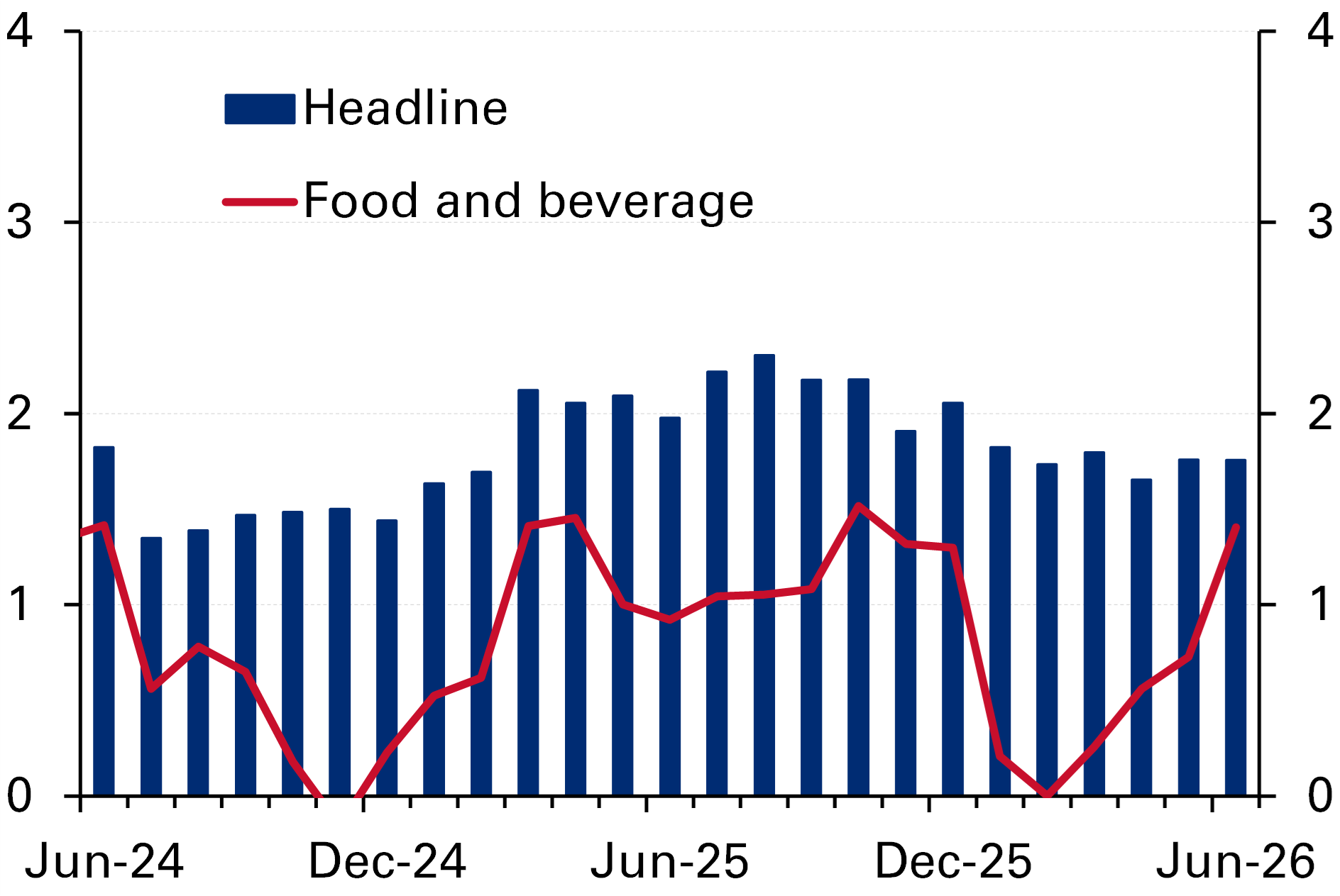
Saudi Arabia: Inflation stable in June despite a sharp pickup in food prices. Saudi Arabia’s headline inflation rate held steady at 1.8% y/y in June, unchanged from May, according to the latest data from GASTAT. The stable reading reflected the offsetting impact of ongoing housing disinflation on other components of the consumer basket experiencing rising inflationary pressures, notably food and beverages. Price rises in this segment, which carries the largest weight in the CPI basket, accelerated to 1.4% y/y in June from 0.7% in May, marking its highest level in nine months and reflecting a broadening in food price pressures. Transportation costs also increased, with prices gaining 1.7% y/y from 1.5% a month earlier, supported by the fastest increase in passenger transport services in almost two years. These upward pressures were largely offset by continued disinflation in the housing and utilities sector, the second largest component of the inflation basket, with residential rental inflation slowing for the nineteenth consecutive month, to 4.4% y/y. Meanwhile, inflation in restaurants and accommodation services eased to 1.5% y/y in June, providing additional support to the stable headline figure. It is worth noting that June’s inflation data was largely collected before the latest escalation in the US-Iran conflict and the renewed disruption to shipping through the Strait of Hormuz. As a result, any inflationary impact from higher transportation costs or supply chain disruptions is more likely to appear in the coming months should geopolitical tensions persist.
Egypt: IMF board expected to decide on seventh review by mid-August. The International Monetary Fund’s Executive Board is expected to discuss and approve Egypt’s seventh review under its economic reform program by mid-August, according to the IMF’s Executive Director for Arab States and the Maldives. If approved, Egypt is expected to receive around $1.6 billion shortly after the Board meeting, including $1.5 billion under the Extended Fund Facility (EFF) and approximately $136 million under the Resilience and Sustainability Facility (RSF). The timeline is broadly consistent with the IMF’s normal procedures, where Board approval typically follows a staff-level agreement by four to six weeks. With the staff-level agreement already secured, Egypt appears to be broadly on track to meet its commitments under the IMF program. Around $3.5 billion remains available under the current arrangement before it concludes in December 2026, covering both the upcoming seventh review and the eighth and final review expected later this year.
US: Similar to the CPI, June PPI inflation soft and below expectations. The PPI for final demand came lower than expected in June, falling by 0.3% m/m and pulling down the y/y increase to 5.5% from a downwardly-revised 6% in May. The monthly decrease was driven by a steep fall (6.4%) in the energy sub-index. Core PPI increased by 0.2% m/m, softening the y/y increase to 4.7%, sharply below expectations (+5.2%). The two key inflation prints for June (CPI and PPI) came soft and sharply below expectations, auguring well for June’s PCE inflation (Fed’s preferred inflation measure), which will be released by month-end. The futures market-implied probability for a Fed rate hike in the July meeting fell further to stand at around 10% currently, down from as much as 39% before the release of the CPI print on Tuesday. Meanwhile, the Fed’s latest Beige Book summary showed that economic activity increased at a “slight to moderate pace” in eleven of twelve Federal Reserve districts in late May and June, which is slightly more broad-based growth than in the previous period. The labor market strengthened compared with the previous period, with employment rising on average while, for all districts, inflation was steady or slower.
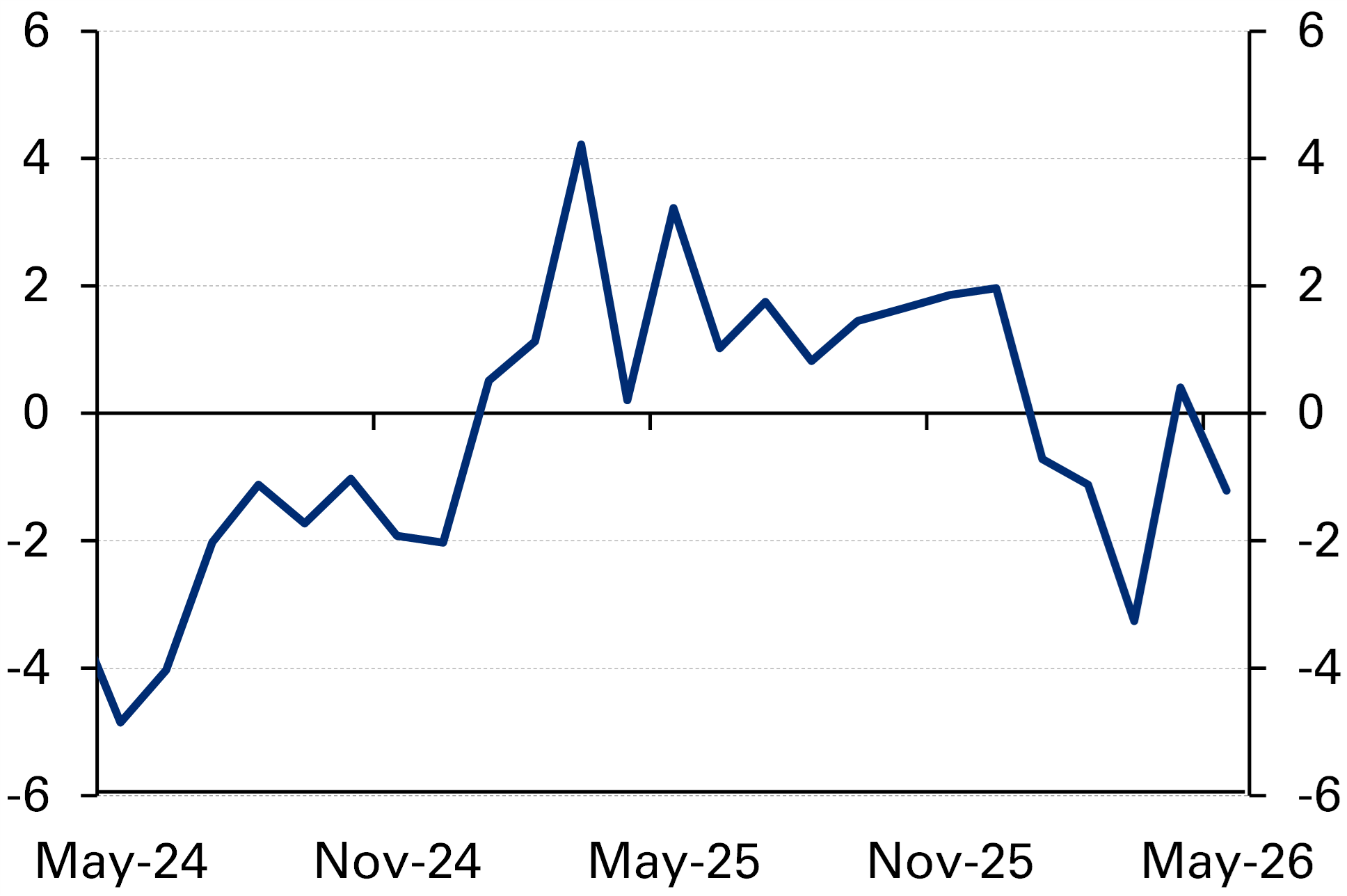
Eurozone: Industrial production declines in May, missing estimates. Industrial production fell 0.2% m/m in May, following an upwardly-revised 0.3% increase in April, undershooting expectations (+0.2%). The sectoral breakdown was mixed: output increased in energy (+2.2% m/m in May vs -0.2% in April), non-durable consumer goods (+0.8% vs +1.6%) and capital goods (+0.3% vs -0.3%), while declines were recorded in durable consumer and intermediate goods. On an annual basis, industrial production contracted 1.2%, reversing the 0.4% increase recorded in April, and below estimates (-0.5%). Overall, the data suggests that the Eurozone's industrial recovery remains uneven, with pockets of resilience offset by broader softness across the sector.