
 +965 2292 4888


Daily Economic Update
15.07.2026
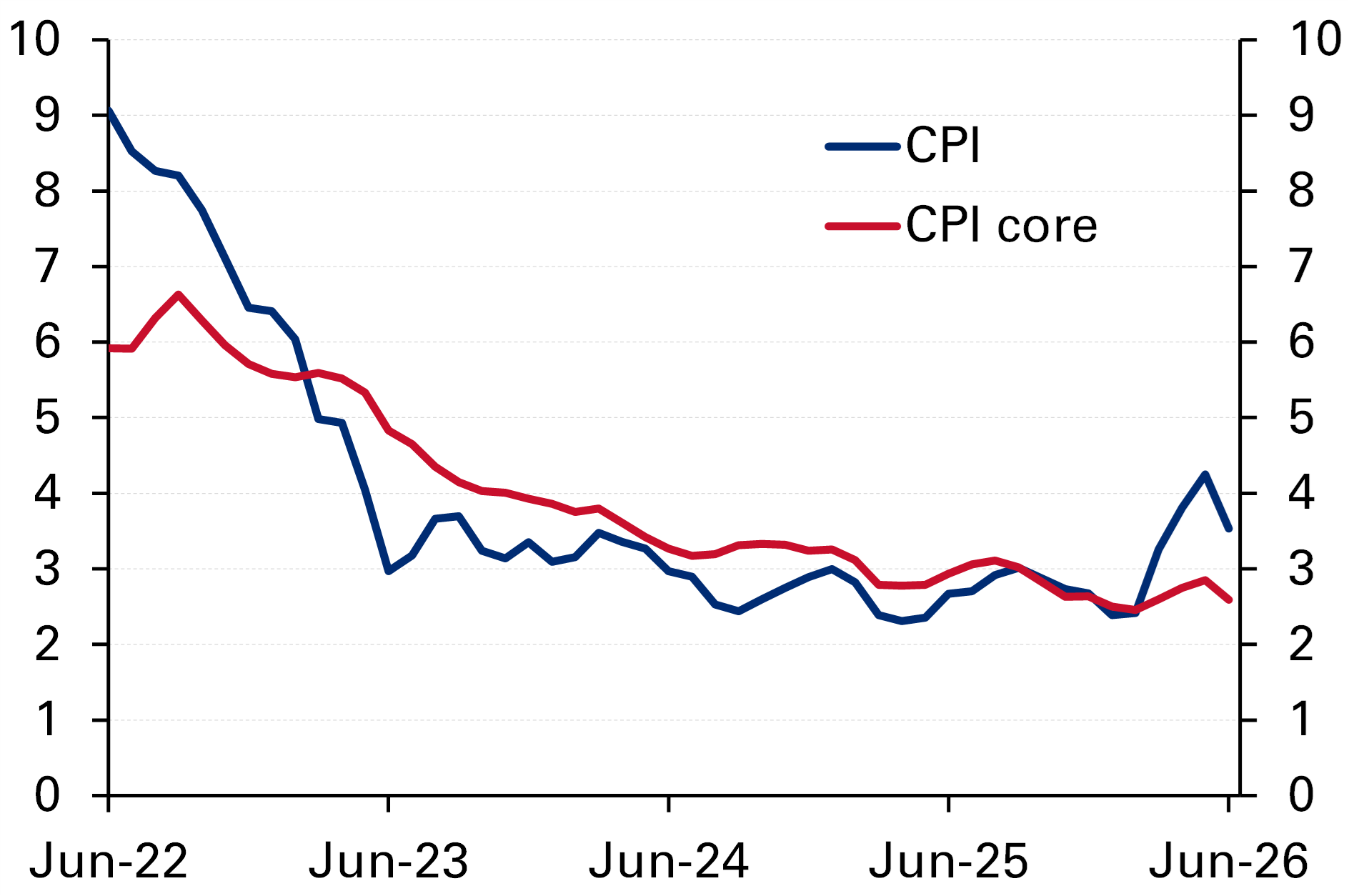
US: June CPI inflation much weaker than expected, with the probability of a July Fed hike plunging. Driven by a 9.7% m/m drop in gasoline prices, the CPI decreased by 0.4% m/m in June, pulling down the y/y increase to 3.5% (+4.2% in May), sharply below estimates. Core CPI was flat in June, lowering the y/y increase to 2.6% from 2.9% in May, the smallest rise since February. The disinflation in core components was broad-based, with the three main categories of core goods, core services excluding housing, and shelter all coming in soft. Core goods decreased for the second straight month in June (-0.1% m/m), pulling down the y/y increase to 0.8%, mostly driven by falling used cars/trucks (-0.2% m/m) and falling apparel prices (-0.6%). The index for durable goods was flat in June, reflecting the fading impact of the previously imposed tariffs. However, reflecting the inflationary pressures related to the AI investment boom, computer software and accessories prices jumped 2.3% m/m and 17.4% y/y. The index for core services was flat m/m (+3.2% y/y), helped by falling transportation services (-0.3% m/m), and shelter increasing by only 0.1% m/m, the smallest increase since January 2021. The closely followed super-core services gauge, which strips out shelter prices, fell by 0.2% m/m, the biggest decline since the onset of the pandemic. Looking ahead, while the disinflation in June was broad-based and may continue in July, the rebound in oil prices and the new tariffs that will be imposed by the US administration in the coming months will be forces putting upward pressure on inflation. The soft CPI for June drove an across-the-board decrease in US treasury yields, with the two-year yield down around 8 bps and the 10-year one falling around 4 bps, while the S&P 500 increased 0.4%. The futures market-implied probability for a Fed rate hike in the July meeting plummeted to around 17% now from as much as 39% before the release of the CPI print.
US: Fed Chair Warsh, in his first testimony to Congress, continued to talk tough on combatting inflation. Fed Chair Warsh, in his first testimony to Congress, continued to talk tough about combatting inflation, saying that the central bank has “no tolerance for persistently elevated inflation” and that the FOMC members share a resolute commitment to restoring price stability. In an optimistic tone, he added that “if we get policy right — and we will — the inflation surge of the last five years will be a thing of the past”. He downplayed the soft June CPI (see above), saying it is only one data point. On the economy, he mentioned that activity is expanding at a solid pace, describing consumption growth as “moderate”, and added that the most striking feature of the economy right now is business investment, which is driven by the AI boom. However, he cautioned that it is not known yet the extent to which the economy will benefit from the AI buildout, adding that new opportunities for the economy introduce new challenges for policymakers and that the Fed is monitoring the implications for inflation and the labor market.
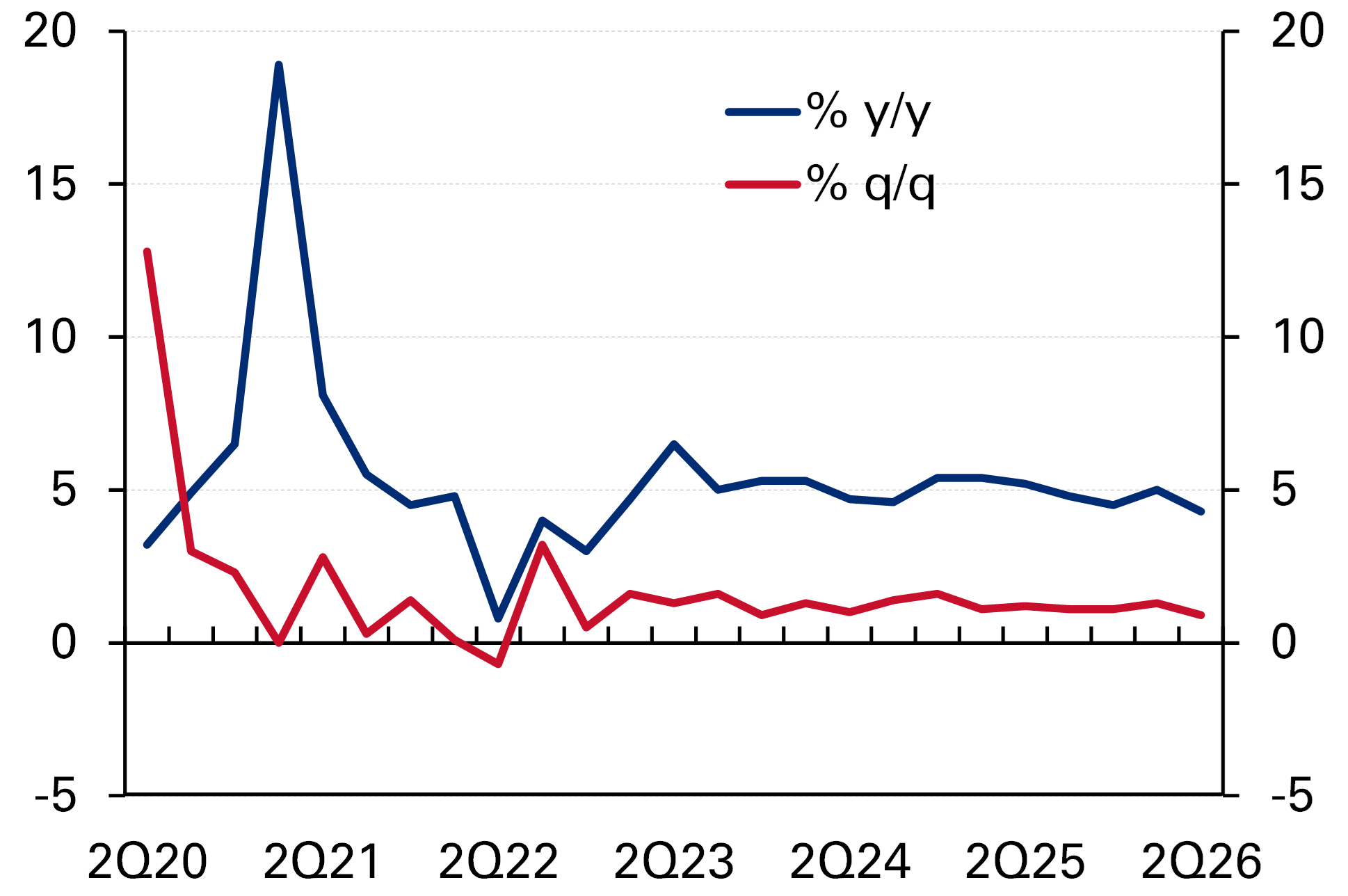
China: Growth in Q2 weakest since 2022, highlighting persistent domestic demand challenges. China’s economy expanded by a below-market expectations 4.3% y/y in Q2, slowing markedly from 5.0% in Q1. This is the slowest rate of growth since late 2022, driven by fragile domestic demand, subdued private investment and the prolonged property downturn, which continued to outweigh the positive contribution from strong AI and tech-related exports. That said, the weaker-than-expected outturn is likely to increase pressure on policymakers to provide additional support to domestic demand, with investors closely watching the upcoming Politburo meeting for signals on infrastructure spending and other targeted stimulus measures. Meanwhile, separate June data were mixed: industrial production accelerated by 5.3% y/y in June from 4.5% in May, supported by manufacturing and high-tech sectors, while retail sales rose 1.0% y/y, rebounding from a 0.6% decline in May and suggesting a modest improvement in consumer spending. Fixed-asset investment contracted 5.7% y/y in the first half of 2026, deepening from a 4.1% decline in the first five months of the year and undershooting expectations, reflecting ongoing softness in investment. The urban unemployment rate edged down to 5.0% from 5.1%. Meanwhile, new home prices fell 3.3% y/y in June, improving from a 3.5% decline in May. Prices remained in contraction for a 36th consecutive month, underscoring the persistent challenges facing the housing market.
Oman: Inflation eased to four-month low in June. Consumer price inflation eased to 2.8% y/y in June, the lowest in four months, from 3.8% in May. Rising food and beverage, service, and transport costs continued to be the main drivers of inflation across the Sultanate, with increases of 6.1%, 5.7%, and 5.5% respectively. Within the food category, vegetables recorded the sharpest rise (+23.6%), followed by fruit (+9.9%) and meat (+7.3%). Meanwhile, prices remained unchanged for communications, tobacco, and clothing and footwear, while housing-related costs declined by 0.6%. The lower reading suggests that conflict-linked inflationary pressures may be abating, but inflation remained well above the pre-conflict average (1% in 2025). Year-to-date, inflation has averaged 2.8% y/y
Egypt: Government introduces new payment mechanism for international oil companies. The Ministry of Petroleum and Mineral Resources plans to pay around USD240 million per month to international oil companies (IOCs) under a new payment framework designed to ensure the timely settlement of partners’ dues and prevent the re-accumulation of arrears. The new mechanism, known as the “full payment” plan, commits the government to making regular monthly payments to foreign partners in exchange for their share of crude oil and natural gas production that is used to meet domestic demand. A dedicated committee will oversee the preparation and distribution of monthly payments to companies operating across Egypt’s oil and gas concession areas. The move follows the government’s successful clearance of all outstanding arrears to foreign energy companies in June, closing a file that had weighed on investor sentiment for several years. By institutionalizing timely payments, the government aims to strengthen investor confidence, support new exploration and production activity, and ensure that the recent recovery in foreign investment flows into the energy sector remains sustainable.