
 +965 2292 4888


Daily Economic Update
11.08.2026
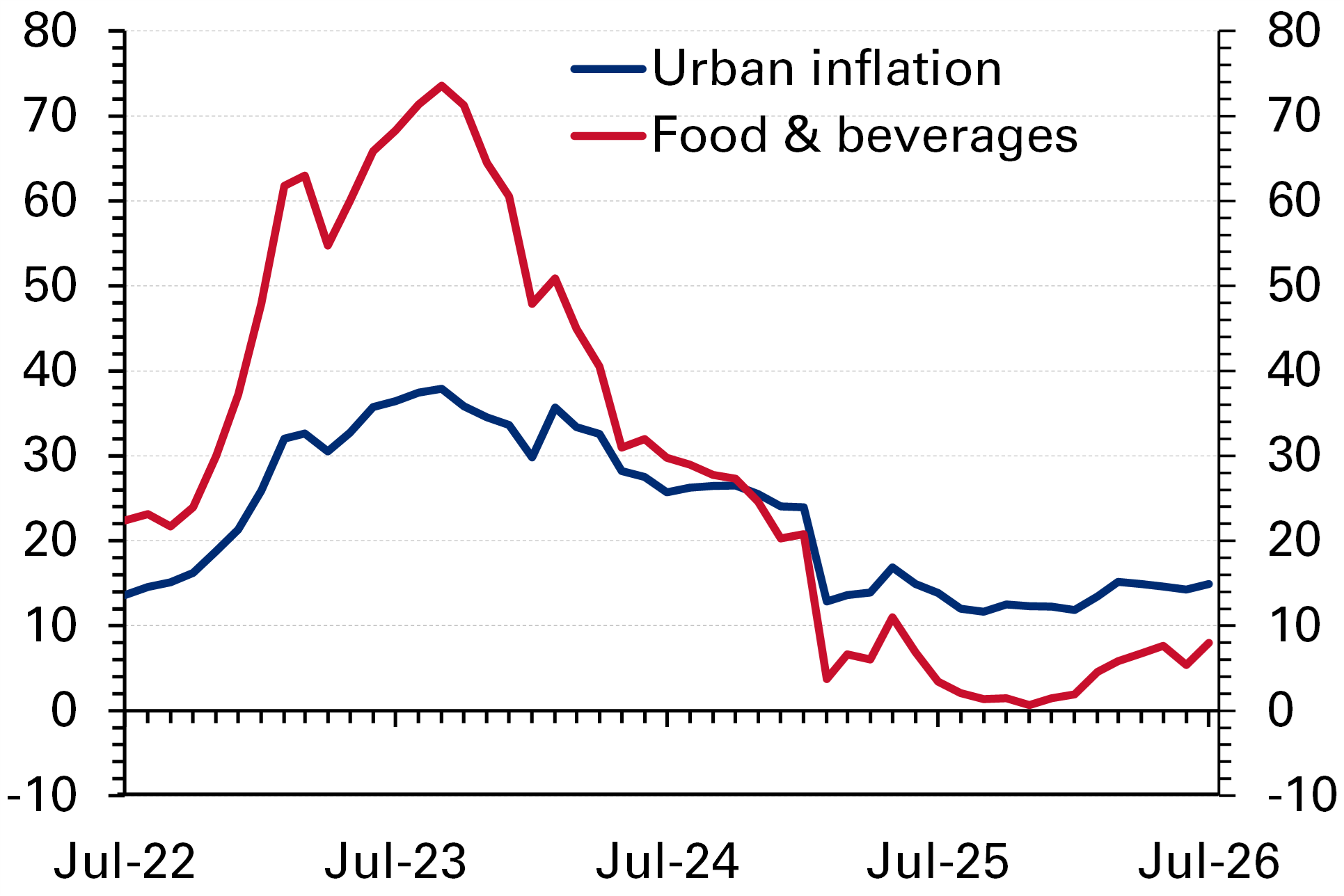
Egypt: CPI inflation accelerated in July. Urban consumer price inflation edged up to 14.9% y/y in July from 14.3% in June and marking the highest reading since April. The increase was primarily driven by accelerating food & beverages inflation, which rose to 8.0% y/y from 5.4% in June, the highest rate since May 2025, albeit driven by a year-on-year base effect. Inflationary pressures remained particularly elevated in housing & utilities at 41% y/y, broadly unchanged from the previous month while transport inflation held steady at 25%. Other categories recording stronger y/y growth included “furnishings and household maintenance” (17.9% versus 16.7%), healthcare (4.5% versus 4.0%), communications (11.4% versus 11.2%), and “restaurants and hotels” (12.5% versus 12.3%). The core measure of inflation also rose slightly to 14.7% from 14.3% in June. The Central Bank of Egypt had kept its key policy rates unchanged at its 9 July meeting (lending rate 20%), projecting that inflation could rise temporarily through Q3 2026 before gradually declining toward its target range, and arguing that the current monetary stance remains sufficiently restrictive to anchor inflation expectations and preserve positive real interest rates. Its next policy meeting is on 20 August.
Oil: Prices surged yesterday amid fading US-Iran deal optimism. Oil prices surged yesterday, with Brent futures settling 5% higher at $87.7/bbl as optimism surrounding a potential Strait of Hormuz agreement faded. Market sentiment shifted after US President Trump outlined additional demands on Iran, including reparations related to the deaths of US personnel and Iranian civilians over recent decades. The latest comments suggest that significant gaps remain between both sides despite ongoing diplomatic engagement, reducing expectations for a near-term breakthrough and prompting markets to rebuild part of the geopolitical risk premium that had been unwound in recent weeks. Attention now turns to tomorrow's releases of OPEC and IEA monthly oil market reports as well as the EIA’s weekly oil inventory figures, all of which will help provide an updated assessment on global supply and demand balances.
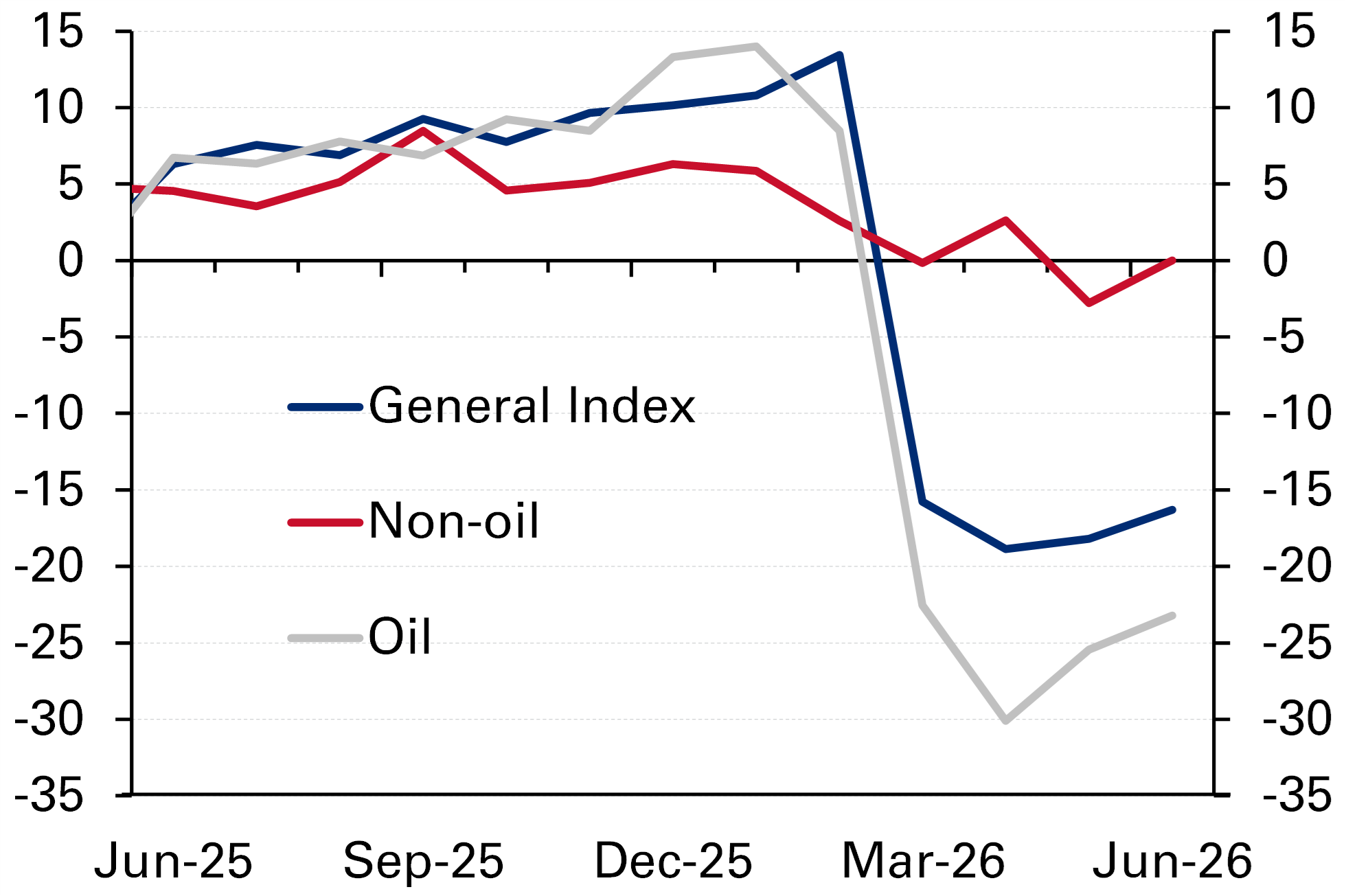
Saudi: Industrial production edged up in June on recovering oil and non-oil activity. Saudi industrial production edged up in June for the second consecutive month, with the index increasing to 92.3 from 88.5 in May, a monthly gain of 4.3%, according to preliminary estimates from GASTAT. In annual growth terms, the decline in the general index recorded since the outbreak of hostilities in the Gulf eased to -16.3% y/y from -18.2% in May. The overall improvement in June reflected an uptick in activity in both the oil and non-oil sectors, with the oil component—the main driving force of the decline—improving to its best level since February (+4.6% m/m; -23% y/y) while activity in the non-oil segment rose to its highest since October 2025 (+3.6% m/m; 0.0% y/y), reflecting gains in manufacturing, especially refining and chemicals production as well as in utilities. June’s figures echo both recent non-oil PMI and flash GDP releases, (-4.8% y/y in Q2), displaying the impact on economic growth and especially on oil production of the conflict in the Gulf.
US: Cleveland Fed President sees a need for more than one interest rate hike to combat inflation. Cleveland Fed President Beth Hammack, who dissented to vote in favor of a 25bps rate hike at the last FOMC meeting, mentioned that the current policy rate is not "meaningfully restricting" the economy, and “now is the time for us to start acting". She emphasized that “one 25bps move probably doesn't do a whole lot for the economy,” and therefore, may need “probably some number of [steps].” She also mentioned that "markets are a complement for the Fed," and not a substitute. In the last post-FOMC meeting conference, Chair Warsh had suggested that markets were effectively doing some of the Fed’s work, with nominal and real bond yields tightening in response to incoming inflation and economic data. Her remarks echo the views of another FOMC dissenter from the last meeting, Minneapolis Fed President Neel Kashkari, who earlier voiced his preference to “rather get going now in small steps” to avoid a really entrenched inflation problem. As we have written before, it seems that two camps have been forming at the FOMC, one that favors starting to raise interest rates immediately and one that favors raising interest rates, but only if inflation does not move closer to the 2% target in the coming months. What could change that is a sustained weakness in the labor market and July’s weak non-farm payrolls report indicates that this is a possibility. Futures market pricing currently indicates an above 50% probability of a rate hike in September.