
 +965 2292 4888


Daily Economic Update
11.10.2026
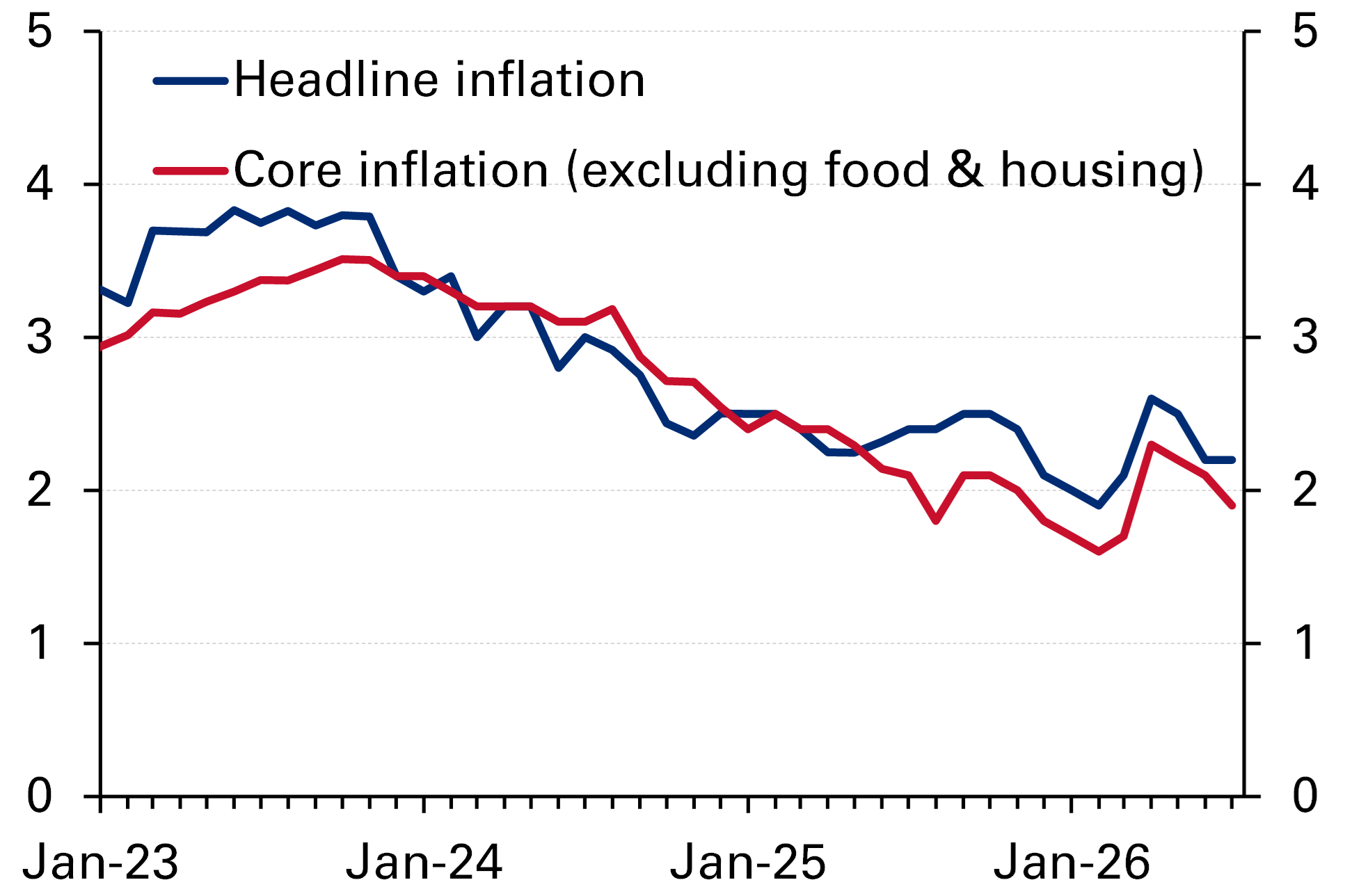
Kuwait: Inflation stable at 2.2% in July; core inflation drops to a four-month low. CPI inflation was unchanged in July at 2.2% y/y, with price rises across most sectors either unchanged or continuing along a disinflationary path which helped to offset an acceleration in food and transport costs in the month. Indeed, food & beverage prices rose 6.1% y/y from 5.6% in June, driven primarily by the volatile fish and seafood subcomponent. Meanwhile, inflation in the housing services category, the largest component in the CPI basket by weight (33.2%), was unchanged at 0.2% y/y, which has helped to anchor the headline rate. Excluding food and housing, core inflation eased from 2.1% in June to a four-month low of 1.9% y/y in July. Among core components, inflation in miscellaneous goods & services slowed to 4.2% y/y from 5.8%, while clothing & footwear eased to 0.5% y/y from 0.9%. Softer inflation, albeit to a lesser extent, was also recorded in the household furnishings and recreation & culture categories. Meanwhile, inflation in the healthcare, communication, education, and restaurants & hotels categories was broadly unchanged from the previous month. Transportation was the only major category to record a notable acceleration in July, with inflation here rising by 5.5% y/y from 4.8% in June after the government raised the price of “Ultra” gasoline. Overall, inflation has remained relatively contained in Kuwait since the regional conflict began, supported by government subsidies and price controls and has come in lower than expected. Indeed, among GCC countries reporting CPI data only Saudi Arabia had lower inflation in July (1.8%). Given this, on an annual average basis, the risks to our 2026 inflation forecast of 2.5% now seem slightly skewed to the downside with inflation in the first seven months of the year averaging only 2.2%.
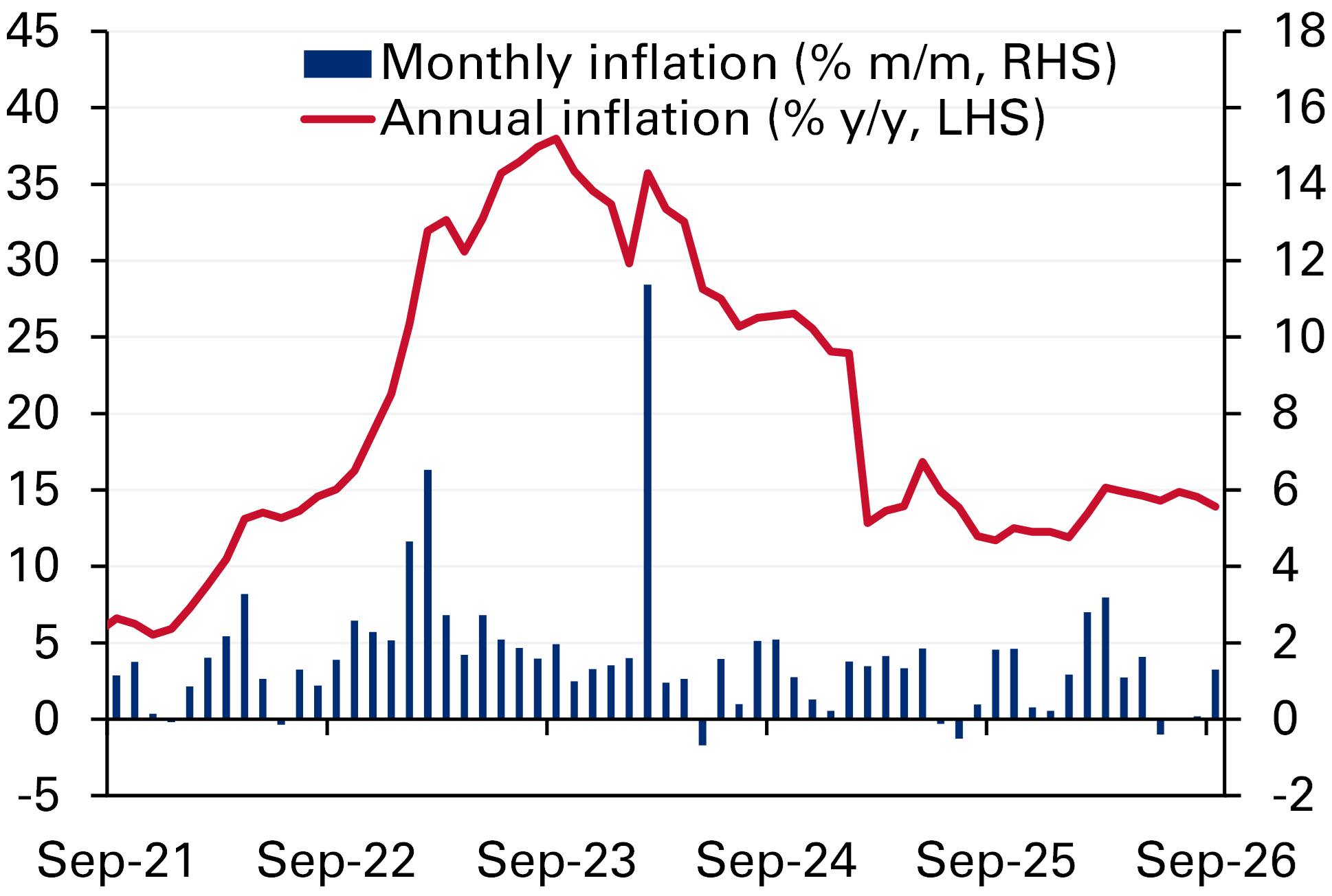
Egypt: Inflation eases to 13.9%, but monthly price pressures return. Annual urban inflation eased for a second consecutive month in September, slowing to 13.9% y/y from 14.5% in August, according to CAPMAS. The headline rate is now at its lowest level since February. However, monthly prices rose by 1.3%, the fastest pace since May, partly reflecting a rebound in food prices and a favorable base effect, as prices had increased by 1.8% m/m in September 2025. Food & beverage prices rose by 2.8% m/m, ending three consecutive months of decline and pushing annual food inflation up to 7.2% from 6.3%. Fresh vegetables were the main driver, with prices surging by 14.7% during the month, while meat and poultry prices increased by 2.2%. The lower annual inflation rate provides some relief for the Central Bank of Egypt, with the estimated real interest rate cushion supporting the carry trade widening to around 6%. With the next Monetary Policy Committee meeting scheduled for 29 October, September’s inflation reading will be the latest available when policymakers decide on rates. We expect the bank to keep policy rates unchanged at both its October and final, December, meetings.
US: Trump’s efforts to influence the Fed’s decisions continue with a renewed attempt to fire Fed Governor Cook. President Trump announced that he would form a committee to investigate Fed Governor Lisa Cook on alleged mortgage-related fraud, which would require her to appear for an in-person hearing in the White House on November 5. The committee includes the administration’s director of the National Economic Council, Kevin Hassett, chair of the US Equal Employment Opportunity Commission Andrea Lucas, and acting director of the Government Ethics office Keith Sonderling. The committee will submit its finding to the president, investigating whether there is necessary “cause” to fire Cook from her Fed post. Previously, the US Supreme Court in June had reinstated Cook on the Fed’s board after Trump fired her through a social media post last year while the case to establish the alleged fraud is still pending in lower courts. After appointing Kevin Warsh as Fed Chair earlier this year, the administration has continued to seek ways to influence the Fed’s decisions. The Fed raised the policy interest rate in September and is expected to hike it again over the coming months. Trump criticized the hike in September, accusing the Fed Board of being political. We note that the vote to hike rates by September was unanimous, and there is a solid inclination by nearly all FOMC members for further increases in the coming months. Trump remains under pressure to drive interest rates lower. However, considering several drivers including sustained above-target inflation rates, robust economic growth, an AI-linked spending boom, and higher energy prices, UST bond yields and overall borrowing costs for most corporate and household loans may remain elevated. We note that yields on UST 10Y and 30Y bonds are currently hovering near their highest level since 2002.
Eurozone: ECB meeting minutes suggest further tightening remains on the table as inflation risks stay skewed to the upside. The ECB's September meeting minutes revealed broad support for the Governing Council's decision to raise interest rates by 25 bps, with policymakers expressing growing concern that the inflationary effects of the Middle East-induced energy shock could prove more persistent than previously anticipated. Members noted that while wage growth and underlying inflation have remained relatively contained thus far, elevated energy prices are expected to keep headline inflation above target well into 2027, while core inflation is projected to remain above 2% throughout the forecast horizon. The accounts also highlighted concerns that a resilient euro area economy, supported by private consumption, fiscal spending and AI-related investment, could enable firms to pass higher input costs on to consumers more readily, increasing the risk of more persistent inflation. Importantly, policymakers stressed that September's rate increase should not be interpreted as the end of the tightening cycle, with the Governing Council expected to closely assess whether elevated energy costs begin feeding more broadly into wages and price-setting dynamics as winter approaches and European gas markets remain vulnerable.
UK: BoE’s Bailey sees subdued second-round inflation effects from higher energy prices currently but warns caution ahead. BoE Governor Andrew Bailey highlighted that second-round effects on underlying inflation from high energy prices are “currently quite subdued” but, reiterating his previous view, cautioned that “the longer the pattern of higher energy prices persists, the more difficult this situation becomes”. The BoE MPC has maintained policy interest rates for now, seeing a relatively softer impact on core inflation despite rising overall inflation due to higher fuel and other energy goods costs. However, the futures market is currently signaling a probability of over 85% that the BoE will raise its base rate by 25 bps at November’s MPC meeting. Meanwhile, amid rising global government bond yields, pressure on fiscal positions and the government’s annual budget due later this month, Bailey emphasized that fiscal policy should be credible and that a continued commitment to the policy stance was “needed more than ever”. He warned that “if markets doubt the fiscal path, yields rise further, which then feeds back”.
Japan: Household spending remained under pressure in August. Japanese household spending fell 3.1% y/y in August, but improved from a 3.6% decline in July, outperforming expectations (-3.6%). Nevertheless, the data marked the ninth consecutive month of contraction, highlighting the continued fragility of consumer demand amid persistent inflationary pressures. While the pace of decline was the mildest since May, spending remained weak across several key categories, including food (-1.4% y/y in August vs -1.3% in July), healthcare (-1.9% vs -6.0%), housing (-5.8% vs -16.4%) and clothing (-8.7% vs -0.3%). By contrast, expenditure on transport and communication returned to positive territory (+0.2% y/y) after contracting sharply in July, providing a modest offset to broader weakness. On a monthly basis, household spending edged up by 0.1%, extending gains for a second month, although the increase fell short of market expectations and pointed to only a marginal recovery in consumption.