
 +965 2292 4888


Daily Economic Update
20.07.2026
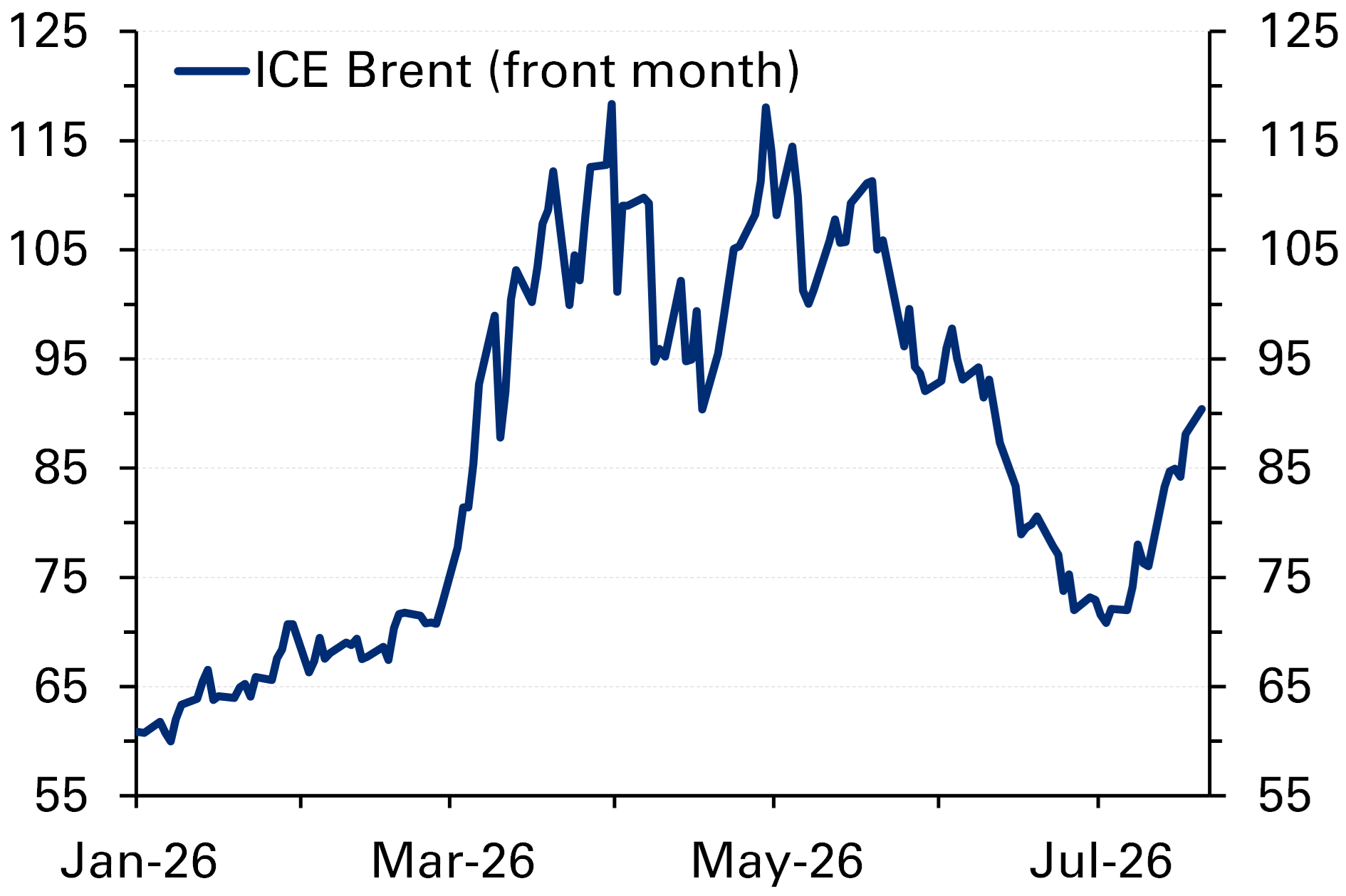
Oil: Brent surges past $90/bbl amid escalating Middle East tensions. Brent futures topped $90/bbl in early Asian trade this morning, having closed Friday at $88.1/bbl, returning to levels last seen before the signing of the US-Iran memorandum of understanding in June. Last week’s move capped the strongest weekly advance since April as geopolitical risks continue to dominate market sentiment, driven by a fresh escalation in US-Iran tensions with both sides exchanging strikes alongside the reimposition of blockades affecting both the Strait of Hormuz and Iranian ports. The latest developments have renewed concerns over regional oil supply disruptions and have prompted markets to rebuild a substantial portion of the geopolitical risk premium in oil prices that had largely disappeared following the ceasefire agreement. Sentiment was further supported by reports that the US is deploying dozens of refueling planes to Israel, a move that markets have interpreted as a sign of potential further escalation in the near term. With no meaningful diplomatic progress or indications of a cessation of hostilities, speculators appear increasingly concerned that the conflict could broaden and begin to pose a more direct threat to regional energy infrastructure and export flows. Meanwhile, fundamentals have also provided support. EIA weekly data show that US crude inventories, including both commercial stocks and strategic reserves (SPR), continued to decline during July. Indeed, EIA data show that in the w/e July 10, total crude stocks fell by 4.7 mb w/w, driven primarily by a 3 mb w/w draw in the SPR, which has now fallen to its lowest level since 1983. While the pace of inventory drawdowns had moderated through mid-June and early July as supply conditions temporarily improved, the renewed escalation in the Gulf has increased the likelihood of tighter market conditions ahead. Should disruptions to shipping through the Strait of Hormuz intensify or persist, inventory draws could accelerate once again.
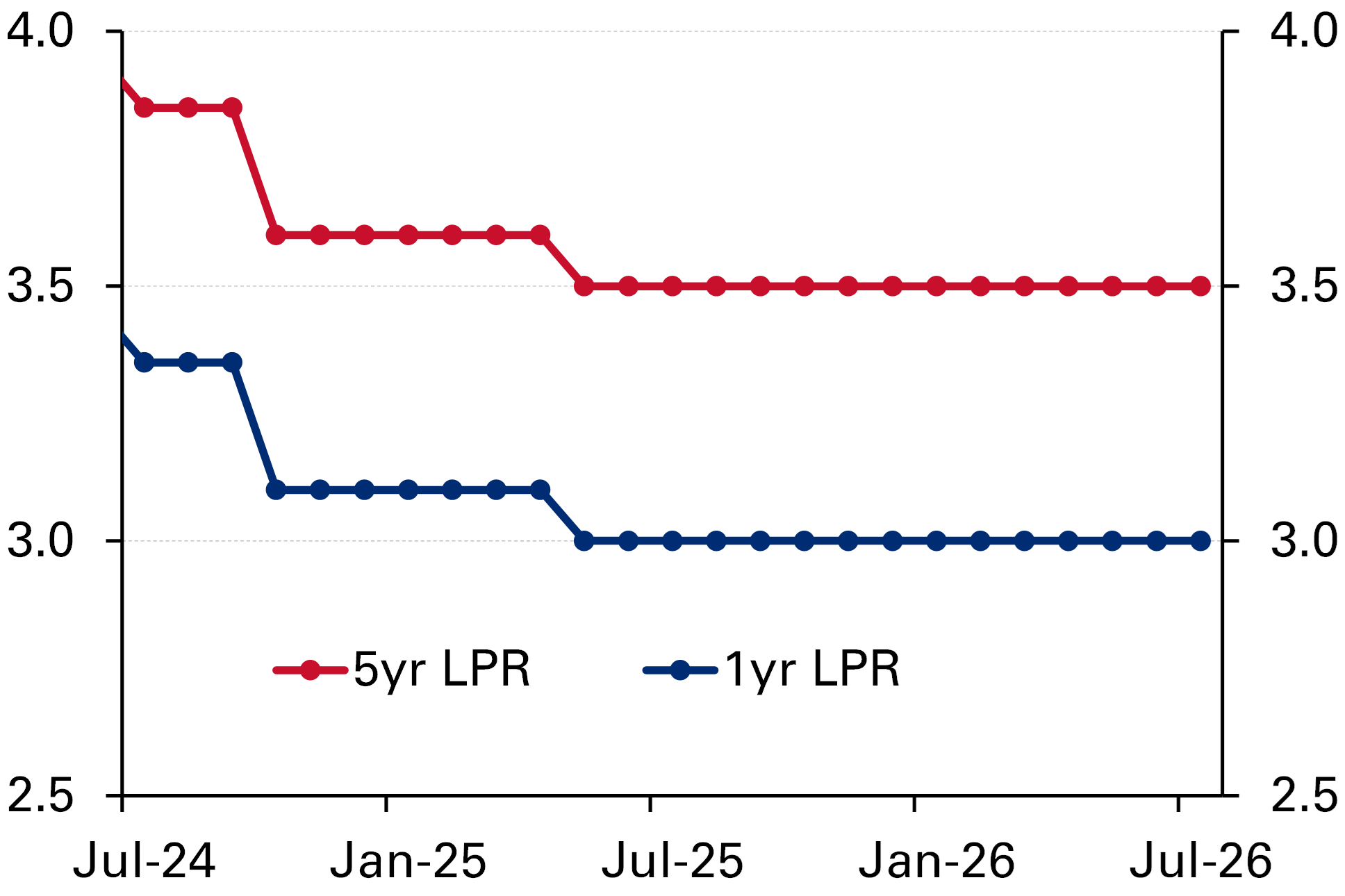
China: PBoC keeping lending rates unchanged in July. The PBoC left its loan prime rates unchanged in July, with the 1-year LPR at 3.0% and the 5-year LPR at 3.5%, extending the pause in policy rates to fourteen consecutive months as authorities continue to favor targeted support measures over broad-based easing. The decision reflects the policymakers’ ongoing cautious approach amid the economic fallout from the Middle East conflict and a slowing domestic economy, with second quarter GDP growth easing to 4.3% y/y, its weakest pace since Q4 2022, with weak consumption overshadowing gains in manufacturing and exports. That said, going forward attention will likely shift to the upcoming Politburo meeting for indications of whether policymakers will introduce additional measures to support domestic demand and stabilize the property sector.
Global: Global flash PMIs, ECB meet and UK/Japan June CPI inflation key events this week. In the US, the S&P Global flash PMIs for July are due on Friday, with the manufacturing measure expected to strengthen to 54.5 from June’s 53.9 but the services one seen modestly easing to 51 from 51.2. In the Eurozone, the ECB meets on Thursday, and the bank is widely expected to keep interest rates unchanged (the deposit facility rate at 2.25%) following June’s 25bps increase. The flash PMI surveys for July (Friday) are forecast to show broadly stable manufacturing (51.3 versus 51.4 in June) but improving services (49.8 versus 49.4) activities. In the UK, the focus will be on political developments and the likely announcement of a new Chancellor as Andy Burnham takes the PM role later today. In terms of data, the unemployment rate for the February-May period (Tuesday) is seen staying steady at 4.9% from the preceding three months, with flat regular pay growth at 3.4% y/y. CPI inflation (Wednesday) in June is expected to cool slightly to 2.7% y/y and 2.5% from May’s 2.8% and 2.6% for the headline and core rates, respectively. The consensus forecast indicates slowing retail sales growth (Friday) at 0.2% m/m in June following 1% in May. The S&P Global flash PMIs for July (Friday) are expected to show moderating manufacturing (52.1 from June’s 52.5) but recovering services (49.4 from 48.8) activities. Finally in Japan, June trade data is due on Wednesday, with exports projected to rise 18.6% y/y after a 17% increase in May, hitting the strongest growth in over three years, and imports seen up 21%. The street forecasts June’s core CPI inflation (Friday) to increase to 1.6% y/y from 1.4% in May, but remaining below the BoJ’s 2% target, helped by government subsidies. Finally, July’s S&P Global manufacturing PMI (Friday) is seen dropping slightly to still solid 54.5 from 54.8 in June.