
 +965 2292 4888


Daily Economic Update
21.07.2026
Oil: Prices swing as mediators push 10-day US-Iran ceasefire, Houthis threaten Saudi naval blockade. Brent crude futures closed 1.3% higher yesterday at $89.2/bbl after briefly trading above the $90/bbl mark in a volatile session. Prices have continued to retrace gains in early trading today, slipping to around $88.5/bbl as markets reassess the near-term geopolitical outlook. The pullback follows reports that Iran has received a 10-day ceasefire proposal aimed at de-escalating the current conflict with the US. Market participants appear to be interpreting the proposal as a potential pathway toward reviving the broader peace agreement, slightly reducing the risk premium that has built into oil prices in recent weeks. Offsetting some of the downside pressure, Yemen's Houthi militia group announced a naval blockade on Saudi Arabia, raising fresh concerns over shipping security in the Red Sea. The announcement is particularly significant given Saudi Arabia's increased reliance on the Yanbu to exports 4.5 mb/d of crude oil and condensates during the US-Iran conflict as an alternative route to the Strait of Hormuz. Nevertheless, the market response has been relatively muted so far as: (i) unlike recent escalations elsewhere in the region, the Houthis' announcement has focused on maritime navigation rather than direct attacks on Saudi oil infrastructure or export terminals, (ii) it remains to be seen if the blockade threat by the Houthis is actually enforced. As a result, while the development highlights the growing vulnerability of alternative shipping routes, market participants appear to be assigning a relatively low probability to an immediate disruption of Saudi crude exports. Overall, oil markets remain caught between competing forces. On the one hand, the ceasefire proposal has raised hopes for a diplomatic off-ramp to the conflict and a potential revival of the US-Iran agreement. On the other hand, the risk of disruptions across both the Strait of Hormuz and the Bab el-Mandeb Strait continues to underpin geopolitical risk premia and leaves crude prices highly sensitive to further developments.
UK: Burnham takes charge as PM, appoints John Healey next Chancellor, replacing Reeves. Andy Burnham officially became UK’s next PM and vowed to address cost of living pressures and nationalize utilities while pledging new public housebuilding. He also promised to stick to the previous administration’s fiscal rule but utilize “any flexibility within them”. Although he didn’t provide many details in yesterday’s remarks, the focus will be on his funding plans in case of any substantial populist or fiscally expansionary moves given already constrained public finances. UK bond markets came under selling pressure after his comment on “flexibility” within the fiscal rules, but gilt moves were also driven by the implications of rebounding oil prices for inflation and policy interest rates. Moreover, in a surprising development, Burnham appointed former defense secretary John Healey as next Chancellor of the Exchequer despite home secretary Shabana Mahmood being seen as the frontrunner for the post. For now, Healey is considered ‘centrist’ and ‘market-friendly’, but he previously clashed with former Chancellor Reeves to lift UK’s defense spending. Burnham and Healey’s economic policies and their impact on government finances will attract greater attention that could influence the UK bond and currency markets over the coming days.
US: Trump hits Canada with 50% tariffs, no exemptions for goods under the USMCA trade agreement. President Trump imposed 50% tariff rates on several Canadian goods citing discriminatory treatment to US goods shipped to Canada, under section 338 of the 1930 tariff act that has never been used and doesn’t require congressional approval. New duties on products including dairy, alcoholic drinks, clothing and furniture, are set to take effect in 30 days. However, the administration’s finding of discriminatory trade practices could eventually end up in court. These new tariffs will not apply to energy, potash, and critical minerals as well as products currently subject to section 232 sectoral duties such as metals. Significantly, there aren’t any exemptions for imports covered under the US-Mexico-Canada (USMCA) trade agreement which was the case with now-cancelled reciprocal levies. As a reminder, the US had recently decided against a long-term renewal of the USMCA trade agreement, which remains in force for now but will be subject to annual reviews. The latest section 338 tariffs could likely be used to gain leverage during further negotiations on the USMCA agreement. But in the interim, it will raise uncertainty for US importers and the overall trade environment.
Kuwait: Inflation declines again as earlier post-conflict pressures ease. CPI inflation eased to a three-month low of 2.2% y/y in June from 2.5% in May, reflecting a broad-based moderation in price pressures across most major categories. The slowdown was driven by softer inflation in both core and non-core components, suggesting that the impact of recent conflict-related supply chain disruptions may be gradually fading. Food & beverage inflation eased further but remained elevated at 5.6% y/y, with the moderation largely linked to slower price growth in the volatile fish and seafood component amid continued relaxation of conflict-related fishing restrictions. Meanwhile, housing services inflation, which carries the largest weight in the CPI basket and reflects largely rents, slowed to just 0.2% y/y from 0.5% in May, marking its weakest reading since August 2021 and perhaps reflecting easing demand pressures in the housing market. Meanwhile, a measure of core inflation which excludes food and housing also eased to 2.1% y/y from 2.2% previously, with most subcomponents recording slower price growth. A notable exception was the transport category, where inflation accelerated to 4.8% y/y from 4.5%, driven primarily by higher airfares. Air transport prices have risen by 22% since February, reflecting elevated travel costs amid the regional conflict. Elsewhere, inflation moderated across several discretionary spending categories, including clothing & footwear, household furnishings, and restaurants & hotels. Inflation in miscellaneous goods & services eased to a ten-month low as the earlier surge in precious metals prices continued to unwind.
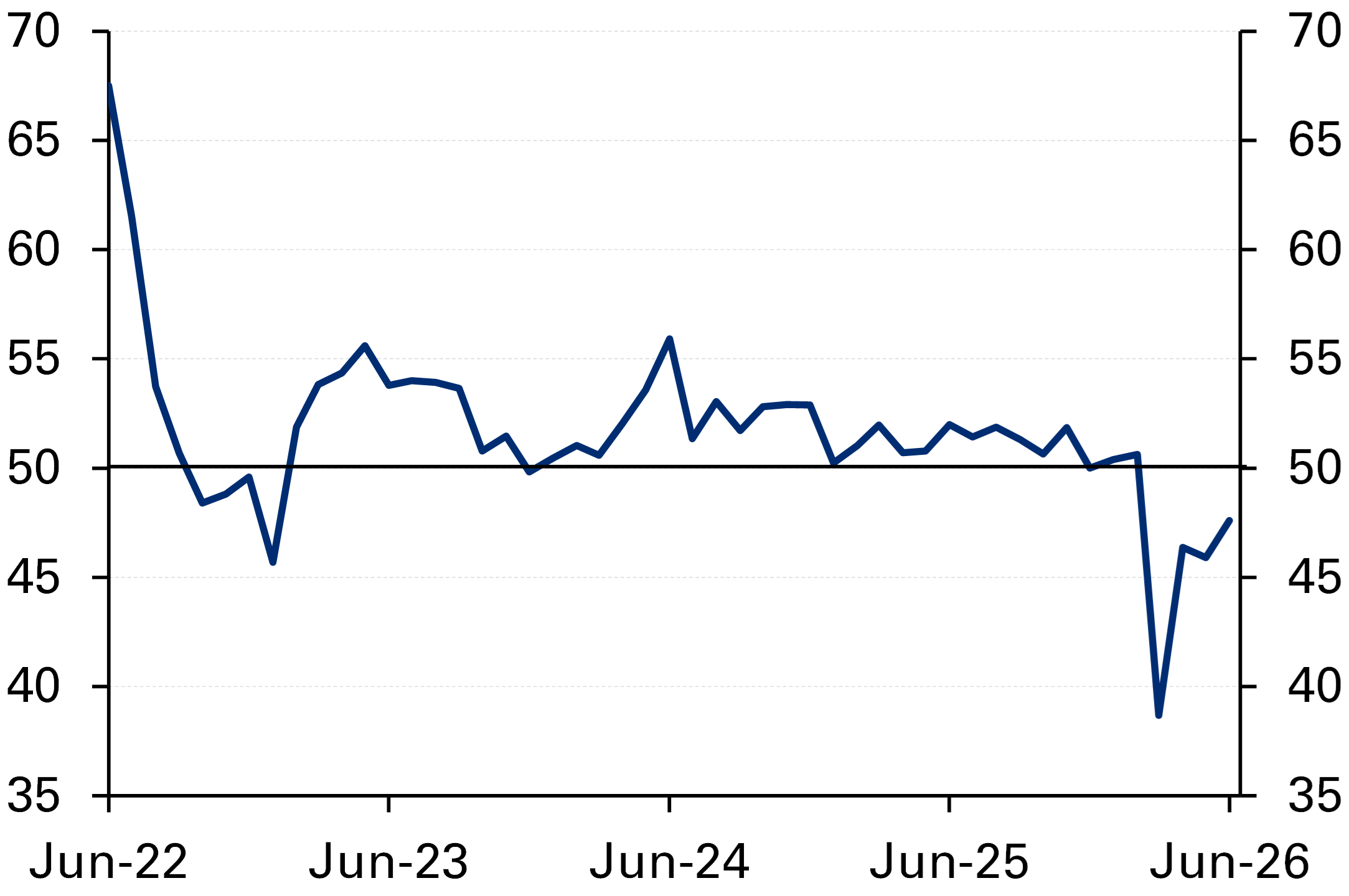
Saudi Arabia: Real estate prices rose in Q2. Overall real estate prices returned to growth in Q2 2026, with the price index rising 1.3% y/y after a decline in the previous quarter (-1.6%), driven mainly by a 2.6% increase in residential property prices and an 11.3% rise in agricultural land prices, while commercial property prices fell 3.2%. Residential land was the strongest performer, increasing 6.3% annually, although villa prices declined 9.7%. On a quarterly basis, overall real estate prices rose 3.0%, led by a 3.7% increase in residential properties. Regional performance was mixed, with Riyadh posting 4.2% y/y growth and Al-Jouf recording the highest increase at 10.4%. Separately, a GASTAT report on short-term economic indicators showed that Saudi business operating revenues index rose 11.4% y/y in May, reflecting strong activity led by mining and quarrying (+39%), financial and insurance services (+13%), and manufacturing (+9.6%). Employee compensation also increased (9.8%), indicating continued labor market strength. However, building permits fell sharply by 33% year-on-year, suggesting that while property prices and business revenues are rising, future construction activity may be moderating.