
 +965 2292 4888


Daily Economic Update
20.09.2026
Japan: BoJ raises rates and hints that more will come, but fell short of the market’s more hawkish expectations. The Bank of Japan delivered a widely expected 25 bps rate hike on Friday, raising the policy rate to 1.25%, its highest level in more than three decades. The decision was split 7-2, with board members Asada and Sato, who were appointed by Prime Minister Takaichi earlier this year, dissenting from the hike. The BOJ noted that low real interest rates are still providing support to the economy, while stronger corporate spending, solid profits, and resilient consumer demand are expected to support continued momentum in economic activity. The statement mentioned that “for underlying CPI inflation, there is a risk that it will deviate upward to a level above the price stability target of 2 percent”, that financial conditions are expected to remain accommodative after the hike in rates and that the “bank will continue to raise the policy interest rate and adjust the degree of monetary accommodation”. In the press conference, BoJ Governor Ueda was generally hawkish but it seems not enough to meet the market’s even more hawkish expectations with the yen falling more than 1% intraday on Friday, but then paring that decline to 0.6% for the day possibly helped by news circulating that the BoJ had conducted a “rate check” with market participants, which often heralds an intervention. Ueda mentioned that “it has become important to stabilize the rate of price increases at a level of around 2%,” importantly adding that “in that sense, I believe the phase of policy has shifted to a new stage.” On the data front, August CPI inflation was released just before the BoJ decision, and was unchanged at 1.9% y/y while the core rate (excluding fresh food) eased to 1.7% y/y from 1.8% in July, below market expectations (1.8%). Policymakers continue to view underlying price pressures as firm, supported by ongoing wage increases, pass-through of higher import costs, and a weak yen, reinforcing the case for the gradual normalization of monetary policy.
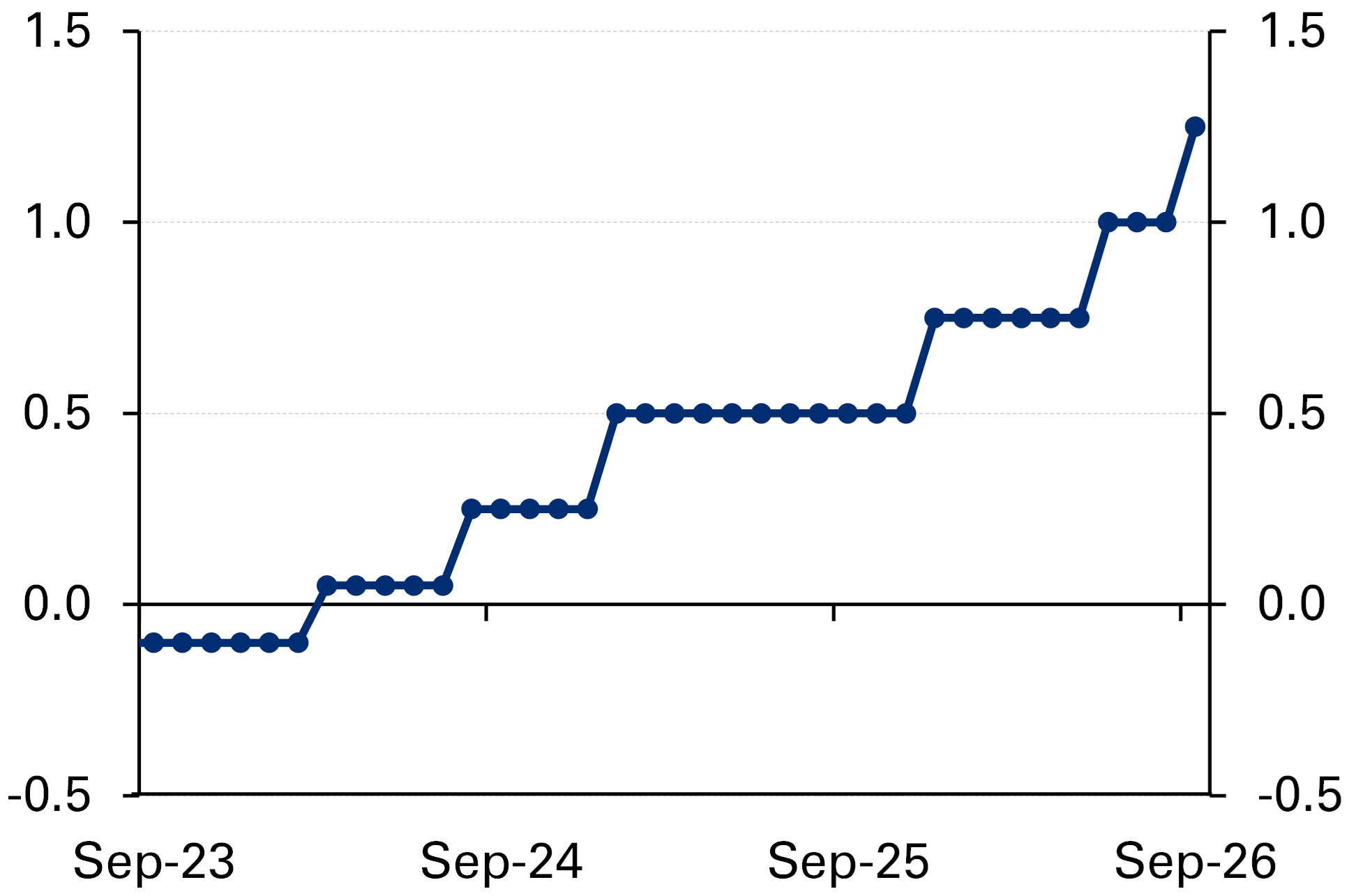
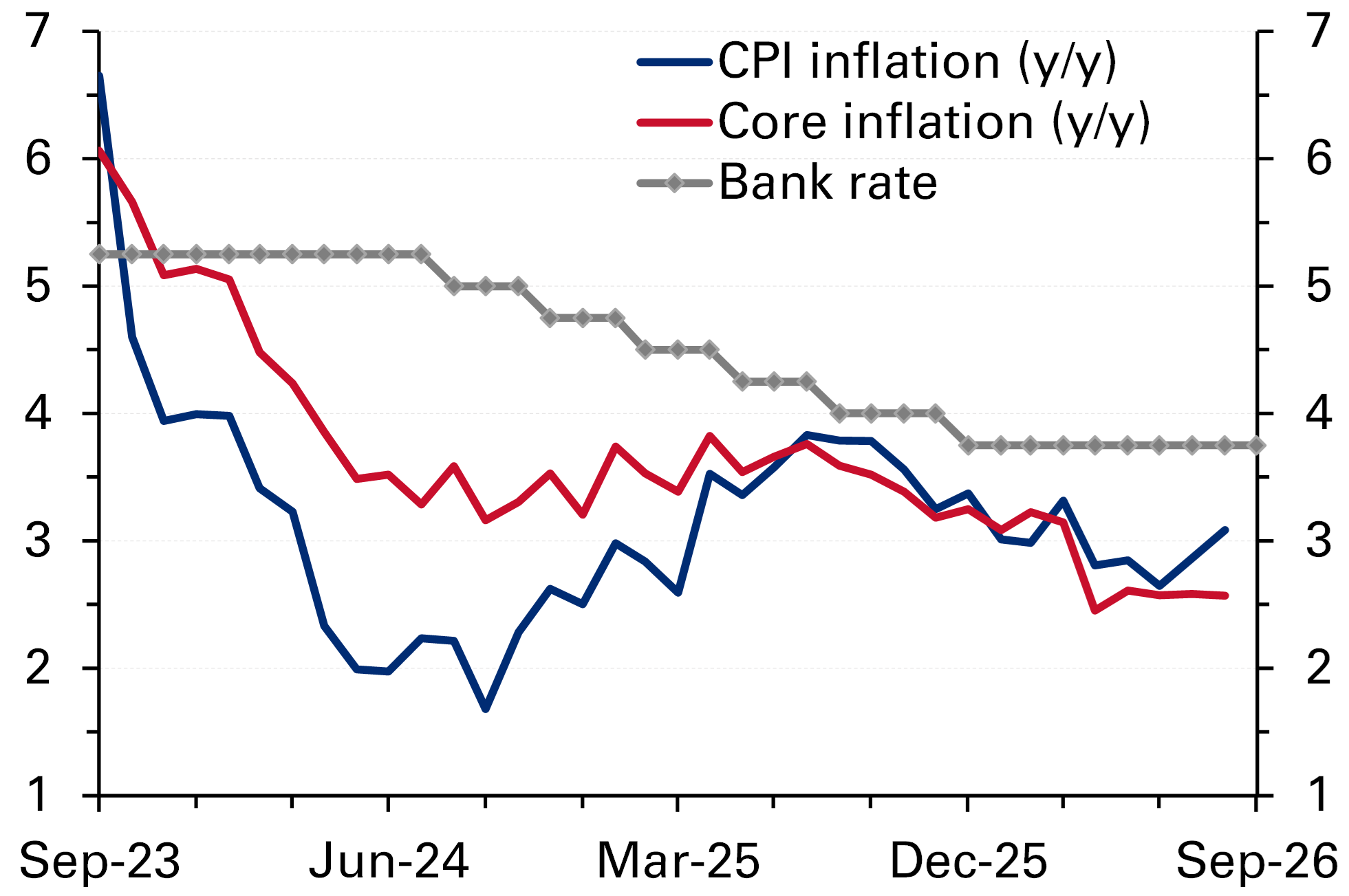
UK: BoE maintains policy rates but warns of potential hikes ahead on worsening inflation outlook; overhauls bond divestment plans, triggering a fall in gilt yields. The MPC, in a 6-3 vote, left the bank rate unchanged at 3.75%, with three dissenting members voting for a 25bps increase. The policy statement highlighted that second-round effects of higher inflation in price and wage-setting are limited for now amid soft labor market conditions, but risks are more tilted to the upside than as seen in July. The bank also sharply lifted its CPI inflation projection to around 3.75% in Q4 and slightly above 4% in Q1 next year versus the peak rate of 3.2% in Q4 2026 seen previously, based on currently elevated energy prices. It also raised its GDP growth forecast for Q3 to 0.4% q/q from 0.1% after July’s upbeat data. Governor Bailey underlined that “the longer this volatility [in global energy prices] persists, the bigger the impact it will have on inflation, and the more likely it is we will need to raise bank rate to ensure that inflation falls back to our 2% target,” adding “policy may have to tighten.” We note that global energy prices have steeply risen in the last few weeks (e.g. wholesale European gas-based load futures are up 50%+ since early August), that may start to transmit through underlying components over the coming months; still, the current weak labor market may help limit the rise. The futures market now signals an over 60% probability of a bank rate hike in November and around a 50% probability of two cumulative hikes by December. Additionally, in a surprising move, the MPC announced a complete overhaul of its gilts divestment plans, aiming to reduce securities held for monetary policy purposes (currently at £368bn) to zero by 2034 through active sales alongside maturing gilts. However, the committee would pause any gilt sales until April 2027, while scrapping plans to offload very long-dated gilts completely. The BoE aims to actively sell £20bn of medium tenor bonds every year through 2034, but they would instead be sold back to the Treasury’s Debt Management Office. These plans will be finalized by next April and would need to be signed off by the Chancellor. Following the announcement of reduced supply of gilts in the market by the BoE, gilt yields fell sharply across the curve, more so at the long end. Yields on 30Y bonds dropped by around 15 bps and 10Y ones by almost 10 bps on Thursday. Moreover, a decline in gilt yields should provide the UK Treasury with some breathing room as the steep rise in borrowing costs has worsened the already poor fiscal situation ahead of the upcoming Autumn budget in late October.
Saudi Arabia: CMA move could redirect $7 billion into domestic assets. Saudi Arabia’s Capital Market Authority (CMA) has introduced new restrictions on offshore investments by public money market funds. Under a recent circular, these funds will be required to reduce the share of their investments and assets held outside the Kingdom to 5% within two years. The move could redirect up to SAR 27 billion ($7.2 billion) into Saudi assets over the next two years. Public money market funds currently hold around SAR 40 billion abroad, meaning a significant portion of these funds could be brought back into the domestic market. While the potential inflow is relatively small, equivalent to around 0.8% of Saudi Arabia’s money supply, it could provide additional liquidity to the local financial system and support domestic money markets. The measure comes as the Kingdom faces rising public financing needs. By encouraging institutional funds to retain a larger share of their assets domestically, the CMA could help strengthen local liquidity and broaden the domestic investor base for Saudi assets.
Egypt: October fuel-price review comes into focus as oil tops $100/bbl. Egypt is approaching the Automatic Fuel Pricing Committee’s scheduled meeting in early October, with expectations building for another adjustment to domestic fuel prices. Brent crude has risen above $100/bbl, while the Egyptian pound has weakened to around EGP 52/USD, increasing the cost of energy imports. The combination of elevated global oil prices, a weaker currency and continued regional tensions has increased pressure on domestic fuel prices. The key question is whether the committee’s usual 10% cap on price adjustments, either up or down, will be sufficient to narrow the gap between domestic fuel prices and current import costs. The FY26/27 budget assumes Brent crude at around $75/bbl, meaning the recent surge in oil prices represents a significant deviation from the government’s original assumptions and could increase the fiscal and inflationary pressures associated with fuel pricing.