
 +965 2292 4888


Daily Economic Update
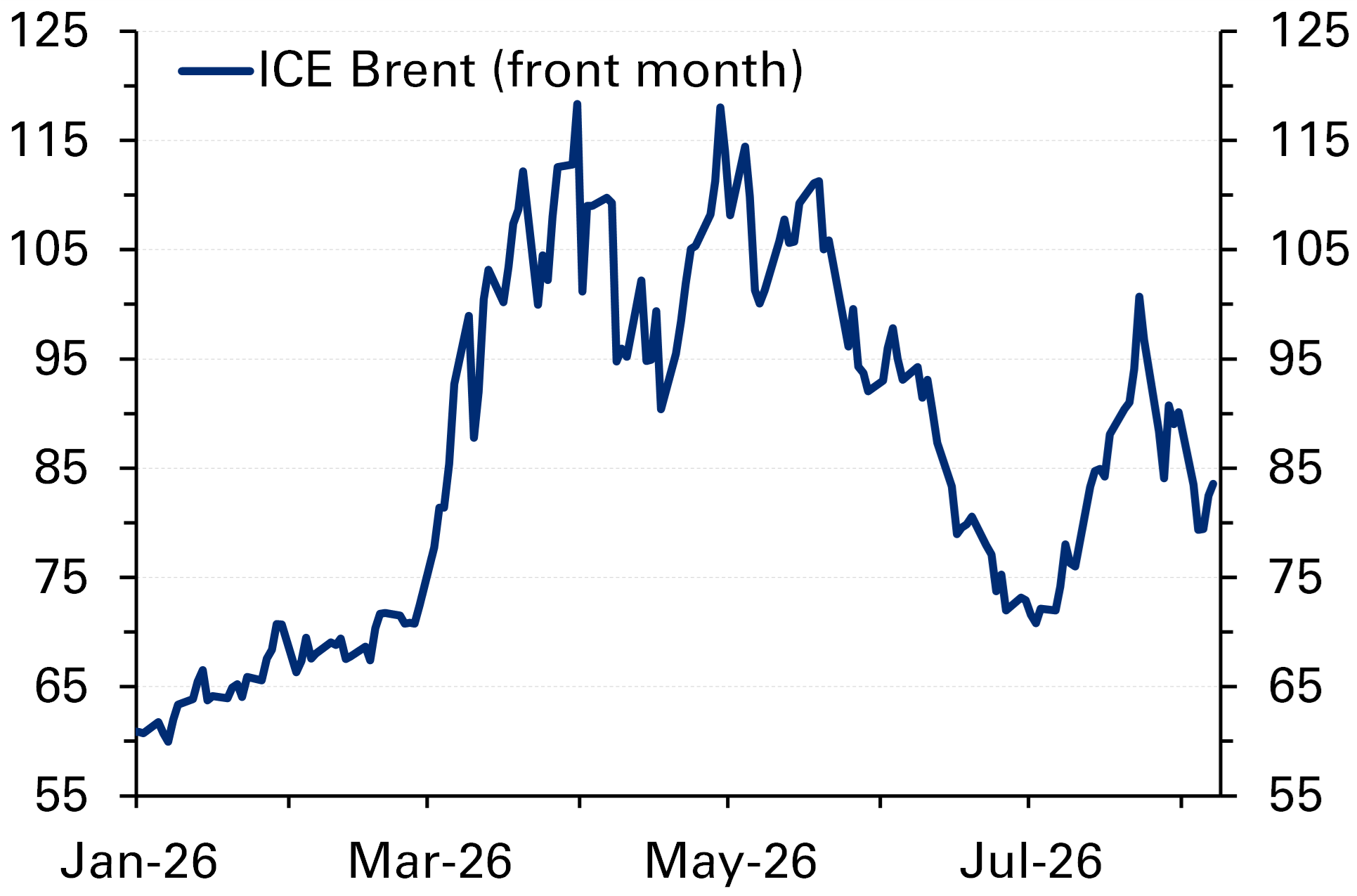
10.08.2026Oil: Prices declined last week but US-Iran diplomatic breakthrough prospects still unclear. Brent crude settled at $83.6/bbl on Friday, down 7.3% on the week overall as the market reacted to President Trump's early-August decision to cancel planned strikes on Iran, reinforcing expectations that both sides may be seeking to avoid a renewed escalation cycle. But losses were partially pared back during Thursday and Friday trading as reports that Iran was considering restrictions on US and Israeli vessels transiting the Strait of Hormuz raised concerns over the future security of regional shipping routes. At the same time, continued attacks by Yemen's Houthis on Saudi assets highlighted the persistence of risks to energy infrastructure and maritime traffic across the region. Meanwhile, US inventory data released last week carried a modestly bearish tone as the EIA’s figures showed a continued drawdown in the Strategic Petroleum Reserve, albeit at a softer rate of 2.8 mb during the week ending July 31. However, commercial crude inventories rose by 2.5 mb, suggesting that supply conditions remain relatively comfortable despite ongoing disruptions to Middle Eastern oil flows. Over the weekend, Iranian officials stated that negotiations with Oman on a new maritime transit arrangement through the Strait of Hormuz were nearing completion, raising expectations that a framework for normalizing shipping activity could emerge in the near term. However, Iran's Supreme National Security Council also reiterated its conditions for reopening the Strait, including an end to military threats against Iran and its regional allies, the removal of the US naval blockade and nearby military presence, compensation for war-related damages, the lifting of sanctions, and the unconditional release of frozen Iranian assets. Taken together, recent developments suggest that the market remains focused on the prospect of a diplomatic breakthrough, the road to which has been anything but smooth.
Global: US July CPI inflation and UK Q2 GDP key data points this week. In the US, attention will be on an important CPI inflation report (Wednesday), which is seen showing slower headline inflation of 3.4% y/y in July from 3.5% in June, with the core rate inching down to 2.5% from 2.6%. The July and August (due on 11 September) CPI inflation prints will be decisive for the FOMC’s next meeting on 15-16 September. PPI inflation (Thursday) is expected at 0.1% m/m in July after the index dropped 0.3% in June, while core PPI inflation is seen remaining flat at 0.2% m/m. Finally, the street projects retail sales growth in July (Friday) to ease to 0.1% m/m from 0.2% in June. In the Eurozone, industrial production (Thursday) is expected to be flat in June after decreasing by 0.2% m/m in May. In the UK, Q2 GDP growth (Thursday) is projected to be a relatively resilient 0.4% q/q, though down from 0.6% in Q1. Finally in Japan, PPI inflation (Thursday) is expected to pick up further to 7.4% y/y in July after hitting more than a three-year high of 7.1% in June.
Japan: Summary of Opinions of the BoJ’s July meeting highlights rising inflation risks. The Bank of Japan’s summary of opinions from the 30-31 July meeting, when policymakers kept the policy rate unchanged at 1.0%, revealed increasing concern about upside risks to inflation. The summary noted that resilient private consumption, robust AI-related investment demand, accommodative financial conditions and government support measures continue to underpin economic activity. Policymakers highlighted upward price pressures from a weaker yen, AI-driven demand and potential pass-through from higher import costs. The summary indicated that given the “greater consideration” that should be given to upside inflation risks than before, and depending on developments in economic activities and financial conditions, rate increases could proceed faster than markets currently expect.
UK: House prices nearly flat y/y in July, lowest increase since late 2023. UK house prices rose at the slowest pace since late 2023 at just 0.1% y/y in July down from 0.7% in June as per the Lloyds house price index (previously Halifax). On a monthly basis, the index was unchanged after rising 0.2% in June. The outlook for the UK housing market continues to be soft given tight household finances amid an anticipation of higher inflation over the coming months, elevated mortgage rates, and slowing wage growth.
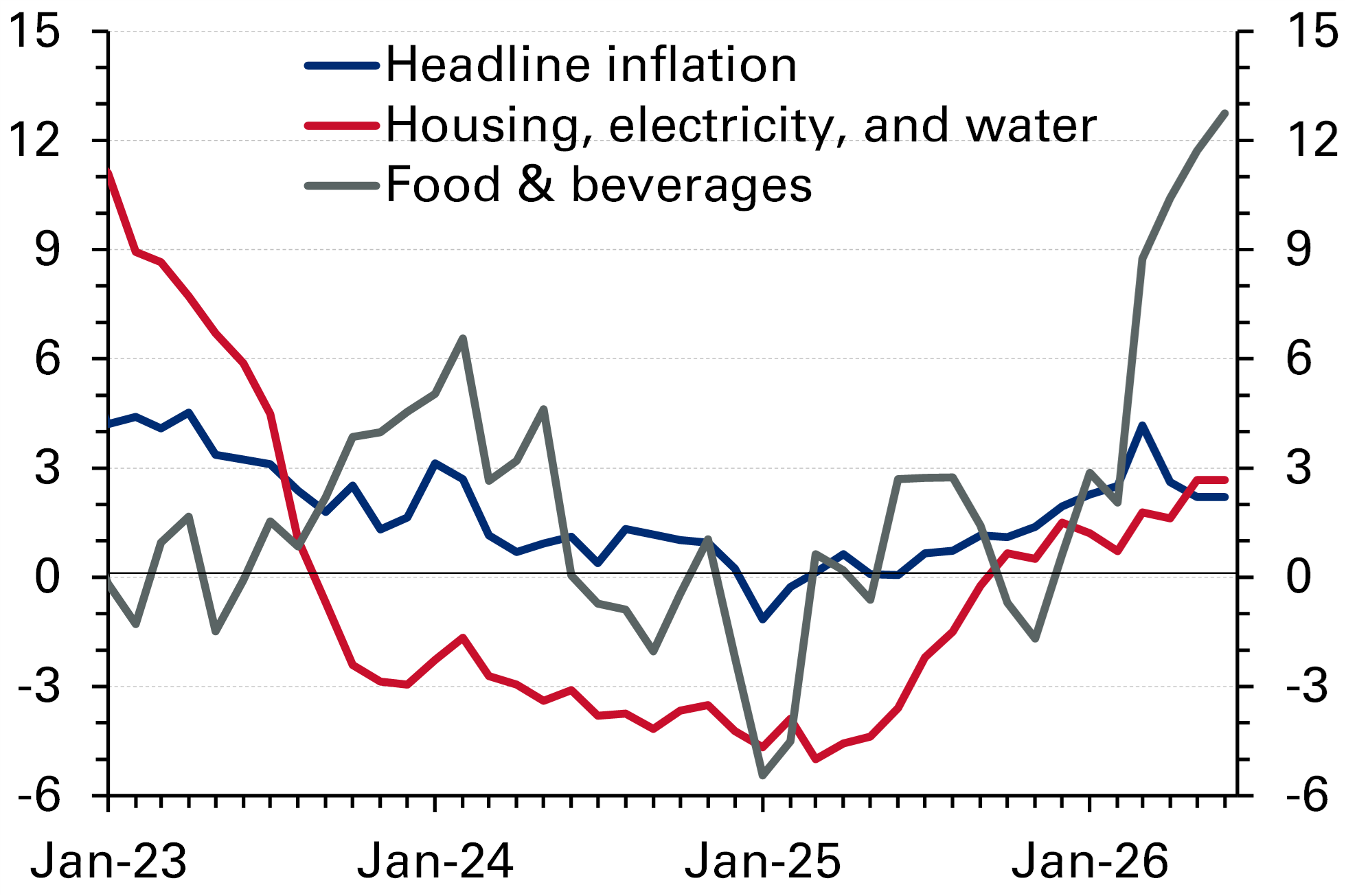
Qatar: Inflation steady in June. CPI inflation was steady at 2.2% y/y in June as accelerating food price pressures were offset by softer inflation across several other categories. The data suggest that while supply-related pressures remain evident in some segments of the basket, broader inflationary momentum remains contained. Food and beverage inflation accelerated to a record high of 12.7% y/y, marking a fourth consecutive monthly increase, likely linked to continued supply disruptions and higher transportation costs from disruptions in the Strait of Hormuz. In contrast, housing services, the largest component of the CPI basket, was unchanged at 2.7% y/y, helping to provide stability to the overall inflation reading. Price trends elsewhere were largely subdued. Inflation in furnishings and household equipment, health, and education remained broadly unchanged from the previous month, indicating limited underlying price pressures. Transport prices remained in deflationary territory for a fifth consecutive month, declining by 0.9% y/y, though the pace of contraction moderated from a multi-year low of -3% in May. Miscellaneous goods and services inflation eased further to 9% y/y, its lowest since January 2025. The moderation largely reflects softer precious metals prices and favorable base effects as last year's surge in gold prices continues to fall out of annual comparisons. Recreation and culture remained the weakest component of the CPI basket, contracting by 7% y/y. The decline, the sharpest since the pandemic-related downturn in 2021, likely reflects the continued impact of regional geopolitical tensions on leisure and entertainment-related spending. Overall, June's data point to a divergence in inflation trends, with food prices still rising strongly while softer readings across transport, recreation, and miscellaneous goods continue to contain the broader inflation picture.