
 +965 2292 4888


Daily Economic Update
04.08.2026
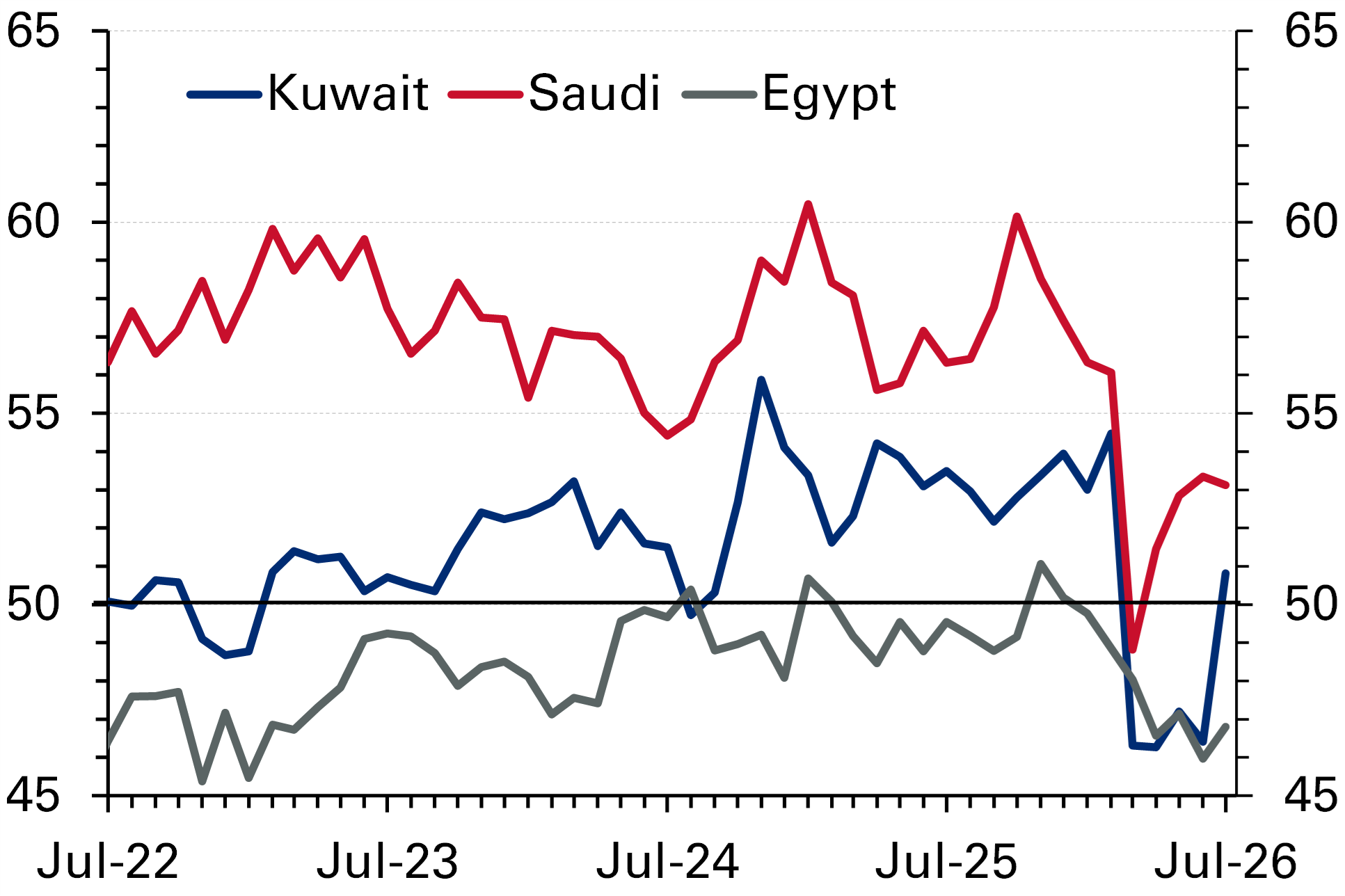
Kuwait: PMI rebounds in July to its best since the start of the US-Iran conflict. The PMI gauge of non-oil private sector activity recovered to 50.8 in July from 46.4 in June, returning to the expansionary above-50 level for the first time since the beginning of the US-Iran conflict in February. Improvements were across the board in terms of the activity metrics, with the output, new orders and employment subcomponents all returning to 50+ levels after four months of contraction, while even the hard-hit export orders balance also improved albeit remaining below 50. Inventory levels and purchases also rebounded after severe weakness in previous months, likely reflecting improved order books and demand but also indicating a welcome easing of supply chain pressures facing businesses. Input price pressures rose but remain below pre-conflict norms, while the output price balance fell back to the low-50s after hitting a near-five year high in June. Overall, the survey offers positive signals of an improvement in the economic climate at the start of Q3, probably reflecting a combination of an easing in tensions between the US and Iran after the signing of the MOU in mid-June, somewhat improved traffic through the Strait of Hormuz through the period and domestically, the resumption of a more consistent flight schedule at Kuwait airport. It remains to be seen how much of this improvement will be sustained in August following the reescalation in US-Iran tensions in the past weeks. Data for the survey were collected between 9-27th of July.
Saudi Arabia: Business activity continued to expand in July. The non-oil private sector PMI eased slightly to 53.1 in July from 53.3 the previous month, marking a fourth consecutive month of expansion in business activity. Output and new orders continued to increase, supported by recovering domestic demand and improving market conditions, although order book growth was weaker than historical averages. However, export orders declined for a fifth straight month, though at the slowest pace during that period, due to higher freight costs and competitive pressures. Meanwhile, employment rose modestly after no growth in June amid signs of spare capacity and the second consecutive month of easing work backlogs. Purchasing activity recovered slightly after a period of demand and supply challenges, with supplier delivery times and inventories also seeing modest improvement as local sourcing increased amid ongoing shipping disruptions. Inflationary pressures moderated as input cost growth slowed, but wage costs increased at the fastest pace in five months, with businesses passing some of the higher costs on to customers through higher selling prices. Looking ahead, business confidence weakened from June’s peak, with firms citing regional tensions and increasing competition as key factors limiting expansion plans.
Egypt: PMI shows signs of stabilization and improved confidence in July. The PMI remained under pressure in July, though improving slightly to 46.8 from a 41-month low of 46.0 in June. The survey pointed to a seventh consecutive month of weakening operating conditions with new orders and output continuing to decline amid subdued market demand, elevated prices, maritime shipping disruptions and a shortage of new projects. Export orders also weakened, reflecting the impact of regional tensions on external demand. Employment fell for the eighth straight month, though the pace of job shedding moderated, while backlogs of work rose sharply due to staffing shortages and raw material constraints. Purchasing activity contracted at its fastest rate since September 2023 and inventories declined as firms responded to weak demand and liquidity pressures by having leaner stock levels. On a more positive note, supplier delivery times improved for the first time since March, suggesting some easing in conflict-linked supply disruptions. Inflationary pressures softened with input cost growth slowing to a 6-month low amid lower oil prices, allowing output price inflation to moderate. Business sentiment reached its highest level since June 2022, with firms expressing greater optimism regarding future demand, though expectations remain contingent on regional developments.
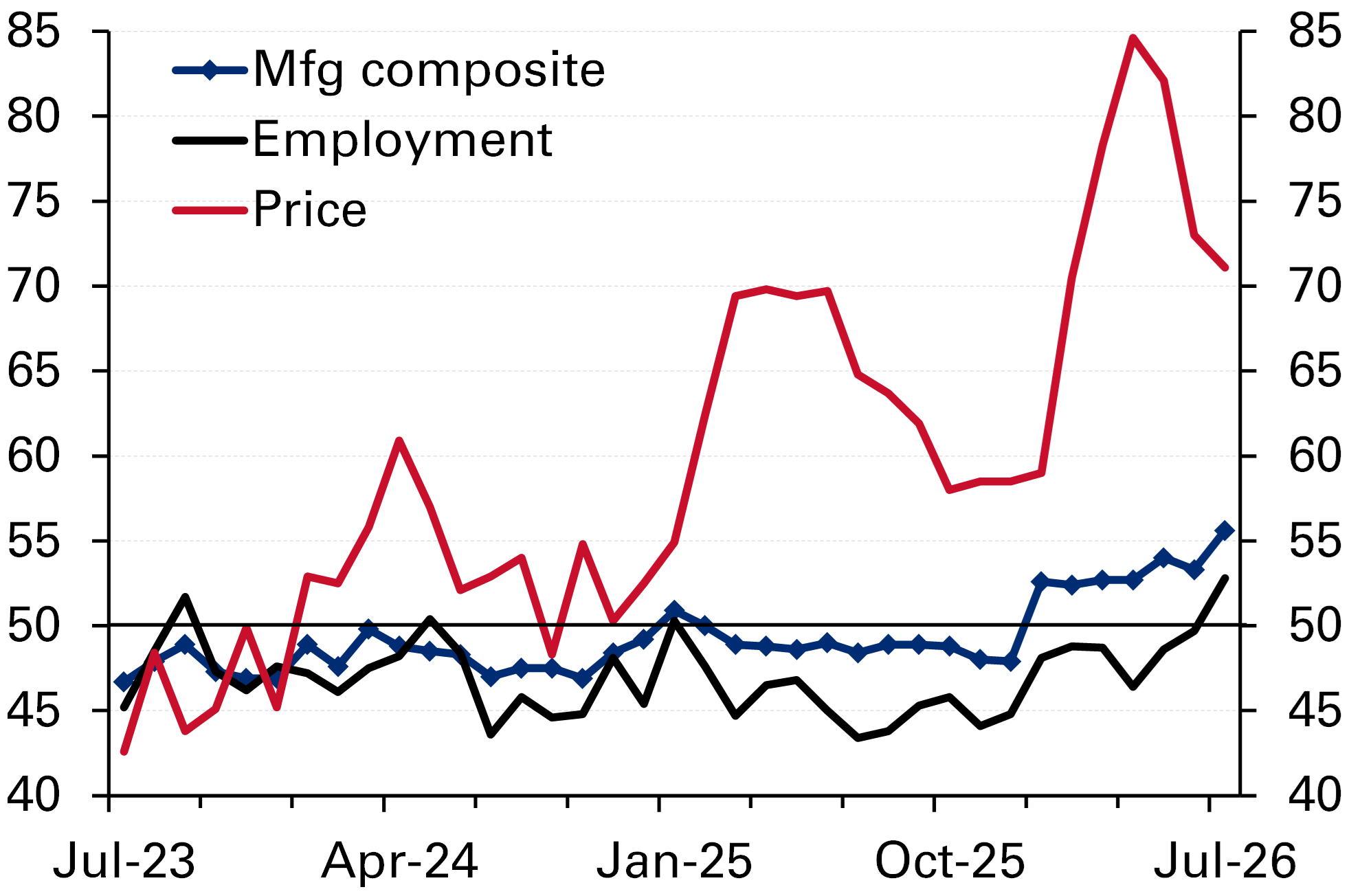
US: Manufacturing activity surges to an over four-year high; 25 US states legally challenge Trump’s latest tariffs. The ISM manufacturing PMI climbed to the highest level since May 2022 at 55.6 in July, beating forecasts and up from 53.3 in June. The expansion was broad-based as output accelerated to its highest reading since November 2021 while new orders also rose at a faster pace, and employment increased for the first time in 18 months. The price gauge moderated for the third straight month at 71.1 from June’s 73 but was still much higher than the pre-US-Iran war level of 59 in January. Manufacturing activity has remained in expansion territory since January, helped by an ongoing AI-related investment boom, rising government defense expenditure, and robust household spending momentum. Meanwhile, 25 US states (Democrat-led) filed a lawsuit against the Trump administration’s latest section 301 tariffs (10-12.5% duties on 60 trading partners) related to forced labor practices, in the US Court of International Trade. This comes after two small US businesses already sued, challenging the legal standing of the tariffs in courts. Such moves are similar to what was seen with the IEEPA tariffs that the US Supreme Court eventually struck down in February. The US administration has recently replaced the court-cancelled tariffs with sweeping duties under section 301 of a trade act.