
 +965 2292 4888


Daily Economic Update
29.10.2026
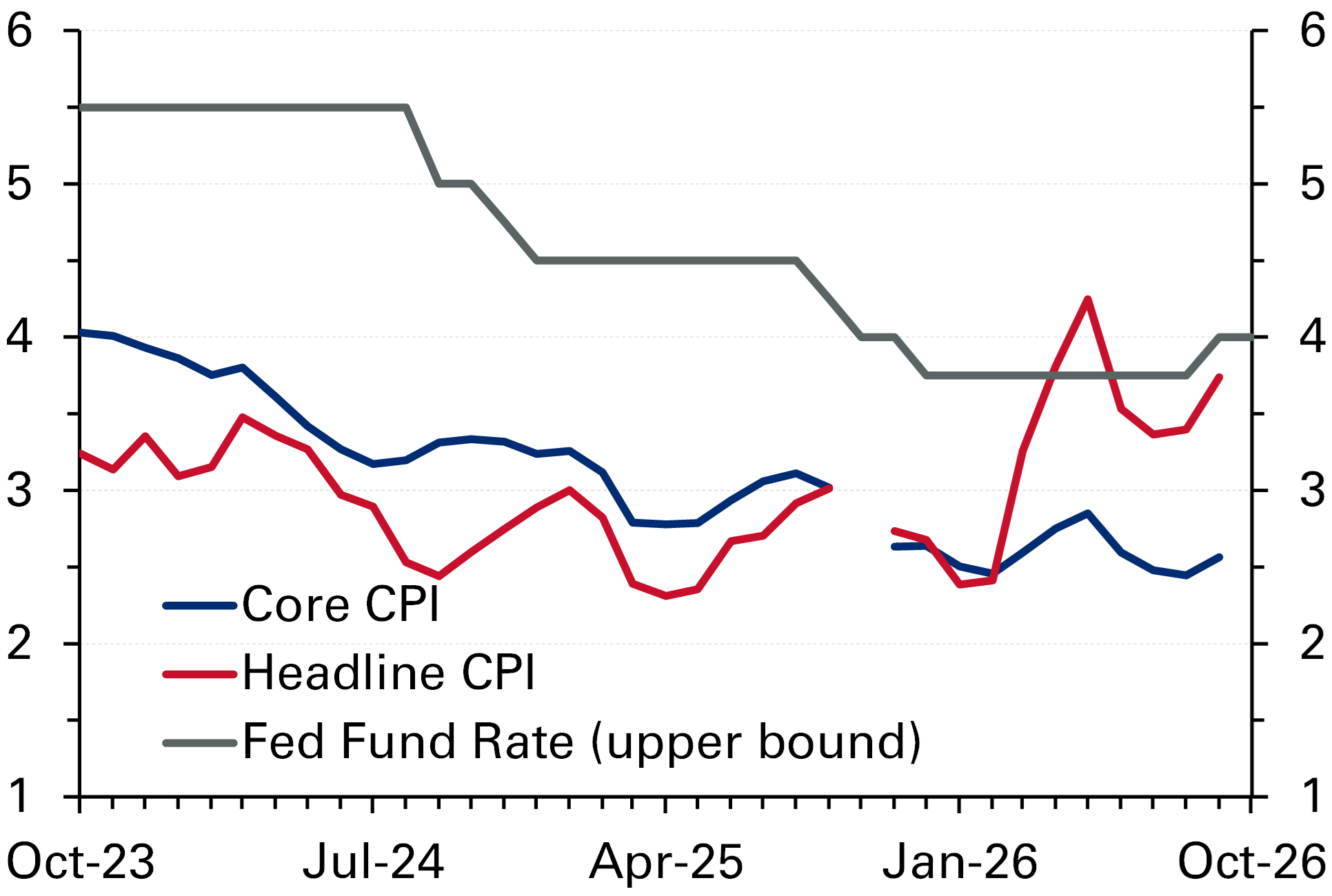
US: Fed maintains interest rates awaiting more data, Chair Warsh sees inflation too high but evades clear signals of a hike in December. The FOMC left the Fed fund target rate unchanged at the 3.75-4% range in a 10-2 vote, with Governor Cook and Cleveland Fed President Hammack dissenting in favor of a hike. The FOMC statement highlighted “the accumulation of more information will help the Committee determine the policy stance appropriate” in tacit justification of keeping rates on hold for now despite higher inflation and mentioned that “economy activity is expanding at a strong pace”. Chair Warsh, at the post-meeting conference, underlined inflation being too high, saying they haven’t delivered price stability yet, and affirmed the 2% inflation target. He also noted employment conditions were quite positive, but the economy wasn’t running too hot to cause inflation. Importantly, despite seeing some recent tightening in financial conditions, he expressed his unwillingness to label them tight enough, while noting that tighter credit conditions “go in the direction of achieving a longer and more durable period of price stability.” He had previously mentioned that tight credit conditions were doing some of the Fed’s work. He noted that higher interest rates would impact the wider economy including the AI-driven investment surge. Warsh also announced trimming the number of the FOMC policy decision meetings to seven in 2027, down from the current practice of eight per year, and further to six in 2028, stating that the remaining scheduled meetings will be non-policy ones discussing about the economy and other issues. Although Warsh acknowledged that inflation was too high, he didn’t send clear signals about a hike in December, leaving the door open. Following his comments, yields on 2Y UST fell, while the 10Y ones increased slightly, somewhat steepening the yield curve. The futures market pricing currently indicates an around 80% probability of a 25bps rate hike in December.
UK: Healey’s first budget delivers no major surprises, market reaction muted. Chancellor Healey’s first Autumn budget appeared a low profile one, delivering no major surprises. In terms of revenue measures, he temporarily doubled the additional tax rate on bank to 6%, raised rates on income from property and savings by an additional 2%, on top of 2% due to take effect in April as previously announced by former Chancellor Reeves, and increased taxes on gambling machines. To address the cost-of-living issues, he extended the freeze on fuel duties and VAT cuts on energy bills, while scrapping standing charges on some gas bills, and removed import tariffs on certain products. He also announced to give 20mn households a one-off payment of £100 each related to energy, costing £2.6 billion. He delivered minor steps to help support small businesses. Healey also vowed to lift defense spending to 3% of GDP by 2030 and to 3.5% by 2035, with details due in the next funding review. There was also a provision to enhance resources for the HMRC department to close the tax gap to enhance collections. The OBR, in its latest economic forecasts, raised GDP growth for 2026 to 1.2% from 1.1% projected in March, but reduced for 2027 to 1% from 1.6%. The fiscal deficits were seen at 4.2% of GDP in FY2026-27 (ending March) and 3.4% in FY2027-28. The headroom to meet the self-imposed fiscal rule of balancing current spending and revenues was reduced to £15 billion by FY2029-30 from £23.6 billion seen in March. Overall, the budget was mostly in line with the market expectations and didn’t deliver any major surprises, accordingly the market reaction was rather muted, with yields being relatively stable. Projection for higher growth in 2026 was also expected but the OBR now sees softer growth in 2027 than the IMF’s latest forecast of 1.2%.
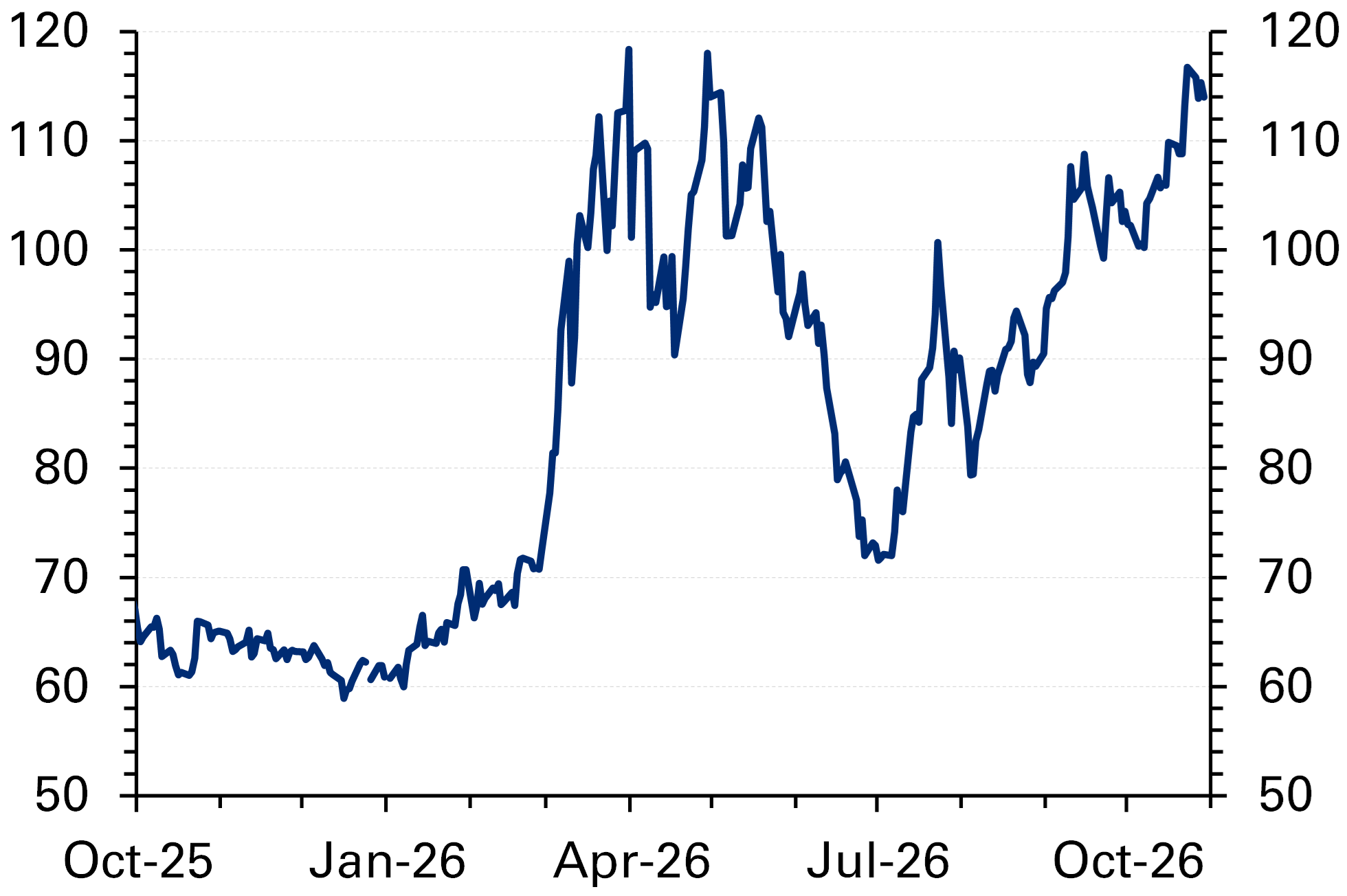
Oil: Prices lower in early trading amid news of diplomatic outreach between the US and Iran. Brent futures were trending lower in Asian markets this morning, reacting to reports that US and Iranian officials were in communication about ways to deescalate the conflict. Brent was trending at just under $114/bbl (-1.2% d/d; +87.3% ytd) at the time of writing, with traders taking some of the steam out of recent price rises on President Trump’s confirmation yesterday that negotiations between the two sides were indeed taking place. US Vice President Vance was also reported to have written to Iran’s top security official, Mohsen Rezaie, though President Trump explained this as being a gesture to provide medical supplies. In any case, oil’s 10+% increase this month reflects heightened tensions and mounting geopolitical risk; markets have increasingly priced in expectations that Washington could take a more aggressive approach following the mid-term elections, particularly after media reports earlier in the week suggested that President Trump was considering a limited but intense military campaign against Iran. These reports come on the heels of the US decision to evacuate some diplomatic personnel from parts of the region amid an escalation in hostilities, particularly from Houthi forces targeting Saudi Arabia. Meanwhile, diplomatic efforts to prevent a broader regional conflict have intensified. Turkey, Saudi Arabia, and Pakistan held talks with Iranian officials in Tehran on Monday, with Pakistan reportedly presenting what has been described as a possible solution to the conflict with American blessing. Iran's security chief, Rezaei, subsequently met with Iran’s Supreme Leader on Tuesday following the discussions, perhaps underscoring the importance attached to the talks. Saudi Arabia may also be seeking to leverage Iran's influence over the Houthis to reduce attacks on the Kingdom's energy infrastructure. However, there has so far been little evidence of a slowdown in hostilities, with the Houthis claiming responsibility for an attack on the 550 kb/d Ras Tanura refinery. While Saudi authorities have not reported any damage to refining operations, they confirmed that a nearby fire was successfully contained. Elsewhere, reports indicate that Washington and Moscow are discussing the potential return of American companies to the Russian oil sector following a future resolution of the Russia-Ukraine conflict. The discussions come ahead of planned peace talks in Abu Dhabi next month involving Russia, Ukraine, and the US, marking another effort by Washington to ease pressures in global energy markets. Attention now turns to Sunday's OPEC+7 meeting, where no changes to production quotas are currently expected as producers are likely to await greater clarity on geopolitical developments before considering any adjustments to output policy.
Egypt: CBE expected to keep interest rates unchanged for sixth consecutive meeting. The Central Bank of Egypt (CBE) is expected to leave interest rates unchanged at today’s Monetary Policy Committee (MPC) meeting, prioritizing exchange-rate stability amid persistent pressure on the Egyptian pound and escalating geopolitical risks, despite a recent slowdown in inflation. Annual urban inflation eased to 13.9% in September from 14.5% in August, while core inflation fell to 14.1% from 14.9%. Nevertheless, renewed pressure on the pound, foreign portfolio outflows from local debt instruments, and rising import costs could fuel inflation through higher domestic prices, limiting the scope for further rate cuts. With the real interest rate still around 5%, current monetary conditions provide room for the CBE to maintain its policy stance without further tightening. A rate hike appears unlikely, as it would reverse the easing cycle initiated earlier this year and increase borrowing costs for businesses and the government. However, continued pressure on the pound and elevated external risks, reflected in the cost of insuring Egyptian sovereign debt, are likely to keep policymakers cautious. The market will therefore focus on the CBE’s guidance on the timing of further easing. While the recent decline in inflation could support rate cuts before year-end, the CBE is likely to adopt a wait-and-see approach until the outlook for inflation, the exchange rate, and foreign capital flows becomes clearer. Therefore, the most likely scenario is that the CBE will resume the easing cycle in 2027 rather than doing that at the end of this year’s MPC meeting.
UAE: ADNOC expands industrial localization drive with AED60 billion manufacturing pipeline. Abu Dhabi National Oil Company (ADNOC) announced more than AED60 billion in local manufacturing opportunities through 2030, alongside a comprehensive overhaul of its procurement, supplier registration and In Country Value (ICV) frameworks aimed at accelerating industrial investment and supply chain localization. The initiative covers the local manufacturing of more than 200 essential products and critical spare parts, many of which are currently imported, while the company expanded its local+ program to more than 100 UAE manufacturers, up from 70 at its launch earlier this year. ADNOC also outlined a substantial project pipeline for 2027-2028, including offshore sour gas developments, export gas infrastructure, enhanced oil recovery projects, refinery upgrades, gas storage facilities, and oilfield developments, supporting its target to increase production capacity to 5mb/d by 2027 from a current capacity of 4.85mb/d. The company further announced that, from the beginning of November 2026, bids will be evaluated under a new framework weighted 70% to commercial competitiveness and 30% to ICV contribution. ADNOC noted that its ICV program has channeled more than AED307 billion into the economy since 2018, supported the localization of over 130 products, the development of 95 factories, and the creation of employment opportunities for more than 27,500 Emiratis, underscoring its role as a key driver of industrial diversification and private-sector growth.
Saudi Arabia: Hadaf plans to raise subsidized wage threshold to SAR 6,000 by 2028. Saudi Arabia’s Human Resources Development Fund (Hadaf) plans to raise the minimum monthly wage eligible for employment support in two phases. The threshold will increase to SAR 5,000 by April 2027 and then to SAR 6,000 by April 2028. The changes align with the phased implementation of the Ministry of Human Resources and Social Development’s decision to raise the minimum wage used to count Saudi employees under the Nitaqat Saudization program.