
 +965 2292 4888


Daily Economic Update
19.07.2026
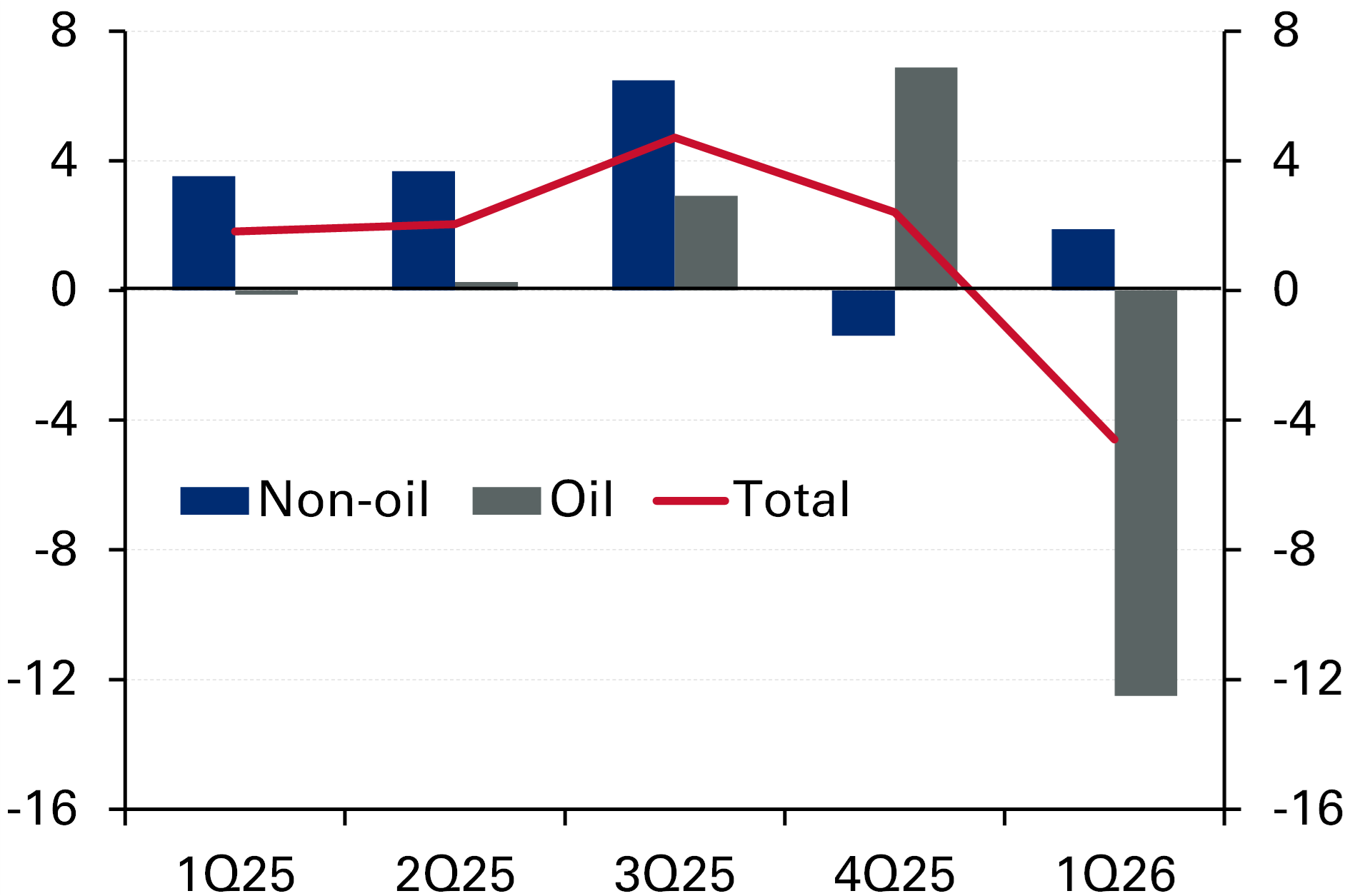
Kuwait: GDP contracts in Q126, weighed by regional conflict. Kuwait’s economy contracted by 4.6% y/y in Q126 (+2.4% in Q4 25) amid a decline in the oil sector, which more than offset a return to expansion in the non-oil economy. Oil GDP fell by 12.5% y/y during the quarter, with crude output down 12% y/y from 2.41 mb/d in Q125 to 2.12 mb/d in Q126, largely a consequence of the disruption caused by the Strait of Hormuz blockade which affected the final month of the quarter. In contrast, the non-oil economy returned to growth, expanding by 1.9% y/y after contracting 1.4% in Q425. The improvement was driven by strong performances in real estate and business activities as well as public administration and defense. Output in these sectors grew by 7.2% and 4.1%, respectively, with the latter recording its strongest growth since 2023. The data suggest that domestic demand and government-related activity provided some support to the broader economy despite the challenging external environment. Partly offsetting this strength was a sharp decline in manufacturing activity, which contracted by 8.6% y/y, with the weakness largely attributable to a drop in refined products output during March, also due to the regional conflict. There were no revisions to the previously released GDP estimates, however. Looking ahead, economic conditions are likely to have deteriorated further in Q2. The oil sector downturn is set to have intensified, with crude production falling by as much as 61% y/y during the quarter as disruptions to regional energy flows deepened, according to direct communication data submitted to OPEC, while the non-oil economy is also likely to have come under greater pressure as PMI readings remained in contraction territory throughout Q2, pointing to weaker business activity and softer private-sector demand.
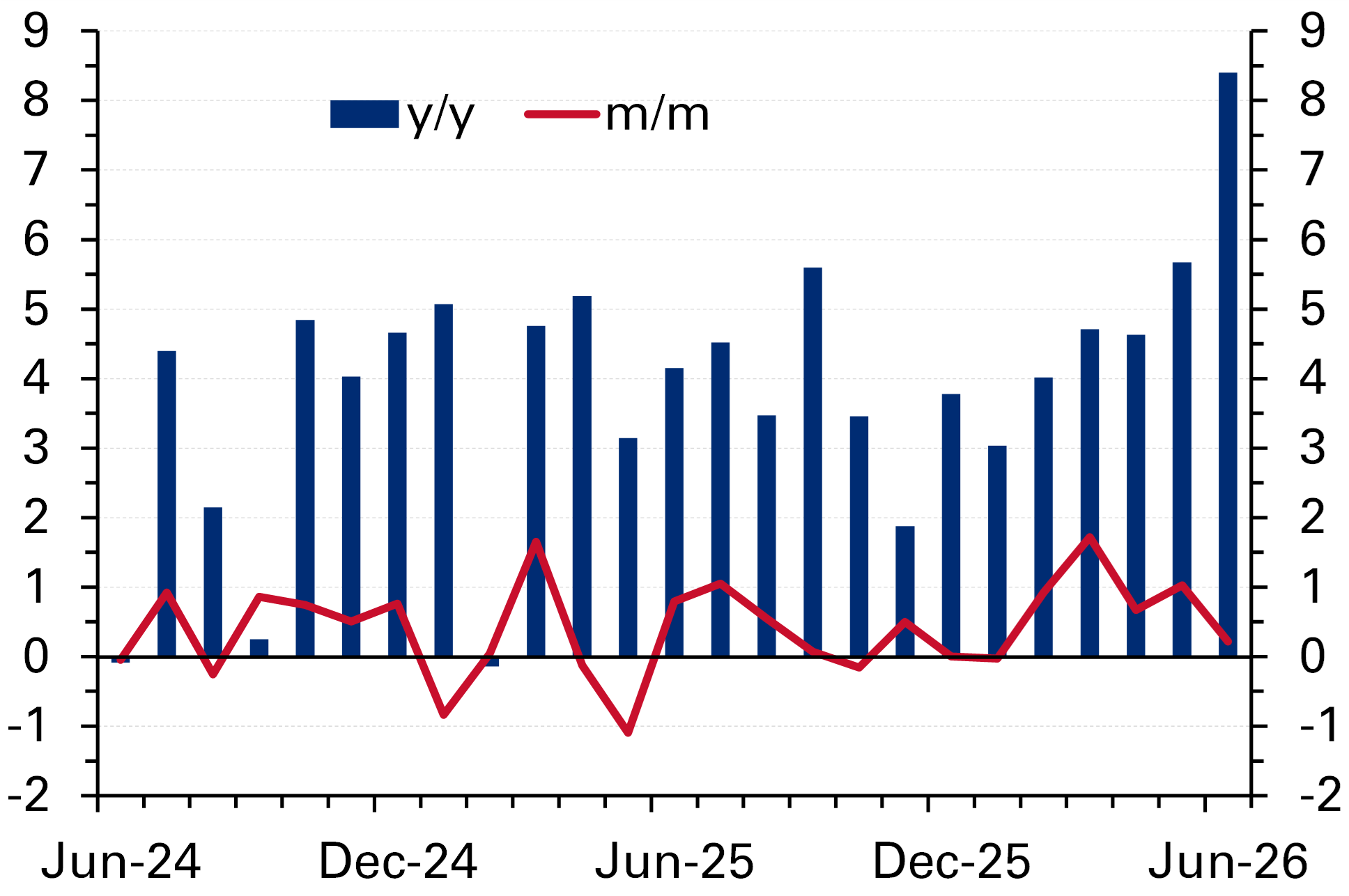
US: Underlying retail sales resilient, more Fed officials warn of high inflation risks. Core retail sales in June remained solid even though overall sales growth was sluggish at 0.2% m/m, down from an upwardly revised 1% increase in May, amid falling gasoline prices. Sales at gasoline stores fell 5.3% m/m after rising 2.6% in May. However, growth in a core measure of sales (excluding gasoline stores, auto, building material and food services) was solid at 0.5% following a 0.8% rise in May, suggesting resilient household spending that along with an ongoing AI-driven investment boom continues to support broader US economic momentum. Meanwhile, initial weekly jobless claims (w/e July 11) fell to a 10-week low of 208K from 216K the previous week, while continuing claims (w/e July 4) also eased to 1.8mn from 1.82mn the week before, indicating soft firing activity. Moreover, given relatively decent employment conditions, the focus of several Fed officials is increasingly shifting towards combating elevated inflation. Fed Vice Chair Philip Jefferson highlighted the current policy stance as being “well positioned,” but warned if “actual inflation does not start to cool down soon, I believe that it could be appropriate to reconsider” it. Dallas Fed President Lorie Logan (an FOMC voting member) mentioned that “if inflation is not heading all the way to 2% on its own, then at least some policy restriction is needed to help get it there,” believing “modestly higher interest rates would better balance the outlook and risks.” She also emphasized that one month of soft inflation data (June CPI inflation at 3.5% y/y, down from 4.2% in May) wasn’t enough and it was “time to finish the job of restoring price stability.” Kansas Fed President Jeff Schmid (a non-voting member) also expressed that his “primary concern is inflation, which is too hot and has been above target for too long.”
UK: Economy returns to growth as attention shifts to the Burnham administration. UK GDP grew 0.1% m/m in May, in line with expectations and following a 0.1% contraction in April, indicating that economic activity remained slightly volatile amid a challenging external environment linked to the Middle East war. Growth was driven entirely by the services sector, which expanded 0.3% m/m, supported primarily by professional, administrative, and information-related activities. Meanwhile, both production (-0.5% m/m) and construction (-0.8% m/m) declined during the month. That said, despite the mixed monthly performance, GDP rose 0.7% in the three months to May, suggesting that the recent slowdown has so far not derailed the broader modest growth trend. However, market attention is likely to remain focused on political developments, with former Mayor of Manchester Andy Burnham set to officially take office as Prime Minister on 20 July, replacing Keir Starmer who stepped down last month on falling approval within the Labor Party. Investors will also be watching for any implications for UK-US relations, given Burnham's past criticism of President Trump and signs of policy differences between the two leaders. Meanwhile, media reports speculate that current Home Secretary Shabana Mahmood may be appointed Chancellor of the Exchequer, replacing Rachel Reeves. Mahmood is seen as being relatively on the right side of the center-left Labor Party.