
 +965 2292 4888


Daily Economic Update
06.08.2026
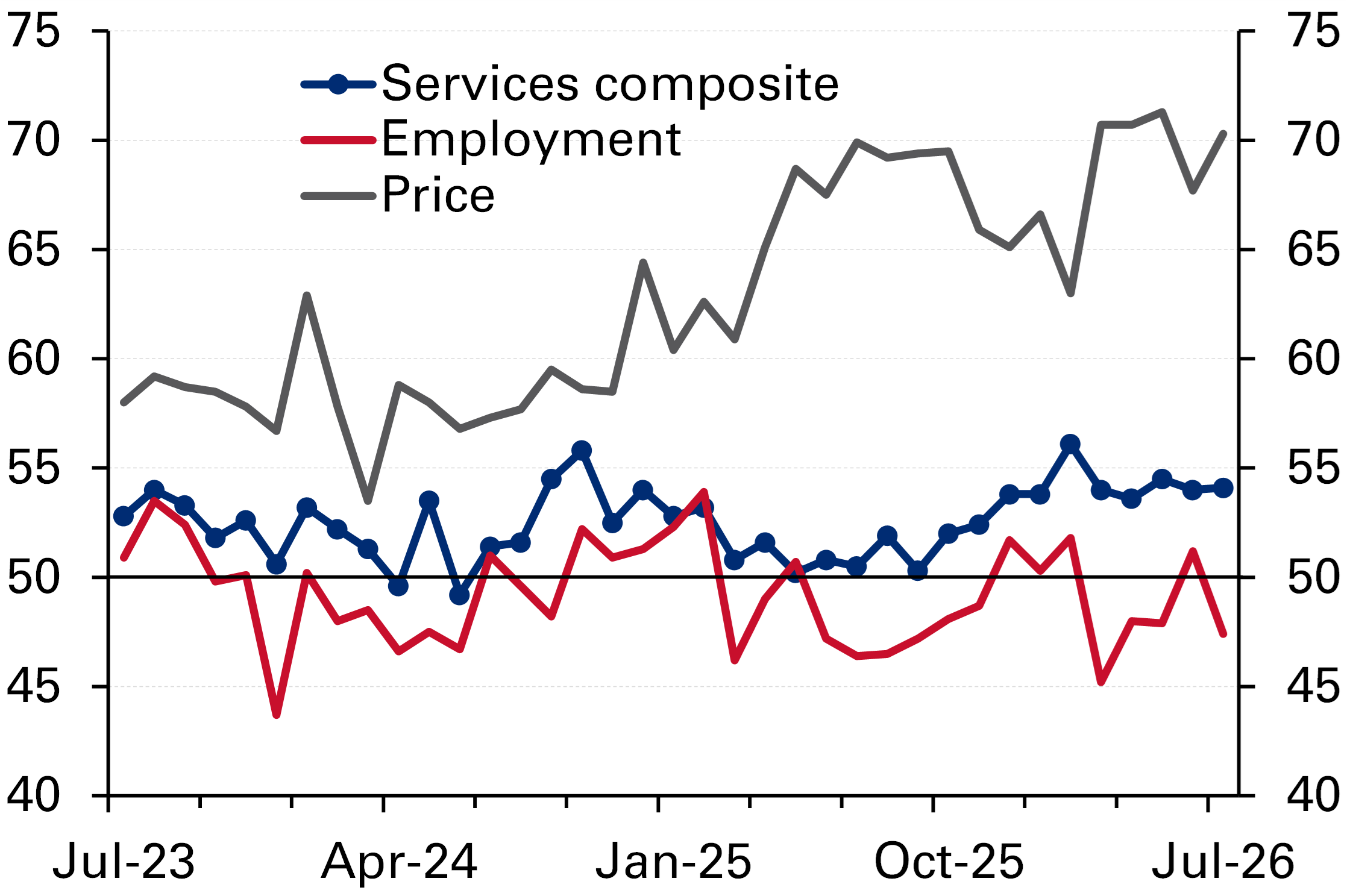
US: Services activity resilient, but price pressures intensify; Fed officials wary of inflation risks. The ISM services PMI inched up to 54.1 in July from 54.0 in June, but below the consensus forecast of 54.5, helped by accelerations in business activity and new orders amid the FIFA World Cup event during the month. However, employment shrank after a brief rebound in June, with the gauge falling to a four-month low of 47.4 from 51.2 in June. Moreover, the price measure climbed to 70.3 from June’s 67.7, reflecting the fresh increase in energy prices. Overall, there were mixed signals in the latest services activity report showing resilient demand, but with elevated inflation and weak employment. Separately, Fed officials are growing increasingly wary of higher inflation risks. Minneapolis Fed President Neel Kashkari, one of the three dissenters who wanted to raise the interest rate by 25bps at last month’s FOMC meeting, emphasized that “now is the time to start slowly moving up as we get more data in,” seeing more work to be done to bring inflation down. He highlighted his preference to “rather get going now in small steps than wait till later, then we have a really entrenched inflation problem and have to raise rates aggressively.” Importantly, he underscored that “there is value in continuing the tradition of explaining our reaction function to the public,” disagreeing with Chair Warsh’s communication style, which has been not only stopping forward guidance but also not explaining the Fed’s reaction function (i.e. how it might adjust policy in response to changes in the economic climate). Meanwhile, Fed Governor Lisa Cook, acknowledging “too high” inflation, stated that “if I do not see signs of continued disinflation soon, I am prepared to act,” as “the risk grows that higher inflation may become entrenched in price and wage setting behavior.” Moreover, another FOMC voting member, Philadelphia Fed President Anna Paulson, recently mentioned that “policy has been mildly restrictive to get underlying inflation back down to 2%,” but we “need to see progress from here,” despite saying her decision to support a hold at the last meeting wasn’t a close call. Overall, it seems that two camps have been forming at the FOMC, one that favors starting to raise interest rates immediately and one that favors raising interest rates, but only if inflation does not move closer to the 2% target in the coming months. The futures market currently assigns around a 55% probability of a 25bps rate hike at FOMC’s next meeting in September.
Egypt: Foreign reserves reach record $56.3 billion in July. According to the Central Bank of Egypt, foreign exchange reserves climbed to a historical high of $56.29 billion at the end of July 2026, rising by $1.22 billion from $55.07 billion in June and extending their growth streak to 47 consecutive months. The rise was mainly driven by stronger foreign currency holdings, which grew to $38.7 billion while the central bank’s gold holdings remained stable at roughly 4.17 million ounces. Meanwhile, remittances from Egyptians working abroad increased by 31% y/y during the first eleven months of FY2025/26 (July 2025 to May 2026), reaching a historic US$43.1 billion, compared to US$32.8 billion during the same period of the previous fiscal year. On a monthly basis, remittances rose by 13.5% y/y in May 2026 to approximately US$3.9 billion, up from US$3.4 billion in May 2025. Together, record remittance inflows and the continued accumulation of reserves significantly enhance Egypt’s foreign exchange buffers, reinforce confidence in external liquidity, and improve the country’s ability to absorb potential shocks.