
 +965 2292 4888


Daily Economic Update
24.08.2026
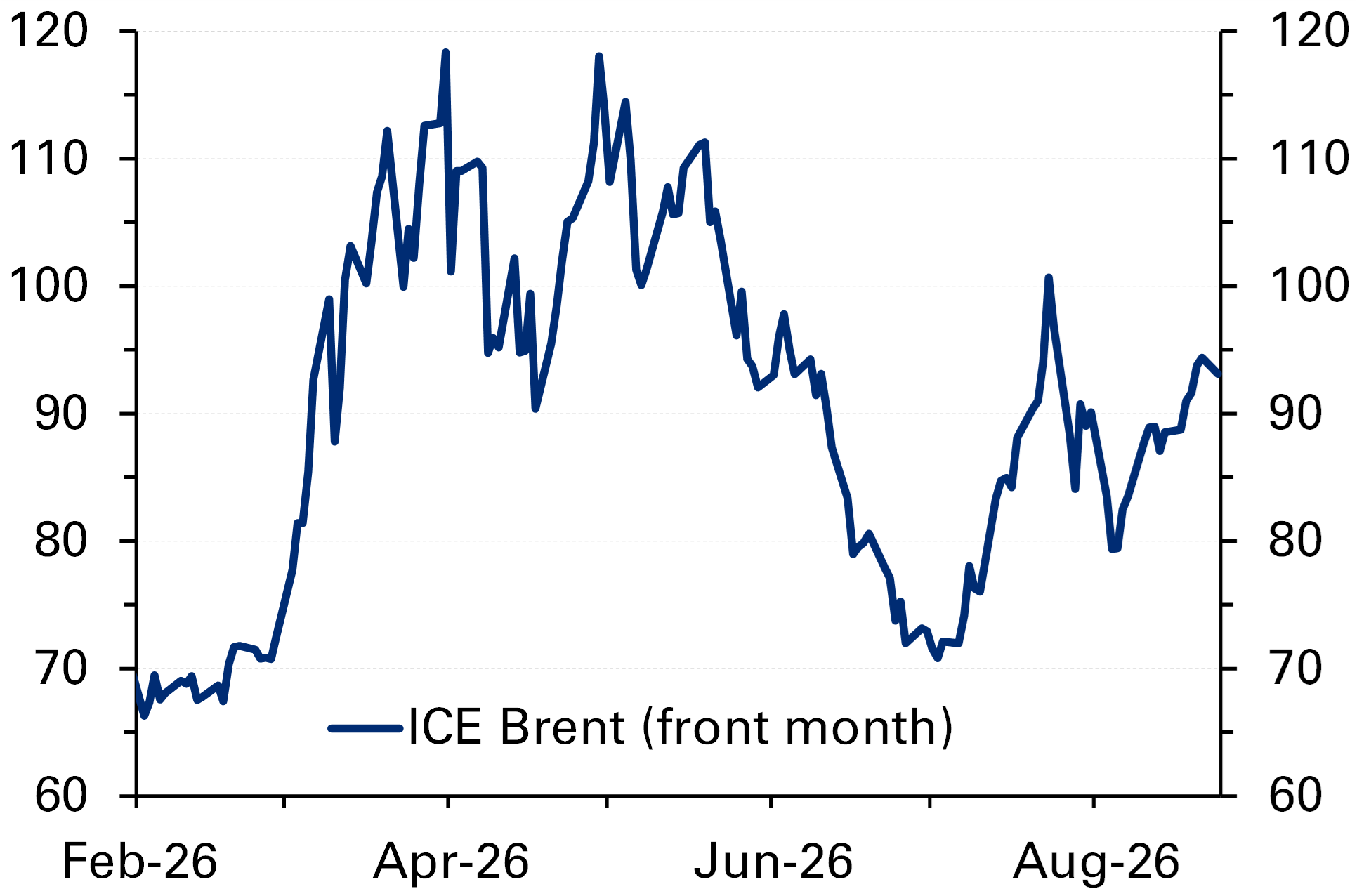
Oil: Prices finished the week higher as US resolves to intensify economic pressure on Iran. Brent crude futures extended gains last week, closing up for the second consecutive week on Friday, by 6.6% w/w to $94.4/bbl (+55.1% ytd) as markets increasingly focused on the risk that intensifying US economic pressure could further constrain Iranian oil exports. Sentiment was supported by the announcement of a new round of US sanctions targeting Iran and potentially entities involved in facilitating its oil trade, including those linked to major trading partners, such as China and Russia. US Treasury Secretary Scott Bessent announced plans for an "Economic D-Day" against Iran and is expected to unveil additional measures later today that could further tighten restrictions on Iranian oil sales and related financial networks. Iran’s isolation was further compounded by the UAE, which announced that it was severing trade and commercial ties with the Islamic Republic following repeated attacks on ADNOC-linked tankers, a move that could disrupt financial channels in Dubai used to facilitate Iranian crude sales. This morning in Asian markets, Brent futures opened slightly lower (-1.4% to $93.1/bbl) as investors take profits and adopt a wait-and-see approach ahead of Bessent's announcement. Nevertheless, risks remain skewed to the upside, both in the Strait of Hormuz, with the possibility that Tehran may seek to retaliate against these sanctions through non-economic means including by targeting Gulf energy infrastructure, and in the Red Sea, with the Houthi threat focusing shippers to look at work-arounds to the north, such as loading cargoes closer to the Suez Canal and at Egypt’s Mediterranean coast.
US: FOMC’s Kashkari sees no UST market dysfunction but concerned about high inflation. Minneapolis Fed President Neel Kashkari (an FOMC voting member) expressed his belief that the UST bond market was functioning “as it should, that trades are taking place, that there's liquidity in the market.” His comments followed the US Treasury Department’s planned intervention in the bond market to contain the steep rise in long-dated UST yields, with Secretary Bessent saying “yields don’t reflect the underlying fundamentals.” Kashkari also indicated that he was “not feeling confident right now that inflation is heading back down to target in a short period of time,” though he didn’t prejudge the FOMC September meeting outcome. Kashkari was one the three dissenters at the July meeting, who voted in favor of a 25-bps rate hike against the majority decision of keeping rates steady. The futures market pricing currently signals a roughly 40% probability of a 25-bps rate hike in September.
Saudi Arabia: Construction cost growth slows in July amid easing overall pressures. Saudi Arabia’s Construction Cost Index (CCI) rose 2.3% y/y in July 2026, slowing from 2.7% in June and marking its lowest growth rate in four months, according to GASTAT. On a monthly basis, construction costs were unchanged. The slowdown was broad-based, with residential construction costs rising 2.2% y/y and non-residential costs increasing 2.6%. However, cost pressures remain elevated for some key inputs. Equipment and machinery rental costs increased by 4.2% for residential projects and 5.8% for non-residential projects, while rentals including operators rose 5.7% and 7.3%, respectively. Labor costs also increased by 1.4% for residential and 1.8% for non-residential construction. Energy prices rose 3% during the month. Basic material costs increased 1.8% in both segments, driven by a 3.9% rise in timber and joinery prices for residential projects and a 4% increase in other building materials for non-residential projects. Overall construction cost inflation is moderating, but equipment rentals and materials remain under pressure amid ongoing logistics disruptions and regional shipping risks. This remains important for Saudi Arabia as Vision 2030 investment increasingly shifts toward deadline-driven projects, including Expo 2030, the 2034 FIFA World Cup, and major rail infrastructure, where cost and delivery pressures could affect project timelines and profitability.
Global: Fed Chair Warsh at Jackson Hole, US July PCE inflation and annual NFP revisions in focus this week. In the US, the Annual Jackson Hole symposium will take place on August 27-29, and Fed Chair Warsh’s keynote speech on Friday will be the key event this week. Warsh has so far avoided explaining the Fed’s reaction function even when inflation has remained stubbornly elevated, and it seems unlikely that he will adjust his vague communication posture at the symposium this week despite mounting pressure. In terms of economic data, core PCE inflation in July (Wednesday) is seen inching up to 0.2% m/m from 0.1% in June, but steady annually at 3.3%. A revised estimate of GDP growth in Q2 is also due on Wednesday as the first estimate showed a 1.5% rise versus 2.1% in Q1. The BLS’s preliminary annual revision in non-farm payrolls for April 2025-March 2026 is due on Friday. In the Eurozone, the ECB’s July monetary policy meeting accounts will be released on Thursday, providing further insight into the decision to leave rates unchanged in July following June’s 25-bps hike. In the UK, August’s Nationwide House price index is expected on Friday. In China, investor attention will shift to the National People’s Congress Standing Committee meeting in Beijing on August 25-28, as markets look for indications of further policy easing and stimulus measures. Finally, in Japan, key data releases due on Friday include the July unemployment rate (expected to remain steady at 2.5%), and Tokyo CPI for August (core inflation forecast to ease slightly to 1.8% y/y from July’s 1.9%).