
 +965 2292 4888


Daily Economic Update
05.10.2026
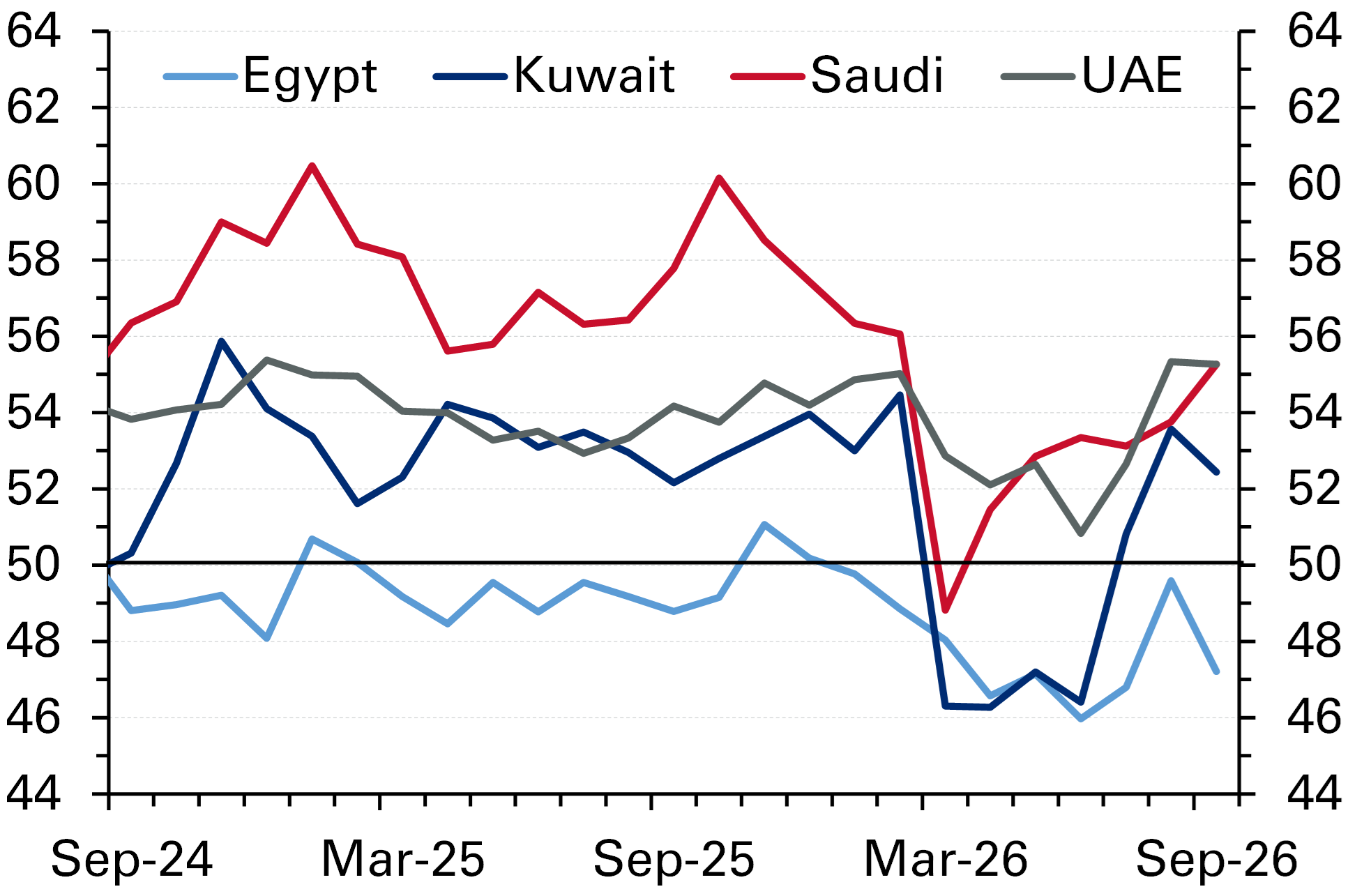
Kuwait: PMI signals further business expansion in September. The non-oil private sector continued to expand in September, with the PMI remaining in growth territory at 52.4, marking the third consecutive month of improving business conditions, although growth eased slightly from August’s six-month high of 53.6. The business output and new orders metrics remained in the solid mid-50s range, driven by successful marketing campaigns and competitive pricing according to the report, while export orders rose for a second month and reached a seven-month high. Business confidence strengthened to its highest level since February, supported by product expansion plans and positive expectations for future market conditions. Firms responded to rising demand by increasing purchasing activity at a near-record pace, expanding inventories, and increasing employment, though backlogs of work continued to accumulate. Supply chain performance improved significantly, with supplier delivery times shortening at the fastest rate since July 2020. On the price front, input cost inflation accelerated on higher reported expenses for advertising, electricity, rent, transportation, maintenance, and labor, while output prices increased at a slightly slower pace as some companies continued to offer discounts to remain competitive. The latest PMI data suggests that the non-oil economy has largely overcome the supply chain bottlenecks and weaker consumer sentiment seen in Q2, as demand, business activity, and confidence continued to strengthen through the third quarter. For Q3 overall, the PMI averaged 52.3, a sharp recovery from 46.6 in Q2 and historically consistent with solid growth in non-oil GDP.
Saudi Arabia: Non-oil activity gains momentum in September. Saudi Arabia’s non-oil private sector recorded a stronger improvement in business conditions in September, with the PMI rising to 55.3 from 53.8 in August. The latest reading marked the sixth consecutive month of expansion and the strongest improvement since February. The acceleration was mainly driven by a sharp increase in new orders, pointing to stronger underlying demand. Domestic sales remained the main source of new business and recovered further following the slowdown seen earlier this year. However, new orders from foreign clients declined for the seventh consecutive month, highlighting continued weakness in external demand. Firms also increased hiring and purchasing activity during the month, suggesting that businesses are responding to stronger domestic demand by expanding capacity and preparing for continued activity. The combination of stronger new orders and employment provides a positive signal for non-oil activity in the coming months. However, cost pressures remained elevated. Firms reported further sharp increases in material and transport costs, which contributed to a strong rise in selling prices. Despite the stronger current conditions, business expectations for the year ahead weakened. Firms remained concerned about regional tensions and the risk of further supply-chain disruptions, which could weigh on activity and costs. Overall, the September PMI points to stronger domestic momentum in the non-oil economy, although persistent weakness in export orders, rising input costs and heightened geopolitical uncertainty remain key risks to the outlook.
UAE: Non-oil economy maintains strong momentum despite rising price pressures. The PMI was unchanged at August's 20-month high of 55.3 in September, signaling a continued improvement in business conditions. Output growth accelerated to a 7-month high, supported by strong foreign demand as export orders increased at the quickest pace since November 2024. Workloads continued to rise, pushing firms to expand their inventory rebuilding, while capacity pressures persisted due to subdued employment growth, leading to a continued increase in outstanding business for 35 consecutive months. At the same time, firms increased their selling prices at the fastest rate since May 2011 as higher raw material, freight, and supplier costs were passed on to customers. Despite the favorable demand environment, business confidence remained subdued, reflecting ongoing uncertainty related to regional tensions, volatile oil markets, and shipping disruptions. Meanwhile, Dubai’s PMI rose to 54.5 in September from August’s 54.1 as output saw its strongest growth of 2026 while export demand posted its fastest increase in two years. Output price inflation saw its fastest increase since January 2014 as companies passed on higher input costs to customers.
Egypt: PMI falls as demand weakens, but employment continues to grow. Egypt’s PMI fell to 47.2 in September from 49.6 in August, pointing to a sharper deterioration in non-oil business conditions. The decline was driven by faster falls in output and new orders, as firms reported weaker client demand amid challenging market conditions, geopolitical disruptions and persistent inflationary pressures. The latest PMI reading was consistent with a slowdown in annual GDP growth to around 4.3%. Firms also continued to reduce their purchases of materials and components, marking the sixth consecutive month of declining input buying. At the same time, higher costs for oil, metals, electricity and transportation pushed firms to raise output prices further, although the pace of wage inflation eased to an eight-month low. Despite weaker demand, employment increased for the second consecutive month, marking the first back-to-back rise in payrolls in more than a year. Firms also remained optimistic about the next 12 months, although confidence weakened from August’s more than four-year high. Overall, the September PMI points to continued pressure on the non-oil economy, with weaker demand and elevated costs weighing on business activity. Ongoing regional tensions and disruptions in the Red Sea remain key risks to the outlook.
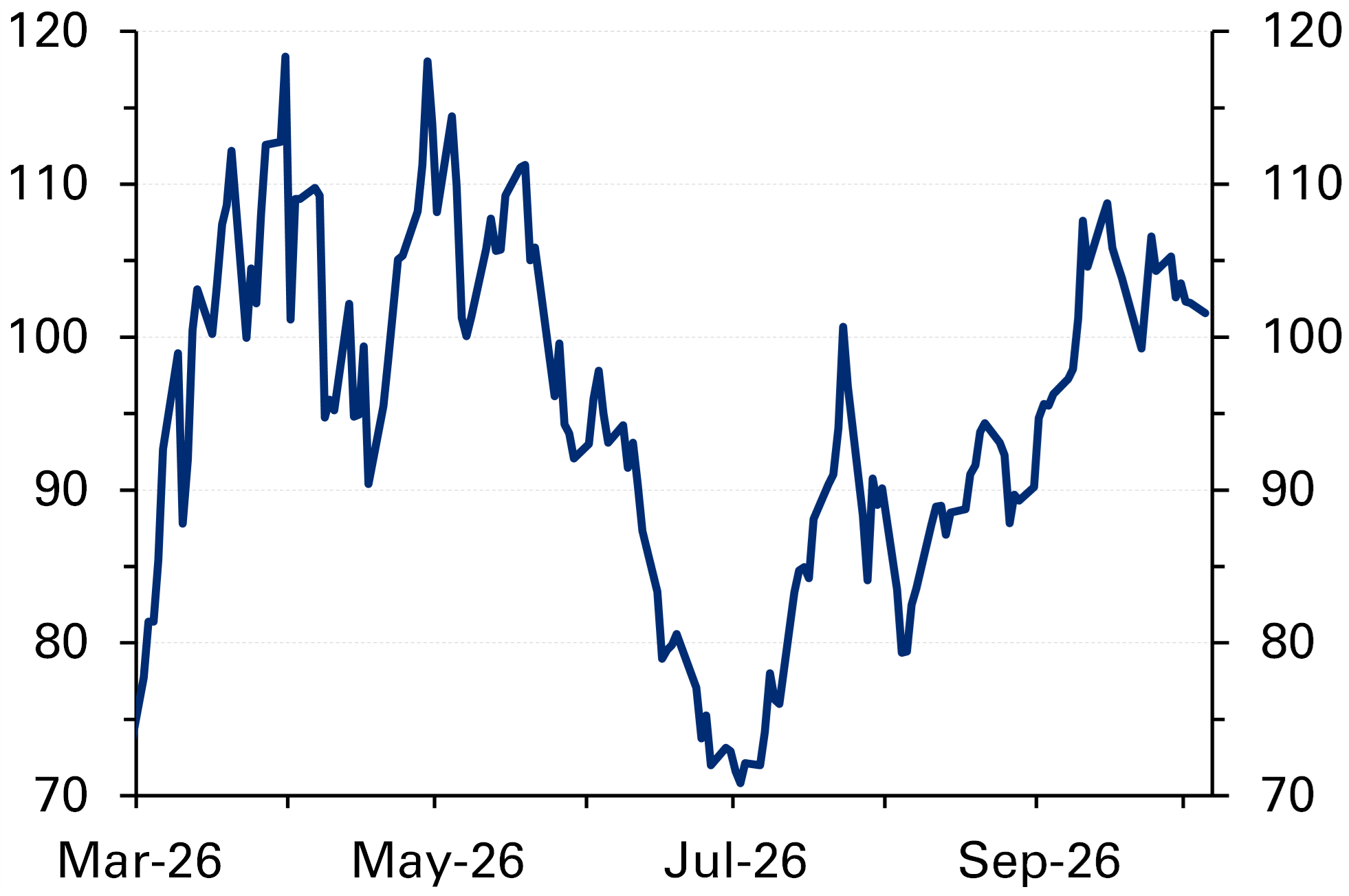
Oil: Prices drop following G7’s supply release announcement. Oil prices are trading lower in today’s Asian session, with Brent down 0.7% to $101.6/bbl, weighed by the G7’s announcement that member countries would release an additional 100 mb of crude and diesel from strategic reserves and OPEC’s decision to keep production quotas unchanged for November. Brent closed Friday at $102.3/bbl, down 2% w/w. The downward price pressure comes despite exceptionally tight middle-distillate markets, with diesel prices trading above $200/bbl across US, Europe, and Asia following supply disruptions linked to the US-Iran conflict and the Russia-Ukraine war. Details remain limited, but authorities indicated that the G7 reserve release would begin “immediately” and be spread over four months, with a substantial portion of diesel entering the market within the first 20 days. Of the pledged volume, 40 mb of crude will come from the US’s SPR, while Europe is expected to contribute 50 mb of diesel, with the remainder coming from Asia. Following the announcement on Friday, European benchmark diesel prices fell 8%. Additional pressure on prices came from reports that Saudi Arabia had restored flows through its East-West pipeline to more than 80% of capacity, easing supply tightness following the outages earlier in September. The possibility of repeated attacks on Saudi energy infrastructure and disruptions to shipments through the Bab el-Mandeb Strait have, nevertheless, continued to support prices in September, helping Brent post a gain of more than 14% m/m. This is despite a recovery in Gulf oil exports, which according to Goldman Sachs reached 23.3 mb/d by end-September, broadly in line with the 2025 average, highlighting that concerns over export security and product shortages continue to outweigh improving supply conditions.
Global: FOMC September meeting minutes and BoJ Ueda’s speech key matters this week. In the US, minutes from the FOMC’s September meeting will be released on Wednesday, providing further insights into the Fed’s 25 bps rate hike decision in that meeting. Meanwhile, Fed speak will continue this week, noting that recent comments by several key FOMC members have had a big influence on the market’s expectation of the Fed’s upcoming rate decision in October. The September ISM services PMI (today) is seen rising to 55.7 from August’s 55.4, while attention will also be on the price subcomponent following the recent surge in energy costs. In the Eurozone, retail sales data for August (Tuesday) are expected to rebound by 0.4% m/m following July's 0.6% contraction while the ECB (Thursday) will release the minutes of its September meeting when rates were hiked by 25 bps. In the UK, the Lloyds Bank House Price Index (Wednesday) is seen rising by 0.2% m/m in September, after dropping 0.2% in August. Finally in Japan, in a speech scheduled for Tuesday, BoJ Governor Ueda may set the stage for the BoJ’s interest rate decision at the end of this month. In terms of data, employees’ cash earnings growth (Wednesday) is seen moderating to 3.7% y/y in August from a strong 4.7% in July.