
 +965 2292 4888


Daily Economic Update
15.11.2026
US: Two influential FOMC members see high inflation but don’t specify their preference for December meeting as PPI inflation accelerates. John Williams, New York Fed President (holds a permanent vote in the FOMC), reemphasized that inflation remained “far too high”, with economy strong and labor market strengthening, and saw the “need to take actions over time”. Similarly, another key FOMC member, Fed Board Vice Chair Philip Jefferson, noted that “inflation readings show persistent price pressures” while ”further policy adjustments should be determined by carefully examining trends in the data, the evolving outlook, and the balance of risks.” Both Williams and Jefferson have cited high inflation but did not specify their near-term preference, leaving the door open ahead of the FOMC meeting in December. As we highlighted previously, given Chair Warsh’s toned-down communication style, the void is being filled by other influential Fed officials. Specifically, comments from these two officials (who along with Warsh form the so-called Fed Troika) now assume much greater importance. Several other voting and non-voting Fed officials have also recently stated the need to tighten monetary policy further. Meanwhile, PPI inflation in October accelerated to reach an almost four-year high of 6.5% y/y (6.3% in September), with core PPI inflation also remaining elevated at 5%, the highest level since December 2022, indicating ongoing consumer price pressures ahead following last week’s hot October CPI prints. Though energy commodity prices have retreated recently from their months-high levels seen in October, many inflation components outside of energy are also showing persistently elevated levels, driving the market expectations for further increases in policy interest rates. Futures market pricing currently signals an 88% probability of a 25bps rate hike in December along with a 12% probability of a larger 50bps increase.
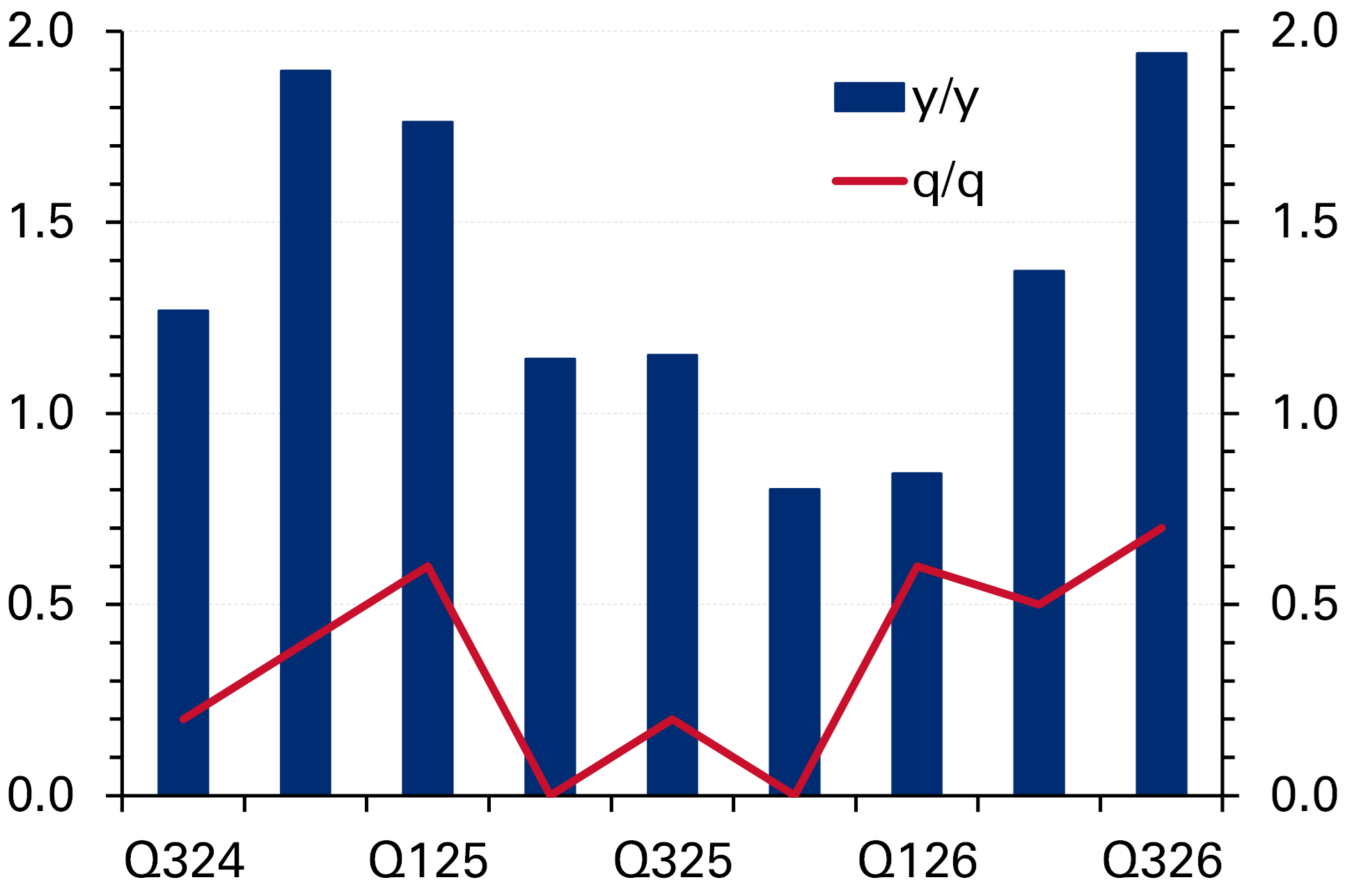
UK: GDP growth in Q3 accelerates to a 10-quarter high, showing resilience as AI helps boost the economy. GDP growth in Q3 accelerated to 0.7% q/q (1.9% y/y) from Q2’s 0.5% (1.4% y/y), matching the consensus forecast and recording the highest growth rate since Q1 2024. Services rose at a faster pace of 0.9% q/q (up from 0.6% in Q2) and production grew by 0.1%, but construction fell by 0.7%. The ONS noted that non-consumer (business) facing services have continued to be the key driver of growth this year, benefitting from increasing AI-related services rollout. The positive impact of AI/technology was also seen in manufacturing output, which rose 0.9% q/q in Q3, as IT hardware products output increased by a solid 4.6% during the quarter. The UK economy has absorbed the shocks from higher energy costs and supply-chain disruptions resiliently so far, with growth beating previous soft projections. The labor market is also showing some early signs of stabilization after sustained job losses over the past two years. The Bank of England recently lifted its growth forecast for 2026 to 1.6% from 1.1% seen earlier and to 1.3% for 2027 (from 1.1%). However, as inflation is expected to climb further, consumer spending may take a hit over the coming months, somewhat offsetting the strong momentum.
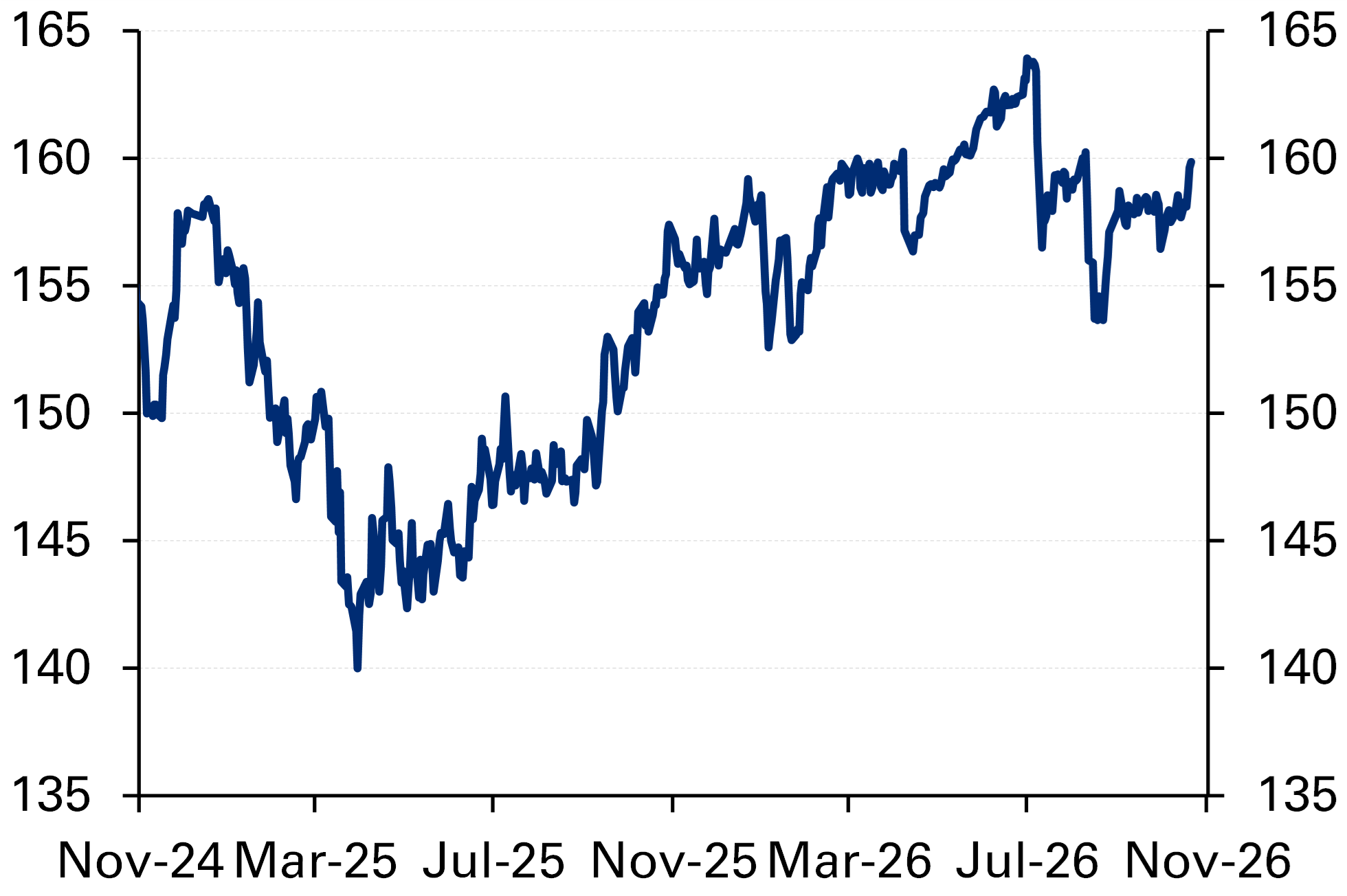
Japan: Yen touches 160/$; Reuters survey shows inflation above the BoJ’s target for second straight month. The Japanese yen touched JPY160/$ for the first time since September on Friday before closing slightly lower. This came as hotter than expected US CPI data and hawkish Fed rhetoric increased expectations on a December Fed hike, widening the US-Japan rate gap. Japanese officials signaled readiness to act, with the MoF’s top currency official Atsushi Mimura describing recent moves as “too fast”, while Finance Minister Satsuki Katayama pledged to keep working closely with the US Treasury and respond appropriately to movements. Meanwhile, a Reuters poll showed that core CPI (released this Friday) is expected to have accelerated to 2.3% y/y in October from 2.1% in September, the highest level since December and above the BoJ’s 2% target for a second straight month, as higher energy costs from the Iran conflict continue their transmission through to consumer goods prices.
Oman: OIA agrees record Chinese investments to accelerate Vision 2040 Goals. In the Oman Investment Authority’s (OIA) largest-ever single day of dealmaking, a broad package of investment agreements was signed with Chinese institutions and companies covering renewable energy, mining, logistics, digital technology, financial services, and advanced manufacturing. Some noteworthy investments include an $800 million joint fund with the Silk Road Fund, a $300 million fund with China Merchants Bank, and an additional $735 million of investments through partnerships with IDG Capital, Templewater, and EW Partners. The agreements aim to shift Oman-China relations beyond trade toward long-term investment, technology transfer, industrial localization, and economic diversification. Major infrastructure and industrial projects include $1 billion in battery energy storage, wind energy and green ammonia development, a $419 million copper and gold mining contract, logistics infrastructure with JD.com, and digital transformation initiatives involving Omantel. Most of the investments are planned for Oman and are expected to bring capital, technology, jobs, and stronger links to global supply chains. The agreements align closely with the objectives of the OIA and support several pillars of Oman Vision 2040.