
 +965 2292 4888


Daily Economic Update
04.10.2026
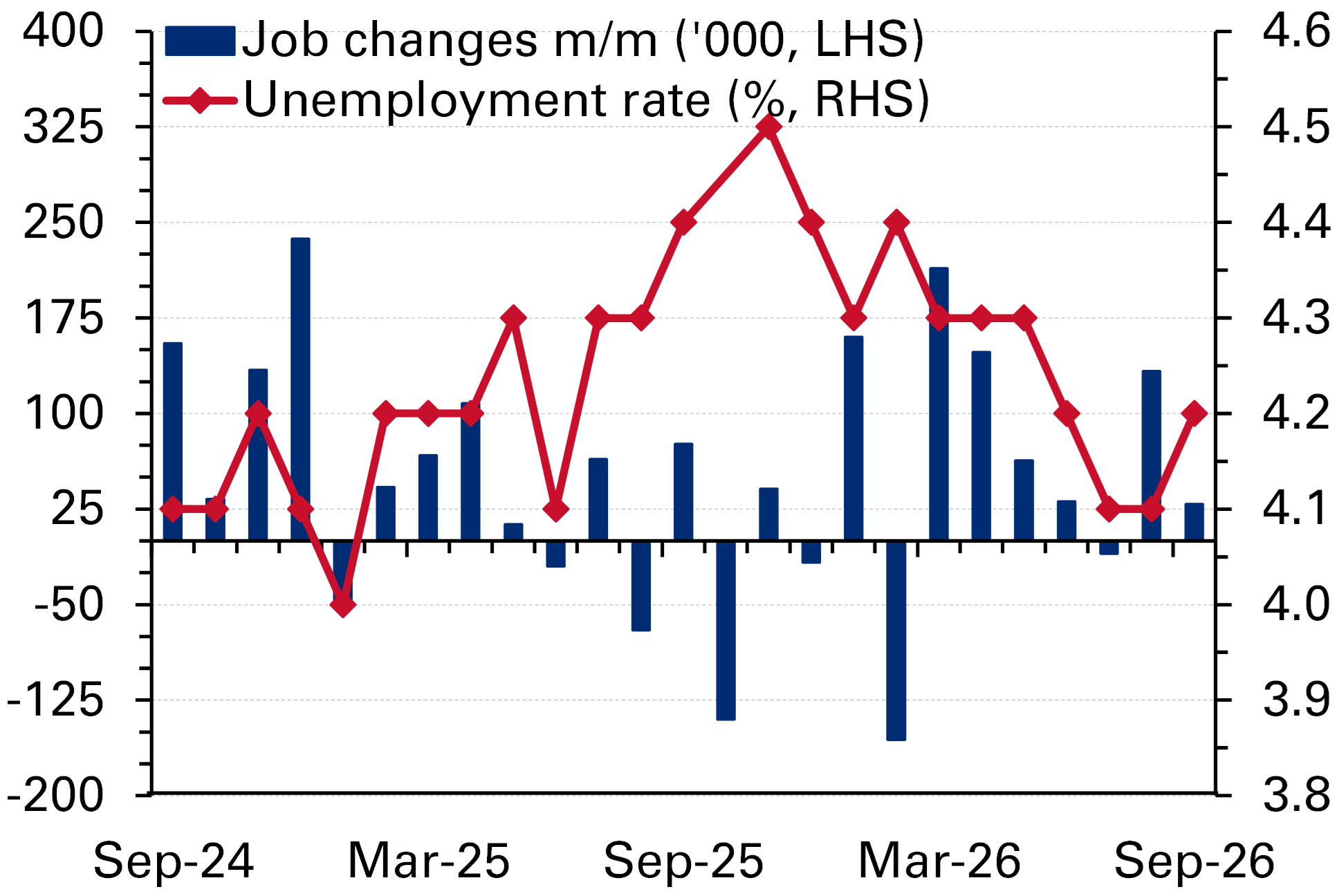
US: Slower-than-forecast jobs growth in September and dovish Fed speak cut probability of a Fed hike in October to only 22%. The US economy added just 29K jobs in September, much below the consensus forecast of a 90K rise, down from a 133K increase in August. Moreover, July-August growth was revised downward by a combined 60K. Nonetheless, the average monthly gain this year stands at a respectable 68K versus just 10K per month in 2025. The unemployment rate ticked up to a still modest 4.2% from August’s 4.1% as the participation rate increased for the second straight month to 61.8% from 61.6% but remaining below the pre-2025 trend. Recent weekly jobless claims data also point to a relatively benign firing backdrop. Wage growth further slowed to the lowest level in over five years at 3% y/y from 3.1% in August. Despite softer hiring activity over the past two years, the modest unemployment underscores that labor market conditions remain stable. Separately, the ISM manufacturing PMI slightly eased to 54.5 in September from 54.6 in August, but the employment subindex rose to 52.7 from 51.2, and new orders expanded at a faster pace. However, the survey’s price gauge increased sharply to a four-month high of 77.9 (71.1 in August) as a fresh surge in energy goods costs refueled higher inflation worries over the coming months. Meanwhile, another influential Fed voice, Vice Chairman Philip Jefferson emphasized that despite inflation remaining too high, the Fed would need to come to a judgment regarding future policy adjustments, “which may take more time”. Echoing his views, Governor Michelle Bowman mentioned that “I don’t currently see an urgent need for further action, and I think we need to better understand the totality of the data.” Their remarks came after New York Fed President John Williams previously said that “there is no need for urgency.” Given a cautious stance by several key Fed officials and softer September jobs data, the future market has trimmed the probability for an interest rate hike at this month’s FOMC meeting to around 22% now, down from over 70% at one point last week.
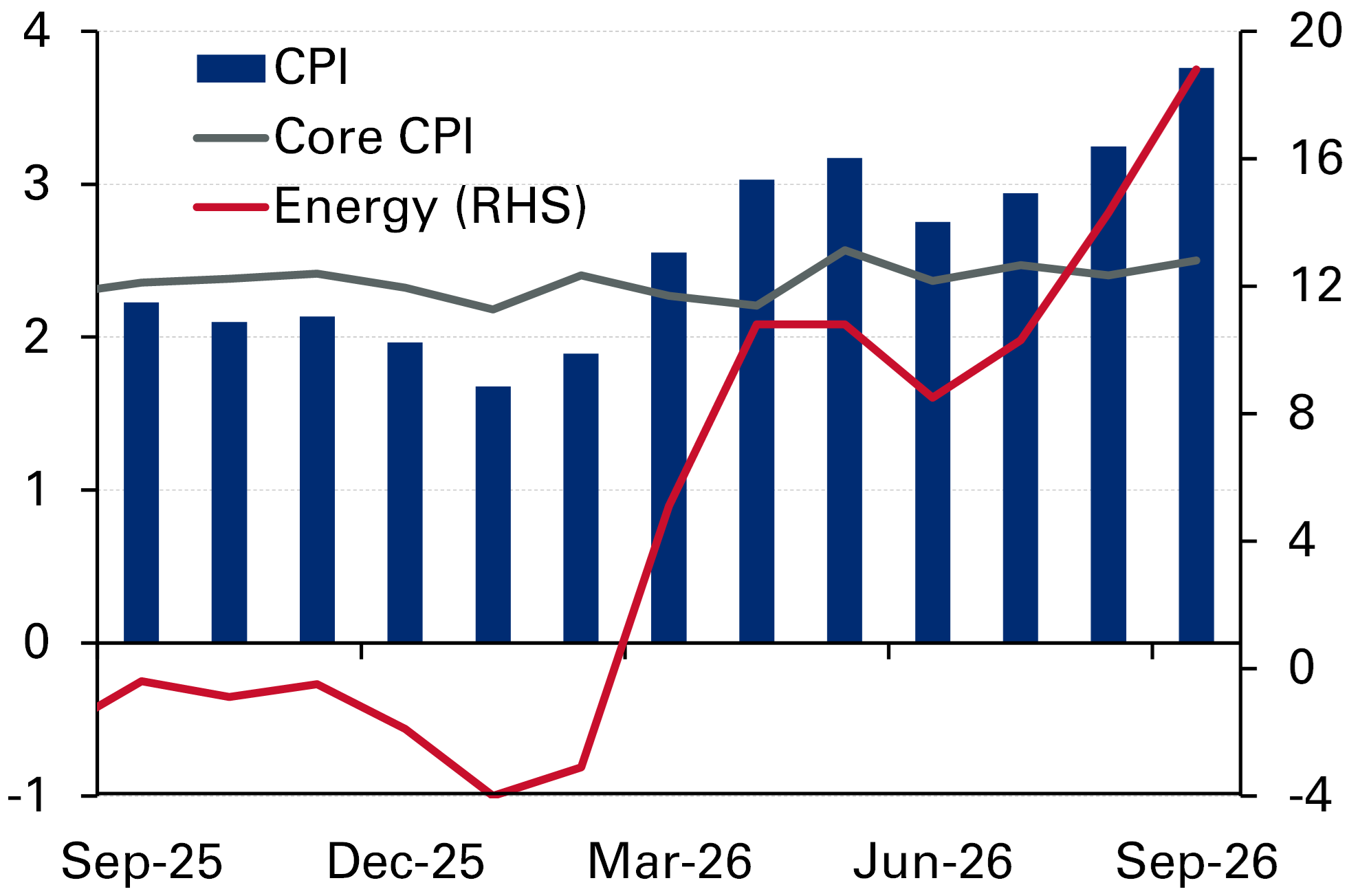
Eurozone: Inflation jumps to a three-year high in September. Eurozone inflation accelerated sharply in September, with the headline rate rising to a higher-than-expected 3.8% y/y from 3.2% in August, the highest reading since September 2023 and moving further above the ECB's 2% target. The pickup was largely driven by a renewed surge in energy prices, with energy inflation climbing to 18.8% y/y from 14.3% the previous month, returning to levels last seen during the energy crisis triggered by Russia's invasion of Ukraine in 2022. Services inflation also edged higher to 3.2% in September from 3.0% previously. Inflation strengthened across the bloc's largest economies, including Germany (3.3% y/y in September from 2.9% in August), France (3.4% from 2.6%), Italy (4.1% from 3.2%) and Spain (5.0% from 4.6%). While the sharp rise in headline inflation was primarily energy-driven, underlying price dynamics also showed signs of firmness with core inflation rising to 2.5% y/y in September from 2.4% previously, though that came in-line with consensus estimates. The return of inflation to a three-year high that is nearly double the 2% target is likely to reinforce policymakers' cautious stance and cement expectations of further rate hikes in the coming months.
Japan: Tokyo inflation accelerates in September, strengthening the case for further BoJ tightening. Inflation in Tokyo, widely viewed as a leading indicator of national price trends, accelerated markedly in September. Headline CPI rose to 2.7% y/y in September from 1.9% in August, marking the fastest pace since November 2025 and moving back above the Bank of Japan (BoJ)'s 2% target. The increase was driven largely by higher energy costs linked to the ongoing Middle East conflict, despite government measures to cushion fuel prices. Meanwhile, Tokyo's core CPI, which excludes fresh food, climbed to 2.7% y/y in September from 1.8% in the month prior, exceeding market expectations of 2.4% and signaling a broadening of inflationary pressures across the economy. More notably, the "core-core" measure closely watched by the Bank of Japan, which excludes both fresh food and energy, accelerated to 3.0% y/y in September from 2.0% in August, its highest level in over a year. The sharp increase underscores that inflationary pressures are becoming more broad-based and are no longer confined to energy-related categories. That said, with underlying inflation proving more persistent, the latest Tokyo CPI data are likely to strengthen expectations for further monetary tightening by the BoJ, which raised its policy rate by 25 bps to 1.25% at its September meeting.
Saudi Arabia: Expansionary 2027 budget targets strong growth recovery. The government unveiled an expansionary budget for 2027, with spending remaining at around SAR 1.4 trillion despite continued geopolitical uncertainty. It expects the economy to rebound strongly next year, with real GDP growth projected at 12.8%, following an estimated 3.6% contraction in 2026. According to the Ministry of Finance’s Pre-Budget Statement, revenues are expected to reach SAR 1.2 trillion in 2027, resulting in a fiscal deficit of SAR 191 billion, equivalent to 3.6% of GDP. This compares with a projected deficit of SAR 245 billion, or 4.9% of GDP, in 2026 and SAR 277 billion, or 5.8% of GDP, in 2025. The sharp growth rebound is largely linked to the recovery in oil activity. The Ministry expects oil-related activity to contract by 21.8% in 2026, contributing to the overall GDP contraction. In contrast, non-oil activity is expected to grow by 3.2%, supported by domestic demand, particularly private consumption and investment. The government expects growth to moderate to 3.9% in 2028 before accelerating again to 5.7% in 2029. Fiscal deficits are expected to continue over the medium term, at SAR 177 billion in 2028 and SAR 192 billion in 2029, while revenues are projected to increase gradually to SAR 1.3 trillion and SAR 1.35 trillion, respectively. The Ministry highlighted the contribution of Vision 2030 reforms to economic diversification, the business environment and private-sector activity. This has helped strengthen the resilience of the non-oil economy despite recent external shocks. The government plans to continue financing its deficits through bonds, sukuk and loans, while increasingly using alternative financing mechanisms such as project finance, infrastructure funding and export credit agency support. Overall, the 2027 budget signals that the government intends to maintain spending on its development priorities despite near-term oil sector weakness, while relying on the expected recovery in oil activity and continued non-oil growth to support the broader economy.
Qatar: CPI rises to a four-month high in July. Inflation accelerated to 4.0% y/y in July, up from 2.5% in June, reflecting stronger price pressures across most major components of the CPI basket following the recent rebasing of the index (2024 = 100). While methodological changes altered the relative weights of several categories, rising food and housing costs remained the primary drivers of the increase. Food & beverage inflation climbed to 13.2% y/y, extending the strong upward trend seen in recent months, though the category now carries a smaller weight in the CPI basket under the revised methodology. Housing inflation also picked up notably, rising 4.2% y/y, with the basket revision giving an increased weight to housing of 28.5% from 21%. Inflation in clothing & footwear accelerated to 4.5% y/y, while miscellaneous goods & services rose 4.1% y/y. Most remaining categories also recorded positive year-on-year inflation rates, with the exception of insurance & financial services inflation which was unchanged from June, while furnishings & household equipment inflation fell 0.2% y/y. Overall, July's data suggest that inflationary pressures have become more broad-based, with higher housing and food costs continuing to drive the headline rate higher.
Egypt: Banking sector net foreign assets reach six-year high. The net foreign assets (NFAs) of Egypt’s banking sector rose to $31.2 billion in August, the highest level in six years, up from $28.4 billion in July, according to Central Bank of Egypt (CBE) data. The increase was broad-based, with the CBE’s NFA rising to $18.8 billion from $17.8 billion, while commercial banks’ NFA increased to $12.4 billion from $10.7 billion. The continued improvement in banks’ NFA strengthens foreign-currency liquidity across the banking system, reducing FX liquidity risks for businesses and providing greater confidence in the financial system. It also highlights the improvement in Egypt’s external liquidity position compared with recent years.