 +965 2292 4888


Daily Economic Update
05.08.2026
Oil: Prices decline amid signs of nearing diplomatic breakthrough. Brent crude futures have extended their decline in early Asian trading today, falling a further 1% to $78.7/bbl after dropping 5.2% d/d in the previous session. Recent price action reflects growing optimism over a deal that would help restore shipping activity through the Strait of Hormuz, pushing Brent futures to a three-week low and down $12/bbl from last Friday’s levels. Driving sentiment were increasingly constructive comments from Qatari and US officials regarding ongoing talks over the Strait between Iran and Oman. Media reports suggest that a temporary 60-day agreement involving the US, Iran, and Oman could be announced as early as today involving dual routes covering inbound and outbound traffic. Optimism was reinforced by US Treasury Secretary Scott Bessent’s comments that a breakthrough may indeed be close. A key outstanding issue however remains whether Iran will be permitted to impose tolls or transit fees under any eventual agreement – a factor that could influence both shipping costs and the pace at which traffic normalizes. Despite the more constructive diplomatic backdrop, current oil flows through Hormuz remain significantly below pre-conflict levels. Estimates suggest current volumes are running at around 5 mb/d, compared with roughly 20 mb/d before the onset of the war. Against this backdrop, strategic petroleum reserves are likely to remain an important source of supply. Market attention will therefore turn to the latest EIA inventory data due later today, with investors closely watching for further drawdowns in US strategic crude stocks.
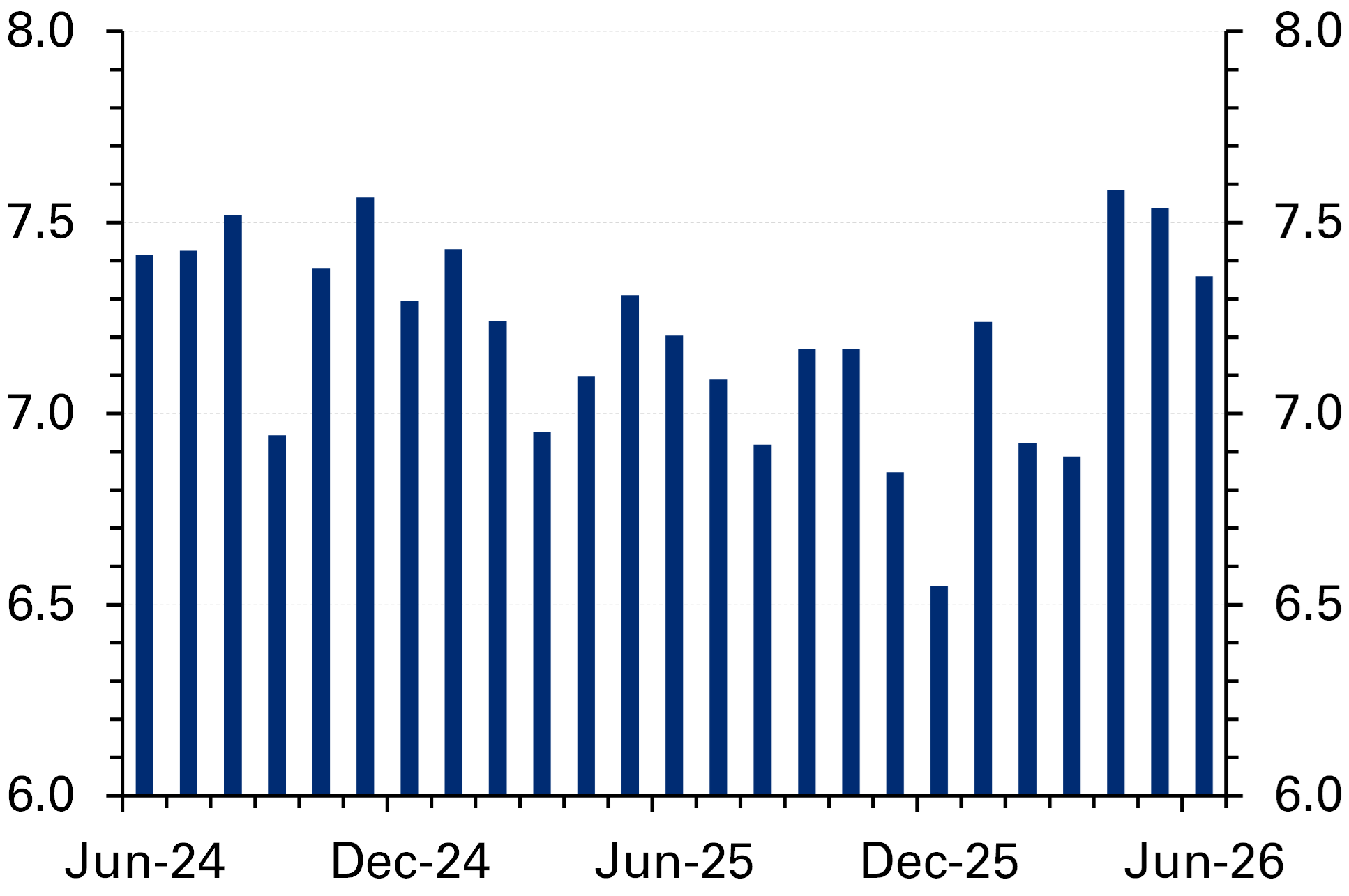
US: Job openings ease in June but accelerated hiring and modest layoffs suggest a broadly stable job market. Job openings in June (JOLTS report) eased to 7.36 million from May’s 7.54 million but remained above the trend seen in most of 2025. The hiring rate increased to a three-month high of 3.4% from 3.3% in May, while the layoff rate held steady at a relatively modest level of 1.1%, signaling that the labor market continues to recover after a weak performance in 2025 due to tariff-related uncertainty and immigration curbs. The quits rate was also unchanged at 2%. As a reminder, non-farm payrolls (due on Friday) are forecast to increase by 80K in July following the rise of 57K in June, further underscoring a gradual improvement in labor market conditions this year. This sustained improvement in the labor market, especially if coupled with higher-than-expected inflation prints in the coming months, will put further pressure on the Fed to hike rates after three FOMC members dissented in favor of raising the Fed fund rate at last month’s meeting. Meanwhile, the S&P 500 index hit a new record high, closing 1.8% up yesterday amid optimism about a potential US-Iran deal to reopen the Strait of Hormuz and strong corporate earnings momentum.
Japan: Employees’ cash earnings rise, meeting consensus expectations; Bessent reiterates yen support. Employees’ cash earnings rose by 3.4% y/y in June, accelerating from an upwardly-revised 3.3% in May, and matching consensus estimates. This put real wage growth at 1.6% y/y, matching the previous month’s increase and remaining positive for the sixth consecutive month. The continued expansion in real wages suggests that household purchasing power remains supported, providing the BoJ with an additional reason to consider raising rates at its September meeting. Elsewhere, US Treasury Secretary Scott Bessent reiterated his support for yen stabilization, stating that the US would do “whatever it takes” to support Japan’s effort to stabilize the currency. Bessent argued that excessive weakness in the yen could increase the risk of competitive devaluations across Asia, underscoring his preference for greater exchange-rate stability in the region.
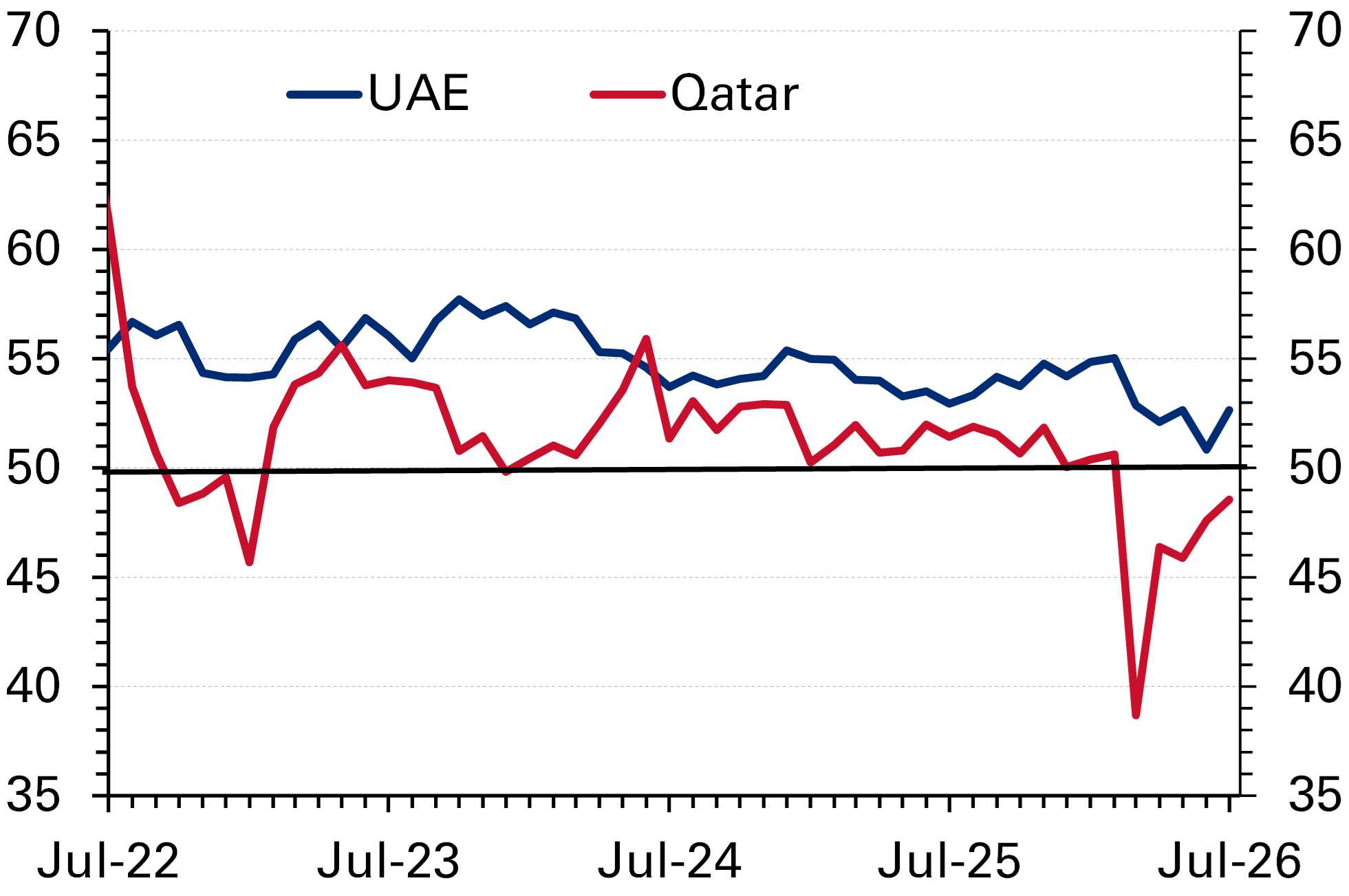
UAE: Non-oil private sector regains momentum in July amid stronger demand. The non-oil private sector PMI regained some momentum in July, rising to 52.7 from a more than 5-year low of 50.8 in June, signaling a moderate improvement in business conditions. The improvement was driven by a faster expansion in new orders, which reached a 5-month high on easing regional tensions and strong domestic spending. Export orders also returned to growth for the first time since March, supported by a pickup in activity across the GCC region. Output growth accelerated as firms responded to stronger demand, while employment returned to the expansionary territory following the decline seen in June. However, the survey highlighted continuing supply-side challenges, with backlogs of work rising at the fastest pace in four months amid freight congestion and input shortages. Cost pressures remained elevated with input price inflation approaching April’s peak due to higher fuel, food, shipping and staffing costs. Firms raised output prices for the second consecutive month, though intense competition limited the extent of pass-through. Business sentiment weakened for the third straight month and fell to a four-month low, reflecting lingering concerns over regional trade disruptions and uncertainty surrounding shipping conditions in the Strait of Hormuz.
Qatar: PMI declines at a softer pace in July. Qatar's non-energy private sector PMI remained in contraction territory in July, though the headline reading improved to 48.5 from 47.6 in June. While still below the 50-point threshold, the latest print represents the highest reading since the onset of the conflict and points to a gradual easing in the pace of deterioration in business conditions. Driving the improvement was a softer decline in new orders, with the survey's largest subcomponent showing a more moderate contraction than in June. Demand conditions nevertheless remained weak, reflecting subdued market activity and the continued impact of the regional conflict on business sentiment and client spending. Employment provided another source of support, with hiring growth accelerating during the month, with job gains in the manufacturing and construction sectors more than offsetting weaker trends in services. Partly offsetting these improvements was a renewed contraction in output following a brief return to growth in June. Firms reported that weak market conditions and project delays weighed on activity, prompting a reduction in purchasing volumes. The decline in output suggests that, despite some stabilization in new orders, activity levels remain under pressure. Price pressures, meanwhile, continued to intensify. Input cost inflation accelerated for a seventh consecutive month, driven by higher purchase prices and rising staffing costs. Firms responded by passing part of these increases on to customers, resulting in the fastest growth in output prices since December 2022 during the FIFA World Cup period. Business sentiment remained positive overall, with firms continuing to expect activity levels to improve over the coming year. However, the degree of optimism eased from June. Overall, Qatar's PMI continues to move in a positive direction, but remains the weakest among GCC peers and the only PMI reading still in contraction territory. With regional tensions remaining elevated, it remains unclear whether the gradual improvement seen in recent months will be sustained through August.
Saudi Arabia: Aramco Q2 earnings robust despite challenging regional environment. Saudi Aramco reported adjusted net income of SAR 125.2 billion ($33.4 billion) in Q2 2026, a 33% y/y increase driven mainly by higher crude oil, refined product, and chemicals prices. The company successfully maintained production and export continuity despite severe disruption to shipping through the Strait of Hormuz by utilizing its East-West Pipeline and other strategic infrastructure. Operating cash flow reached $25.4 billion, the gearing ratio increased to 6.2% from 4.8% at the end of Q1 2026, and the board approved a base dividend of $21.9 billion. Compared with Q1 2026, when adjusted net income was $33.6 billion, earnings remained stable at an elevated level, highlighting the company’s resilience and ability to sustain strong profitability amid regional geopolitical tensions. Overall, Aramco’s results highlight the company’s continued strong profitability, supported by higher energy prices, operational resilience, and the strategic use of alternative export routes during ongoing regional supply disruptions. For the first half of 2026, adjusted net income totaled approximately $67 billion, up significantly from $51 billion in H1 2025. Furthermore, Aramco continued to advance its long-term growth strategy, with ongoing investment in key oil and gas expansion projects, downstream integration initiatives, and international chemicals activities. These investments are intended to expand the product portfolio and to enhance operational resilience and flexibility, thereby supporting the long-term growth of the company.