
 +965 2292 4888


Daily Economic Update
26.08.2026
US: Consumer confidence drops to a 7-month low on worsening expectations. An already-subdued Conference Board consumer confidence index dropped to a seven-month low of 89.4 in August from a downwardly revised 90.2 in July as worsening expectations overshadowed the improvement in the present situation. Details were also mixed, as the perception about the current employment conditions improved, with more respondents seeing jobs as “plentiful”, while fewer respondents mentioned they were “hard to get”. However, consumers’ mood deteriorated about the outlook over the next six months across employment conditions, business conditions, and household income prospects. We reckon that despite weak consumer confidence readings in recent periods, aggregate private consumption has remained solid, mainly lifted by wealthier households amid rising equity markets. Separately, US house prices rose further in June, up 0.2% m/m, largely matching the pace from May, following a minor slump seen during February-April, as per the S&P Case Shiller 20-city index. On an annual basis, price rises accelerated to hit a one-year high of 2.1% from 1.6% in May. Nonetheless, elevated mortgage rates (30Y fixed at around 6.8%) and broadly slowing wage growth amid high inflation continue to impact affordability for many first-time buyers that may limit any substantial increases in house prices.
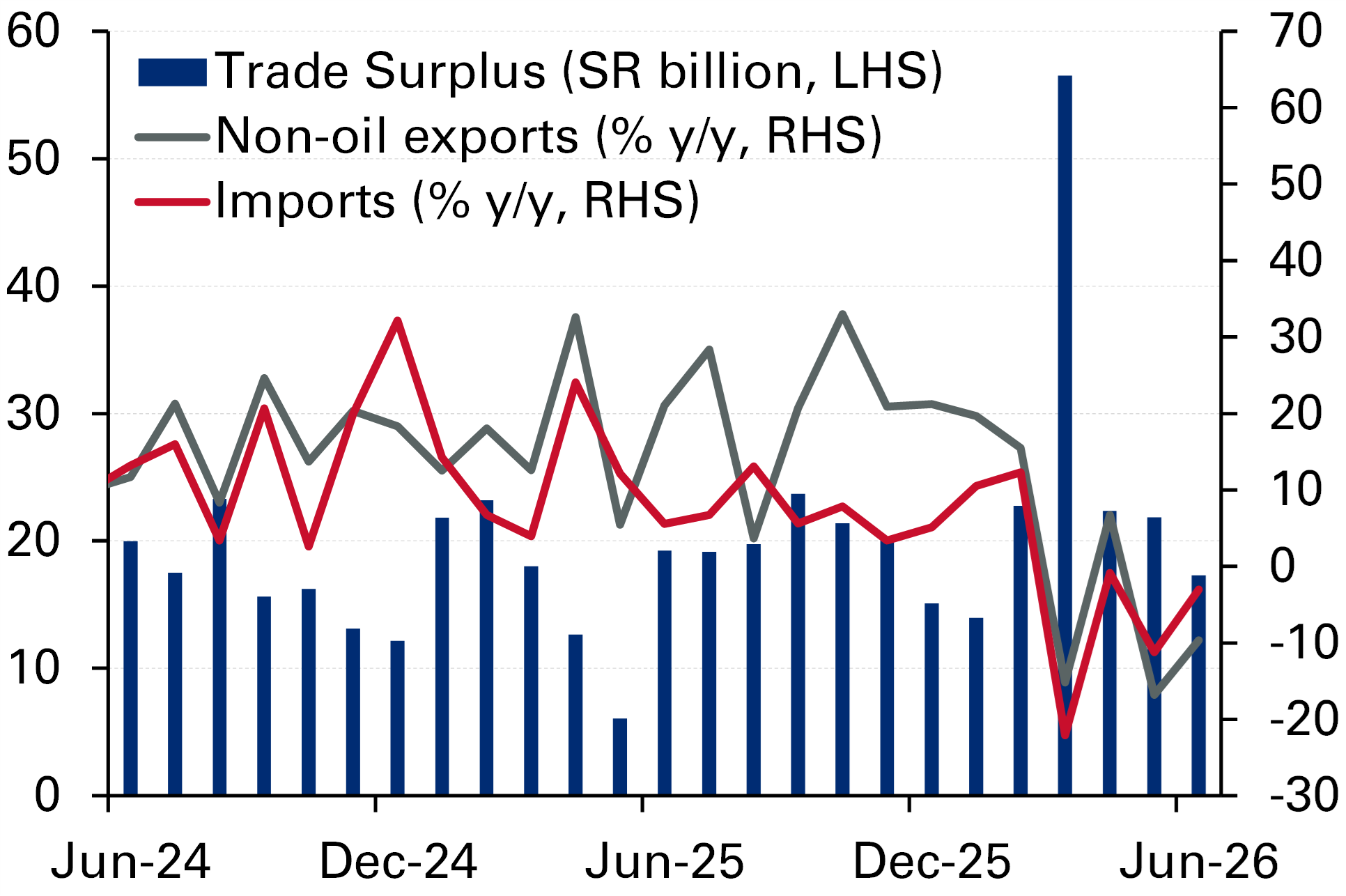
Saudi Arabia: Trade surplus narrows in June as oil and non-oil exports decline. Saudi Arabia’s merchandise trade surplus fell 10% y/y in June, marking the first decline since February, as both oil and non-oil exports weakened, according to GASTAT. This followed a sharp 329% y/y increase in May, when the surplus benefited from higher oil prices. Total merchandise exports declined 4.5% y/y, while imports fell by 3%. Oil exports decreased 2.3% y/y, ending a run of monthly increases and recording their first decline since January. However, oil’s share of total exports edged up to 72% from 70.4% a year earlier, as non-oil exports fell more sharply. Non-oil exports, including re-exports, dropped 9.7% y/y. Re-exports declined 6.7%, mainly due to a 41.7% fall in machinery and electrical equipment re-exports, which accounted for 36.1% of total re-exports. The ratio of non-oil exports to imports also weakened to 34.9%, from 37.5% in June 2025. The June figures suggest that the impact of the regional conflict is increasingly appearing in Saudi Arabia’s trade data. Despite relatively high oil prices, exports were affected by higher shipping, rerouting and war-risk costs, with disruptions to regional trade flows likely weighing on volumes. The sharp decline in machinery re-exports also points to continued logistical challenges. Plastics and rubber remained the largest non-oil export category, accounting for 20.7% of non-oil exports, although it fell 12.8% y/y. Chemical products followed at 19.2%, declining 30.4%. On the import side, machinery and electrical equipment accounted for 25.7% of total imports, down 20.4%, while chemical products rose 30.5%. Japan was Saudi Arabia’s largest export destination in June, followed by South Korea and China, while China remained the largest source of imports, ahead of Switzerland and the US.
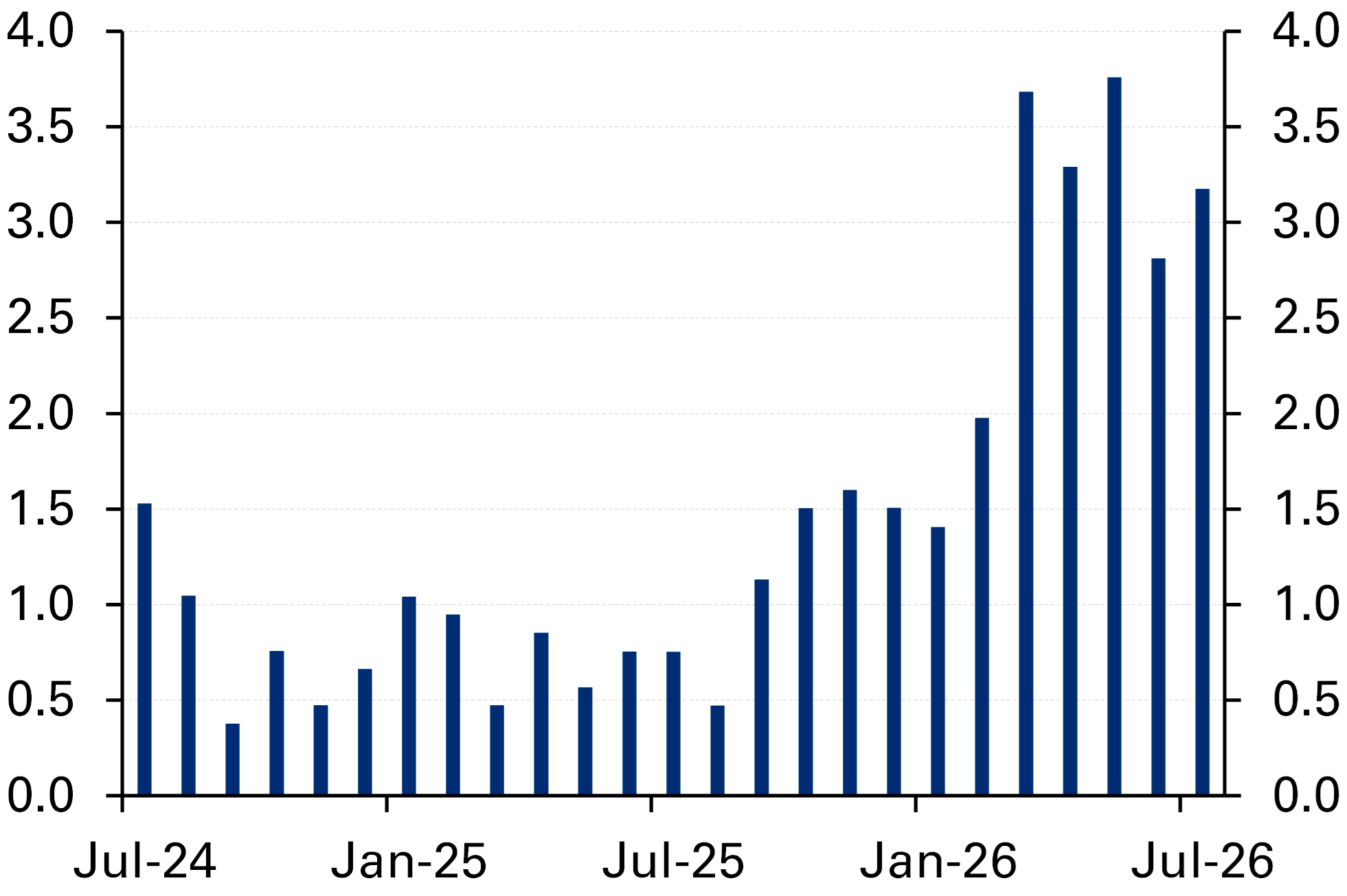
Oman: Inflation accelerates in July to 3.2% on higher food prices. Consumer price inflation accelerated to 3.2% y/y in July (+0.7% m/m), reversing course from June’s softer inflation print of 2.8%, according to official NCSI data. The primary driver was steeper price rises in the food and non-alcoholic beverages category, which rose 7.3% y/y, but other notable contributors included transport (+6.5%), miscellaneous goods and services (+5.3%), and restaurants and hotels (+3.6%), while housing-related costs declined 0.6%. Inflation in the Sultanate continued to outpace the recently reported rates in Saudi Arabia, Qatar, and Kuwait, likely owing to relatively softer food price controls and thus a greater pass-through rate of imported food inflation to domestic consumer prices as well as burgeoning growth in Oman’s non-oil economy. Average inflation for the first seven months of 2026 came to 2.9%.