
 +965 2292 4888


Daily Economic Update
06.10.2026
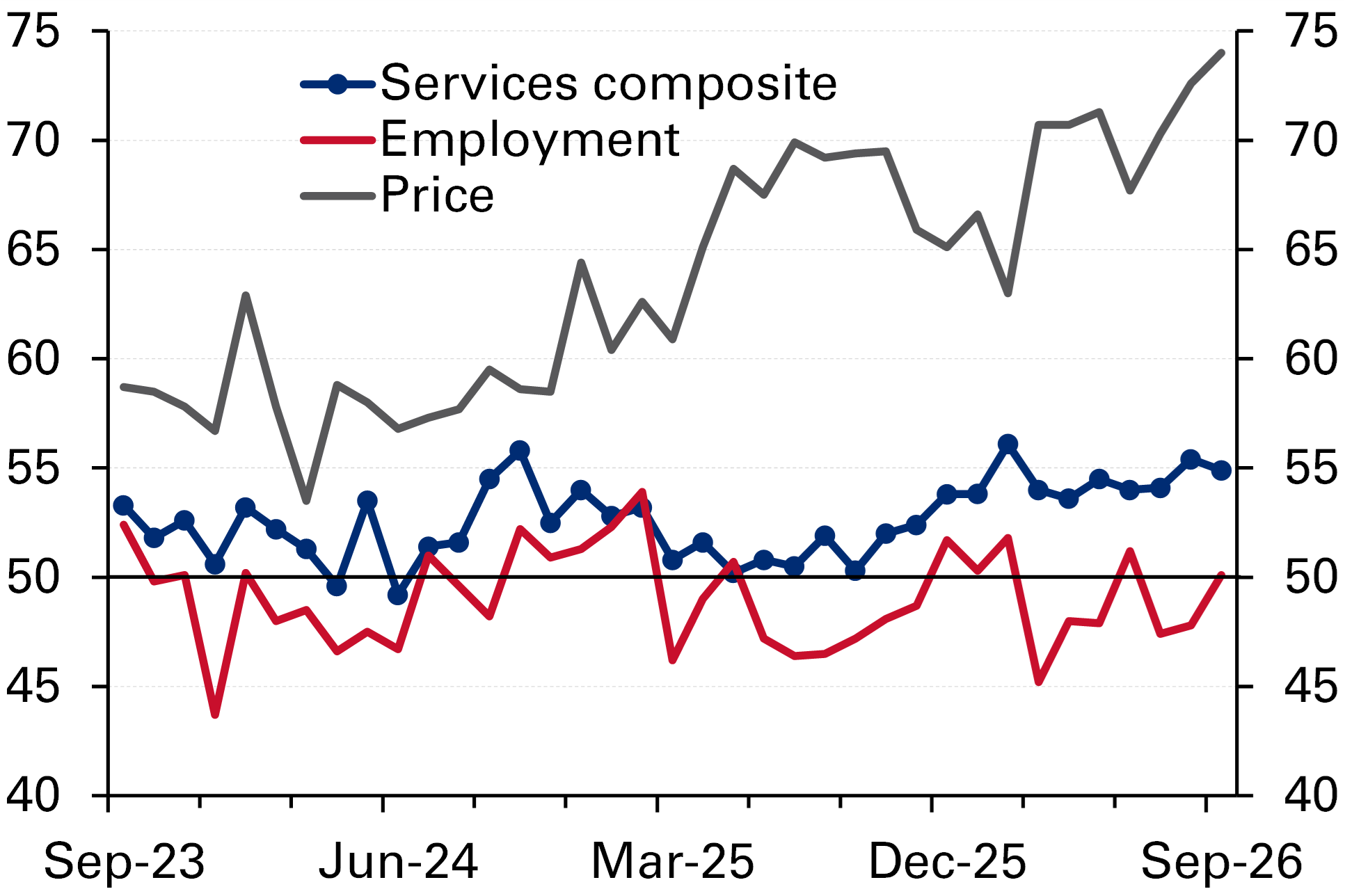
US: Services activity growth moderates slightly as price pressures reach an over four-year high; UST bond yields continued their uptrend. The ISM services PMI slightly eased to 54.9 in September (55 consensus forecast) from August’s 55.4 as output dropped back to 56.5 from a 56-month high of 61.7 in August. Growth in new orders also slowed somewhat but remained robust overall, signaling continued strong demand, while the employment subindex returned to expansion at 50.1 from 47.8 in August. However, the gauge of prices hit an over-four year high of 74 from August’s 72.6, indicating worsening inflationary pressures. Firms were generally concerned about rising fuel costs and supply chain-related disruptions. We note that recent strong business activity readings have highlighted sustained resilient economic growth, supported by robust aggregate household consumption and the ongoing AI-linked business investment boom. Reflecting this economic strength, among other reasons, UST bond yields continued their uptrend, increasing by 2-3 bps yesterday after rising by 10-15 bps last week and with the 10-year hitting 5.3%.
Saudi Arabia: Overall unemployment edges lower in Q2. Saudi Arabia’s overall unemployment rate, covering both Saudis and non-Saudis, edged down to 3.0% in Q2 2026, from 3.1% in Q1 and 3.2% a year earlier, according to GASTAT. The overall labor force participation rate was unchanged q/q at 67.2% but was 1.0 percentage point higher than a year earlier. Among Saudi nationals, however, the unemployment rate increased slightly to 6.5%, up from 6.4% in Q1, although it remained below the 6.8% recorded in Q2 2025. The Saudi labor force participation rate declined to 48.7%, down 0.3 percentage points q/q and 0.5 percentage points y/y. The increase in Saudi unemployment was mainly driven by higher female unemployment, which rose 0.6 percentage points to 9.6%. In contrast, unemployment among Saudi males declined slightly by 0.1 percentage point to 4.8%. Overall, the Q2 data point to a relatively stable labor market, with the headline unemployment rate continuing to edge lower. However, the slight rise in Saudi unemployment and the decline in Saudi labor force participation highlight some continued challenges in the domestic labor market.
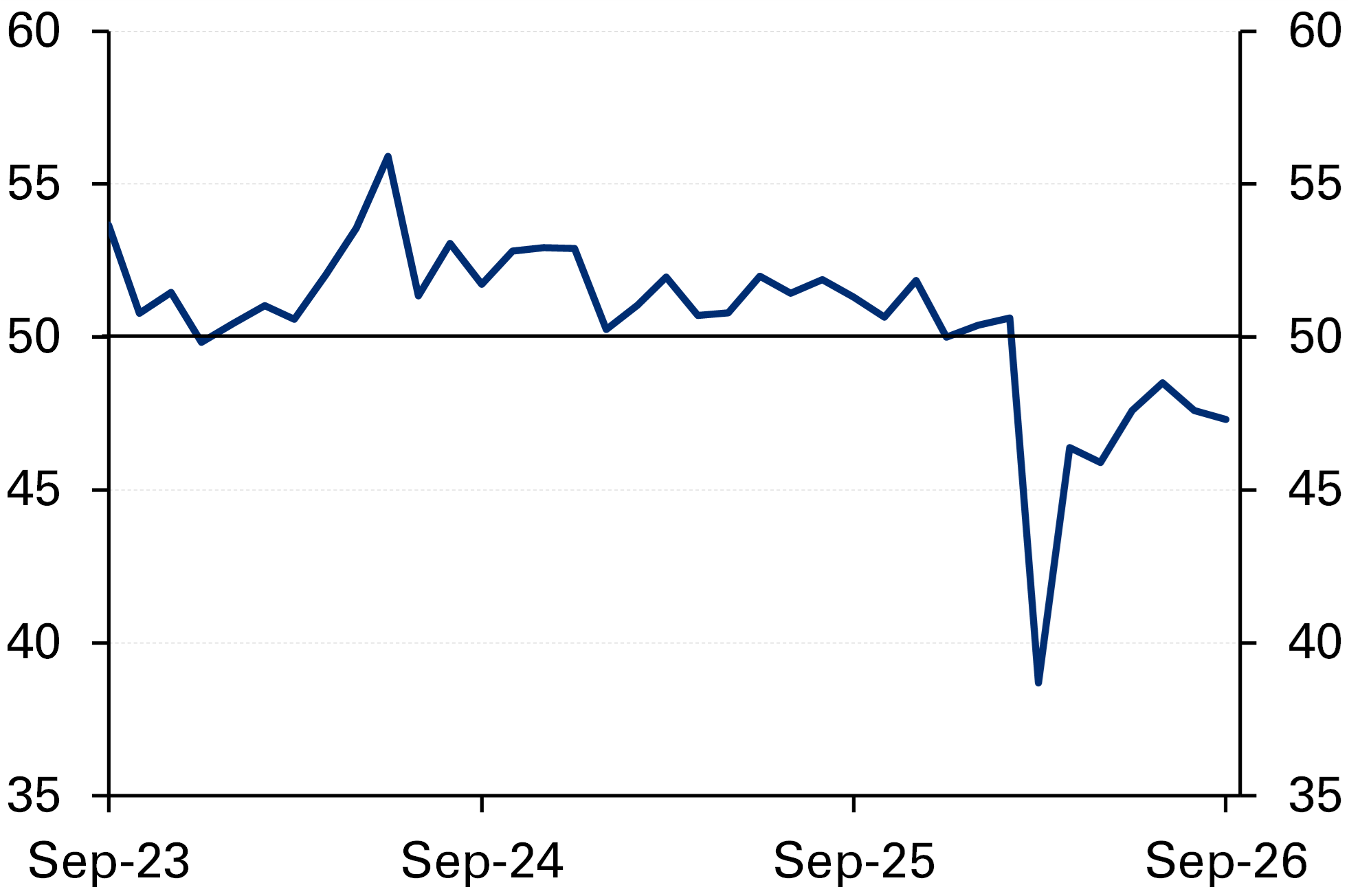
Qatar: PMI worsens in September. Qatar's non-energy private sector PMI declined to 47.3 in September from 47.6 in August, marking an eighth consecutive month in contraction territory and pointing to continued weakness in business conditions. The deterioration was driven by faster declines in both output and new orders, with firms citing subdued demand, weaker market conditions, and ongoing fallout from the regional conflict. Partly offsetting the weakness in activity was a modest improvement in employment. Hiring rose at a slightly faster pace than in August, suggesting that firms retain some cautious optimism despite current headwinds. Indeed, business confidence strengthened during the month, with firms reporting a more positive 12-month outlook, supported by planned investments, expectations of an eventual easing in regional tensions, and anticipated government initiatives aimed at supporting economic activity. Meanwhile on the price front, cost pressures remained elevated. Input prices increased for another month, although the rate of inflation eased slightly from August. Higher raw material prices, rising overhead expenses, and stronger wage pressures continued to drive costs higher, with staffing cost inflation reaching a seven-month high. Businesses continued to pass a portion of these increases on to customers, keeping output price inflation close to record highs by the survey's historical standards. Overall, while September's data suggest that Qatar's private sector remains under pressure from weak demand and conflict-related disruptions, business conditions have improved slightly since the start of the US-Iran war, with the headline PMI averaging 47.8 in Q3, the highest quarterly reading so far this year.
Egypt: Fuel import bill rises 36% amid widening gas supply gap. Egypt’s fuel import bill rose by around 36% y/y to $21.8 billion during January-September 2026, up from $16 billion a year earlier, as the country increased imports of natural gas, crude oil and petroleum products to meet domestic demand. Natural gas accounted for the largest share at $10.5 billion, followed by petroleum products at $7.4 billion and crude oil at $3.4 billion. The increase highlights the continued gap between domestic gas production and consumption. Egypt currently produces around 3.8 billion cubic feet per day (bcf/d), compared with average consumption of around 6.2 bcf/d, rising to about 7.2 bcf/d during the summer peak. The Ministry of Petroleum is targeting gas production of 5.1 bcf/d in FY27/28, below the earlier target of 6.6 bcf/d by 2027 announced by the Prime Minister last year. The lower production target suggests that Egypt is likely to remain reliant on gas imports to meet domestic demand in the near term.