
 +965 2292 4888


Daily Economic Update
17.11.2026
US: Fed Chair Warsh lays out AI impact scenarios in the Fed’s productivity taskforce conference; equity markets fall amid Nvidia fallout. Fed Chair Warsh highlighted three scenarios related to AI’s impact on the economy and the job market but clarified that they were not predictions. He noted that at one end, AI-linked productivity increases could share gains with the broader economy, driving the GDP growth rate above its long-run average and keeping the labor market near full employment. He emphasized that another outcome could be less positive, bringing substantial labor market disruption and displacing some jobs amid widespread automation. Finally, he stated that AI could also disappoint, as expected returns from significant capital investment “could turn down and equity valuations could fall, leading to an economic slowdown and a more notable rise in unemployment.” In that scenario he mentioned that the economy would recover but without the productivity gains. He didn’t offer any take on monetary policy or the current economic outlook. This was the inaugural conference on the jobs and productivity taskforce; one of the five taskforces Chair Warsh had constituted and recommendations from these taskforces could have implications for the Fed’s future monetary policy framework. Separately, the US administration imposed more restrictions on the exports of advanced semiconductors, which drove a fresh selloff in the US equity markets amid the fallout from the Nvidia outrage and wider concerns related to the sustainability of the AI-fueled boom. The S&P 500 and the Nasdaq Composite fell by 1.9% and 2.5%, respectively, yesterday, with the Nasdaq now down around 12% from its record high in early October.
Eurozone: Industrial production remained weak in September. Industrial production inched up by a lower-than-expected 0.2% m/m in September, after decreasing in each of the previous three months. The different components continued to diverge with production increasing in September for durable consumer goods and intermediate goods, but dropping for energy and non-durable consumer goods. While monthly figures are volatile, the weakness from a y/y perspective is clear. On an annual basis, industrial production contracted by a relatively steep 1.5% in September (-1.1% in August), undershooting expectations by a wide margin. In fact, industrial production has decreased y/y every month so far this year with the exception of a small increase in April. However, this weakness has been driven mainly by the non-durable consumer goods component, which tumbled by 7.5% y/y in September, following decreases of 9.4% and 5.1% in August and July, respectively. The durable consumer goods component has been another laggard although trends have been improving, increasing by 1.6% y/y in September, following decreases of 0.3% and 1.8% in August and July, respectively. In contrast, intermediate goods, capital goods, and energy have been much more resilient, showing mostly positive y/y growth since April. Obviously, higher energy prices have hit overall Eurozone industrial production hard this year, and hence any sustained decrease in energy prices from here should bode well for a rebound in growth in 2027.
UAE: Fitch affirms AA- rating with a stable outlook despite war-related headwinds. Rating agency Fitch has affirmed the UAE’s long-term issuer default rating at “AA-” with a stable outlook, reflecting the country’s strong fiscal and external balance sheets, underpinned by low public debt, substantial sovereign assets, and high-income levels. While Fitch expects the war on Iran to weigh on non-oil activity, higher oil prices and hydrocarbon production, and resilient oil exports could offset part of this impact. The agency projects real GDP growth of 0.5% in 2026 based on hydrocarbon GDP growth of 7% and non-hydrocarbon GDP growth of -1.5%. In the former, Fitch noted the ramp up in oil production following the UAE’s exit from OPEC+ and production quotas earlier this year, while the non-hydrocarbon economy, especially Dubai’s given its outsized weight, has been adversely affected by conflict-linked disruption to logistics, tourism and manufacturing activity. Fitch expects Dubai’s GDP to decline by 5% this year. On the fiscal front, the agency forecasts a consolidated fiscal surplus of 4% of GDP in 2026 on the back of robust oil revenues—supported by higher export volumes through the Strait of Hormuz and an average oil price of $87/bbl—even as spending is expected to rise by 20% on recovery and support programs. Public debt is also expected to remain low at 22.8% of GDP, well below the median for similarly rated sovereigns. Fitch also highlighted substantial external buffers, including strong FX reserve holdings at the central bank and the sizeable assets of Abu Dhabi Investment Authority, which it views as a key anchor of macroeconomic stability amid elevated regional geopolitical risks.
Oman: Inflation eased to 4-month low in October. Consumer price inflation eased for the second consecutive month to 2.9% y/y in October, down from 3.2% in September, and the lowest reading since June. Despite the moderation in overall inflation, food price inflation eased but remained elevated at 7.6% y/y (from 8% in September) led by still high inflation in vegetables (17%), fruits (16.9%), and meat (10.5%), alongside higher prices for beverages, dairy products, and other food items. Additionally, higher inflation was logged in transport (5.6%) and tobacco (4.7%), while hotel and restaurant prices rose by 3.4%. In contrast, housing costs were little changed, up only 0.1%, helping to anchor overall inflation, while reduced price pressures for furnishing, education, and miscellaneous goods and services also contributed to the lower October inflation reading. Inflation so far this year (10 months) averaged 2.9%, in line with our full-year forecast of 3% in 2026, and we see inflation gradually declining toward 2% over the medium term as conflict-linked supply chain pressures abate.
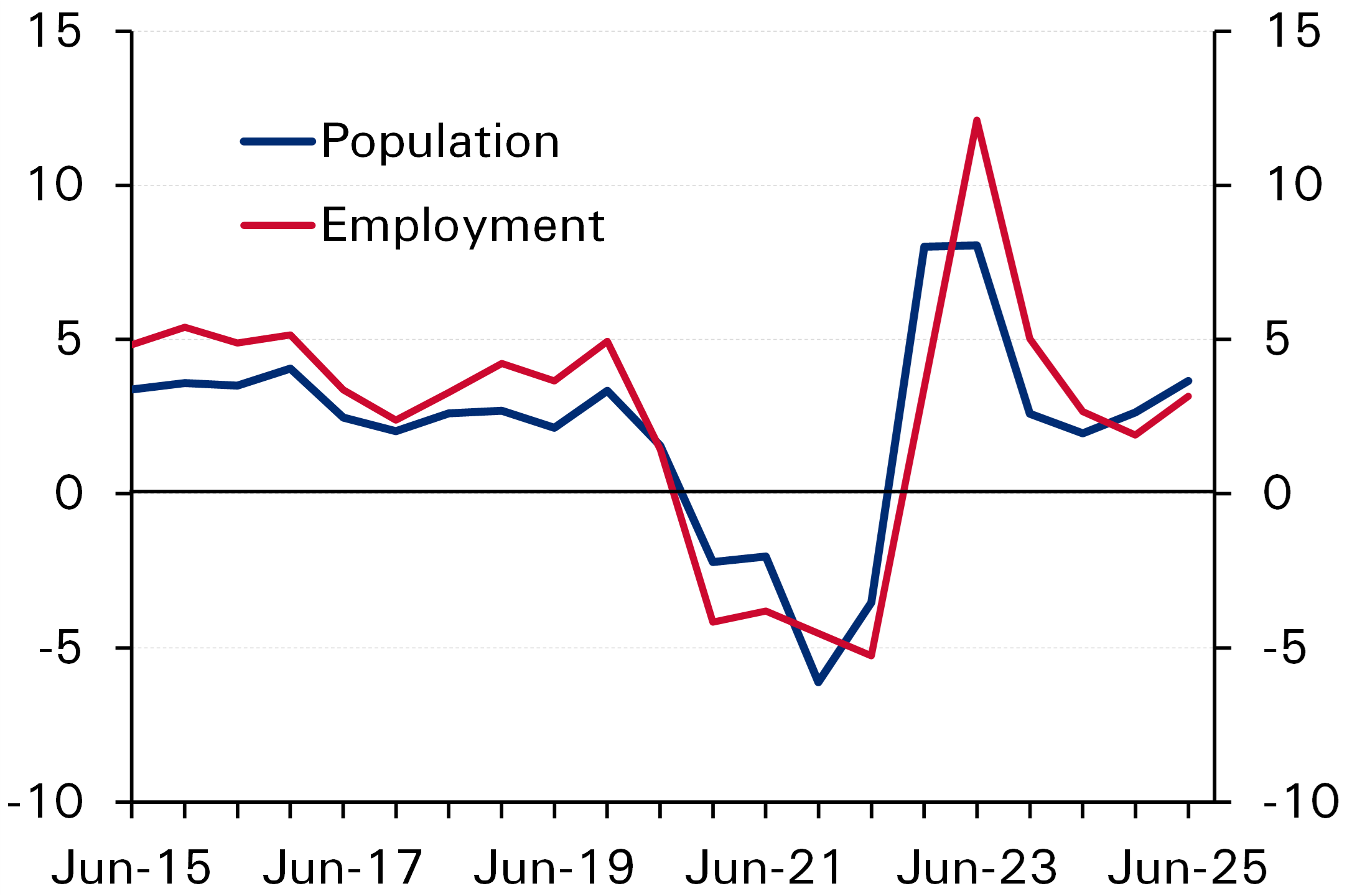
Egypt: Private-sector minimum wage to rise by 21% in January 2027. Egypt’s private-sector minimum wage will increase by 21% y/y to EGP 8,500 per month from 1 January 2027, following approval by the National Wages Council, according to a cabinet statement. This will be the first increase since March 2025, replacing the current EGP 7,000 minimum and covering around 26.5 million private-sector workers. The new minimum will also exceed the EGP 8,000 floor currently paid to government employees. The prime minister stressed the importance of ensuring compliance among private companies, which employ the majority of Egypt’s workforce. Meanwhile, the government’s 2027-2030 program targets raising the public-sector minimum wage to EGP 15,000 by FY29/30. A working group comprising government and private sector representatives will also study potential wage increases across sectors through 2030. The increase is higher than the average inflation rate recorded in 2026, which could support workers’ purchasing power, provided that price pressures remain contained. However, higher wages may also add to businesses’ operating costs, potentially creating further inflationary pressures if companies pass these costs on to consumers.