
 +965 2292 4888


Daily Economic Update
07.10.2026
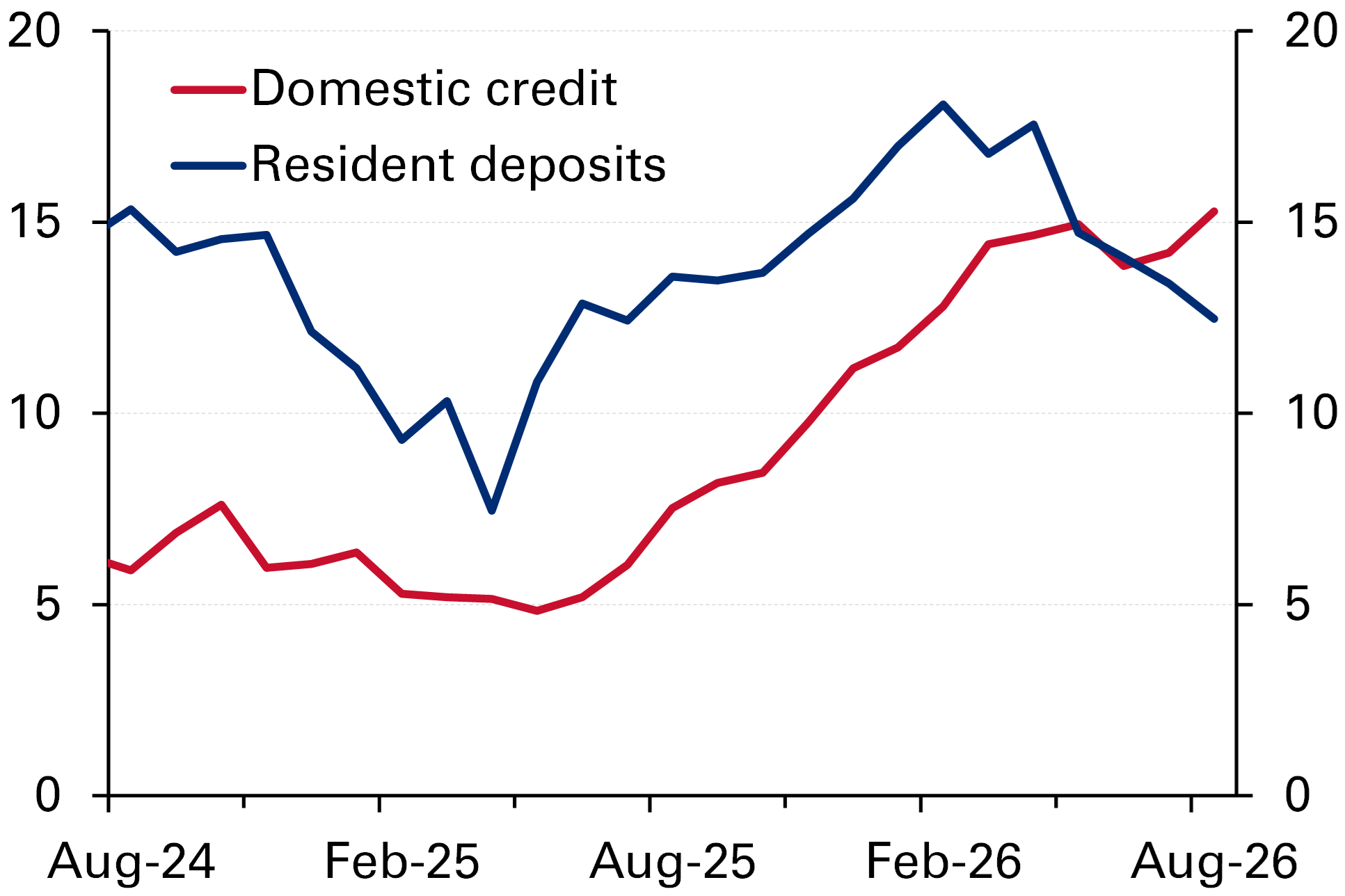
UAE: Domestic credit growth accelerates in August to a new recent high. Domestic credit growth accelerated to a modern record of 15.3% y/y in August, up from 14.2% in July, surpassing the previous series historical peak of May 2026 (15.0%) and reflecting strong increases across both public and private sectors. Private sector credit grew by 12.6%, the fastest pace since January 2015, driven mainly by a surge in personal credit of 19.3% y/y, well above the 14.7% increase in July. Moreover, corporate borrowing growth accelerated for the second consecutive month to 8.6%, up from 7.1% in July. Meanwhile, public sector credit (government plus GREs) continued to post double-digit growth for the ninth consecutive month, rising by 22% y/y. While credit growth to the government moderated to 16.4% from 24% in July, lending growth to GREs remained broadly stable at a strong 27% y/y. On the funding side, resident deposit growth continued to ease for a fourth straight month to 12.5% y/y, down from 17.6% in April, largely reflecting slower growth in public sector deposits. In contrast, private sector deposit growth was steady at 12.8%. The figures highlight the ongoing resilience of the UAE economy and banking system in the face of conflict headwinds, reflected in recent PMI figures that showed non-oil activity expansion back to pre-conflict levels in August and September, while oil production had recovered to 3.8 mb/d in August according to secondary source data.
Kuwait: Current account surplus widened in Q1 26 despite lower oil receipts. The current account logged a surplus of KD2.6 billion (22% of GDP) in Q1 2026, up from KD2.2 billion (19% of GDP) in Q4 2025 despite the onset of the US-Iran conflict at the end of February and severe disruption to Kuwait’s international trade. This increase was largely driven by strong investment income receipts, rising to KD3.4 billion from KD2.8 billion previously. The services’ account deficit narrowed slightly to KD1.3 billion, reflecting lower transportation and other services payments due to the impact of the US-Iran war on maritime trade. These gains more than offset a wider secondary income deficit, which increased to KD1.6 billion as workers’ remittances rose by 15.3% q/q. Meanwhile, the goods trade surplus was broadly stable at KD2.1 billion. Both imports and exports fell in Q1 with total exports declining by -14.1% q/q on lower oil and non-oil exports. Oil export receipts fell by -10.4% q/q to KD4.1 billion as production declined sharply to 2.1 mb/d from 2.57 mb/d in Q4 2025, partially offset by a 31% increase in the KEC price to an average of $83.8/bbl. Non-oil exports contracted a sharp -37% q/q, while imports (FoB) plunged by -23% q/q to KD2.4 billion, largely reflecting the disruptions to maritime trade routes following the US-Iran conflict. On the financial account side, net outflows rose slightly to KD2.6 billion in Q1, largely driven by a shift in direct investment abroad from net repatriation of overseas assets in Q4 to net capital deployment abroad in Q1 (KD0.95 billion) while portfolio investment recorded a net inflow of KD2.0 billion in Q1 amid both a decline in equity portfolio investment abroad and in foreign investor inflows. Finally, the Central Bank of Kuwait’s reserve assets declined for a third consecutive quarter to KD10.7 billion (currently at KD8.5 billion in August 2025), covering more than 3 months of imports of goods & services.
Egypt: World Bank raises its growth forecast for Egypt. The World Bank raised its forecast for Egypt’s economic growth in FY25/26 to 5.1%, up from 4.3% in its April forecast. It also upgraded its growth forecast for the current fiscal year to 4.3%, from 4.0% previously. The Bank attributed the stronger growth outlook to easing inflation, resilient domestic consumption and private investment, and a recovery in the extractive industries. However, it noted that Egypt remains vulnerable to higher global oil and commodity prices, elevated borrowing costs and continued geopolitical tensions in the Middle East. Lower remittances from Egyptian workers in the GCC could also weigh on the outlook. The World Bank expects inflation to average 14.2% in the current fiscal year, up from 13.3% in FY25/26, but significantly below 20.9% in FY24/25. It noted that inflation has remained relatively stable since the outbreak of the Iran conflict in late February, although it remains higher than in other countries across the region. The Bank attributed the relative stability partly to government subsidies on essential goods and administratively set fuel prices.
Saudi Arabia: Saudi Arabia and UAE lead regional AI development. Most Middle Eastern countries continue to lag the rest of the world in their readiness to adopt digital technologies, particularly artificial intelligence (AI). However, Saudi Arabia and the UAE have made notable progress over the past two years and are emerging as regional leaders. According to a World Bank report, AI could boost productivity in 13% to 20% of jobs across the Middle East, while less than 10% of jobs are at risk of automation. Despite their progress, both countries face challenges including limited Arabic-language data, weak innovation capacity, and gaps in skills and regulation, which could slow AI adoption. Saudi Arabia and the UAE are also the only countries in the region ranked among the global top 25 for AI model development and high-performance computing capabilities, highlighting their leading position in the region’s AI race.
Japan: Ueda signals greater focus on anchoring inflation ahead of October BOJ meeting, earnings growth remains robust. In remarks delivered on Tuesday, BOJ Governor Kazuo Ueda stated that Japan's economy and prices are evolving broadly in line with the central bank's baseline outlook, with underlying inflation gradually approaching the 2% target and medium-to-long-term inflation expectations continuing to rise. Ueda warned that developments in the Middle East, strong AI-related demand and exchange-rate fluctuations could push underlying inflation above the BOJ's price stability target, adding that it has become "more important than before" to ensure inflation becomes anchored around 2%. He also noted that financial conditions remain accommodative despite last month's rate hike and reiterated that, given the current backdrop, the BOJ expects to continue adjusting the degree of monetary accommodation through further policy rate increases as warranted by economic, price and financial conditions. However, Ueda stopped short of signaling an imminent move at the BOJ's 30 October meeting, with markets interpreting the remarks as broadly consistent with a pause at the 30 October meeting, with implied market pricing suggesting a better than an 80% probability that rates will be unchanged. Separately, average cash earnings rose 3.8% y/y in August, slightly above expectations and marking a seventh consecutive month of growth above 3%, the longest such stretch since 1992. Although earnings growth moderated from July's pace, regular pay continued to post solid gains and overtime earnings accelerated 5.2%, suggesting labor market conditions remain supportive of income growth. The figures are likely to provide some reassurance to policymakers that wage increases remain sufficiently robust to support the BOJ's objective of achieving a sustainable 2% inflation rate.
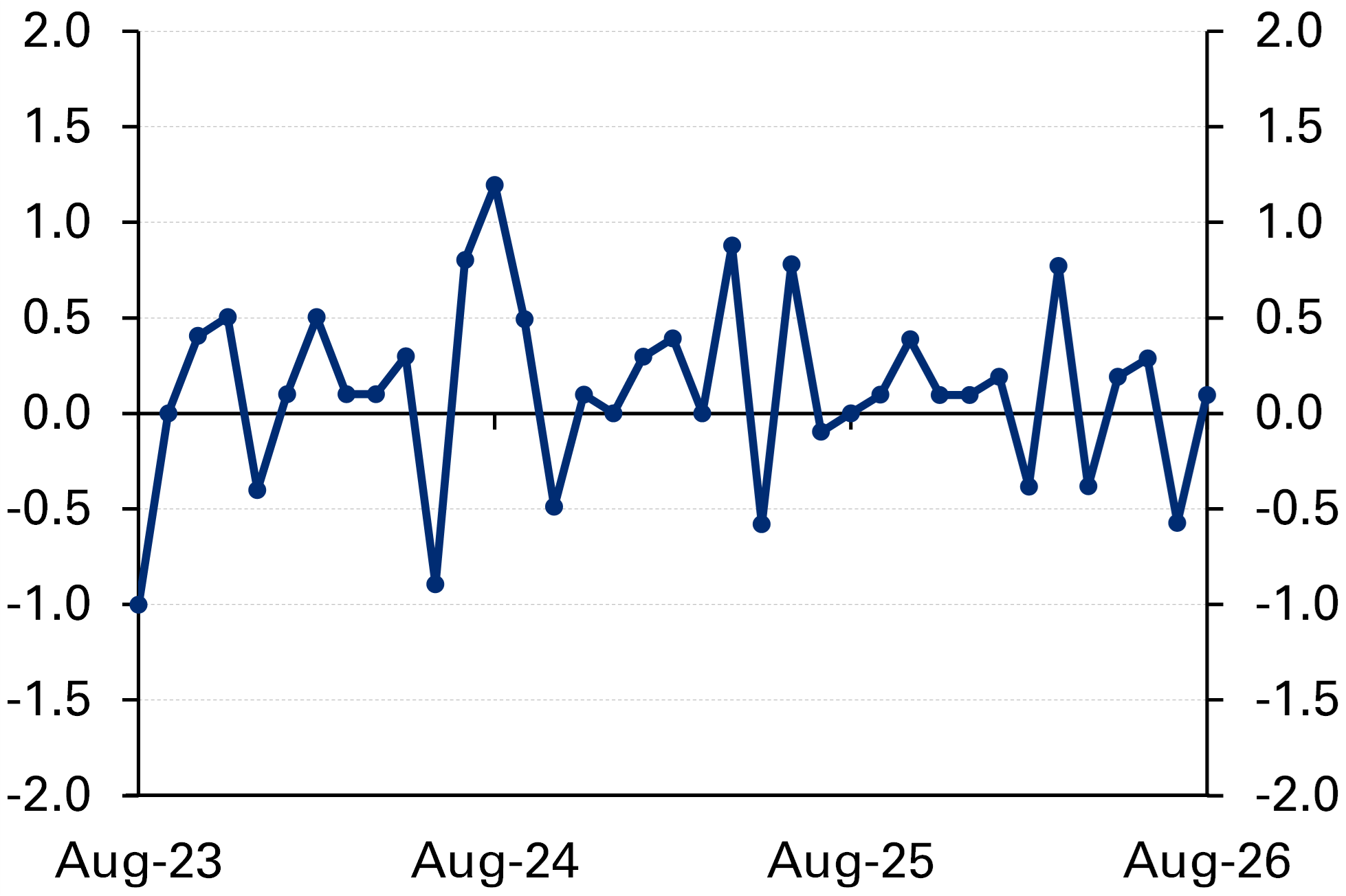
Eurozone: Retail sales inch up in August, coming weaker than expected. Eurozone retail trade volumes rose 0.1% m/m in August, following July's 0.6% decline, slightly missing expectations (+0.2% m/m). The increase was driven by stronger sales of non-food goods (+0.5% m/m) and food, drinks, and tobacco (+0.1%). However, fuel sales fell markedly (-1.9% m/m), reflecting the impact of higher energy prices on household spending patterns. On an annual basis, retail sales increased 0.8% in August, up from a downwardly revised 0.4% in July, indicating a modest improvement in consumer demand. The August data suggests that consumption has stabilized following a weak July, but it does not point to a sustained strengthening in household demand.