
 +965 2292 4888


Daily Economic Update
13.09.2026
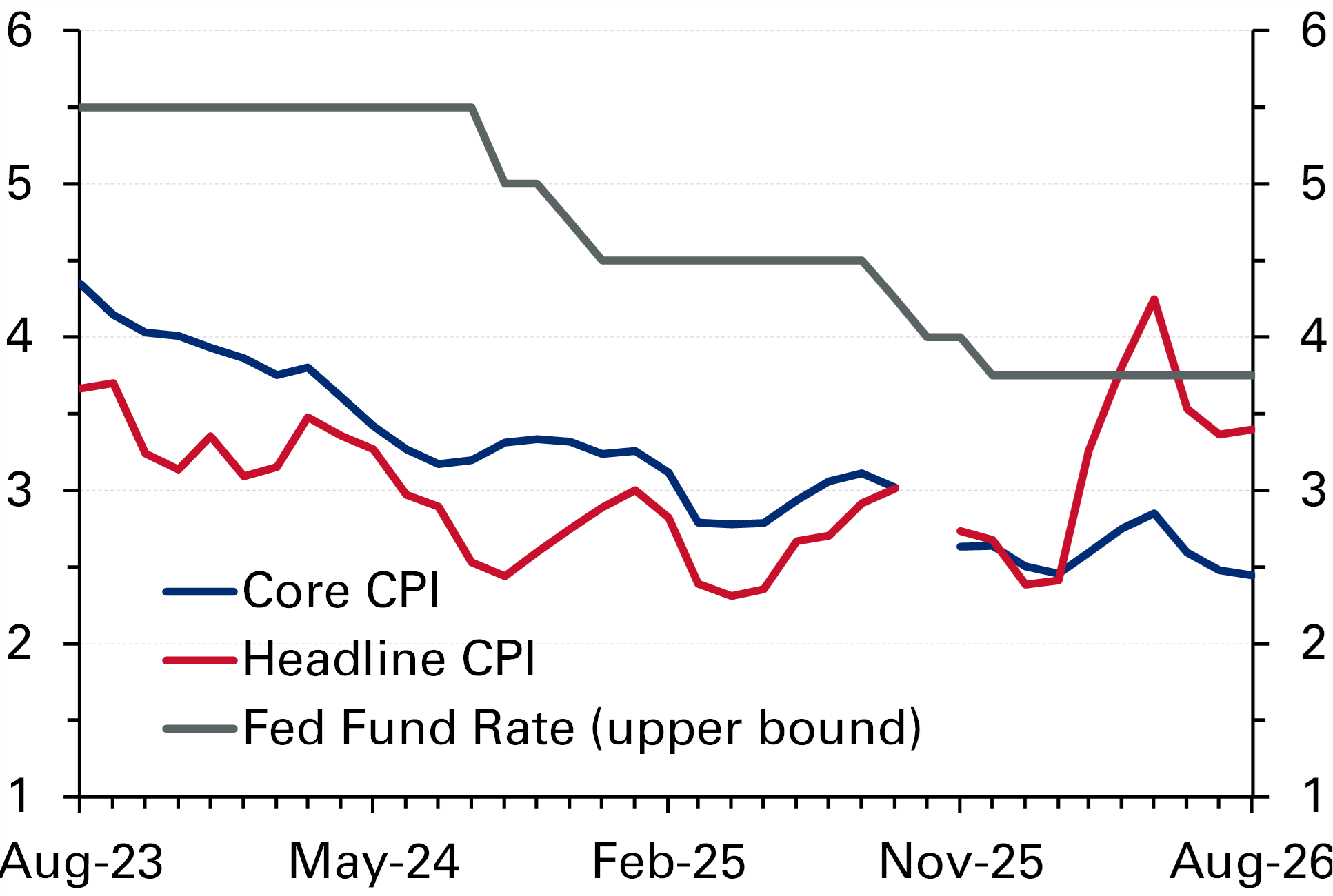
US: Hotter-than-forecast m/m core CPI inflation boosts odds of a Fed rate hike this week. CPI inflation in August was steady at 3.4% y/y and the core rate softened very marginally, rounding down to 2.4% from 2.5% in July, matching the consensus forecast. However, on a monthly basis, both headline and core accelerated to 0.4% and 0.3% (versus 0.2% forecast) from 0.1% and 0.2%, respectively. While higher energy goods prices (+4.2% m/m) were among the main contributors to the sharp acceleration in overall inflation, heavyweight shelter also rose by 0.3%, up from just 0.1% in the previous two months. Details within the underlying inflation components were more mixed, as core goods inflation eased to 0.1% m/m (0.7% y/y), but a key services gauge tracked by the Fed, super core services (ex. energy and housing), climbed 0.5% m/m (3% y/y), the highest since January. Within core services, mobile plans costs increased by 5.9% m/m, with airfares rising at 2.7% after being up 2.2% in July but other stickier categories such as medical care and auto insurance fell by 0.2% and 0.8%, respectively. The ongoing boom in AI-related demand and rising semiconductor prices saw a 3.8% m/m increase in computers and peripherals costs but the contribution of that category specifically in overall inflation is minor. Energy commodity prices have further increased steeply in September, that may drive inflation higher over the coming months, with their effects potentially transmitting to core components through rising transportation and raw material costs. After the CPI release, the futures market bumped up the probability of a Fed interest rate hike at the FOMC’s September 15-16 meeting to over 85% from around 70% before the CPI print and around 60% before the PPI print. The Fed has put itself in a corner, given that the upcoming FOMC meeting became very much dependent on the recently released CPI and PPI prints. Separately, as crude oil prices increased sharply in the last few days, yields on 10Y UST bonds came within the striking distance of hitting the key psychological 5% mark, staying near the highest point in three years and not far from the levels seen pre-GFC in 2007.
Eurozone: ECB raises rates with inflation risks skewed to the upside. The European Central Bank raised its deposit facility rate by 25bps to 2.50% at its meeting on Thursday. The decision reflects concerns that inflationary pressures stemming from the Middle East-related energy shock could keep inflation above target for longer than previously anticipated and came after euro area inflation accelerated to 3.3% y/y in August. ECB President Lagarde mentioned that the decision to raise rates was a “no brainer”. Meanwhile, accompanying staff projections showed a more resilient growth outlook, with euro area GDP expected to grow by 0.9% in 2026 and 1.4% in 2027 compared with 0.8% and 1.2% projected previously. Inflation is projected at 3.0% in 2026, 2.5% in 2027, and 2.1% in 2028, and while the 2026 forecast was unchanged, the prior projections for 2027 and 2028 stood at 2.3% and 2%, respectively, suggesting a slower return to the 2% target. On forward guidance, the ECB maintained its data-dependent, meeting-by-meeting approach and reiterated that it is not pre-committing to any particular rate path. Nevertheless, the Governing Council's focus on upside inflation risks and the upward revision to its inflation projections suggest that policy will remain biased toward further tightening, with risks to the policy rate path continuing to be skewed to the upside.
UK: GDP in July logs unexpected expansion indicating solid resilience amid ongoing headwinds. The UK economy in July posted a solid unexpected rise of 0.4% m/m (1.6% y/y) following a 0.3% (1.1% y/y) increase in June, versus the consensus forecast of no change. Growth in services was unchanged from June at 0.4%, while both production and construction rebounded by 0.2% and 0.1% after dropping 0.2% and 0.1% in June, respectively. According to the ONS, the services sector significantly benefited from AI and cloud computing-related activities, while manufacturing was mainly boosted by higher output in similar product categories including computer, electronic and optical goods. However, consumer facing services declined 0.4%, led by retail trade as household budgets come under pressure. July’s expansion has raised hopes that growth may remain resilient in Q3 despite high energy costs; however, headwinds from elevated interest rates, rising inflation and a weak labor market persist that may temper momentum.
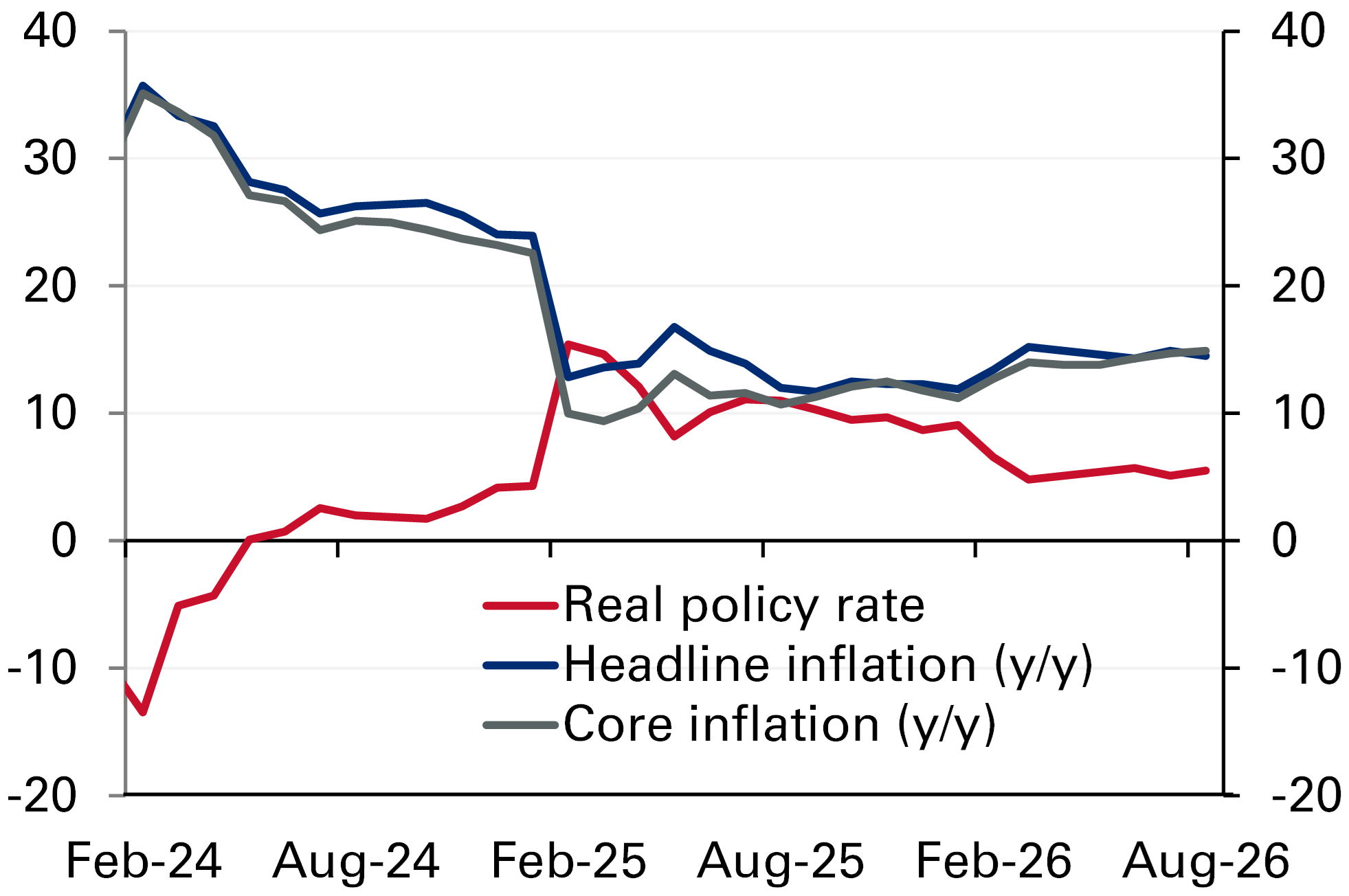
Egypt: Inflation eases in August, but fuel prices remain a key risk. Urban inflation eased to 14.5% y/y in August, from 14.9% in July, according to CAPMAS. The main driver was a 7% m/m decline in vegetables’ prices, which helped food inflation ease for the third consecutive month. The moderation is notable in the past few months despite the recent escalation in regional tensions. However, fuel prices remain a key upside risk to the inflation outlook. With Brent crude recently rising above $100/bbl, the Fuel Pricing Committee could consider another fuel price increase before year-end, which would put renewed pressure on inflation and might induce another second round of price hikes. Against this backdrop, we expect the central bank to keep policy rates unchanged at its policy meeting at the end of this month, marking the fifth consecutive hold. With the real interest rate still above 5%, the bank has sufficient room to maintain its previously announced “wait-and-see” approach while assessing the impact of global and regional developments.
Oman: Inflation reached 3-month high in August. CPI inflation accelerated to 3.4% y/y in August, up from 3.2% in July, reaching its highest level since May. The rise was mainly driven by stronger transport inflation, with prices increasing by 8.5% y/y from 6.5% the previous month, largely reflecting higher fuel costs linked to rising crude oil prices and heightened US-Iran tensions. Inflation for miscellaneous goods and services also accelerated, climbing to 6.1% from 5.3% in July. Food inflation moderated slightly too but remained relatively high at 7.0% (from 7.3% previously). Inflation in restaurants and hotels held steady at 3.6%, and prices for furnishings, household equipment, and routine household maintenance were unchanged at 3.1%. In contrast, housing and utility costs fell for the fourth consecutive month, down 0.6% y/y. On a monthly basis, consumer prices decreased 0.3% in August, following a 0.7% increase in July.