
 +965 2292 4888


Daily Economic Update
17.09.2026
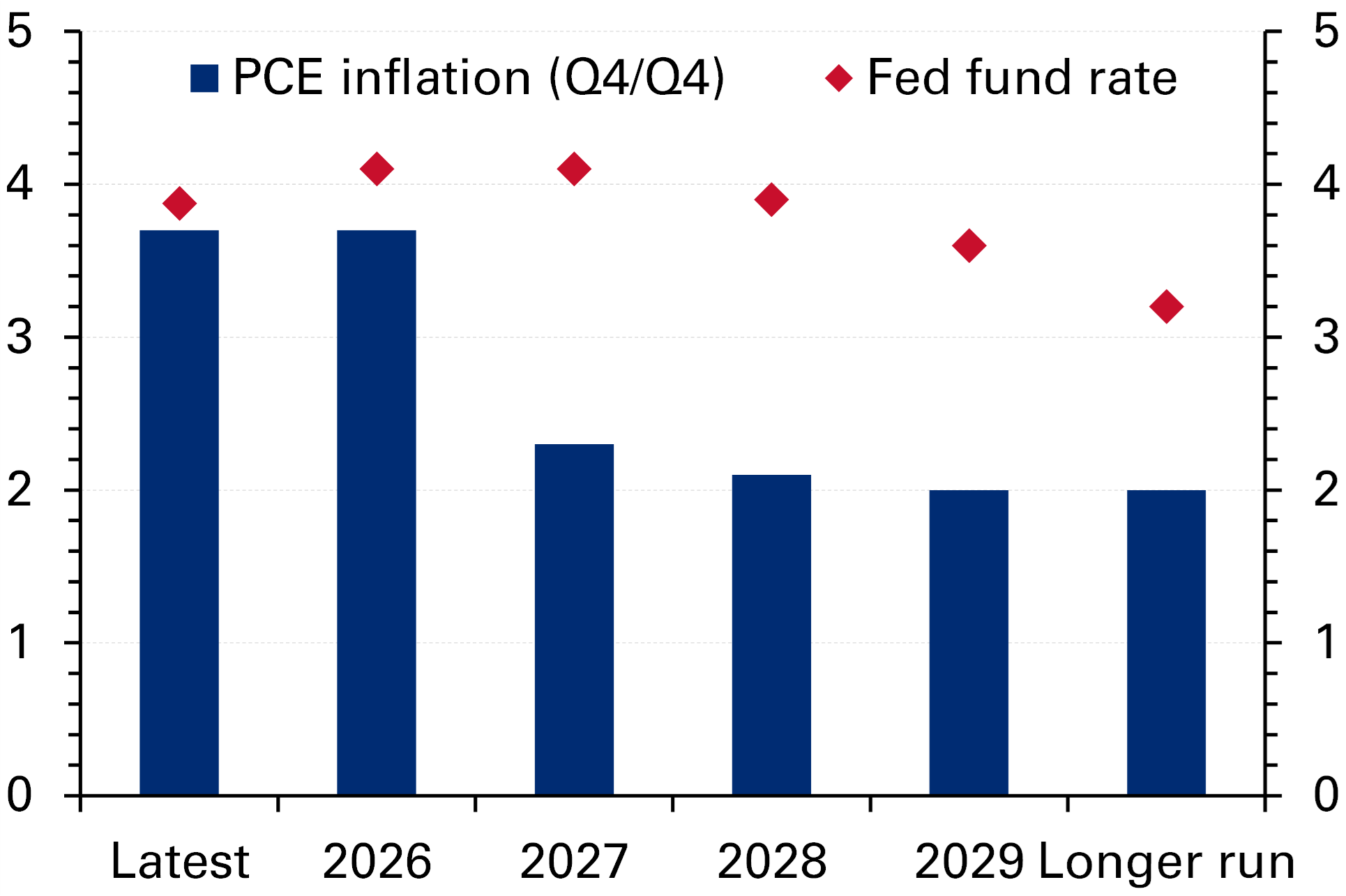
US: Fed delivers 25bps interest rate hike in a hawkish move, sees one more hike by end-2026. The FOMC, in a unanimous vote, raised the Fed Fund target rate by 25bps to the 3.75-4.0% range in order to “support a timelier return” to the 2% goal. It noted that economic growth has been strengthening, productivity growth is strong, job gains keeping pace with the workforce, and inflation elevated. The updated dot-plot was hawkish showing that 16 members see at least one more hike this year with only two members seeing steady rates by year-end, with the median dot signaling steady rates in 2027, but eight members penciling in one more hike in 2027, with the longer run interest rate estimate being raised to 3.2% from 3.1%. The GDP growth forecast was lifted by 0.1% in 2026 and in 2027 to 2.3% and 2.4%, respectively, but the unemployment rate outlook was revised down to 4.1% in 2026-2029. PCE and core PCE inflation in Q4 2026 are now seen higher at 3.7% and 3.4% respectively, with inflation expected to only reach the Fed’s 2% target by 2029. Similar to the June meeting, Chair Warsh didn’t contribute to these projections. Delivering a hawkish tone in the post meeting conference, Warsh labeled the latest hike as the removal of “a dose of accommodation”, saying he and most other FOMC members would be hard pressed to describe current financial conditions as restrictive. He expressed that recent inflation readings indicate that underlying trends haven’t improved and many inflation categories were still showing a 3% increase on a 12-month basis and 6-month annualized basis. He mentioned that rising bond yields were reflecting a strengthening US economy, competition from private bond issuance as well as heightened geopolitical uncertainty. But he made no mention of the concerns about unsustainable fiscal deficits. Keeping his usual style, Warsh didn’t offer any forward guidance, but after a disappointing communication stance at the previous two FOMC meetings, he exhibited some clarity about his macroeconomic views and about the Fed’s reaction function. Following the FOMC decision, President Trump repeated his demand to lower interest rates, but unlike previously, when he heavily and publicly criticized then Fed Chair Powell for not cutting policy rates, he directed his angst towards the Fed Board, describing it as “very hostile, very political”. Financial markets wavered during Warsh’s speech, with the yield curve flattening and equities falling; the S&P 500 dropped by around 0.5%, the two-year yield ended the day up around 7 bps after being down by more than 5 bps before the decision, and 10Y UST yields remained above 5% at yesterday’s close. Futures market pricing now indicates a 50% probability of another rate hike in October and a 70% probability of three cumulative hikes over the next 12 months.
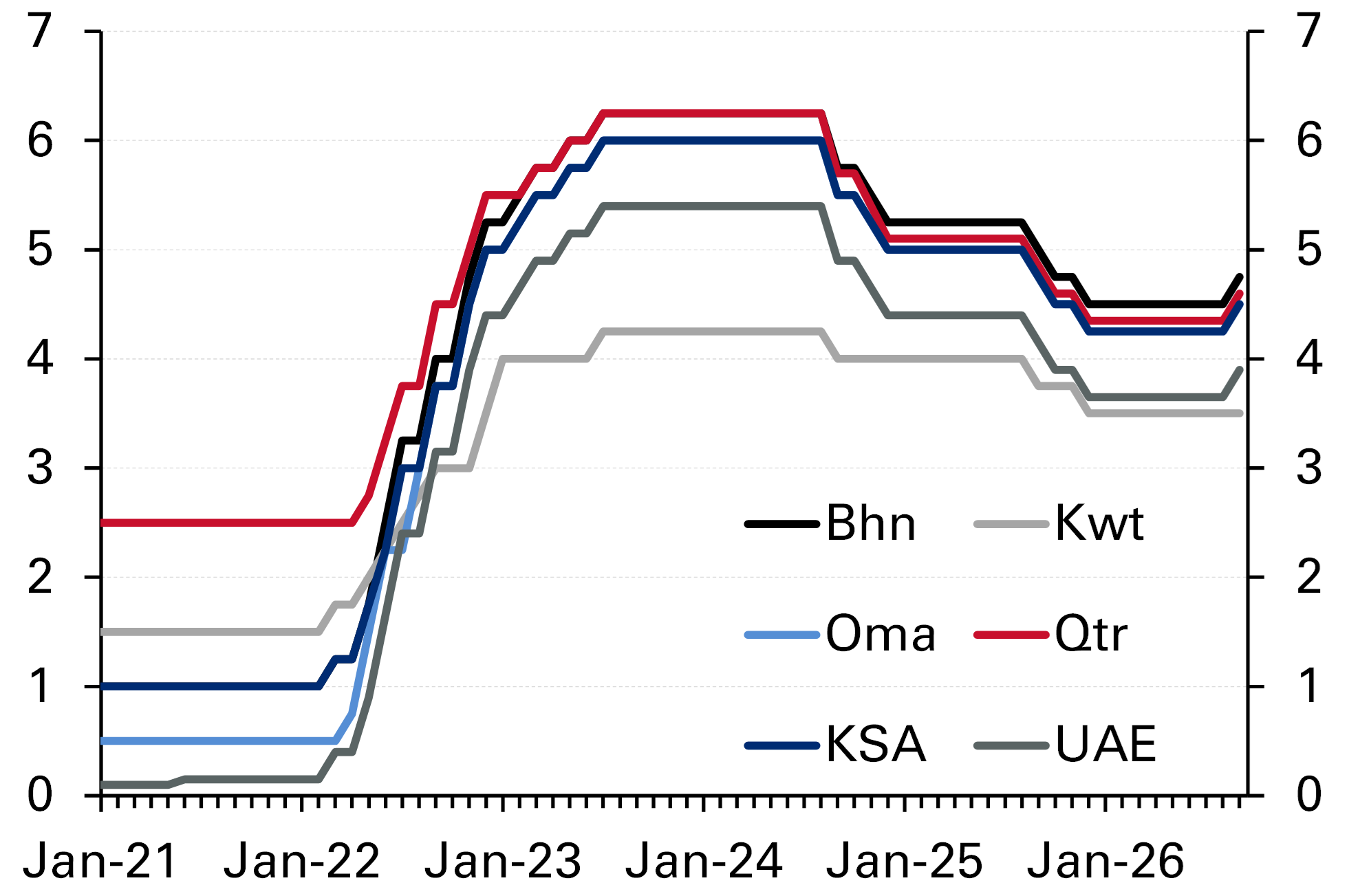
GCC: Most Gulf central banks follow the US Fed in raising policy rates. Most GCC central banks raised policy rates by 25bps following the US Fed’s first-rate hike since 2023, reflecting their commitment to monetary and exchange rate stability under dollar pegged currency regimes. Saudi Arabia increased its repo and reverse repo rates to 4.50% and 4.00%, respectively, while Oman raised its repo rate to 4.50%. Bahrain also lifted its overnight deposit rate from 4.25% to 4.50% and Qatar increased its deposit, lending, and repo rates to 4.1%, 4.6%, and 4.35%, respectively. In the UAE, the central bank increased the base rate for the overnight deposit facility by 25bps to 3.90%, while keeping the borrowing rate on short-term liquidity facilities unchanged at 50bps above the base rate. Kuwait diverged from the regional trend, with the Central Bank of Kuwait (CBK) keeping its discount rate at 3.50%. The decision reflects Kuwait’s unique monetary framework, as the Kuwaiti dinar is pegged to an undisclosed basket of currencies rather than solely the US dollar, which affords it greater policy flexibility. In a statement, the CBK noted that its assessment of financial and economic data “reflects the soundness and strength of the monetary and financial stability in the State of Kuwait, and prevailing monetary conditions are considered consistent with domestic economic conditions “.
Oil: Prices decline amid signs of easing supply crunch. Brent futures fell 2.7% yesterday from their four-month high of nearly $109/bbl to $105.8/bbl as signs of improving Saudi export availability helped ease concerns over near-term supply shortages. Sentiment was supported by reports that Saudi Arabia is offering additional crude cargoes to Asian refiners via ship-to-ship transfers off the coast of Oman. These developments have partially alleviated the supply crunch caused by Houthi attacks on Saudi Arabia's East-West pipeline, which remains offline after drone strikes damaged two pumping stations. However, media reports indicate that Saudi Aramco plans to restore roughly half of the pipeline's capacity within the coming days, raising expectations that some lost export capacity could soon return to the market. Additional bearish pressure came from EIA inventory data, which showed a much smaller than expected drawdown in crude stocks last week (-400 kb w/w) from the US Strategic Petroleum Reserve – indeed the smallest since March. Meanwhile, according to US Energy Secretary Wright, the seven-day average of crude transiting the Strait of Hormuz was about 11 mb/d, roughly 55% of the pre-conflict rate.
UK: August’s CPI inflation accelerates matching the consensus forecast, supporting a cautious BoE stance today. UK CPI inflation in August increased to a five-month high of 3.1% y/y from July’s 2.9%, mainly driven by rising transportation costs, particularly motor fuel prices (+23% y/y), and higher utility charges. The core rate held steady for the fourth straight month at 2.6%, with the services gauge also unchanged at 3.4%. On a monthly basis, headline and core inflation increased to 0.5% and 0.3% from 0.3% and 0.2%, respectively. Despite higher overall inflation, primarily driven by rising energy costs, the flat core and services inflation rates should encourage the BoE to maintain caution; the MPC is mostly expected to keep the bank rate unchanged at 3.75% today. Amid an ongoing weak labor market, the MPC may signal the continuation of its previous stance of awaiting greater clarity on the second-round effects of higher energy prices on underlying inflation components, which, so far, seem relatively limited.
Eurozone: Industrial production remained subdued in July. Eurozone industrial production declined 0.1% m/m in July, matching the pace of contraction recorded in June, which was revised down from an initially reported flat reading. On an annual basis, industrial output was unchanged from a year earlier, an improvement from the 0.3% y/y decline in June (also revised lower from a previously reported 0.1% increase). The monthly weakness was driven primarily by a further decline in non-durable consumer goods production (-1.6% m/m), while growth in energy output eased (+0.9%). However, the downturn was partly offset by a recovery in intermediate goods production (+0.3% m/m) and a modest increase in capital goods (+0.5%) and durable consumer goods (+0.9%) output. Across the region's largest economies, industrial activity weakened in both Germany (-1.5% m/m) and France (-0.4%) while Italy (+0.7%) and Spain (+0.6%) recorded an increase. The July data suggest that industrial production remains stuck in a low-growth environment, with pockets of resilience in investment-related sectors offset by continued softness in consumer-oriented manufacturing.
Egypt: Government wants to increase domestic gas production by year-end. Egypt plans to increase domestic natural gas production by around 330mncf/d before year-end, according to the Oil Ministry, as it seeks to strengthen local supply and reduce reliance on imports. Most of the additional production is expected to come from the Zohr and West Mina fields in the Mediterranean, while around 80mncf/d is expected from the Meleiha fields in the Western Desert by end-September, following the completion of the second phase of a gas processing plant. Egypt’s gas exploration activity is also picking up. EGAS made nine discoveries in FY25/26, including eight gas and one oil discovery, adding around 2.8tn cubic feet of gas reserves. Three exploratory gas wells are currently being drilled and are expected to be completed before year-end. Meanwhile, EGAS invested around $1.12 billion in nine gas-field development projects during FY25/26, connecting 28 wells to production. The company also plans to launch a new East Mediterranean seismic survey in October, following a similar survey in the West Mediterranean that has already attracted investment interest from TotalEnergies and Chevron.