
 +965 2292 4888


Daily Economic Update
16.09.2026
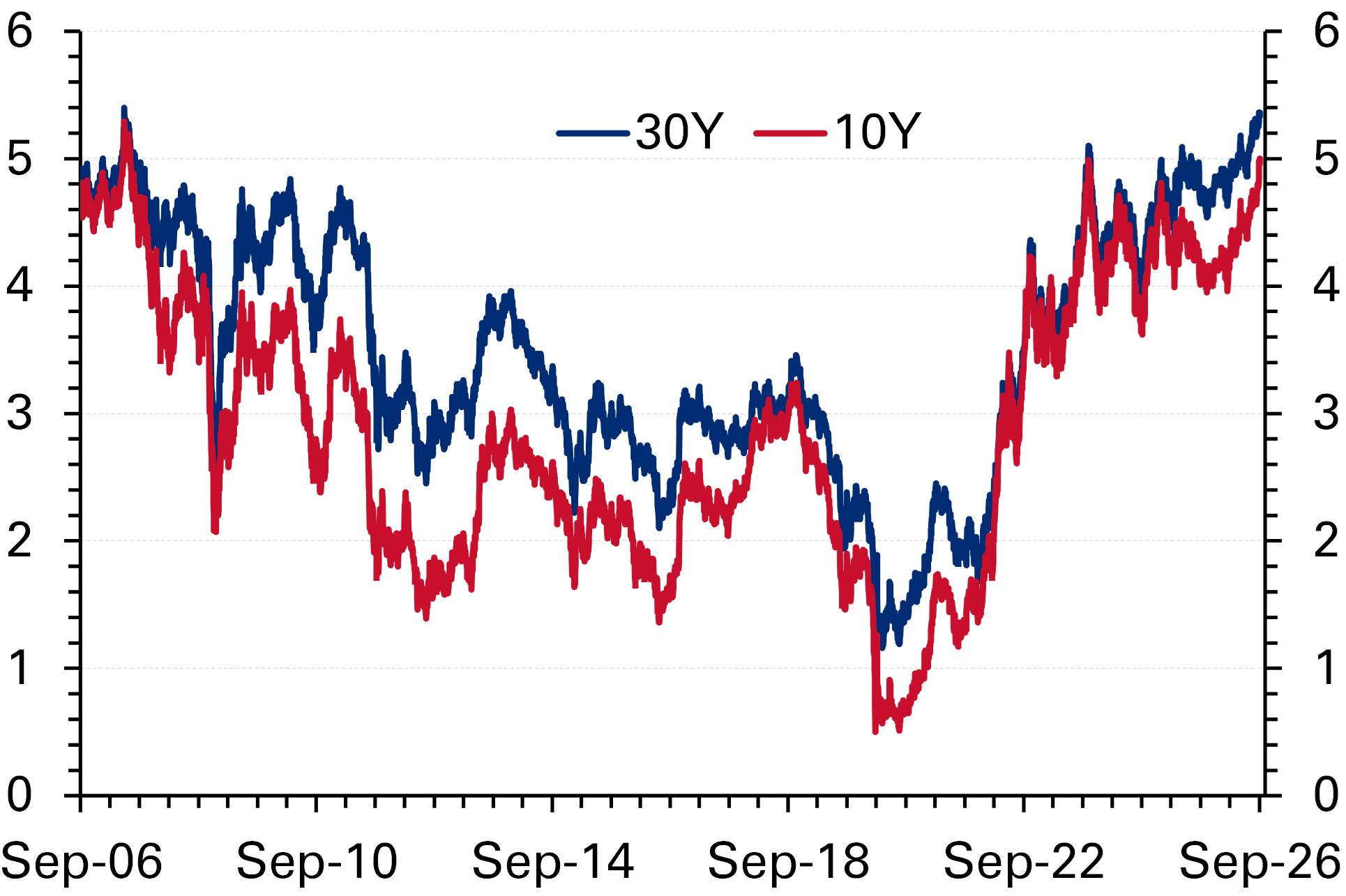
US: Bessent acknowledges the need to address the fiscal deficit as bond yields continue to surge. In a testimony before the House Financial Services Committee, Treasury Secretary Bessent stated that rising UST yields were reflecting “global issues” among other things, and “the need to address the deficit is one of those." He also labeled the latest treasury buybacks successful, citing strong demand for UST auctions following those buybacks. However, the ongoing rise in US treasury yields clearly shows that this buyback initiative is so far failing, as lowering UST yields is the real goal of that initiative. Bessent defended the department’s FX intervention to support the yen, believing that a stronger yen would mean “that the Japanese government will not have to sell US assets to finance foreign currency intervention.” Finally, strangely, he also argued that Trump’s recently proposed $5K dividend to every adult US citizen would not affect the fiscal deficit and was exploring ways to do it without needing congressional approvals but didn’t offer further details. Based on the market estimates, these dividends would cost the treasury well above $1tn. Given the US’s unsustainable debt trajectory, the administration should be targeting initiatives for fiscal consolidation not those that will worsen that path, simply for partisan election reasons. Bessent’s recent emphatic comments/actions have failed to assuage mounting concerns in the UST bond markets, with yields on long-dated bonds climbing to decades-high levels. For example, 10Y yields yesterday hit the highest point since 2007, topping the 5% mark. As we noted previously, the rise in bond yields is reflecting concerns about a poor US fiscal trajectory, a higher inflation outlook, robust economic growth as well as an oversupply of bonds including from private players such as tech ‘hyperscalers’. Indeed, with the markets expecting a Fed rate hike later today with a high probability, failure to deliver a hike could push long-bond yields even higher if it is interpreted as the Fed showing disregard for inflation concerns.
UK: Employment falls further in August, weighing on the MPC outcome this week amid expected inflation acceleration. UK payrolls fell by 26K (based on real-time payroll data) in August, worsening from a revised 19K decline in July, taking the cumulative drop in jobs since November 2024 (after the announcement of higher National Insurance Contributions) to 238K. The unemployment rate in the May-July period remained unchanged at 4.9% (versus the consensus forecast of 5%), but the labor participation rate declined to 63.8% from 63.9% in the April-June period. Regular pay growth was steady in line with forecast at 3.5% y/y in the three months through July, but total pay growth (including bonuses) eased to 3.9% from 4.2% in April-June, matching the slowest rate since late 2020. Finally, vacancies again dropped slightly to 702K in June-August, the lowest level in over five years. The latest job data confirms the continuation of weak job market conditions. For now, the expectation from the BoE is more towards maintaining the bank rate at 3.75% at this week’s MPC meeting, with the futures market signaling an around 65% probability of a hold. Still, given rising energy prices, and an anticipated further acceleration in inflation (August CPI print due later today), the market pricing currently indicates several bank rate hikes starting later this year through end-2027. However, amid a weak employment backdrop and an overall soft growth outlook, and considering Governor Bailey’s cautious stance, the possibility of the BoE extending its current wait-and-watch mode over the coming months remains.
Japan: August trade data point to resilient external demand, though a sharp rise in imports widened the trade deficit. Japan’s export performance remained strong in August, with shipments rising 19% y/y though easing from 23% growth in July and continuing to be supported by solid demand for technology products, particularly AI-related semiconductors (+52% y/y). For 8M2026, exports are up by nearly 16% y/y. Imports, meanwhile, continued to grow at a rapid pace, increasing 28% y/y in August, a tick higher than July’s rise and the fastest growth since November 2022, amid strong energy purchases. Notably, crude oil imports surged by nearly 60% y/y, reflecting efforts to diversify energy sourcing amid geopolitical tensions in the Middle East. As a result, the trade balance recorded a deficit of ¥1.1 trillion ($7.6 billion) in August, compared with a deficit of ¥635 billion ($4.3 billion) in July, marking the fourth consecutive monthly shortfall. Overall, the data indicate that Japan’s export sector remains resilient, supported by strong technology exports and continued demand from key Asian markets. However, the widening deficit reflects the impact of higher energy imports, particularly for crude oil, which more than offset gains in exports.
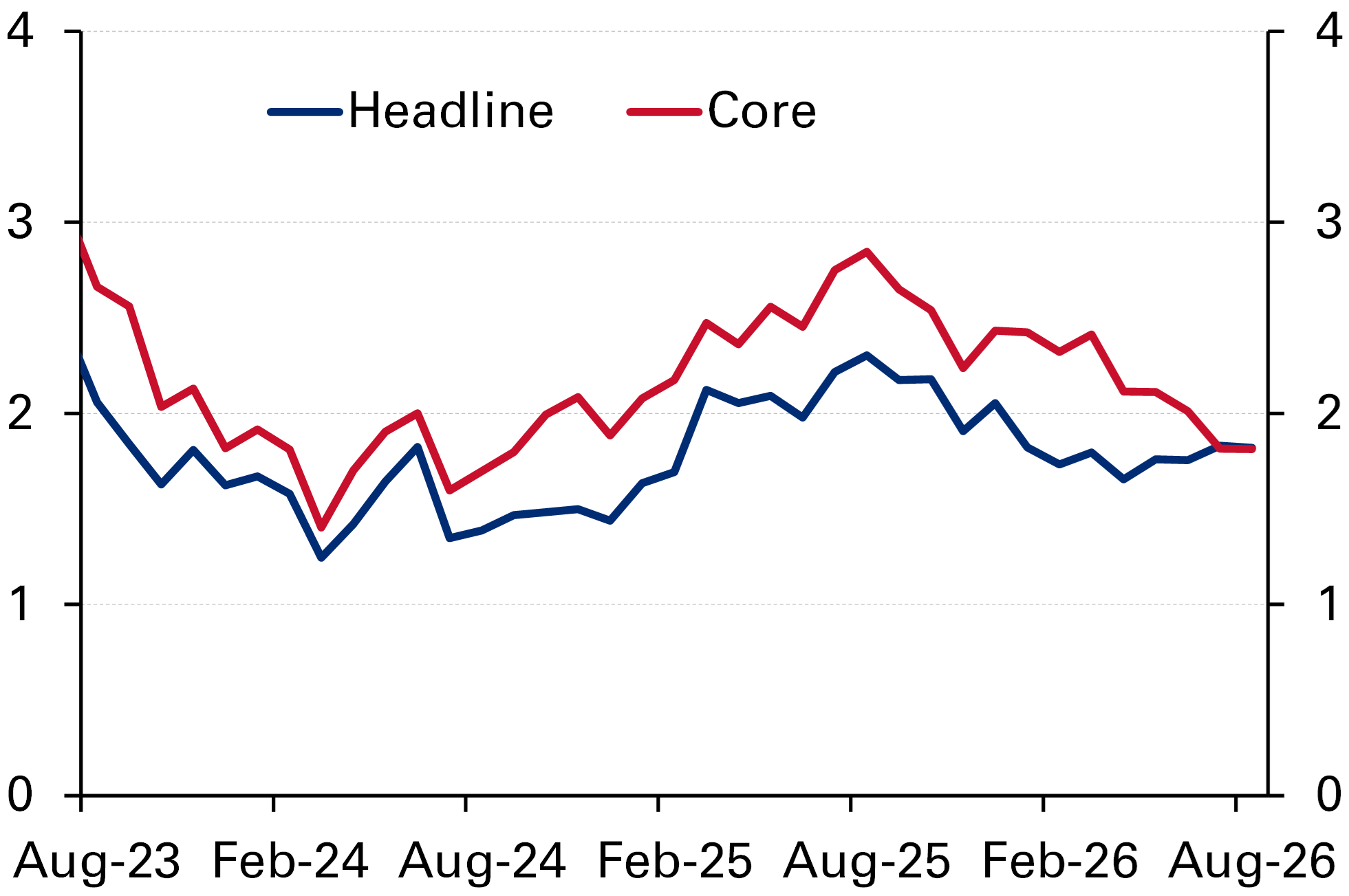
Saudi Arabia: Inflation stable in August, but risks rise in September. Inflation remained unchanged at 1.8% y/y in August for the fourth consecutive month, while core inflation also held at 1.8% for the second month in a row, according to GASTAT. Inflation therefore remained comfortably below 2%, with housing continuing to be the main contributor. On a monthly basis, prices increased by just 0.1% m/m in August. Housing prices rose 0.2% m/m driven by higher rents, while transport and personal care increased by 0.6% and 0.8%, respectively. These increases were partly offset by a 0.4% decline in restaurants and accommodation prices and a 0.1% fall in food prices. Housing remained the largest contributor to annual inflation, adding 0.8 percentage points to the headline rate. The utilities and housing division increased by 3.9% y/y, with actual rents also rising 3.9%. The stable inflation rate suggests that domestic prices remained relatively insulated from the regional geopolitical shock through August. Inflation continued to be driven mainly by housing costs rather than energy prices, with price-monitoring steps helping to limit broader price pressures. However, conditions have changed significantly since the August data were collected. Drone strikes on Saudi territory, damage to the East-West pipeline and a Houthi advance towards Bab Al Mandab have increased risks to regional supply chains. Shipping and insurance costs have also risen sharply. If these disruptions persist, higher freight and import costs could begin to feed into domestic prices, making September inflation an important indicator of the extent of the geopolitical shock.