
 +965 2292 4888


Daily Economic Update
18.11.2026
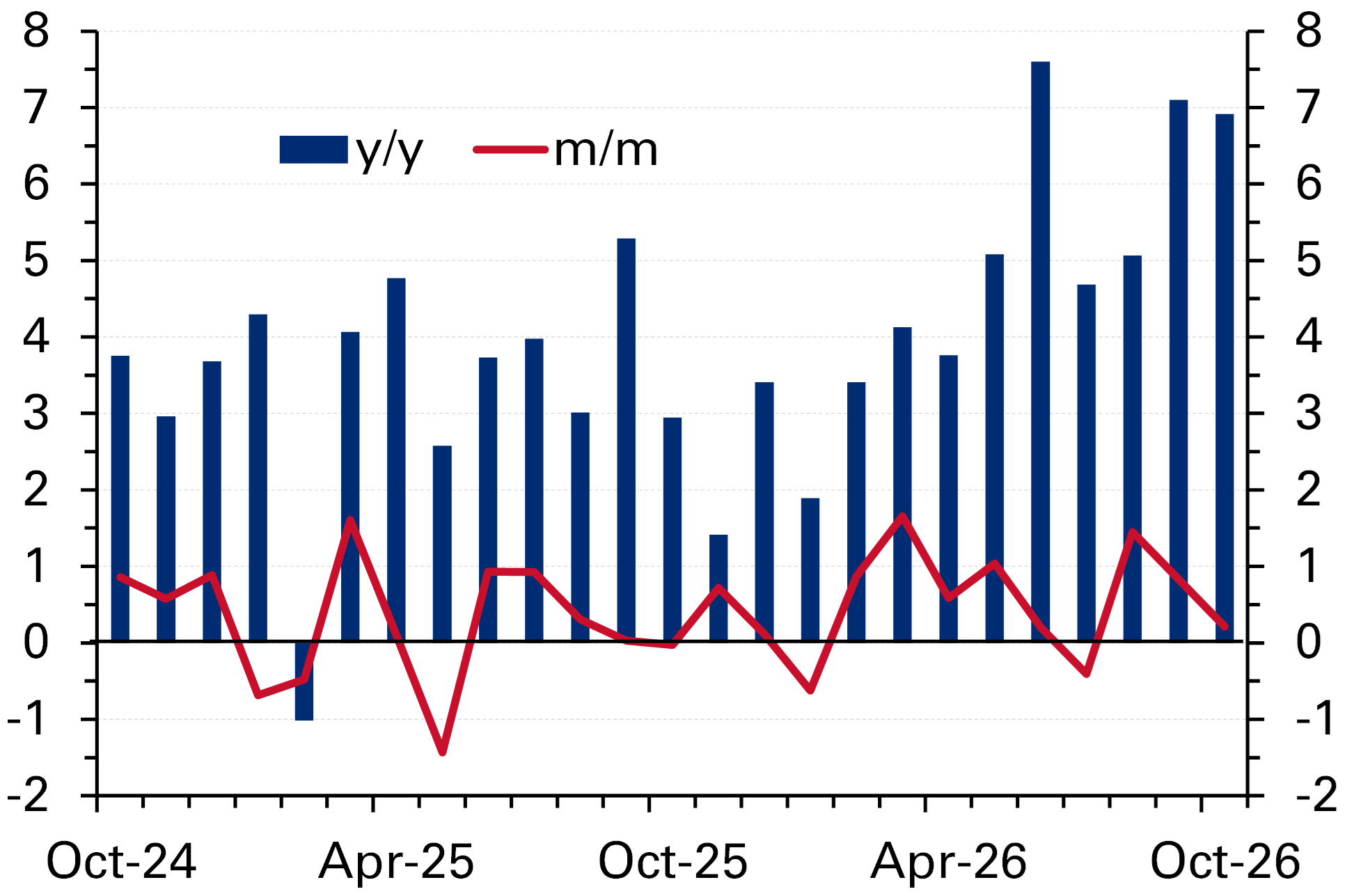
US: Retail sales growth in October eases but still robust despite high energy costs; key FOMC official sees more work to do in taming inflation. Retail sales growth in October eased to 0.2% m/m (6.9% y/y) from September’s 0.8% (7.1% y/y), in line with forecasts, as auto and furniture sales declined steeply but gasoline station receipts rose. A core measure of growth in sales (excluding auto, gasoline, building materials, and food services) increased more than forecast to 0.6% m/m from an upwardly revised 0.5% in September, suggesting US consumers continue to spend robustly despite mounting pressure on disposable incomes from high energy costs. Energy prices have retreated sharply in November, which, if is sustained, should support household consumption further, helping keep US economic growth strong. Meanwhile, manufacturing production in October increased by 0.3% m/m (2.2% y/y) after September’s 0.3% (1.1% y/y) rise. Separately, John Williams, New York Fed President and a permanent FOMC voting member, highlighted that the recent data indicated “the economy is strong, strengthening and inflation is stubbornly high”, while stating “we still have our work to do to make sure we bring inflation back down to 2%”. However, he dismissed the calls for bigger rate hikes, saying “I don’t think the situation calls for dramatic action.” He underlined that AI spending was among the key drivers pushing inflation up, which could likely be a persisting factor. The market pricing currently signals an over 95% probability of a 25bps rate hike in the FOMC’s December meeting as several other Fed officials have also supported further policy interest rate increases.
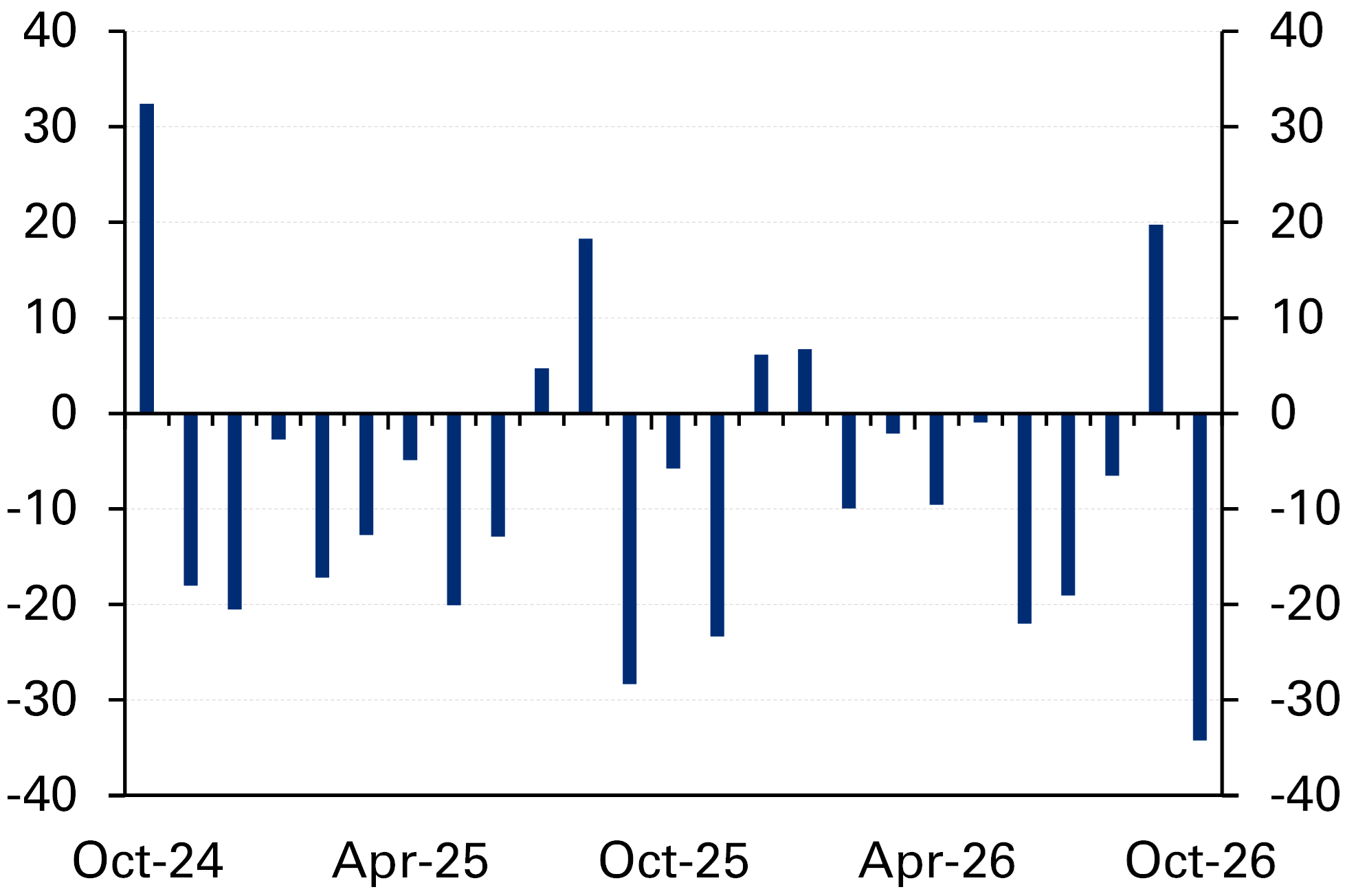
UK: Mixed labor market data shows renewed decline in jobs, but the unemployment rate falls further. UK payrolls fell by 34K m/m in October after an upwardly revised +20K in September (based on real-time payroll data), lifting the cumulative drop to around 215K since November 2024. We note that the monthly payroll data usually sees significant revisions over subsequent months. However, the unemployment rate unexpectedly fell to 4.6% in the July-September period from 4.7% in June-August, the lowest level since February-April 2025, with a steady participation rate of 63.8%. Wage growth slowed, with regular pay growth at a below-forecast 3.5% y/y in the three months through September, down from 3.7% in the three months through August and total pay growth easing to a nearly six-year low of 3.6% y/y from 3.8%. Finally, vacancies declined to 690K in August-October, the lowest level in 66 months. The UK economy has remained surprisingly resilient this year despite steeply elevated energy costs and shipping disruptions, and the labor market data prior to October had shown early signs of stabilization. A higher inflation outlook (the BoE forecasts CPI inflation rising to 4.9% y/y in Q2 27) and a robust economy have been driving market expectations of a further tightening in the monetary policy over the coming months. However, fresh weakness in the job count and slowing wage growth, if sustained, may temper those expectations. For now, market pricing currently signals an around 90% probability of another 25bps bank rate hike in December following the similar increase in early November.
Japan: Trade deficit narrowed in October; higher oil prices drive up imports. October trade data showed the trade deficit narrowing to ¥477 billion from ¥557 billion in September, beating market expectations, although marking the sixth consecutive month of deficit. Exports rose 21% y/y in October, matching forecasts and improving from 16.7% in September. Growth was mainly driven by exports to the US (24% y/y) and Asia (23%) while exports to the Middle East fell by 15% y/y. This marks the 14th consecutive month of positive export growth, buoyed by AI-related shipments as semiconductors exports and chip-making equipment exports rose by 50% y/y each, displaying resilient demand. Similarly, imports came in up 22% y/y, below forecasts of 26% and up from 18.5% y/y in September, with energy remaining the big driver as crude oil imports comprised 61% of the total. The BOJ highlighted in its quarterly outlook report that higher oil prices will lead to reduced growth in the second half of FY2026 and FY2027, reflecting the impact of geopolitical disruptions.
Egypt: Misr Life Insurance to offer 15% stake on EGX in December. State-owned Misr Insurance Holding Company (MIHC) plans to sell a 15% stake in its subsidiary, Misr Life Insurance, through an offering on the Egyptian Exchange next month, according to its intention to float. The transaction involves selling 750mn existing shares, with all proceeds going to MIHC. Based on the company’s estimated fair value of EGP 69.1bn, the stake could be worth around EGP 10.4bn (approximately $190mn), equivalent to EGP 13.82 per share. The offering will be conducted through two channels: a private placement for qualified investors in Egypt and abroad, and a public offering for local retail investors. Both will be priced through a book-building process, with subscriptions and trading expected to begin in December, subject to regulatory approvals and market conditions. The planned 15% sale is smaller than the up to 20% stake previously considered by the Sovereign Fund of Egypt. The company also completed a 10-for-1 share split in September, increasing its number of shares to 5bn while keeping paid-in capital unchanged at EGP 5bn. The listing has been repeatedly postponed since it was first announced in 2018, reflecting delays in implementing the government’s privatization program. Its planned offering follows Banque du Caire’s IPO earlier this quarter, making it the second public offering under the program in Q4 2026. The transaction is part of the government’s broader efforts to accelerate privatization, attract private investment, improve the management of state-owned assets and strengthen private sector participation in the economy.