+965 2292 4888


Kuwait Outlook
19.11.2026
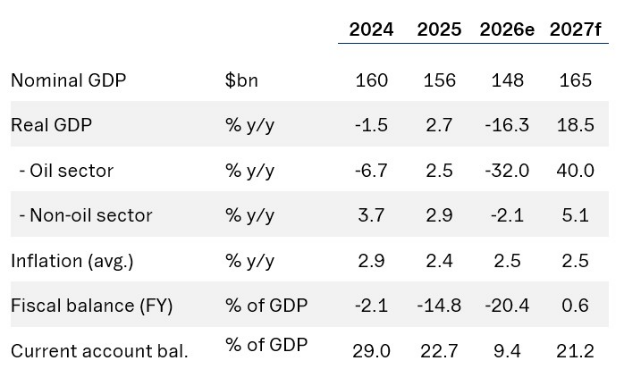
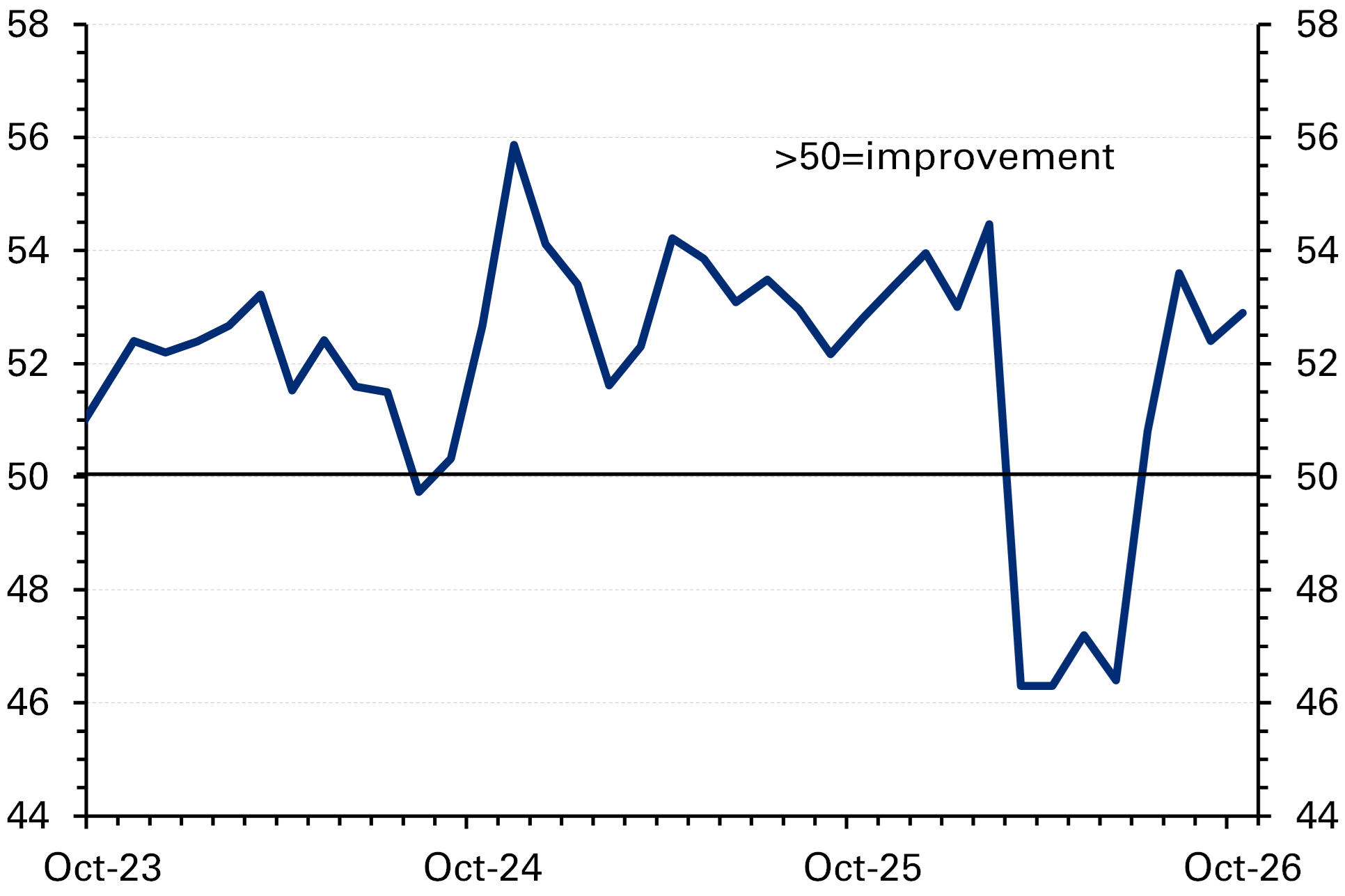
Economy weathers conflict-linked shock: Despite severe disruption in the early months of the conflict, economic activity rebounded relatively quickly and by September, a range of metrics were back at or close to pre-conflict levels. The PMI activity gauge recorded four consecutive months of expansion through October, oil production recovered to 2.1 mb/d (80% of pre-war levels), while business (6.7% y/y) and household (5.1%) credit growth had risen to solid levels by September. This resilience was underpinned by trade and supply-chain adjustments, more normalized air travel and substantial government liquidity injections (govt and public sector deposits up 32% YTD in September). We therefore see a relatively limited dip in non-oil GDP of 2% in 2026, weighed by disruptions to refined oil output, and assuming an end to regional hostilities in H1 27 a rebound in non-oil GDP of 5% in 2027. Oil GDP (around 50% of the economy) is also assumed to surge 40% next year as it returns to pre-conflict levels by year-end. We believe that there were signs in 2025 of economic reform momentum gathering pace from a higher scale of project awards, more streamlined government procurement processes and further emphasis on fiscal consolidation measures (see below) aimed at addressing long-standing structural challenges, and we expect the government to return to these initiatives once the regional climate stabilizes, resulting in higher investment rates than in the past. A positive impact on housing and credit demand from the ‘mortgage’ law could also emerge from H2 27.
Fiscal outlook supported by higher oil revenues allied to fiscal restraint: The fiscal deficit is forecast to widen to 20% of GDP (KD9.3bn) in FY26/27 driven by lower oil revenues following the sharp drop in production during Q2 26, then tentatively return to broad balance next year on higher revenues, lower conflict-related spending and continued expenditure restraint. Options to finance the deficit have been widened further by the decree approving temporary albeit limited state borrowing from its huge Future Generation Fund (assets estimated at over $1trn), adding potentially an extra 60% of GDP in borrowing capacity and reducing reliance on public debt markets. Growth in public debt – now at about 25% of GDP up from just 3% in early 2025 – is expected to be much slower going forward. Rating agencies have left the government’s credit rating unchanged through the US-Iran conflict and reflecting ongoing commitment to fiscal reform, the newly approved excise tax is likely to be implemented in 2027, potentially generating KD200mn (0.4% of GDP) in annual revenues with only a temporary inflationary impulse of around 0.5-0.7pp.
Reforms and investment to shape the post-conflict outlook: Beyond geopolitical developments, the pace and quality of development spending, together with progress on fiscal and regulatory reforms, will remain key determinants of medium-term growth as the authorities seek to shift from a consumption-led to an investment-driven growth model. Realizing this transition will require further improvements to the business environment, labor market reforms, and targeted privatization to increase private-sector participation (the $16bn KPC oil pipeline deal in July was a notable step on FDI). In the field of AI, the government aims to use the technology to raise public sector productivity and help diversify the economy, and recent deals with Microsoft include developing an AI-powered in-country cloud system and a Digital Innovation Center.