
 +965 2292 4888


Economic Insight
15.07.2026
Real estate sales remained subdued in the second quarter of the year, extending the weakness seen in Q1, though the market showed tentative signs of stabilizing as geopolitical tensions eased following the interim US-Iran peace agreement. The composition of activity also shifted in Q2, with residential sales recovering to partially offset continued softness in the investment segment and commercial transactions witnessing a sharp pullback after performing strongly in Q1. Real estate prices in Q2 posted their first quarterly growth in a year, driven by a rebound in residential prices. The outlook for the real estate market for the remainder of the year remains tied to the conflict in the Gulf; a breakdown in the US-Iran ceasefire arrangement that leads to renewed hostilities and closure of the Strait of Hormuz could adversely affect confidence in the market. We are cautiously optimistic, though, on the prospect for a recovery in real estate activity in 2026.
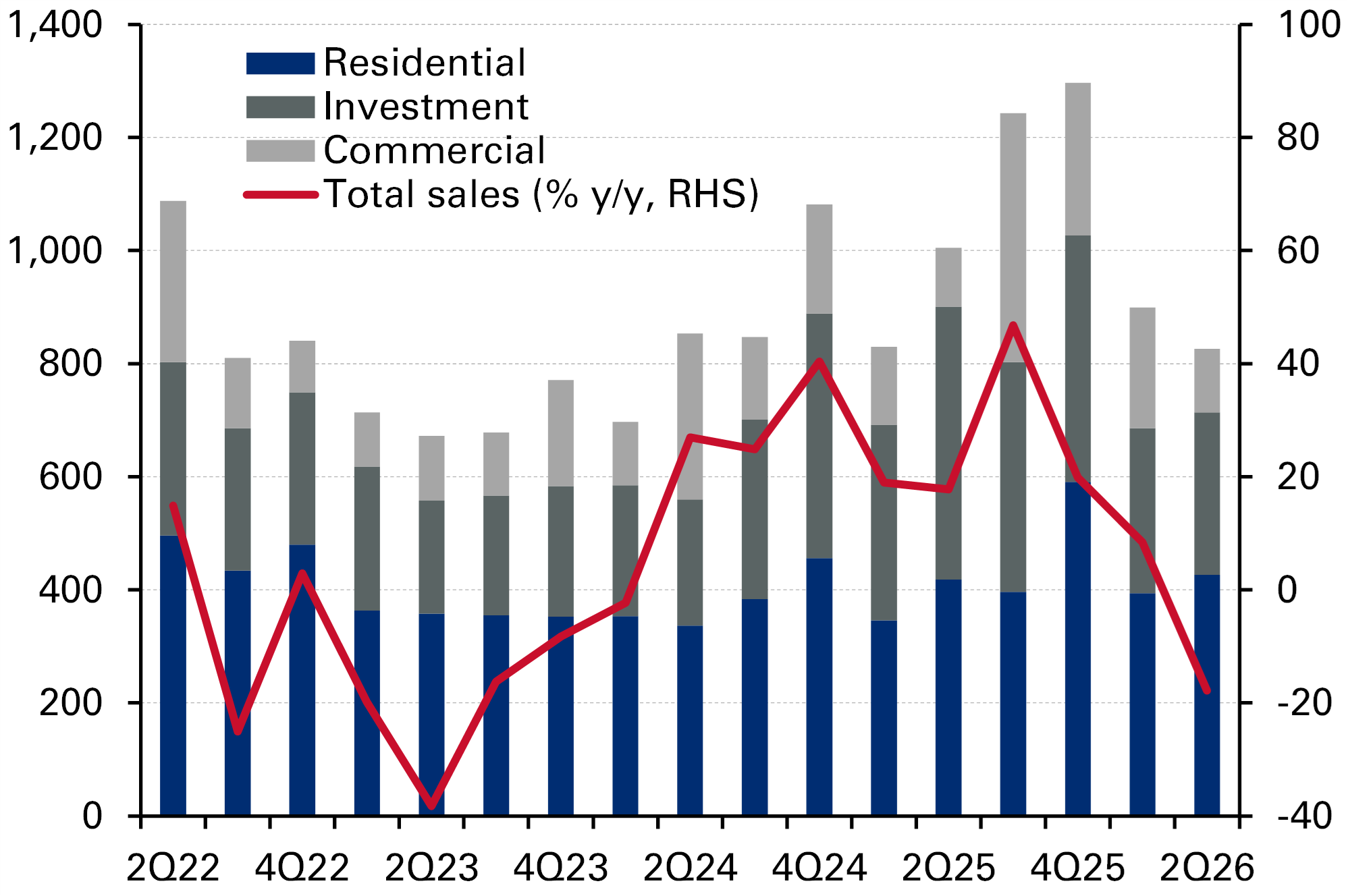
Total property sales in the April-June 2026 period fell to KD826 million (-8.2% q/q; -17.8% y/y), closing lower for the second consecutive quarter. The value of sales in Q2 was also the lowest in more than two years and a notable retreat from Q4 2025’s decade-high figure of KD1.3 billion. (Chart 1.) The decline was driven by the notoriously volatile commercial segment, where sales nearly halved to KD112 million (-47.4% q/q; +7.9% y/y) following exceptionally strong activity in Q1, and by a second consecutive quarterly fall in investment sector activity, which, at KD287 million (-1.6% q/q; -40.5% y/y), is the lowest level in two years, highlighting the impact of regional geopolitical uncertainty on investor sentiment. The subdued performance of this segment is also consistent with bank data showing slower credit growth for real estate activities. In contrast, residential property sales increased in Q2 to KD427 million (+8.2% q/q; +2.0% y/y), reversing part of the weakness recorded in Q1 to reach their highest level in three quarters, while transaction volumes also recovered. The improvement suggests that underlying demand could be firming despite prevailing geopolitical and macroeconomic uncertainty.
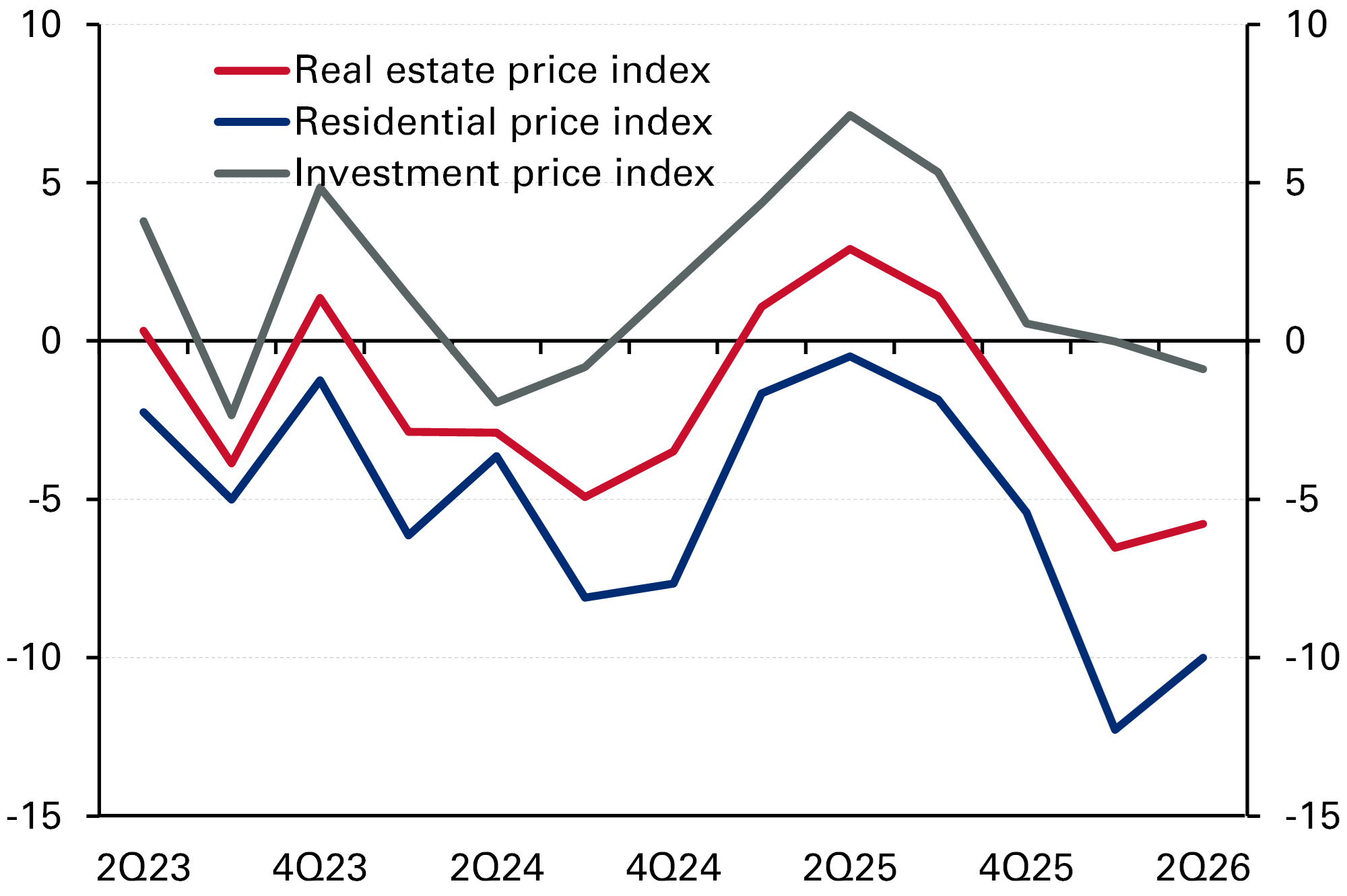
Meanwhile, real estate prices showed tentative signs of stabilization during Q2, according to our real estate price index. Overall prices rose by 1.0% q/q, ending three consecutive quarters of decline, though they were still down by -5.8% y/y on last year. (Chart 2.) Residential prices recorded the strongest improvement, increasing by 3.8% q/q for a first quarterly gain since Q2 2025, though they, too, remained well down on last year’s levels (-10.0% y/y). The rebound may indicate that the sharp correction witnessed over the past year is beginning to moderate as residential demand improves and sentiment gradually recovers following the easing of regional tensions. Investment prices, in contrast, weakened modestly during the quarter (-1.8% q/q; -0.9% y/y), which is broadly consistent with the softness in investment sales activity amid continued investor caution. Nevertheless, the recovery in residential sales and stabilization in overall prices suggest that the market may be moving beyond the period of acute weakness seen in Q1. However, a sustained recovery will require a broader improvement in investment activity, which will likely be contingent on regional stability. The recent increase in tensions between Iran and the US which threatens the peace agreement signed between the two protagonists in June warrants the maintenance of a cautious view about the prospect for materially higher real estate activity during the remainder of the year.