+965 2292 4888


Oman Outlook
17.11.2026
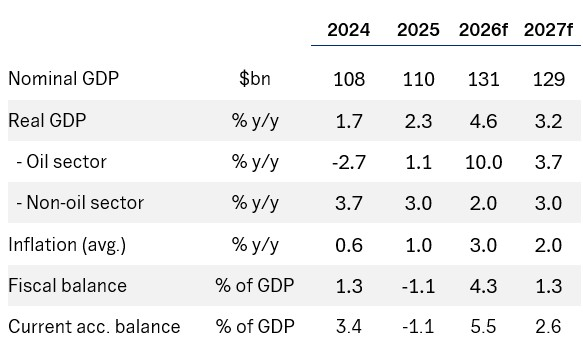
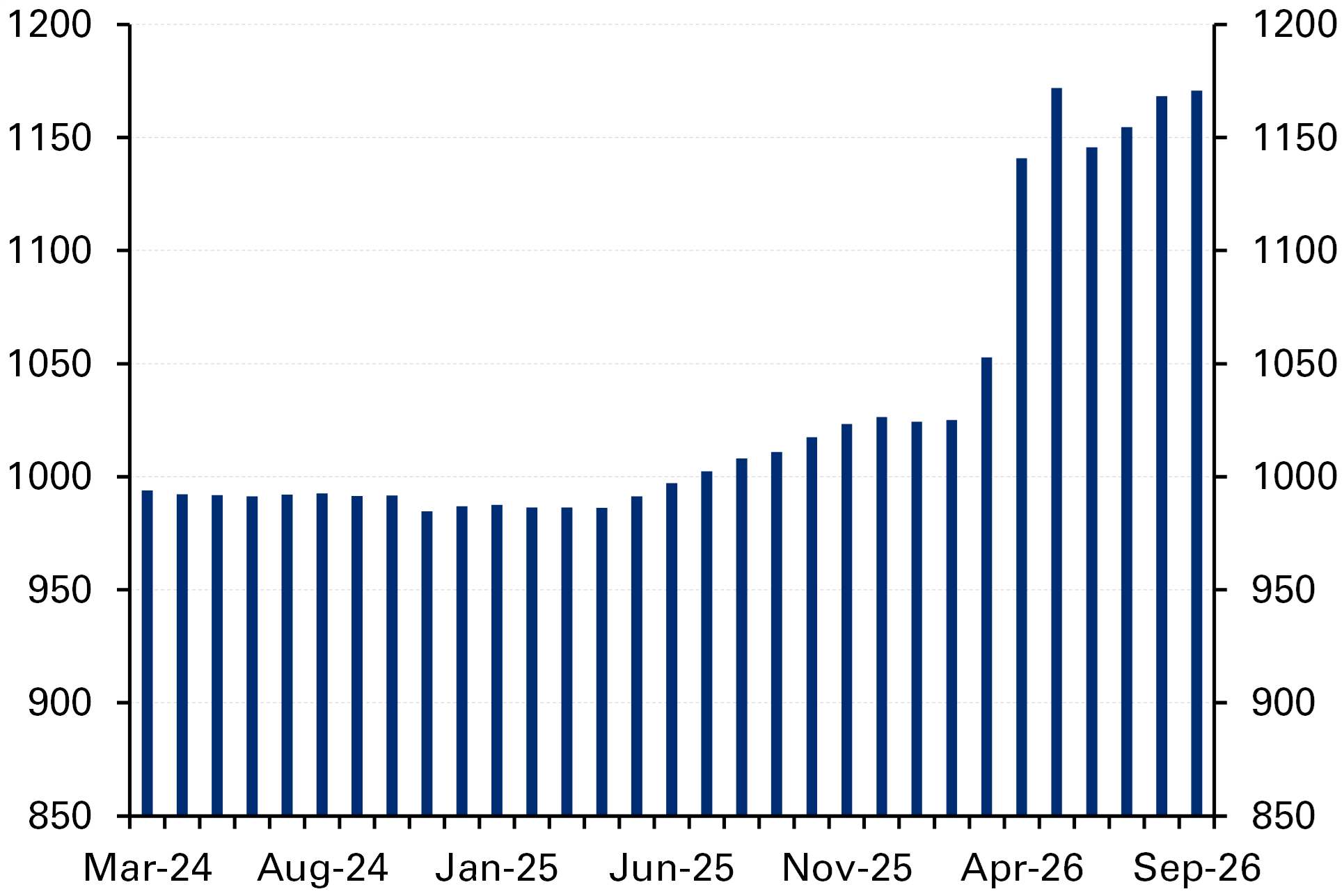
Economy shielded from major conflict-related disruption: Oman has emerged as one of the GCC’s strongest economic performers in 2026 thanks to its geographic and diplomatic positioning, which has shielded it from much of the disruption associated with the US-Iran conflict. This has allowed the economy to remain resilient while neighboring markets face greater uncertainty. A key driver was the oil sector, with Oman the only GCC state to avoid a reduction in oil production at the outbreak of hostilities; in fact, crude output surged by almost 20% to a multi-year high of 949 kb/d in September. Non-hydrocarbon GDP growth, meanwhile, is forecast to come in at the upper end of GCC estimates, at 2.0% in 2026, on the back of robust trade data—supported by the increased use of Omani ports during the conflict—and real estate and bank lending activity that has held up well in 2026 so far (+22% and +12% y/y, respectively in Q2) despite the regional strife. The tourism, construction and manufacturing sectors, though, have been adversely affected by the conflict. Tourism, a key pillar of the Vision 2040 strategy, had been growing on average by 6% y/y since 2022 before contracting in the first half of the year (-3.3%). Looking ahead, non-oil growth is expected to strengthen as regional pressures ease and investment in the development plan pipeline progresses. To that end, the authorities will find support from strong Omani private sector employment (+7% y/y in September), a notable success in recent years. Moreover, continued efforts to expand hydrocarbon production capacity, especially for LNG, will further support growth
Stronger fiscal position creates space to pursue diversification plans with more vigor: The government has made progress in recent years strengthening its public finances, in pursuit of its latest 5-year development plan target of preserving fiscal discipline while prioritizing investment in economic diversification projects. Through a combination of post-pandemic fiscal discipline, based on subsidy reforms, expenditure rationalization and revenue augmentation (non-oil receipts hit a record 38% of all revenues in 2025), the government has been able to lower both its deficit and public debt levels, the latter declining sharply from 64% of GDP in 2020 to under 35% by end-2025. Government debt earned an investment-grade sovereign rating by all three major credit rating agencies in 2025 as a result. Moreover, with energy exports in 2026 unconstrained by Strait of Hormuz considerations, the Sultanate has been able to capitalize on higher energy prices and 2026 could see the largest fiscal surplus on record. Overall, the much-improved fiscal space provides a solid platform for the Sultanate to accelerate progress toward the authorities’ diversification objectives.
Economic prospects hinge on advancing diversification agenda and US-Iran conflict de-escalation: While Oman has largely been outside the line of fire in the ongoing conflict, a return to a ‘hot’ war or a long, protracted period of regional tension will, nevertheless, prove unsettling for business, investment, and tourism, upon which the Sultanate’s Vision 2040 plan hinges. On the upside, Oman is expected to leverage its geographical position as a potential conduit for GCC trade and hydrocarbon exports, through additional pipelines and expanded port infrastructure in partnership with its neighbors as they look to prevent a repeat of 2026 by increasing export routes that bypass the Strait of Hormuz.